
- Luxurious Pawz
Bathing Tips for Pets With Sensitive Skin
Key Takeaways
|
Pets with sensitive skin often need a more careful bathing routine than pets with otherwise healthy skin. The goal is not simply to get the coat clean. The shampoo, water temperature, amount of friction, rinsing technique, and drying method can all affect how comfortable the skin feels afterward.
For pet owners in Eagle Rock, paying attention to these details can be particularly useful when a pet already experiences recurring itching, dryness, redness, or reactions after grooming. A gentle bathing routine can support skin comfort, but it should not be used as a substitute for veterinary diagnosis when the underlying problem is persistent.
Prepare Your Pet’s Skin Before Bathing
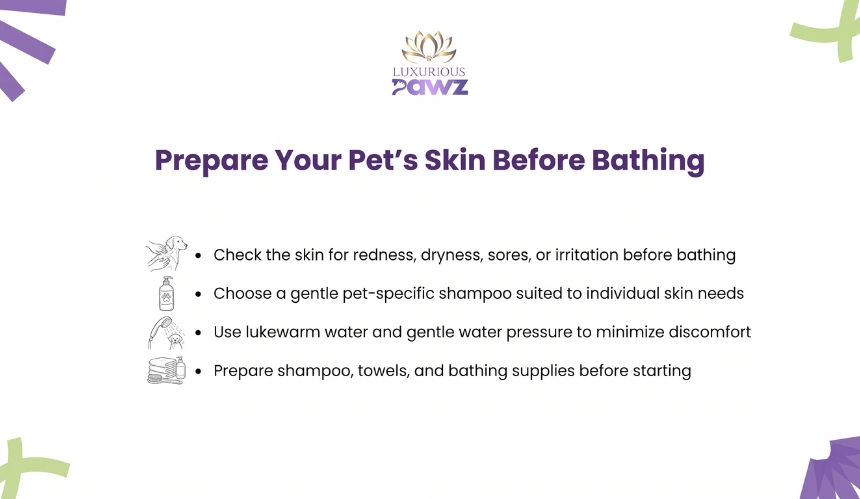
Before starting a bath, examine the skin rather than immediately reaching for shampoo. Sensitive skin can result from allergies, parasites, infections, environmental triggers, or other dermatological conditions, so the same bathing routine will not necessarily suit every pet.
The American Animal Hospital Association recommends considering factors such as seasonality, itching severity, parasite prevention, previous treatments, and changes in the pet’s routine when evaluating an itchy dog.
This matters because bathing can sometimes make a pet appear temporarily cleaner while leaving the underlying cause of irritation unresolved. For example, a dog that repeatedly scratches after spending time outdoors in Eagle Rock may need more than a change in shampoo if the itching continues or is accompanied by redness, hair loss, lesions, or recurrent ear problems.
Check for Redness, Dryness, or Irritation
Look closely at areas that can be easy to overlook, including the paws, skin folds, belly, ears, underarms, and around the rear. Redness, excessive flaking, scabs, sores, unusual odor, or significant inflammation can indicate that the problem is more than ordinary skin sensitivity.
If the skin is already raw or painful, aggressive bathing may increase discomfort. AAHA’s canine dermatology guidance specifically recommends examining areas where inflammation may be less obvious, including paws, claws, skin folds, perianal areas, and other body regions.
A useful approach for Eagle Rock pet owners is to observe whether irritation follows a particular pattern. If symptoms repeatedly appear after outdoor exposure, certain grooming products, or particular times of year, make a note of the pattern. That information can be useful when discussing the pet’s skin with a veterinarian.
Choose a Gentle Pet-Safe Shampoo
Sensitive skin does not automatically mean that every product labeled “natural,” “organic,” or “hypoallergenic” will be appropriate. The product should be designed specifically for pets and selected according to the animal’s individual skin needs. Avoid substituting human shampoo for pet shampoo. Human and animal skin have different characteristics, and a product that feels mild on human skin is not necessarily appropriate for a pet.
Medicated shampoos are different from ordinary grooming shampoos. Veterinary sources note that they may be used for specific conditions such as bacterial or yeast infections and certain allergic skin problems, but the appropriate formulation depends on the diagnosed condition.
For a pet with recurring irritation, it is therefore better to ask a veterinarian whether a therapeutic shampoo is appropriate instead of experimenting with multiple products.
In Eagle Rock, the dry, warm summer pattern can leave pets’ coats exposed to dust and outdoor debris, while the wetter winter season creates different grooming considerations. Regular pet bathing can help remove accumulated environmental debris without relying on overly frequent washing, which is especially relevant for pets spending time around Colorado Boulevard, Eagle Rock Boulevard, and the residential foothill areas where outdoor exposure varies.
Use the Right Water Temperature
Use comfortably lukewarm water rather than very hot water. The objective is to clean the coat without creating additional discomfort for already sensitive skin. Water pressure also matters. A strong spray directed directly at the skin can make a nervous or irritated pet uncomfortable. A gentler flow allows the coat to become saturated without unnecessary physical stimulation.
Before bathing a sensitive-skinned pet in Eagle Rock, prepare the shampoo, towels, and other supplies first. Keeping everything within reach allows the bath to move efficiently and reduces the amount of time the pet spends standing wet while you search for something.
Do You Know?
Skin allergies have been among the most common health reasons for veterinary visits in dogs for more than a decade, according to Nationwide pet insurance claims data discussed by the American Animal Hospital Association. This is one reason recurring itching should not automatically be treated as a simple grooming issue.
Use a Gentle Bathing Technique
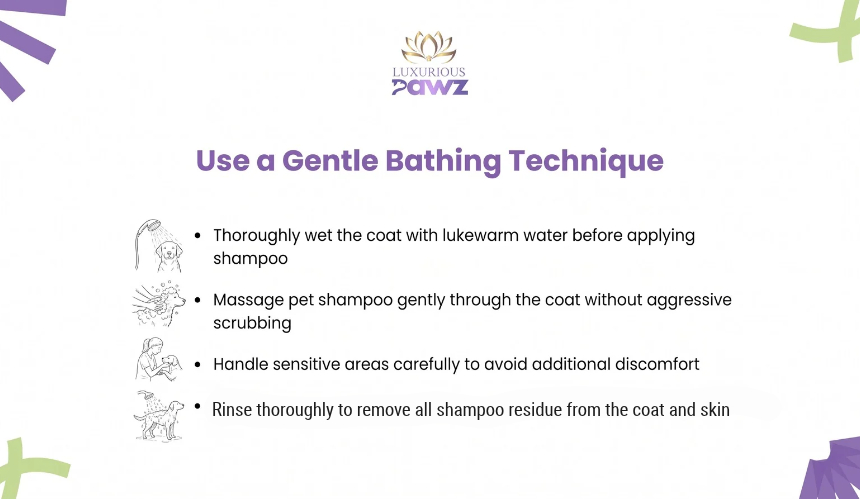
Once the pet is prepared, the bathing technique becomes just as important as the product being used. Sensitive skin can react poorly to excessive rubbing or incomplete rinsing, so the objective should be controlled cleaning rather than vigorous scrubbing.
A useful distinction is that cleaning the coat and stimulating the skin are not the same thing. Shampoo needs to reach the coat and skin appropriately, but there is rarely a need to scrub aggressively. This is particularly important for pets that already associate bathing with discomfort.
Wet the Coat Thoroughly
Begin by thoroughly wetting the coat with lukewarm water. Dense or longer coats can hold dry areas beneath the outer layer, making it difficult for shampoo to distribute evenly. Use a controlled stream of water and avoid directing strong pressure toward the face, ears, or visibly irritated areas. For pets that become anxious during bathing, a calmer and more predictable process can also make the experience easier to manage.
In Eagle Rock households where pets regularly come back from outdoor activity with dirt or debris on their coats, a thorough pre-rinse can help remove loose material before shampoo is introduced. This reduces the need to use excessive product or friction later.
Massage Shampoo Without Scrubbing
Apply an appropriate amount of pet shampoo and distribute it gently through the coat. Instead of vigorously scratching the skin with your fingertips, use controlled movements that work the shampoo through the hair and down toward the skin.
Sensitive areas should receive particularly gentle handling. If the pet reacts strongly when a specific area is touched, do not assume that the reaction is simply behavioral. Pain or inflammation may be present.
For pets with diagnosed skin disease, follow the veterinarian’s instructions regarding the product, contact time, application areas, and bathing frequency. A medicated shampoo is not simply a stronger version of ordinary shampoo; it is part of a treatment approach intended for a particular condition.
Rinse Away All Shampoo Residue
Rinsing deserves as much attention as shampoo application. Products left behind on the coat can become an additional source of irritation, particularly when the pet already has compromised skin.
Work systematically from one area to another and continue rinsing until the water runs clean and there is no noticeable slippery shampoo residue. Pay particular attention to thick-coated areas, paws, skin folds, underarms, and the underside of the body. Do not rush the rinse simply because the coat looks clean. A pet can appear freshly groomed while still retaining product close to the skin.
For sensitive pets in Eagle Rock, this step can make a meaningful difference because the purpose of a gentle bath is not just to remove dirt; it is to finish with as little unnecessary residue and irritation as possible.
Do You Know?
73% of clients surveyed about veterinary dermatology cases reported reaching a “tipping point of frustration” after the third veterinary visit, with respondents having spent an average of $925 by that point. The data was reported by AAHA from a 2022 American College of Veterinary Dermatology-commissioned survey.
Dry and Maintain Sensitive Skin After the Bath
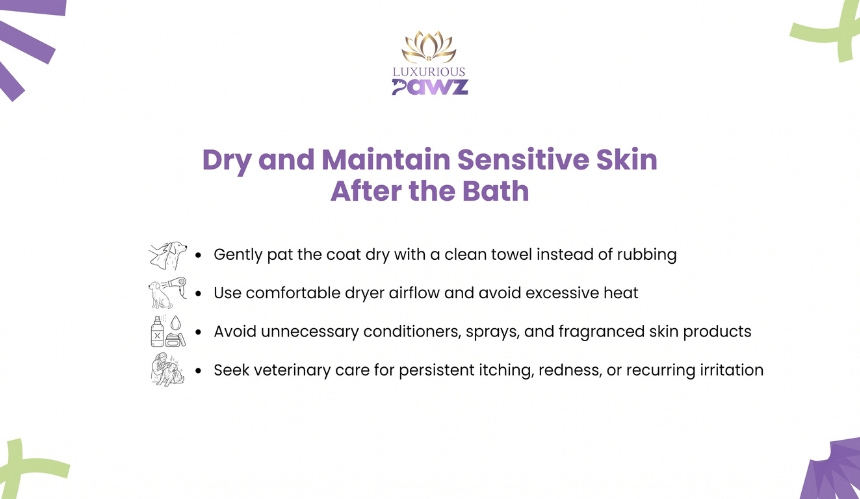
The bath does not end when the shampoo has been rinsed away. How a pet is dried and what is applied afterward can influence whether the skin remains comfortable. Sensitive skin requires a balance: leaving the coat excessively wet can create an unfavorable environment in some areas, while excessive heat or aggressive towel rubbing can cause unnecessary irritation. Post-bath care should therefore be gentle, controlled, and appropriate for the pet’s coat type.
In Eagle Rock, the warm, dry summer pattern and relatively low annual rainfall can leave dogs carrying fine dust and outdoor debris in their coats, while the neighborhood’s foothill setting can mean additional exposure during walks around areas such as Hill Drive, Yosemite Drive, and the residential streets near San Rafael Hills.
A consistent dog grooming routine can help manage coat buildup between baths while allowing owners to monitor changes in the skin, paws, and coat that may become more noticeable with frequent outdoor activity.
Dry the Coat Gently
Use a clean towel to absorb moisture rather than aggressively rubbing the coat. Vigorous rubbing can create friction against already sensitive skin and may tangle longer coats. If a dryer is used, keep the airflow comfortable and avoid excessive heat. Constantly moving the airflow instead of concentrating it on one spot can help prevent unnecessary heat exposure.
Take additional care around the face, ears, paws, and skin folds. These areas may require slower, more deliberate drying because moisture can remain trapped even when the outer coat feels relatively dry.
For pets receiving professional grooming in Eagle Rock, owners can also ask the groomer how the pet’s skin responded during and after the bath. A pattern of post-grooming redness or itching is useful information rather than something that should simply be ignored.
Avoid Unnecessary Skin Products
After bathing, resist the temptation to add multiple products simply because the skin feels dry or the coat needs additional fragrance or shine. Sensitive skin does not necessarily benefit from having more products applied to it.
If a veterinarian has recommended a specific topical product, use it according to the instructions provided. Otherwise, adding several conditioners, sprays, fragrances, or other topical products at once can make it difficult to determine what caused a reaction if irritation develops. AAHA notes that managing allergic skin disease generally requires an individualized, multimodal approach rather than a single universal solution.
Know When Professional or Veterinary Care Is Needed
A sensitive-skinned pet may need professional attention when symptoms continue despite careful grooming. Persistent scratching, licking, redness, hair loss, sores, recurring infections, unusual odor, or repeated flare-ups can indicate an underlying dermatological problem.
AAHA recommends a detailed history and dermatological assessment when investigating allergic skin disease, including consideration of parasites, environmental changes, previous treatments, and other possible causes.
This distinction is especially important: professional grooming can support coat and skin hygiene, but it does not replace veterinary diagnosis or treatment. If a pet repeatedly develops symptoms after bathing, the goal should be to identify the trigger rather than simply bathe less often or keep changing products.
For pet owners in Eagle Rock, keeping a simple record of when itching or redness appears can help identify patterns. Note the bathing product, bathing date, outdoor exposure, and when symptoms started. This gives a veterinarian more useful information than simply reporting that the pet “has sensitive skin.”
If your pet needs careful bathing and grooming, Luxurious Pawz provides professional pet grooming services for pets throughout the Greater Los Angeles area. Their grooming approach can be tailored around your pet’s coat, comfort, and individual needs. Contact Luxurious Pawz to discuss a grooming routine that works for your pet.
Frequently Asked Questions
How often should I bathe a pet with sensitive skin?
There is no single bathing schedule that works for every sensitive-skinned pet. The appropriate frequency depends on the pet’s coat, skin condition, lifestyle, and whether a veterinarian has recommended therapeutic bathing. Over-bathing can contribute to dryness, so the routine should be based on the pet’s individual needs.
Can I use human shampoo on a pet with sensitive skin?
It is better to use shampoo specifically formulated for pets. Human shampoo is not automatically suitable for an animal’s skin, even when it is marketed as gentle or moisturizing. Pet-specific formulas are designed with the animal’s skin and coat needs in mind, helping reduce the risk of unnecessary dryness or irritation.
Should I bathe my pet if its skin is already irritated?
If the skin is severely inflamed, painful, raw, or has open sores, consult a veterinarian before proceeding with a routine bath. The appropriate treatment depends on what is causing the irritation. A veterinarian can determine whether bathing is appropriate and recommend products or treatment that will not further aggravate the affected skin
Are medicated shampoos safe for sensitive-skinned pets?
Medicated shampoos can be useful for specific conditions, including certain bacterial, yeast, and allergic skin problems, but they should be selected and used according to veterinary guidance. Using the wrong formula or applying it too frequently may irritate the skin further or interfere with the intended treatment.
Why does my pet still itch after a bath?
Bathing may remove allergens or debris from the coat without eliminating the underlying cause of itching. Fleas, environmental allergies, food-related reactions, infections, and other dermatological conditions can all contribute to persistent itching.
When should I take my pet to a veterinarian for sensitive skin?
Seek veterinary advice when itching is persistent or severe, or when you notice redness, hair loss, sores, recurring infections, unusual odor, or repeated flare-ups. These signs may indicate an underlying condition requiring diagnosis rather than a change in grooming routine alone.