
- admin
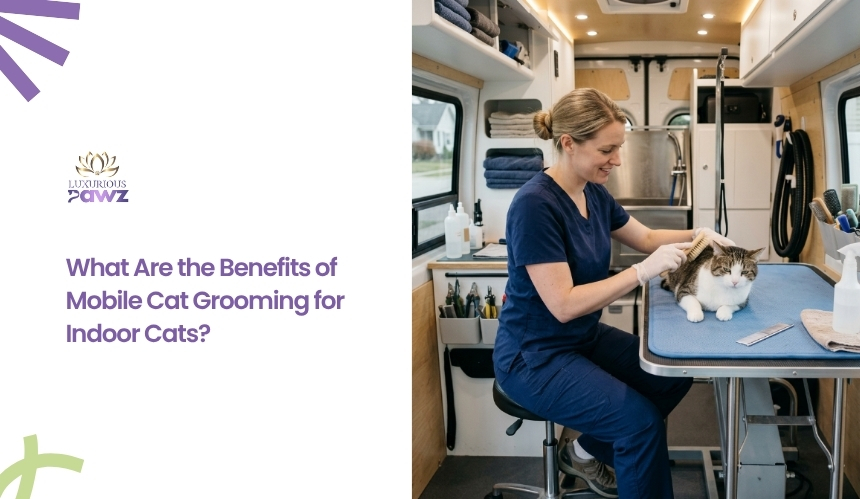
What Are the Benefits of Mobile Cat Grooming for Indoor Cats?
Key Takeaways
|
Indoor cats may look clean, but their coat, nails, skin, and hygiene still need routine care. Limited outdoor activity can make grooming issues harder to notice until tangles, overgrown claws, or coat changes affect comfort. Mobile cat grooming gives indoor cats professional care with less disruption than a traditional salon visit. This article explains how mobile grooming supports cleaner coats, safer handling, and easier care for indoor cats.
Pasadena’s warm, dry climate can make coat care more important for indoor cats, especially when shedding, dryness, tangles, or loose fur buildup become harder to manage. Many cats also dislike loud salons, car rides, and unfamiliar pets, which can make routine care stressful for both the cat and the owner.
For indoor cats that need brushing, deshedding, nail trimming, sanitary care, and gentle skin checks, cat grooming in Pasadena, CA can support better comfort and cleaner coat maintenance. It helps reduce matting, hairballs, overgrown claws, and hidden skin concerns while giving cats a calmer grooming experience that fits their normal home routine.
Why Do Indoor Cats Still Need Grooming Support?
Indoor living protects cats from many outdoor risks, but it does not remove their grooming needs. Cats still shed, grow nails, and collect loose fur even when they stay inside most of the time. These small issues can slowly affect comfort if they are not managed.
Lose coat can lead to tangles or hairballs, while overgrown nails may cause snagging, pressure, or irritation. Indoor cats can also develop skin, coat, or hygiene concerns that are easy to miss during daily care. Regular grooming gives owners a better chance to notice dryness, dandruff, matting, or unusual coat changes early.
Shedding And Loose Fur Still Build Up Indoors
Indoor cats shed because coat cycles continue even without outdoor exposure. Loose hair can collect in the undercoat, especially in long-haired cats, senior cats, overweight cats, or cats that do not groom themselves efficiently.
When extra hair stays trapped, cats may swallow more fur during self-grooming. This can increase hairballs and cause the coat to look dull or uneven. Dense areas around the chest, belly, armpits, and back legs are also more likely to tangle when loose hair is not removed.
Regular brushing and deshedding keep the coat lighter and easier to manage. For owners, it also reduces the amount of fur that collects on furniture, bedding, clothing, and floors.
Do You Know?
Cats naturally swallow loose dead hair while grooming because their rough tongue moves shed hair toward the stomach. Cornell Feline Health Center explains that most swallowed hair passes normally, but large hair clumps can sometimes create serious digestive blockage. This makes brushing and deshedding especially useful for indoor cats with heavy coats, seasonal shedding, or frequent hairballs.
Why Can Long Nails Affect An Indoor Cat’s Comfort?
Indoor cats may not wear down their claws as much as cats that climb, scratch rough outdoor surfaces, or move across varied terrain. Scratching posts help, but they do not always keep nail length under control.
Overgrown claws can snag on carpet, blankets, upholstery, and soft bedding. In more serious cases, long nails may curve toward the paw pad and create pressure while the cat walks, jumps, or rests.
Routine trimming keeps claw length manageable. It also reduces the risk of broken nails, paw irritation, and accidental scratches during normal handling.
Pasadena’s indoor cats may not wear down their claws naturally because they spend most of their time on soft flooring, bedding, furniture, and scratching posts instead of rough outdoor surfaces. When nails grow too long, they can snag on fabric, press toward the paw pad, or make walking and jumping uncomfortable.
For cats that resist at-home claw care, pet nail trimming in Pasadena, CA is important because it supports safer movement, reduces broken nail risks, and makes handling easier for both cats and owners. It also fits naturally with mobile cat grooming because nail care is one of the most practical grooming needs for indoor cats.
Skin And Coat Checks Help Catch Early Issues
Grooming gives a closer view of the cat’s skin, coat density, and body surface. Indoor cats can still develop dandruff, dry skin, flea exposure, scabs, lumps, irritation, or sensitive areas.
A groomer may notice changes that are easy to miss during daily petting. Greasy fur, thinning patches, flaking, odor, or sudden matting can point to changes in mobility, weight, grooming behavior, or skin condition.
Early detection does not replace veterinary care. However, it can help owners respond sooner when a cat’s coat or skin looks different from its normal condition.
Do You Know?
Cornell Feline Health Center notes that cats typically spend 30% to 50% of their day grooming themselves. Because grooming is so frequent, owners may not notice a problem until visible hair loss or skin lesions appear. Regular grooming checks can make coat changes, irritation, and abnormal licking easier to spot earlier.
How Does Mobile Cat Grooming Reduce Stress For Indoor Cats?
Many indoor cats are sensitive to travel, noise, handling changes, and unfamiliar spaces. Mobile grooming limits several common stress triggers by bringing professional care closer to the cat’s normal environment.
No Car Ride Or Waiting Room Stress
Car rides can create tension before grooming begins. Many cats associate carriers and vehicles with discomfort, vet visits, motion, or loss of control. This can lead to hiding, vocalizing, trembling, panting, or defensive behavior.
Mobile cat grooming removes the need for a salon trip. The cat does not have to sit in traffic, wait near unfamiliar pets, or adjust to a busy grooming facility.
This setup is especially useful for indoor cats that rarely leave home and become overstimulated quickly outside their normal routine.
One-On-One Grooming Creates A Calmer Experience
A mobile grooming appointment usually focuses on one pet at a time. This controlled setting limits background noise, crowding, barking dogs, unfamiliar cats, and repeated handling by different people.
One-on-one care allows the groomer to adjust the pace based on the cat’s response. A nervous cat may need slower movements, quiet handling, short pauses, or a gentler approach around sensitive areas.
This focused process makes grooming more predictable for cats that do not tolerate busy settings well.
Familiar Home Proximity Supports Better Handling
Mobile grooming usually takes place near the home, so the cat avoids a long transition before and after the appointment. This can make the full grooming process easier for cats that depend on routine.
Indoor cats often settle faster when they return to a familiar space immediately after grooming. They do not have to recover from a salon environment, a long wait, and another car ride.
For cats with anxiety, age-related stiffness, or low tolerance for change, nearby grooming makes routine coat and nail care more practical.
What Are The Main Benefits Of Mobile Cat Grooming For Indoor Cats?
Mobile grooming combines coat care, hygiene support, nail maintenance, and owner convenience in one controlled service. The main value is not only cleanliness, but a more consistent care routine for cats that live mostly indoors.
Better Coat Health And Less Matting
A brushed coat allows air to move through the fur and prevents loose hair, oil, and debris from collecting in dense areas. This is especially helpful for long-haired breeds, thick-coated cats, senior cats, and cats with limited flexibility.
Mats can pull on the skin and cause discomfort when the cat moves, lies down, stretches, or grooms itself. Tight matting may also hide irritation underneath the coat.
Mobile grooming helps remove trapped hair before it compacts. Brushing, combing, deshedding, and careful mat removal keep the coat cleaner, lighter, and easier for the cat to maintain between appointments.
Cleaner Home And Better Fur Control
Indoor shedding affects both the cat and the living space. Fur can settle into carpets, sofas, curtains, bedding, and air vents. When coat care is inconsistent, owners may notice more cleaning, more lint buildup, and more visible hair on household surfaces.
Professional grooming removes excess coat in a controlled session instead of letting it fall gradually around the home. It does not stop natural shedding, but it can make fur buildup easier to manage.
For households with multiple cats, fabric furniture, or sensitive family members, scheduled grooming can create a cleaner and more comfortable indoor environment.
Safer Nail, Ear, And Hygiene Care
Indoor cats often need more than coat brushing. Grooming may include nail trimming, ear checks, sanitary trimming, and gentle cleaning around areas that collect debris.
Ear checks may reveal wax buildup, odor, redness, or particles that need attention. Sanitary trims can help long-haired cats stay cleaner around the rear area, especially if fur traps litter or waste.
Professional handling also reduces risk for owners who find at-home grooming difficult. A trained groomer understands feline body language, safe restraint, and when a cat needs a pause instead of forced handling
More Convenient Care For Cat Owners
Mobile cat grooming saves time by removing the need to drive, wait, and transport the cat back home. This is practical for busy owners, multi-cat households, senior pet owners, and cats that strongly resist carriers.
The easier the process feels, the more consistent grooming becomes. Owners are less likely to delay coat maintenance or hygiene care until discomfort, matting, or visible buildup appears.
For indoor cats, the strongest benefit of mobile grooming is a cleaner, safer, and calmer care routine that supports comfort without disrupting the cat’s normal environment.
For indoor cats that need gentle coat care, safer handling, and a calmer grooming routine, Luxurious Pawz provides a convenient way to manage grooming without the stress of a traditional salon visit. From brushing and nail care to hygiene support and coat maintenance, professional mobile grooming can help cats stay cleaner, more comfortable, and easier to care for at home.
Frequently Asked Questions
How often should an indoor cat get mobile grooming?
Most indoor cats benefit from grooming every 4 to 8 weeks, depending on coat length, shedding level, age, and grooming tolerance. Long-haired cats, senior cats, and cats that develop tangles quickly may need more frequent appointments than short-haired cats.
Is mobile cat grooming better for nervous indoor cats?
Mobile cat grooming can be better for nervous indoor cats because it reduces travel, waiting room exposure, and contact with unfamiliar pets. A quieter one-on-one setting can make brushing, nail trimming, and hygiene care easier to manage.
What should owners do before a mobile cat grooming appointment?
Owners can place the cat in a quiet room, keep the carrier nearby if needed, and avoid overstimulating the cat before the groomer arrives. Sharing details about behavior, matting, sensitivity, or medical concerns also helps the groomer plan safer handling.
Can mobile grooming help older indoor cats?
Yes, mobile grooming can help older indoor cats because senior cats may have reduced flexibility, arthritis, weight changes, or lower grooming ability. Professional coat care can reduce tangles, improve hygiene, and make routine grooming less physically stressful.
When should a cat see a vet instead of a groomer?
A cat should see a vet if there is bleeding, open wounds, sudden hair loss, strong odor, swelling, severe skin irritation, or signs of pain. Groomers can notice concerns, but medical symptoms require veterinary diagnosis and treatment.
Is pet nail trimming useful for indoor cats that use scratching posts?
Yes, scratching posts help maintain claws, but they may not fully prevent overgrowth. Indoor cats can still develop sharp, curved, or snagging nails. Regular pet nail trimming helps keep claws comfortable and reduces accidental scratches during handling.