
- admin
The Best Grooming Practices for Senior Pets: What You Need to Know
Key Takeaways
|
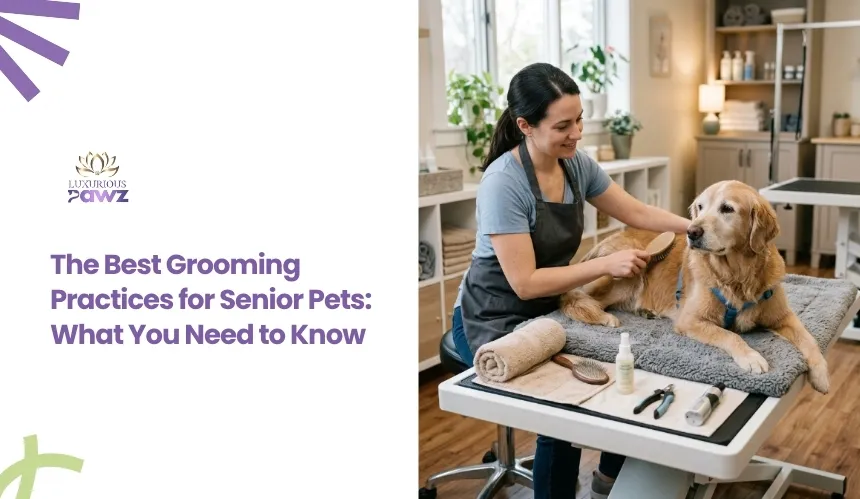
Senior pets often need grooming that is gentler, slower, and more closely tied to their physical comfort. Aging skin, weaker joints, coat changes, and reduced tolerance can make routine brushing, bathing, and nail care more difficult than before.
The right grooming approach reduces discomfort, prevents hygiene-related problems, and helps owners notice early changes in skin, coat, mobility, or behavior. This guide explains how to groom older dogs and cats safely while supporting their long-term comfort and cleanliness.
Essential Grooming Practices For Senior Pets
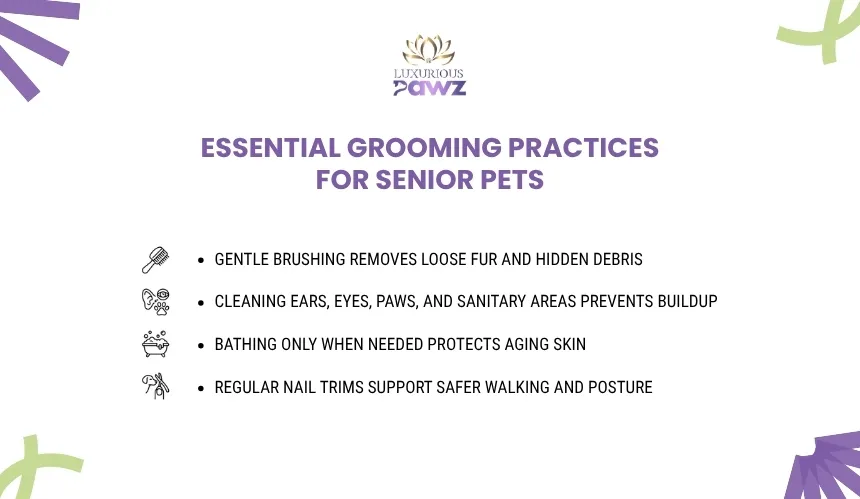
Senior pet grooming should focus on comfort, hygiene, and early detection of physical changes. The routine should be gentle enough for aging skin and joints while still preventing coat buildup, nail problems, and infection risks.
Step 01- Brush Gently And Regularly
Regular brushing removes loose fur, dander, and debris before they collect close to the skin. For senior pets, this reduces matting, improves coat airflow, and prevents painful pulling on thin or sensitive skin. A soft slicker brush, bristle brush, grooming glove, or wide-tooth comb is often safer than aggressive deshedding tools.
Brushing also works as a basic health check. While moving through the coat, owners may notice lumps, scabs, redness, flaky skin, bald patches, parasites, or painful areas. Sudden flinching or resistance in one spot can signal soreness, irritation, or a deeper issue that needs attention.
Do You Know? The American Veterinary Medical Association reports that about 1 in 4 dogs develop cancer during their lifetime, and the risk rises to 1 in 2 for dogs aged 10 or older. This makes routine brushing more than coat care, since hands-on grooming can help owners notice unusual lumps, sores, or skin changes earlier. |
Step 02 - Clean Ears, Eyes, Paws, And Sanitary Areas
Targeted cleaning prevents buildup in areas that senior pets may no longer groom well on their own. Ears should be checked for wax, odor, redness, or discharge. Eye areas may need gentle wiping to remove tear residue, crusting, or staining without irritating nearby skin.
Paws and sanitary areas need regular checks because debris, urine residue, fecal matter, and moisture can collect around fur and skin. Keeping these areas clean reduces odor, matting, skin irritation, and infection risk, especially for pets with incontinence or limited mobility.
Step 03 - Bathe Only When Necessary
Senior pets usually need bathing based on condition, not a fixed schedule. Too many baths can strip natural oils, weaken the skin barrier, and increase dryness or itching. Lukewarm water and mild, pet-safe shampoo help clean the coat without irritating aging skin.
Drying should be complete but gentle. Moisture left in thick fur, skin folds, paws, or sanitary areas can create odor, yeast buildup, and bacterial irritation. Towels or a low-heat dryer setting can reduce stress while keeping the pet warm and comfortable.
In Glendale, CA, grooming sessions should always be done with close attention to a pet’s comfort, especially for senior animals that may be more sensitive to touch, water temperature, or handling. Signs such as flinching, stiffness, panting, or pulling away can indicate discomfort during the process. In such cases, adjusting the pace and being gentle is essential to ensure a safe experience during Pet Bathing in Glendale, CA.
Step 04 - Keep Nails Trimmed For Safer Movement
Long nails can change how a senior pet stands and walks. When nails press into the floor, they affect paw placement, reduce traction, and place extra strain on joints. This can be especially uncomfortable for pets with arthritis, weak hips, or balance issues.
Nail trims should be small and consistent rather than delayed until nails become overgrown. If the nails have grown longer or are dark, professional trimming may be safer. Careful nail care supports better grip, posture, and walking comfort.
In Glendale, CA, regular pet care routines are especially important due to active urban environments and seasonal changes that can affect a pet’s comfort and mobility. Overgrown nails can lead to discomfort, posture issues, and difficulty walking on hard surfaces. Maintaining proper nail health through Nail trimming in Glendale, CA, helps support better balance, reduces the risk of injury, and keeps pets more comfortable during daily movement around the home and outdoors.
How To Make Grooming Safer And Less Stressful for Senior Pets
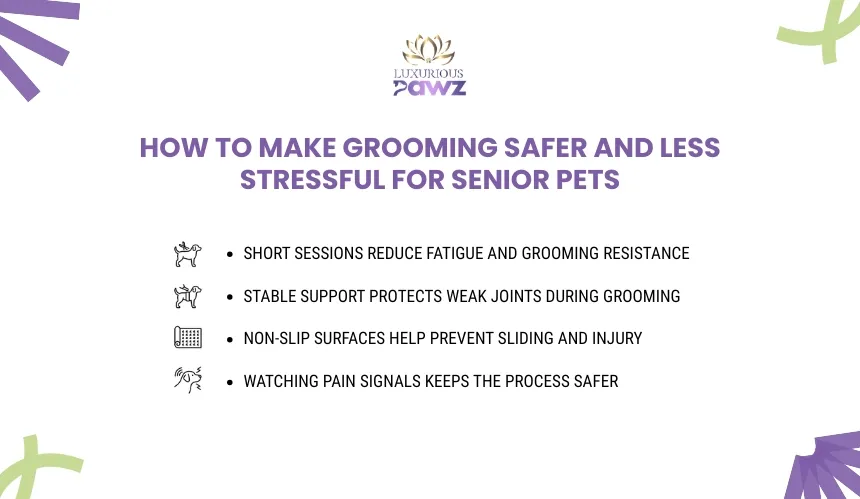
Senior pets may tolerate grooming differently because of joint pain, lower stamina, sensory changes, or anxiety. A safer approach reduces physical strain while keeping the pet calm, stable, and cooperative.
Use Shorter Sessions Instead Of One Long Appointment
Short grooming sessions reduce fatigue and prevent older pets from staying in one position for too long. A senior pet with physical weaknesses may become uncomfortable during extended brushing, bathing, or trimming, even if the grooming itself is gentle.
Breaking the routine into smaller steps allows time for rest, repositioning, and stress recovery. For example, brushing can be done one area at a time instead of completing the full coat in one sitting. This pacing lowers resistance and makes grooming easier to repeat consistently.
Support The Body During Brushing, Bathing, And Drying
Stable positioning is essential for senior pets because slippery surfaces and awkward angles can increase injury risk. Non-slip mats, soft towels, low grooming tables, and firm floor support help protect weak joints and reduce the chance of sliding during baths or drying.
Body support should be gentle and practical, not restrictive. Holding the chest, hips, or abdomen lightly can help pets stay balanced without forcing painful posture. Grooming should be adjusted around the pet’s comfort level, especially when lifting legs, turning the body, or handling stiff areas.
Do You Know? Cornell Feline Health Center notes that X-rays in one study showed 90% of cats over age 12 had evidence of degenerative joint disease. This supports using stable surfaces, careful positioning, and body support during grooming because resistance may come from joint pain rather than behavior alone. |
Watch For Pain Signals During Grooming
Senior pets may show discomfort through behavior before the cause becomes visible. Flinching, panting, trembling, growling, hiding, limping, sudden stiffness, or pulling away from a specific area can indicate pain, fear, skin irritation, or joint sensitivity.
These signals should change how the grooming session continues. Stop, give the pet time to settle, and check the affected area carefully. Repeated reactions in the same spot may point to a medical issue, such as an injury, skin inflammation, or a hidden lump that needs veterinary attention.
Common Grooming Mistakes To Avoid With Older Pets
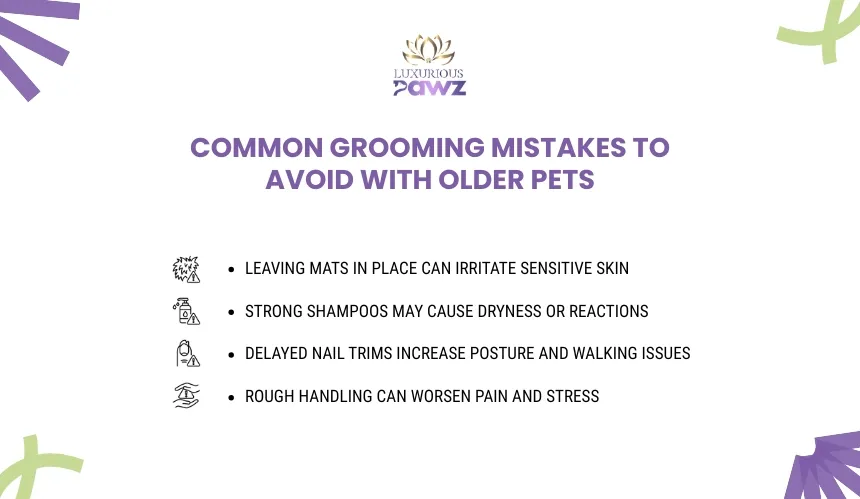
Older pets are less tolerant of rough handling, delayed grooming, and harsh products. Avoiding these mistakes reduces pain, skin irritation, mobility strain, and hygiene-related complications.
1. Ignoring Mats Because The Pet Seems Fragile
Mats should not be left in place just because a senior pet appears too delicate for grooming. Matted fur pulls against the skin every time the pet moves, which can create soreness, restrict airflow, and trap moisture close to the body. In older pets with thinner skin, this pressure can lead to redness, hot spots, hidden wounds, or secondary infection.
Delaying mat removal usually makes the problem harder to manage. Small tangles can tighten into dense clumps that cannot be brushed out safely at home. If mats are close to the skin, professional grooming may be needed to remove them without causing cuts, bruising, or unnecessary stress.
2. Using Strong Shampoos Or Heavily Scented Products
Senior pets need gentle grooming formulas because aging skin is more likely to become dry, reactive, or inflamed. Strong shampoos, deodorizing sprays, human products, and heavily scented cleansers can disrupt the skin barrier, causing itching, flaking, redness, or allergic reactions.
A mild, pet-safe shampoo is usually a better choice for routine bathing. Pets with chronic dryness, allergies, recurring odor, or skin disease may need a veterinarian-recommended formula instead of standard grooming products. The product should clean the coat without stripping natural oils or leaving irritating residue behind.
3. Delaying Nail Trims For Too Long
Long nails can change how an older pet places weight on the paws. When nails touch the floor before the paw pads settle properly, the pet may shift posture, lose traction, or place extra strain on the wrists, elbows, hips, and spine. This can make existing arthritis or joint stiffness more noticeable during movement.
Delayed nail care also makes trimming more difficult because the quick may extend farther into the nail. Smaller, more frequent trims reduce the risk of pain and bleeding while supporting safer walking. For pets that resist nail handling, professional trimming can prevent injury and reduce stress.
Do You Know? The Association for Pet Obesity Prevention reported that in 2022, 59% of dogs and 61% of cats were classified as overweight or having obesity. Extra body weight can increase pressure on joints and paws, making long nails, poor traction, and unstable movement more problematic for senior pets. |
When To Seek Professional Grooming Or Veterinary Advice for Aged Pets?
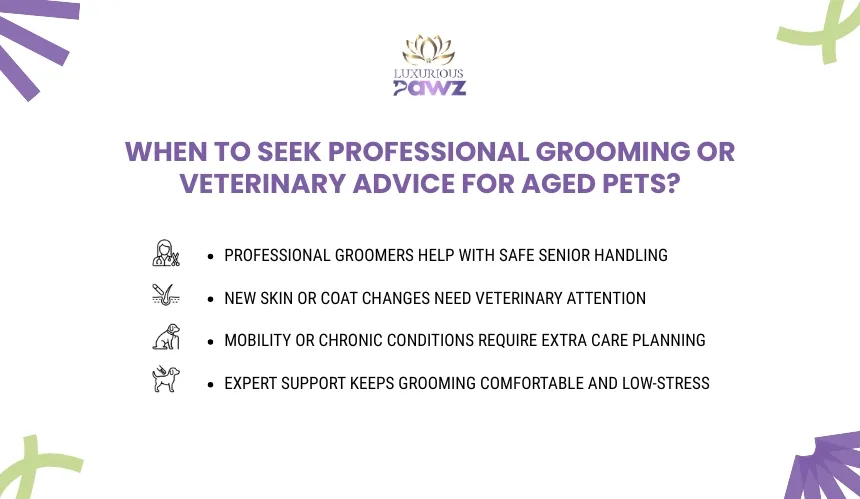
Senior pets may need expert support when home grooming becomes painful, stressful, or medically risky. A trained groomer can reduce handling strain, while a veterinarian can determine whether grooming-related changes are linked to infection, inflammation, parasites, allergies, hormonal imbalance, or chronic disease.
- Choose a groomer experienced with senior pets for safer positioning, non-slip support, low-stress handling, and appointments adapted to reduced stamina.
- Contact a vet when skin or coat changes are new, worsening, painful, spreading, or linked with odor, licking, bleeding, hair loss, or behavior changes.
- Seek medical guidance before grooming pets with mobility limitations, diabetes, incontinence, heart disease, neurological weakness, open wounds, or severe anxiety.
Senior pets need grooming that respects their pace, comfort, and physical limits. At Luxurious Pawz, each session is handled with patient care, gentle techniques, and close attention to skin, coat, nails, and mobility needs, giving older dogs and cats a calmer grooming experience built around comfort, cleanliness, and trust.
Frequently Asked Questions
How often should a senior pet be professionally groomed?
Senior pets usually need professional grooming every 4 to 8 weeks, depending on coat length, shedding level, mobility, skin condition, and hygiene needs. Long-haired pets, incontinent pets, or pets prone to mats may need shorter intervals. The goal is to prevent buildup before grooming becomes uncomfortable or medically difficult.
Why does my older dog suddenly hate being groomed?
A sudden dislike of grooming often points to pain, joint stiffness, skin irritation, hearing changes, vision loss, or fear linked to a previous uncomfortable experience. Resistance should not be treated as stubborn behavior. Shorter sessions, quieter handling, body support, and a veterinary check can help identify the trigger.
Should senior cats be groomed if they stop cleaning themselves?
Senior cats often reduce self-grooming because of arthritis, obesity, dental pain, or reduced flexibility. Regular brushing, gentle mat control, nail care, and sanitary cleaning can prevent coat clumping and skin irritation. A cat that suddenly stops grooming should also be checked for pain or illness.
Can grooming make arthritis pain worse in older pets?
Grooming can aggravate arthritis if the pet stands too long, slips on surfaces, or has legs lifted into uncomfortable positions. A safer grooming setup uses stable footing, supported posture, rest breaks, and minimal forced movement. Pets with advanced mobility issues may need modified grooming while sitting or lying down.
Is mobile grooming better for senior pets?
Mobile grooming can help senior pets that become anxious during travel, struggle with car rides, or tire easily in busy salon environments. It may reduce waiting time and environmental stress. However, the best choice depends on the groomer’s senior-pet experience, equipment, handling style, and the pet’s medical needs.
When is grooming at home no longer enough for an older pet?
Home grooming may not be enough when mats are tight, nails are overgrown, skin changes are painful, hygiene issues keep returning, or the pet becomes highly stressed during handling. Professional grooming or veterinary support is safer when routine care risks cuts, joint strain, infection, or worsening discomfort.