
- admin
Calming Your Pet Before Grooming: Tips for a Smooth Visit
Key takeaways
|
A grooming appointment should leave your pet clean, comfortable, and confident. Yet for many dogs and cats, the moment they sense the carrier coming out or hear the word “bath,” anxiety sets in. You might notice pacing, trembling, hiding under the bed, or sudden resistance to being touched. These reactions are not stubbornness. They are stress responses triggered by unfamiliar handling, new environments, and sensory overload.
Grooming anxiety can escalate quickly if it is not managed properly. Elevated cortisol levels, defensive behavior, and heightened sensitivity to touch can turn a simple nail trim or bath into a stressful experience for both the pet and the groomer. This guide focuses on practical, evidence-based strategies to calm your pet before grooming.
Why Do Pets Get Anxious Before Grooming?
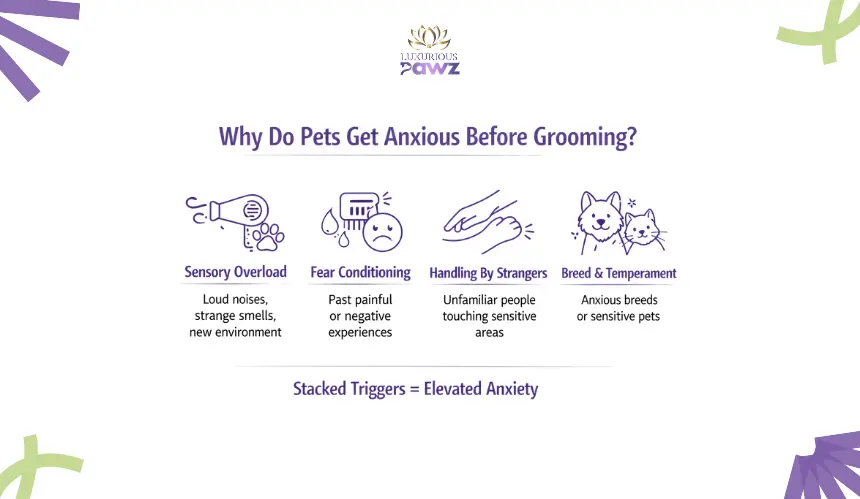
Before calming a nervous pet, it is important to understand the source of the anxiety. Grooming stress is usually triggered by identifiable factors that activate a dog’s or cat’s fight-or-flight response. When these triggers stack together, anxiety builds quickly.
- Sensory Overload From New Environments
Grooming salons introduce loud dryers, running water, unfamiliar scents, metal tables, and other animals. For pets with strong auditory sensitivity or territorial instincts, this sudden change can elevate heart rate and trigger a stress response. - Fear Conditioning From Past Experiences
Painful mat removal, nail quickening, or uncomfortable restraint can create lasting negative associations. Even one unpleasant session can condition a pet to react defensively the next time grooming tools appear. - Handling By Unfamiliar People
Being lifted, restrained, or touched in sensitive areas such as paws and ears by someone new can feel threatening. Pets that lack early handling exposure often show stronger resistance. - Breed Traits And Individual Temperament
Naturally anxious breeds, high-energy dogs, and sensitive cats process stimuli differently. Rescue pets or seniors may carry heightened vigilance due to past trauma or reduced tolerance to stress.
Understanding these root causes shifts the focus from controlling behavior to reducing triggers. Once you know what sparks anxiety, you can start identifying early warning signs before stress escalates.
How To Recognize Grooming Anxiety Before It Escalates
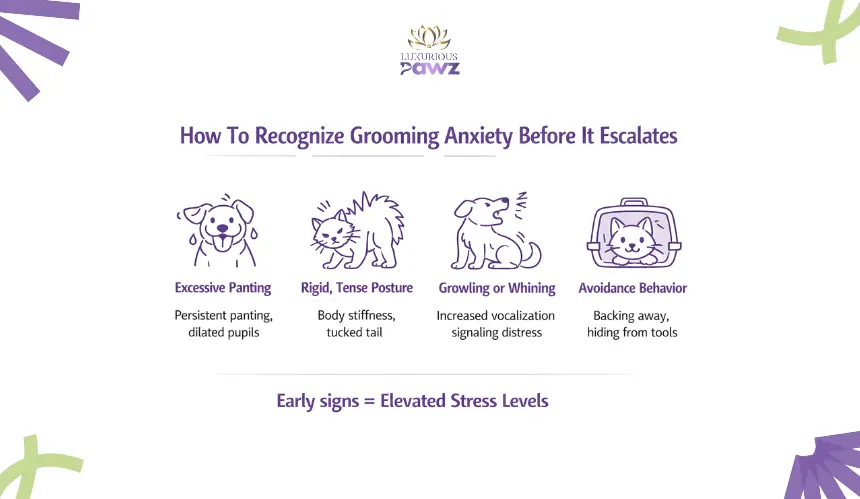
Early detection is what separates a routine grooming appointment from a stressful encounter. In professional grooming environments, experienced groomers are trained to read subtle stress signals before they turn into defensive behavior. Pet owners can apply the same observation standards at home.
Recognizing pre-groom stress indicators allows for timely intervention, structured desensitization, and safer handling practices.
Physical Stress Signals That Indicate Elevated Cortisol Levels
An anxious pet often shows measurable physiological responses before visible resistance begins. These signs reflect activation of the sympathetic nervous system.
- Persistent Panting Without Physical Exertion
Rapid breathing in a calm environment signals nervous arousal rather than temperature regulation. - Dilated Pupils And Fixed Stare
Enlarged pupils indicate heightened alertness and overstimulation. - Muscle Tension And Rigid Posture
A stiff body, tucked tail, or lowered head reflects defensive anticipation. - Excessive Shedding Or Dander Release
Stress-induced shedding is common in both dogs and cats during grooming anticipation.
Monitoring these responses helps determine whether the pet is approaching a stress threshold that could escalate during nail trimming, clipping, or bathing procedures.
Behavioral Red Flags Groomers Watch For
Behavioral cues often appear before physical restraint is required. These signals are critical because they reveal emotional discomfort rather than disobedience.
- Avoidance Of Grooming Tools Or Designated Areas
Refusal to approach the carrier, grooming brush, or bathing area indicates anticipatory stress. - Increased Vocalization Or Growling
Whining, yowling, or low growls signal defensive communication. - Sudden Hyperactivity Or Escape Attempts
Pacing, darting movements, or attempts to hide reflect acute anxiety. - Resistance To Paw Or Ear Handling
Pulling away from touch in sensitive areas suggests grooming-specific discomfort.
In professional grooming assessments, these behaviors guide adjustments in handling techniques and session pacing. At home, they signal the need for structured calming strategies before the appointment day.
Identifying anxiety early prevents reactive management. The next step focuses on proactive preparation days before the grooming session to reduce stress at its source.
How To Prepare Your Pet Days Before The Grooming Appointment
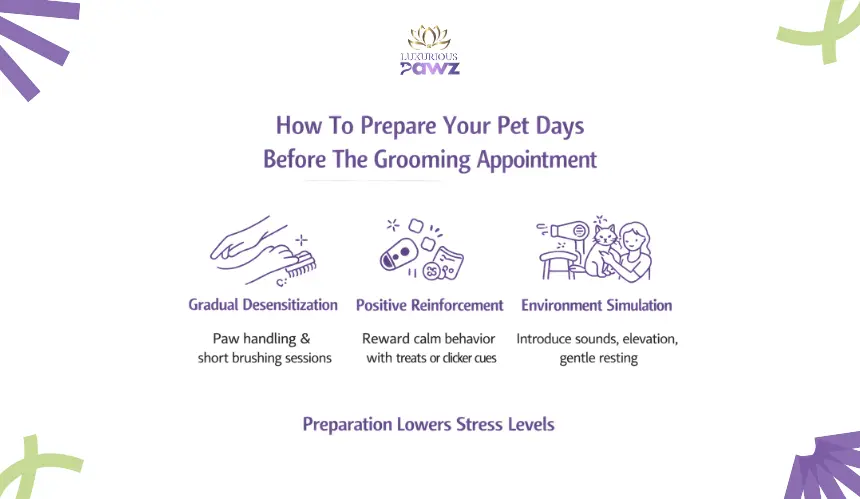
Professional grooming outcomes are strongly influenced by what happens before the appointment date. Experienced groomers consistently report that pets who receive pre-visit conditioning show lower stress scores, improved compliance during handling, and shorter session times. Preparation is not about last-minute calming. It is about structured exposure that builds confidence in controlled steps.
When done correctly, pre-groom preparation reduces sensory shock, minimizes defensive reactions, and supports safer handling during bathing, drying, clipping, and nail trimming procedures.
Gradual Desensitization to Reduce Grooming Anxiety
Desensitization training introduces grooming-related stimuli in low-intensity formats before the actual appointment. This method is widely used in canine behavioral conditioning and feline stress management.
- Controlled Paw And Ear Handling
Touch and hold paws for a few seconds daily. Gently lift ears and reward calm behavior. This builds tolerance to nail trimming and ear cleaning procedures. - Short, Structured Brushing Sessions
Begin with brief brushing intervals and gradually increase duration. Focus on mat-prone areas to reduce future discomfort during coat maintenance. - Exposure To Grooming Tools Without Use
Place clippers or brushes near the pet without activating them. Allow investigation without restraint to reduce tool-related fear conditioning.
Gradual exposure rewires associations. Instead of linking grooming tools to discomfort, the pet begins associating them with neutrality or reward.
What Role Does Positive Reinforcement Play In Pre-Groom Conditioning?
Behavioral reinforcement is foundational in fear-free grooming protocols. Reward-based systems create predictable outcomes, which lowers anticipatory anxiety.
- Treat And Reward Pairing With Handling
Provide high-value treats immediately after calm cooperation during touch exercises. - Verbal Markers Or Clicker Cues
Consistent verbal praise or clicker signals clarify expected behavior, improving response reliability. - Calm Release Techniques
Ending sessions while the pet remains relaxed prevents stress accumulation and strengthens confidence.
Positive reinforcement does not eliminate stress overnight. It builds resilience across repeated low-pressure interactions.
Can You Simulate The Grooming Environment At Home?
Environmental rehearsal significantly reduces sensory overload during salon visits. Professional groomers often recommend home simulation to minimize first-exposure shock.
- Low-Volume Dryer Sound Exposure
Play grooming dryer audio at minimal levels during relaxed moments. Gradually increase volume over several days. - Elevated Surface Familiarization
Encourage brief standing sessions on a stable table with supervision. Reward steady posture. - Short Restraint Practice Sessions
Light, gentle holds for a few seconds mimic positioning during trimming without creating panic.
These structured simulations increase environmental familiarity, which directly lowers cortisol spikes during real appointments.
Preparing in advance creates measurable improvements in grooming cooperation. Once foundational conditioning is in place, day-of-appointment strategies become more effective and predictable.
What Should You Do On The Day Of The Grooming Appointment?
Preparation builds the foundation, but execution on the appointment day determines how stable your pet remains during check-in, restraint, and handling. Professional grooming teams often evaluate a pet’s emotional state within the first few minutes of arrival. ‘
Pets that arrive regulated are easier to position, bathe, dry, and trim safely. The focus on this day should be on physiological balance and controlled transitions.
Exercise Before The Appointment
Energy management directly affects handling tolerance. A pet that has unspent energy is more likely to resist restraint or display reactive behavior during close-contact grooming procedures.
- Take dogs for a structured, moderate-paced walk lasting 20 to 30 minutes. This supports endorphin release and lowers baseline arousal levels.
- Use controlled interactive play instead of high-intensity activity that may cause overstimulation.
- For indoor cats, short engagement sessions with wand toys can reduce restlessness without elevating stress.
The objective is calm fatigue, not exhaustion. Properly balanced activity improves cooperation during bathing and nail trimming.
Natural Calming Aids
Certain calming supports are commonly integrated into professional pet care routines when anxiety is mild to moderate. These tools work best when paired with prior conditioning.
- Pheromone-based sprays designed for dogs or cats can promote emotional stability during transport and waiting periods.
- Compression wraps may provide gentle, consistent pressure that some dogs find reassuring.
- Veterinarian-approved calming supplements containing ingredients such as L-theanine may assist with anticipatory stress.
These aids should not replace behavioral preparation. Pets exhibiting severe fear responses may require consultation with a veterinarian or a certified behavior professional.
Transportation And Arrival Strategy
The transition from home to a grooming facility is often where anxiety intensifies. Grooming businesses frequently observe that rushed or chaotic arrivals increase resistance during intake procedures.
- Maintain a quiet vehicle environment with steady driving and minimal sudden stops.
- Avoid rushing from the parking to the reception. Controlled movement prevents stress spikes.
- Communicate specific sensitivities to the grooming team, including discomfort with paw handling or loud equipment.
A composed handover supports safer handling and allows the groomer to adjust pacing or techniques accordingly.
With the appointment day structured effectively, the next consideration involves first-time grooming experiences and how early exposure shapes long-term stress responses.
Special Considerations For Puppies And First-Time Grooming Visits
First grooming experiences shape long-term behavioral patterns. Professional groomers often observe that a pet’s initial exposure to bathing, clipping, and restraint determines future compliance levels.
Early encounters should focus on trust-building and controlled introduction rather than achieving a perfect aesthetic result. When the first session prioritizes emotional stability, long-term grooming resistance decreases significantly.
Young puppies, kittens, and adult pets visiting a grooming salon for the first time require a structured, low-pressure approach that supports behavioral imprinting.
How Should Early Grooming Exposure Be Structured?
Early exposure must be gradual and confidence-driven. Grooming businesses that follow structured onboarding protocols often schedule introductory sessions specifically designed for acclimation.
- Introduce grooming tools at home before the first appointment, including brushes, combs, and nail clippers. Familiarity reduces tool-related fear.
- Practice short table-standing sessions in a controlled environment to build stability and posture tolerance.
- Reinforce calm responses during brief handling of paws, ears, and tail to reduce defensive reactions during trimming.
This early conditioning period is especially effective during the puppy socialization window, when adaptability is highest.
Should The First Grooming Session Be Shorter Than Standard Appointments?
Yes, session length matters significantly for first-time visits. Experienced grooming professionals often recommend introductory or express sessions for young or unconditioned pets.
- Limit the initial appointment to essential services such as light trimming, sanitary cleaning, and gentle bathing.
- Avoid extensive coat reshaping or complex styling during the first visit.
- Prioritize positive handling experiences over cosmetic perfection.
A shorter, structured session prevents overstimulation and allows the pet to leave the salon without heightened cortisol levels. This creates a positive association with the grooming environment.
What If The Pet Shows Immediate Resistance During The First Visit?
Immediate resistance should not be forced into compliance. Ethical grooming standards prioritize safety and stress management.
- Groomers may pause procedures to allow emotional regulation before continuing.
- In some cases, services are split into multiple shorter sessions to avoid overwhelming the pet.
- Persistent severe anxiety may require collaboration with a veterinarian or a certified behavior specialist before future appointments.
The goal of the first grooming experience is not the completion of every service. It is establishing trust and reducing fear conditioning. When handled correctly, early grooming exposure builds predictable, stress-controlled behavior for future visits.
With first-time protocols addressed, the next step focuses on identifying situations where professional behavioral or veterinary support becomes necessary.
Grooming Considerations For Pets Across The Foothill And Northeast Los Angeles Communities
Pets living in the foothill neighborhoods surrounding the San Gabriel Mountains and the Northeast Los Angeles corridor often experience unique environmental influences that can heighten anxiety. Seasonal heat waves, common in areas like Pasadena and Glendale, can increase baseline irritability before appointments.
Fireworks during summer events and holiday celebrations across hillside communities frequently sensitize pets to loud noises, which may amplify fear responses to grooming dryers and equipment.
Urban density in neighborhoods near Eagle Rock and Highland Park also means increased exposure to traffic noise and crowded environments. For already sensitive pets, these stimuli can raise stress thresholds before they even enter the salon.
In such cases, pre-appointment behavioral consultation or veterinarian-guided calming strategies may be recommended to ensure safe and structured grooming sessions.
Professional assessment protects both pet welfare and grooming quality. Addressing severe anxiety with the right support system creates a stable foundation.
When Professional Support Is Necessary
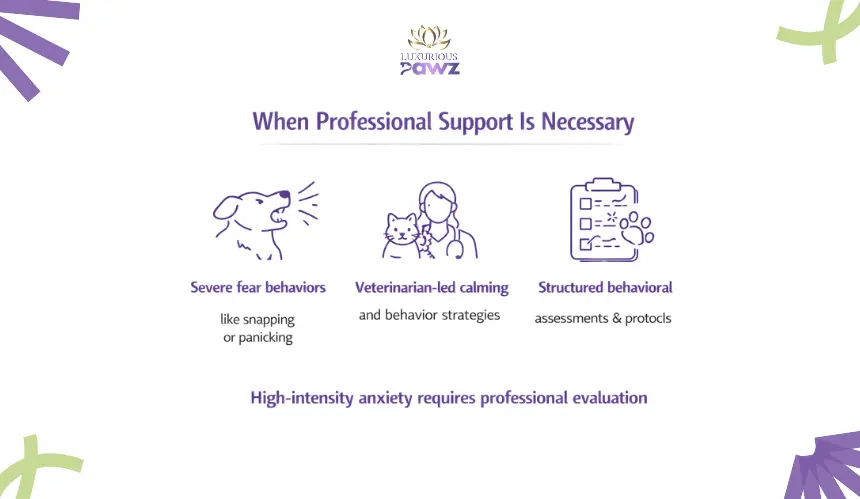
Some grooming-related stress responses exceed what structured home conditioning can resolve. Professional grooming facilities operate under strict animal welfare and liability standards. When a pet displays high-intensity fear behaviors, continuing the session without intervention increases the risk of injury and reinforces negative associations with grooming procedures.
Indicators such as repeated snapping during nail trimming, violent thrashing on the grooming table, uncontrolled vocal distress, or physiological symptoms like excessive drooling and panic-level trembling suggest the stress threshold has been surpassed. In these situations, ethical grooming protocol requires stopping or modifying the service rather than forcing completion.
Collaboration with a veterinarian or a certified behavior professional may be necessary for pets exhibiting severe anxiety patterns. Pre-groom behavioral assessments, structured desensitization plans, or medically supervised calming strategies can stabilize the pet before future appointments.
Grooming should feel calm, safe, and predictable for your pet, not overwhelming. At Luxurious Pawz, every appointment is approached with structured handling techniques, fear-aware grooming standards, and individualized attention tailored to your pet’s temperament.
Frequently Asked Questions
How long does a typical grooming appointment take for an anxious pet?
For pets that require additional emotional regulation breaks, grooming sessions may take 15 to 30 minutes longer than standard appointments.
A small dog receiving a bath and light trim may take around 90 minutes, while double-coated or large breeds may require up to 3 hours. Groomers often schedule buffer time to prevent rushing, which reduces handling pressure and improves safety.
Can I stay with my pet during the grooming session?
Most professional grooming salons restrict owner presence in the grooming area for safety, insurance, and workflow control. Pets frequently become more reactive when they can see but not access their owner.
Separation during the session often allows the groomer to establish structured control and maintain consistent handling protocols.
How often should nervous pets be professionally groomed?
Regular scheduling improves predictability and reduces resistance. For most dogs, grooming every 4 to 8 weeks supports coat maintenance and familiarity with the process.
Long-haired breeds or pets prone to matting may require more frequent appointments. Consistent intervals prevent coat neglect, which reduces discomfort during brushing and clipping.
Are mobile grooming services better for anxious pets?
Mobile grooming can benefit pets that struggle with high-traffic salon environments. The one-on-one setting and absence of multiple dryers may reduce overstimulation.
However, some pets feel more secure in structured salon environments with stable equipment and trained support staff. Suitability depends on the pet’s individual stress triggers.
What should I tell the groomer before the appointment?
Providing accurate behavioral and medical history improves service safety. Inform the groomer about skin sensitivities, previous grooming incidents, medication use, arthritis, or specific touch aversions.
Detailed intake information allows the grooming team to adjust tools, positioning, and service duration to match the pet’s tolerance level.