
- admin
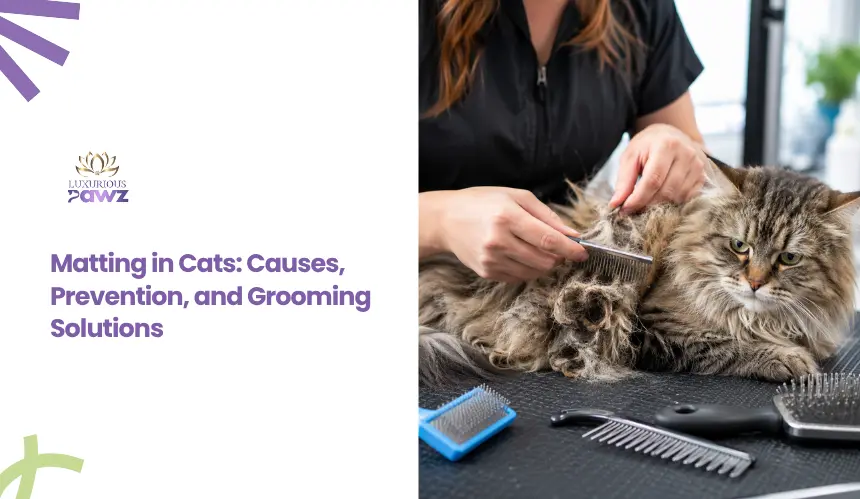
Matting in Cats: Causes, Prevention, and Grooming Solutions
Key Takeaways
|
Matting in cats can turn a soft, healthy coat into tight, uncomfortable tangles that pull on the skin and affect a cat’s daily comfort. Although mats may start as small knots, they can become painful when loose fur, friction, moisture, or reduced self-grooming allow the coat to clump together. This issue is especially common in long-haired cats, older cats, overweight cats, or cats that struggle to groom certain areas of the body.
Understanding matting early helps cat owners protect coat health, prevent skin irritation, and choose safer grooming care before the problem becomes difficult to manage. This blog discusses matting in cats, its causes, prevention, and grooming solutions.
Why Matting Happens In Cats And Why It Matters
Matting forms when loose fur, friction, oils, or debris bind the coat into dense clumps instead of allowing hair to shed naturally. Once the fur tightens, the mat can press against the skin and create discomfort that regular self-grooming cannot fix.
Loose Undercoat, Friction, And Dead Hair Buildup
Cats shed dead hair continuously, but not all loose fur falls away on its own. In dense-coated or long-haired cats, the undercoat can stay trapped beneath the outer guard hairs. When this loose fur is not removed through brushing or grooming, it starts to collect in small knots.
Friction makes the problem worse. Areas that rub during movement, such as the armpits, chest, belly, hind legs, and tail base, are more likely to develop compacted fur. As the cat walks, stretches, sleeps, or curls up, trapped hair twists together and tightens into mats.
Dead hair buildup also blocks airflow through the coat. This can make the fur feel heavy, uneven, and harder for the cat to manage during normal self-grooming.
Skin Oils, Moisture, Litter Dust, And Debris
Natural skin oils help protect a cat’s coat, but excess oil can make loose hair stick together. When oil mixes with shed fur, dust, or small particles from litter, the coat can clump more easily, especially around the lower body and back legs.
Moisture is another common trigger. Damp fur from bathing, water spills, drooling, or incomplete drying can tighten as it dries, causing loose hair to bind into thicker tangles. This is why mats can develop faster when a cat’s coat stays slightly wet or dirty.
Debris caught in the coat adds weight and texture, making smooth grooming difficult. Over time, these particles act like anchors that hold loose hair in place and increase the chance of mat formation.
How Mats Pull On The Skin And Affect Comfort
Mats are not just surface-level tangles. As they tighten, they pull connected hairs toward one compact point, creating constant tension on the skin underneath. This can make normal movements uncomfortable, especially when the mat sits near joints or high-motion areas.
Tight mats may also hide irritation, redness, sores, or trapped moisture below the coat. Because the skin is covered, early signs of discomfort can go unnoticed until the mat becomes painful or difficult to remove safely.
A cat with mats may avoid being touched, overgroom nearby areas, walk stiffly, or become less tolerant of brushing. These behavior changes often indicate that the mat is affecting comfort, not just coat appearance.
Common Causes Of Cat Matting By Coat Type And Lifestyle
Some cats develop mats faster because their coat structure, movement patterns, or grooming ability creates higher risk. Identifying the cause helps owners choose a grooming routine that matches the cat’s actual coat needs instead of reacting only after mats appear.
Long-Haired And Dense-Coated Cat Breeds
Long-haired and dense-coated cats have more surface area for loose fur to collect and bind. Breeds such as Persians, Maine Coons, Ragdolls, Himalayans, and Norwegian Forest Cats often have thick undercoats that trap shed hair beneath the visible topcoat.
The outer coat may look smooth while the lower layers are already beginning to clump. This makes routine combing more reliable than surface brushing alone, because mats usually start close to the skin where trapped undercoat, coat oils, and friction combine.
Did you know? A veterinary dermatology article on dvm360 states that cats can have 60,000 to 120,000 hairs per square inch, far more than dogs at about 15,000 hairs per square inch. That coat density explains why surface brushing may miss trapped undercoat and why combing close to the skin matters for mat prevention. |
How Do Aging, Arthritis, And Obesity Increase Matting?
Older cats and cats with arthritis may struggle to twist, bend, or reach areas along the back, hips, belly, and tail base. When self-grooming becomes limited, loose fur remains in place longer and begins to compact.
Obesity adds a similar risk because reduced flexibility prevents full-body grooming. A cat may still clean easy-to-reach areas but neglect lower-friction zones, creating uneven coat maintenance. Sudden matting in a cat that previously groomed well can also indicate pain, mobility decline, or a health issue that needs closer attention.
Did you know? NC State College of Veterinary Medicine reports that 90% of cats over 12 years old showed evidence of arthritis on X-rays, and a later NC State study found radiographic degenerative joint disease in just over 90% of all cats. This makes sudden matting in senior cats more than a coat issue because reduced grooming may reflect pain, stiffness, or limited mobility. |
High-Friction Areas Like Armpits, Belly, Chest, And Tail Base
Mats often develop in areas where the coat bends, rubs, or compresses during normal movement. The armpits, belly, chest, inner legs, behind the ears, and tail base are common mat-prone zones because fur repeatedly shifts against itself.
These areas can mat even when the rest of the coat looks healthy. The risk increases when a cat sleeps curled tightly, wears a collar, has a thick ruff, or moves with reduced flexibility. Checking these friction points early prevents small knots from tightening into mats that sit close to sensitive skin.
How To Prevent Mats Before They Become Painful
Prevention works best when loose hair is removed before it compresses into tight clumps. A consistent grooming routine reduces coat tension, supports skin airflow, and keeps small tangles from turning into painful mats.
How Often Should Cats Be Brushed To Prevent Mats?
Brushing frequency should match the cat’s coat density, shedding pattern, and grooming ability. Long-haired cats often need daily or near-daily brushing because their undercoat traps loose hair quickly. Medium-haired cats may need brushing several times a week, while short-haired cats usually need less frequent maintenance unless they shed heavily or have mobility issues.
The goal is not just to smooth the surface coat. Effective brushing must reach the lower coat layers where loose undercoat collects. Short, regular sessions are safer than waiting until knots form because dense mats become harder to separate without pulling the skin
In Sunland, CA, cats are often exposed to dry air and outdoor dust that can quickly make their coats look unkempt and trap loose fur close to the skin. Regular maintenance helps keep the coat clean and comfortable while reducing shedding around the home. Light brush out in Sunland, CA is a gentle grooming step that removes surface-level debris and loose hair without stressing the skin or coat.
Did you know? Cornell Feline Health Center notes that cats typically spend 30% to 50% of their day grooming themselves. When a cat cannot maintain that natural grooming rhythm because of age, pain, obesity, or stress, loose undercoat can stay trapped longer and increase the risk of mat formation. |
Using Combs, Slicker Brushes, And De-Matting Tools Correctly
A metal comb is useful for detecting early tangles because it catches resistance that fingers may miss. It should pass through the coat with minimal pulling. If the comb stops, the area should be worked gently from the outer edge of the tangle rather than dragged through the knot.
Slicker brushes can remove shed hair from thicker coats, but pressure control matters. Pressing too firmly can irritate the skin, especially around the belly, chest, and inner legs. De-matting tools should only be used on loose, minor tangles because sharp edges can cut close to the skin when mats are tight or compacted.
Checking Hidden Mat-Prone Areas During Grooming
Mats often form first in areas the cat cannot groom easily or where body movement creates repeated friction. The most common zones include the armpits, belly, groin, behind the ears, chest, back legs, and tail base.
These areas should be checked with fingers before brushing because hidden knots can sit close to the skin. Early detection keeps grooming low-stress and reduces the risk of sudden pulling. Cats that resist handling in these zones may need shorter sessions, calm positioning, or professional support before the mats become severe.
Managing Bathing, Drying, And Coat Moisture Safely
Moisture can tighten existing tangles and make loose hair bind together as the coat dries. Cats should not be bathed when tangles are already present unless the mats are removed first. Wet mats can shrink, harden, and sit closer to the skin.
After bathing or accidental wetting, the coat should be dried thoroughly with gentle towel drying and controlled airflow if the cat tolerates it. Damp areas under the belly, around the legs, and near the tail base need extra attention because trapped moisture can increase coat clumping and skin irritation risk.
In Sunland, CA, dry weather and outdoor dust can sometimes make a cat’s coat feel less clean or cause mild buildup over time. Regular gentle care helps maintain hygiene while keeping cats comfortable and stress-free. Cat-safe bath in Sunland, CA is a mild and careful grooming approach designed to clean the coat while ensuring safety, comfort, and minimal stress for sensitive cats.
Safe Grooming Solutions For Removing Cat Mats
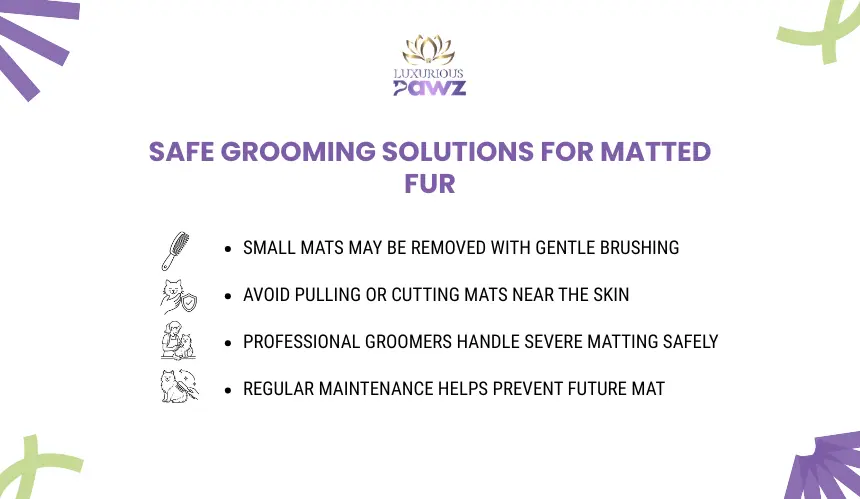
Cat mats should be removed based on how tight, close to the skin, and uncomfortable they are. Safe grooming protects the skin first because pulling or cutting compacted fur can cause pain, stress, or accidental injury.
When Is Gentle Detangling Appropriate?
Gentle detangling is appropriate only when the mat is small, loose, and not tightly attached to the skin. The fur should be separated with light finger work or slow combing without forcing tension through the coat.
The safest method is to hold the fur near the skin to reduce pulling, then work from the outer edge of the tangle inward. A wide-tooth comb or mat splitter may help with minor knots, but the process should stop if the cat reacts with pain, growling, sudden movement, or skin twitching.
Detangling should never become a prolonged struggle. Stress can make grooming harder in future sessions, and repeated pulling can irritate the skin beneath the mat.
Why Can Scissors Be Dangerous Around Tight Mats?
Scissors are risky because tight mats often pull the skin upward into the fur. What looks like a gap between the mat and the body may actually include stretched skin, especially around the belly, armpits, groin, and behind the ears.
Cutting into a mat without clear visibility can cause deep skin injuries. Cat skin is thin and flexible, so it can fold into the matted area without being obvious from the surface.
If a mat cannot be lifted and separated easily, scissors should be avoided. Clippers handled by a trained groomer or veterinary team are safer because they are designed to remove compacted coat with better control and less skin tension.
When Is Shaving Or Professional Grooming Safer?
Shaving or professional grooming is safer when mats are dense, widespread, close to the skin, or located in sensitive areas. A groomer can assess coat condition, use proper clipper blades, and remove mats without excessive pulling.
Professional handling is also useful for cats that resist brushing, bite, hide, or become highly stressed during grooming. Controlled restraint and low-stress grooming techniques reduce the chance of sudden movement while mats are being removed.
A full shave is not always necessary. In many cases, targeted mat removal, sanitary trimming, or a maintenance cut can solve the problem while preserving healthy coat areas.
What Signs Mean A Mat Needs Veterinary Help?
A mat may require veterinary care when there is redness, swelling, bleeding, odor, discharge, open skin, or visible pain. These signs can indicate skin irritation, infection, trapped moisture, or sores hidden beneath the coat.
Veterinary support is also safer for severe pelting, where mats cover large sections of the body like a tight shell. Cats with arthritis, advanced age, obesity, heart disease, breathing issues, or extreme grooming anxiety may need medical supervision or sedation for safe mat removal.
When pain, skin damage, or health risk is present, grooming becomes a medical handling issue rather than a routine coat-care task.
For dense coats, recurring tangles, or hidden mat buildup, luxurious pawz offers safe mat assessment, controlled de-shedding, targeted trimming, and gentle handling focused on coat health and skin protection. Schedule a grooming session before minor tangles become painful mats.
Frequently Asked Questions
Why does my cat keep getting mats even though I brush regularly?
Regular brushing may not prevent mats if the tool only smooths the topcoat and misses the dense undercoat near the skin. Mats often start in hidden friction zones, such as the armpits, belly, chest, and tail base. A metal comb can help detect resistance that a brush may pass over.
Can matted fur make my cat act differently?
Matted fur can change a cat’s behavior because tight clumps create skin tension during walking, stretching, resting, or being touched. A cat may hide, resist brushing, overgroom nearby areas, walk stiffly, or react sharply when handled. These changes often signal discomfort rather than simple grooming dislike.
Is it safe to use a detangling spray on cat mats?
Cat-safe detangling sprays may help with small, loose tangles, but they should not be used as a fix for tight mats close to the skin. Product residue, moisture, or excessive rubbing can worsen compacted fur. Any spray should be feline-safe, lightly applied, and followed by gentle combing without pulling.
Should I bathe my cat if the fur is already matted?
Bathing a matted cat can make the problem worse because wet mats often tighten as they dry. Water can shrink compacted fur closer to the skin and trap moisture underneath. Mats should be removed before bathing unless a groomer or veterinarian recommends a controlled cleaning approach for skin or hygiene reasons.
How do I know if my cat needs a groomer instead of home brushing?
A groomer is the safer choice when mats are close to the skin, cover multiple areas, return quickly, or cause your cat to resist handling. Professional grooming allows proper coat assessment, controlled clipping, sanitary trimming, and safer mat removal without excessive pulling or accidental skin injury.
Why do older cats suddenly start getting mats?
Older cats may develop mats because arthritis, stiffness, weight gain, dental pain, or reduced flexibility limits self-grooming. Sudden coat changes can also suggest discomfort or an underlying health issue. When a previously well-groomed cat starts matting, the grooming issue should be treated as a possible mobility or wellness signal.