
- admin
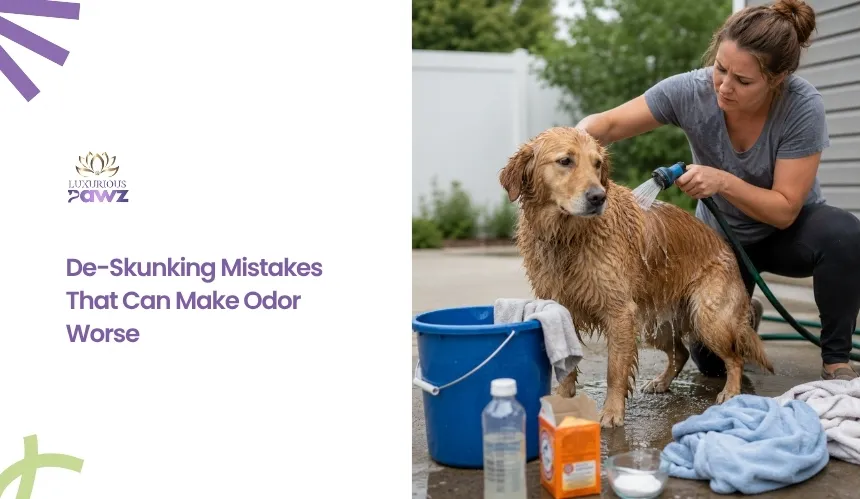
De-Skunking Mistakes That Can Make Odor Worse
Key Takeaways
|
Skunk spray is one of the most difficult odors to remove because its sulfur-based compounds quickly attach to fur, fabrics, and other surfaces. Many common cleaning mistakes, such as rinsing too early, masking the smell with fragrances, or delaying treatment, can make the odor spread and last longer. Understanding what causes these mistakes helps pet owners remove skunk odor more effectively while preventing repeated contamination.
Sunland, CA, sits along the foothills of the Angeles National Forest, where skunks are commonly seen in residential neighborhoods and nearby natural areas. Pets that spend time in backyards, parks, or on evening walks have a higher chance of encountering wildlife. If a skunk sprays your pet, the odor can quickly spread to your home, car, and furniture. Professional de-skunking in Sunland, CA neutralizes the odor at its source, helping protect your pet’s coat while preventing the smell from lingering throughout your home.
Common De-Skunking Mistakes That Trap or Spread the Odor
The first steps taken after a skunk encounter can significantly affect the success of odor removal. Skunk spray is not like ordinary dirt or pet odors because it contains oily compounds that resist simple washing. Using ineffective methods can spread the residue across the pet’s coat and surrounding areas, creating a much larger cleaning challenge.
Did You Know? Smithsonian’s National Zoo that a skunk can accurately spray its defensive musk from several feet away and usually aims for the face of a perceived threat. This defensive spray is so potent that it can temporarily irritate the eyes and nose of both animals and humans.
Should You Wash With Water Before Neutralizing Skunk Spray?
One of the most common de-skunking mistakes is immediately washing the pet with water. While rinsing may seem like the fastest solution, plain water does not break down the compounds responsible for skunk odor.
Skunk spray contains sulfur-based chemicals called thiols. These compounds have an oily structure that allows them to attach strongly to fur and resist being removed through normal bathing. When water is applied first, it can spread the oily residue across unaffected parts of the coat instead of eliminating it.
This issue is especially common with pets that have:
- Long or thick fur that holds onto moisture
- Double coats that trap oils beneath the surface
- Curly coats where residue can become difficult to reach
- Dense areas around the face, neck, and tail
Once the spray spreads, more areas require treatment, increasing the time and effort needed for complete odor removal. Instead of focusing only on the original contaminated area, the cleaning process must address the entire coat.
A more effective approach is neutralizing the odor-causing compounds before extensive rinsing. De-skunking solutions designed for this purpose work by breaking down the molecules responsible for the smell rather than simply moving them around. After neutralization, rinsing becomes more effective because the source of the odor has already been targeted.
Using Home Remedies That Don't Break Down Skunk Oils
Many pet owners turn to household remedies after a skunk encounter, but some methods only cover the odor rather than removing it. Strong scents may temporarily overpower the smell, but they do not eliminate the sulfur compounds attached to the pet’s coat.
Common examples include:
- Scented shampoos that only mask the odor
- Perfume sprays that create a mixture of fragrances
- Household cleaning products not designed for pets
- Remedies that focus on covering smells rather than neutralizing them
The reason these methods fail is that skunk odor is caused by specific chemical compounds, not just surface dirt. Removing the smell requires targeting those compounds directly.
Another mistake is assuming that stronger cleaning products will always produce better results. Using multiple products together without understanding their ingredients can irritate the skin, damage the coat, or create an ineffective cleaning process.
Professional de-skunking methods focus on odor neutralization rather than fragrance replacement. The goal is to chemically change or break down the odor-producing compounds so they no longer create the recognizable skunk smell.
Why Delaying Treatment Makes the Odor Harder to Remove
Timing is a major factor in successful de-skunking. The longer skunk spray remains on a pet, the more opportunities it has to spread onto additional surfaces.
Immediately after spraying, the contamination is usually limited to the areas directly exposed. However, normal pet behavior can quickly transfer the odor. A pet may rub against furniture, shake its coat, sleep on bedding, or travel in a vehicle, spreading the residue throughout different areas.
Commonly contaminated items include:
- Pet beds and blankets
- Collars and harnesses
- Towels used during cleaning
- Grooming equipment
- Carpets and upholstery
- Vehicle interiors
This creates a secondary odor problem where the pet may appear clean, but the smell returns because contaminated surfaces continue releasing odor-causing compounds.
Early treatment reduces the amount of contamination and prevents the odor from becoming a larger household issue. Addressing the problem quickly also makes the cleaning process more efficient because fewer surfaces require attention.
Why Some Cleaning Methods Make Skunk Odor Last Longer
Skunk odor often remains because many cleaning methods focus on removing visible residue instead of addressing the chemical source of the smell. Understanding how skunk compounds interact with different materials explains why some approaches fail even after multiple attempts.
Did You Know? According to Britannica, the powerful smell of skunk spray comes from sulfur-containing chemicals called thiols. Humans can detect some thiols at extremely low concentrations, which is why even tiny amounts of skunk residue can seem overwhelming.
How Skunk Oils Bond to Fur and Fabrics
Skunk spray is effective because it is designed to remain noticeable. The oily nature of the spray allows sulfur compounds to attach strongly to animal fur, clothing fibers, upholstery, and other porous materials.
Unlike water-based odors, skunk residue does not simply rinse away. The compounds can become trapped between individual hairs or absorbed into materials with small spaces where ordinary washing cannot fully reach.
Fur type plays a major role in how long the odor lasts. Pets with dense or heavy coats may retain more residue because the spray can penetrate deeper into the hair layers. Similarly, fabrics such as carpets, blankets, and upholstery can absorb the odor and release it slowly over time.
This is why cleaning only the pet may not solve the entire problem. Any surface that has absorbed skunk residue can continue contributing to lingering odor.
Why Scrubbing or Repeated Washing Isn't Enough
Repeated washing is another common mistake because it creates the impression that more cleaning automatically leads to better results. However, ordinary shampoo and aggressive scrubbing do not necessarily remove the sulfur compounds responsible for skunk odor.
Scrubbing too aggressively may spread the oily residue deeper into the coat rather than removing it. It can also irritate the pet’s skin, especially when multiple washing attempts are performed within a short period.
Frequent washing with unsuitable products may remove natural skin oils, causing dryness and discomfort while leaving the original odor problem unresolved.
Effective odor removal depends on using the right type of cleaning approach. The focus should be on neutralizing the compounds causing the smell rather than repeatedly washing the surface where those compounds are attached.
Cross-Contamination Around the Home and Vehicle
One of the most overlooked causes of lingering skunk odor is cross-contamination. Even after the pet has been cleaned, contaminated items around the home can continue releasing the smell.
For example, a dog that returns to a contaminated bed after bathing may quickly pick up the odor again. Similarly, a collar or harness that still contains skunk residue can transfer the smell back onto clean fur.
Areas that commonly require attention include:
- Sleeping areas
- Transportation spaces
- Grooming tools
- Floors and carpets
- Soft furniture
- Pet accessories
A complete de-skunking process involves treating both the pet and the environment. Ignoring contaminated surfaces often leads to repeated odor problems and unnecessary additional cleaning.
How to Remove Skunk Odor Without Making It Worse
Effective de-skunking requires more than repeated bathing or covering the smell with stronger fragrances. The goal is to neutralize the odor-causing compounds while preventing further spread. A structured approach helps remove skunk residue from the pet, surrounding materials, and areas where contamination may have occurred.
Neutralize Before Rinsing
One of the most important steps in successful de-skunking is neutralizing the odor before extensive rinsing begins. Skunk spray contains sulfur-based compounds that need to be chemically broken down rather than simply washed away.
A neutralizing treatment works by targeting the molecules responsible for the odor. Instead of allowing the residue to spread throughout the coat, the treatment helps reduce the strength of the compounds before they are removed.
The order of the cleaning process matters because applying water too early can distribute the oily residue. By addressing the source of the odor first, the later rinsing stage becomes more effective.
A proper de-skunking process typically involves:
- Identifying the areas with the strongest exposure
- Applying an appropriate odor-neutralizing solution
- Allowing the treatment to work as directed
- Rinsing thoroughly after neutralization
- Checking for remaining odor after drying
This approach reduces the chance of leaving behind hidden residue that can cause the smell to return later.
Clean Contaminated Accessories and Surfaces Separately
Many de-skunking attempts fail because attention is focused only on the pet. However, any item that contacts the sprayed coat can become a secondary source of odor.
Pet accessories and household materials can absorb skunk residue because many fabrics contain tiny fibers that trap oily compounds. These trapped compounds may continue releasing odor even after the original incident has passed.
Items that may require separate cleaning include:
- Collars and harnesses
- Leashes
- Pet bedding
- Blankets and towels
- Grooming brushes
- Pet carriers
- Vehicle seats
- Furniture covers
Cleaning these items separately prevents the odor from transferring back onto the pet. For example, a freshly cleaned dog can quickly regain a skunk smell if it returns to a contaminated bed or wears an untreated collar.
Environmental cleaning is especially important when the pet spends significant time indoors. Skunk odor can become embedded in household materials, creating a cycle where the smell repeatedly returns despite proper pet treatment.
Know When Professional De-Skunking Is the Better Option
While mild skunk exposure may be manageable at home, some situations require professional assistance. Professional groomers have experience handling odor removal while protecting the pet’s skin, coat, and overall comfort.
Professional de-skunking may be beneficial when:
- The spray exposure is extensive
- The odor remains after proper treatment
- The pet has a thick or difficult-to-clean coat
- The spray affected sensitive areas
- Multiple cleaning attempts have failed
Experienced groomers use specialized products and controlled techniques designed specifically for odor neutralization. They can also identify areas where residue remains trapped, such as dense undercoat areas or difficult-to-reach sections of the body.
Attempting repeated home treatments without success can sometimes create additional problems, including skin irritation from excessive washing. Professional evaluation can provide a more efficient solution when standard cleaning methods are not enough.
How to Prevent Lingering Skunk Odor After Treatment
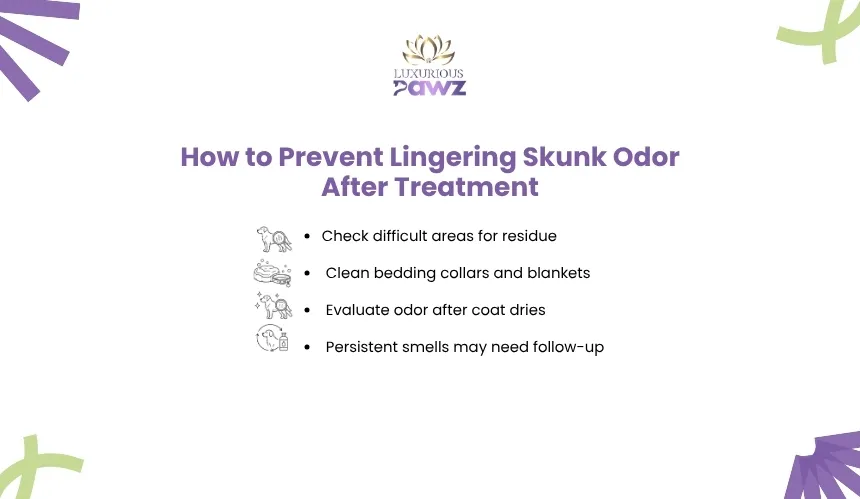
Removing the initial odor is only part of the process. Lingering skunk smell often occurs because small amounts of residue remain hidden in fur, accessories, or household surfaces. Proper follow-up care reduces the chance of odor returning after the pet appears clean.
Check for Missed Areas on the Pet
Some areas of a pet’s body are more likely to retain skunk residue because they are difficult to clean thoroughly. Even a small amount of remaining contamination can become noticeable again when the coat becomes wet.
Common areas that require careful inspection include:
- Around the ears
- Neck and collar area
- Under the chin
- Chest and shoulder areas
- Between the legs
- Tail and rear coat areas
Pets with longer or thicker fur may require additional attention because odor-causing compounds can remain hidden beneath the outer layer of hair.
After cleaning, allow the coat to dry completely before evaluating the results. Wet fur can temporarily hide or change how odors are detected, making it difficult to determine whether treatment was fully successful.
A thorough inspection after drying helps identify whether another treatment is needed before the odor spreads again.
Wash Bedding, Collars, and Other Contact Items
A clean pet can become contaminated again if frequently used items still contain skunk residue. Many owners overlook accessories because they focus entirely on the animal, but these items often play a major role in recurring odor.
Collars, harnesses, bedding, and blankets should be cleaned because they remain in direct contact with the pet for extended periods.
Particular attention should be given to:
- Fabric collars that absorb oils
- Soft bedding materials
- Towels used during the cleaning process
- Pet clothing
- Travel blankets
If an item continues holding the odor after cleaning, replacement may be more practical than repeated washing. Porous materials can sometimes retain sulfur compounds even after multiple cleaning attempts.
Maintaining clean surroundings after treatment helps protect the results of the de-skunking process and prevents unnecessary recontamination.
Monitor for Persistent Odor That Needs Follow-Up Treatment
A common misconception is that skunk odor should disappear immediately after one cleaning session. In reality, some cases require follow-up treatment, especially when exposure was severe or the residue reached multiple surfaces.
Persistent odor may become noticeable when:
- The pet gets wet
- The coat becomes humid
- The pet returns to contaminated areas
- Hidden residue remains in dense fur
If the smell continues despite proper cleaning, the issue may not be a failed treatment but rather remaining contamination in areas that were missed.
A follow-up assessment can help determine whether another de-skunking treatment is needed or whether professional grooming support would provide a better solution.
Sunland, CA, experiences warm, dry weather for much of the year, allowing dust, pollen, and outdoor debris to build up on pets’ coats after walks and playtime. Regular Pet Bathing helps remove these contaminants, supports healthy skin and fur, and keeps pets clean and comfortable. For pets that frequently visit local parks, neighborhood streets, or nearby hiking areas, routine bathing is an important part of maintaining their overall hygiene and freshness.
Give your pet the care they deserve with Luxurious Pawz. Our experienced team is committed to providing gentle, professional grooming tailored to your pet’s unique needs. From maintaining a clean, healthy coat to creating a comfortable grooming experience, we focus on your pet’s well-being every step of the way. Book an appointment today and let your furry companion enjoy the quality care and attention they deserve.
Frequently Asked Questions
Can skunk spray make my pet's eyes uncomfortable?
Yes. If skunk spray gets into your pet’s eyes, it may cause temporary irritation, redness, excessive tearing, or squinting. Gently flushing the eyes with clean water can help, but if the irritation persists or your pet appears to be in pain, it’s best to seek veterinary advice.
Does skunk odor become stronger when a pet gets wet?
Yes. Even after cleaning, small amounts of skunk residue trapped in the coat can become more noticeable when the fur gets wet or humid. This may indicate that some odor-causing compounds were not completely removed and additional treatment is needed.
How can I reduce the chances of my pet encountering a skunk?
Keeping pets on a leash during evening walks, securing garbage bins, removing outdoor food sources, and supervising pets in the yard can reduce the likelihood of skunk encounters. Skunks are generally nocturnal and prefer to avoid people and pets when possible.