
- admin
Expert Guide: Health & Grooming Benefits of Dog Baths
A Quick Answer: Regular dog baths provide far more than a clean, fresh-smelling coat. They support healthier skin, reduce irritants, help control shedding, and offer important hygiene benefits that improve a dog’s overall comfort. For many dogs, a well-timed bath also strengthens the skin barrier, washes away allergens, and makes it easier to spot early signs of irritation or developing health issues. |
Pet owners often view bathing as a simple grooming task, but it has deeper wellness value when it is tailored to a dog’s coat type, activity level, and skin condition. Factors like seasonal changes, environmental exposure, and breed-specific needs influence how effective a bath can be. Understanding these elements helps owners create a bathing routine that supports long-term health and improves daily comfort for the dog.
This guide explores the complete role of dog baths from a health, hygiene, and wellness perspective while helping readers make informed choices about products, techniques, and bathing schedules.
Understanding Why Dog Baths Matter
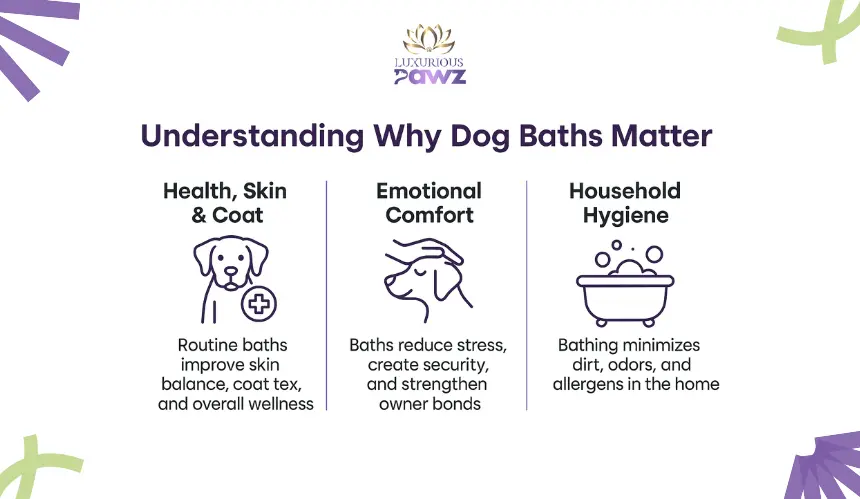
Dog baths play an essential role in supporting long-term health, skin comfort, and coat quality. Many of these benefits are not immediately visible, yet they contribute significantly to a dog’s overall wellness when bathing becomes a consistent routine.
Did you know? Sources indicate skin and coat concerns represent a significant portion of canine veterinary cases, with some veterinary clinics citing approximately 25% of dog visits involving these issues. |
How Do Regular Dog Baths Support Skin and Coat Health?
Healthy skin creates the foundation for a glossy, resilient coat, and baths help maintain that balance. Proper cleansing removes buildup that interferes with natural oils and keeps the skin’s protective barrier functioning at its best.
Bathing helps regulate oil production, prevent clogged follicles, and maintain hydration levels that reduce dryness and irritation. These improvements support better shedding cycles, smoother coat texture, and easier brushing. Balanced skin chemistry also minimizes itching, flaking, and discomfort that often develop when the coat remains unwashed for long periods.
What Emotional and Behavioral Benefits Do Dogs Gain From Bathing?
Dogs respond to comfort, routine, and touch, which makes bathing a meaningful experience beyond physical cleanliness. When handled gently and consistently, many dogs form positive associations with bath time.
Baths can reduce stress by creating a calm, predictable environment that helps sensitive dogs feel more secure. The process also strengthens owner bonding because the dog receives focused attention and physical care. As the coat becomes cleaner and more comfortable, dogs often show improved confidence during daily activities.
Why Are Pet Baths Important for Improving Hygiene and Household Cleanliness?
Clean fur plays only a small part in a dog’s overall hygiene. Baths reduce dirt, bacteria, and environmental allergens that collect on the coat and spread throughout the home.
Bathing helps remove odors at the source, not just on the surface. It also minimizes the amount of dander and microscopic debris that can settle on furniture, carpets, and bedding.
By rinsing away outdoor contaminants and reducing the presence of fleas or pollen stuck in the coat, baths contribute to a healthier living space for both pets and their owners.
When, Why, and How Often Dogs Need a Bath
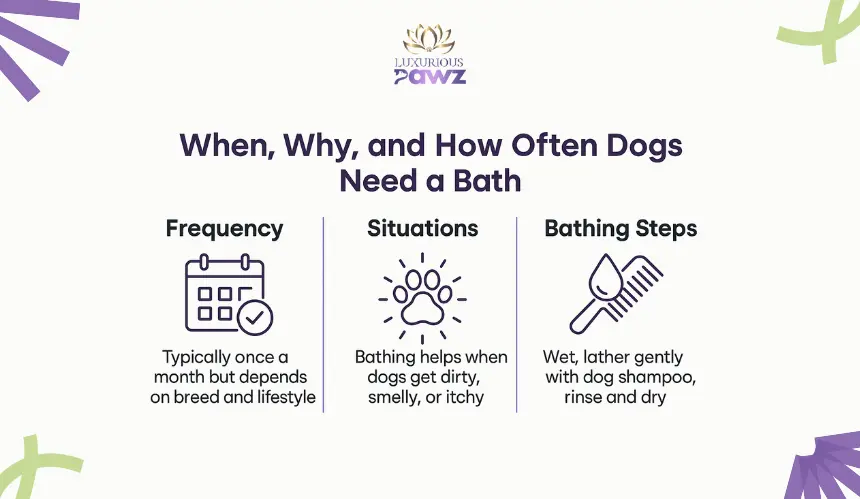
Bath frequency varies widely among dogs, and understanding the factors that shape bathing needs helps owners maintain healthy skin and coat conditions. Each dog requires a schedule that aligns with their lifestyle, health, and coat structure.
What Factors Influence How Often a Dog Should Be Bathed?
Many elements determine the right bathing routine, and these must be evaluated to avoid irritation or dry skin.
Breed characteristics, activity levels, and environmental exposure all contribute to how quickly dirt and allergens accumulate. Dogs with sensitive or allergy-prone skin may need specialized schedules recommended by a professional.
Outdoor dogs often require more frequent baths than pets who stay indoors, especially during high pollen seasons. These considerations help determine a balanced routine tailored to each dog’s needs.
Did you know? Pollen particles can cling to a dog’s coat for hours, meaning regular baths help minimize allergy triggers inside the home. |
How Does Coat Type Affect the Ideal Bathing Frequency?
Coat type is one of the strongest indicators of how frequently a dog should be bathed, and understanding these differences helps maintain proper skin moisture and coat integrity.
Short-haired dogs often benefit from baths every three to five weeks due to easier oil distribution along the coat. Medium-coated dogs may need baths every four to six weeks, especially if they shed consistently throughout the year.
Long-haired or silky-coated breeds require closer attention due to tangling and debris retention, making baths every three to four weeks more appropriate.
Double-coated breeds usually need fewer baths, often every six to eight weeks, since excessive washing can disrupt the natural insulation their coat provides.
What Signs Show That a Dog Needs a Bath Soon?
Dogs typically communicate their bathing needs through visible and sensory cues. Recognizing these signs helps owners respond before discomfort develops.
A lingering odor, oily residue, or visible dirt are common indicators that a bath is overdue. Increased scratching or dull coat appearance may also signal the need for cleansing. When these cues appear, a timely bath restores coat comfort, removes irritants, and supports better skin function.
Step-by-Step Dog Bathing Guide
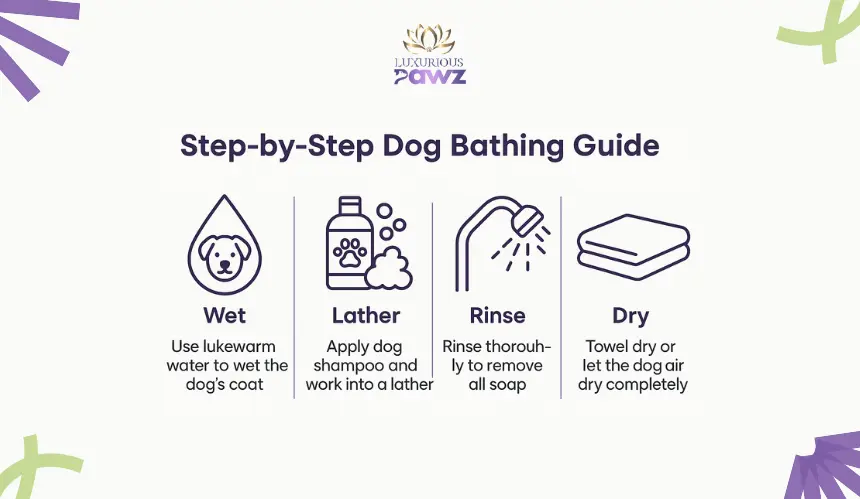
A clear set of steps helps dog owners give their pets a comfortable, effective bath that supports both coat health and overall hygiene. Each stage of the process contributes to better cleansing, easier maintenance, and a more relaxed experience for the dog.
Step 1: Preparing the Dog and The Bathing Area
Preparation sets the foundation for a calm and efficient bath by reducing stress for both the dog and the owner.
Start by brushing the coat to remove loose fur and mild tangles that can trap dirt. This allows shampoo to reach the skin more effectively and prevents mats from tightening during washing. Gather towels, shampoo, brushes, and a slip-resistant mat so everything is accessible.
Adjust the water to a lukewarm temperature that feels comfortable to the touch. These preparations create a smooth start and help the dog feel more secure throughout the process.
Step 2: Proper Washing Techniques for Different Coat Types
Proper washing ensures that the coat is cleansed evenly without irritating the skin or leaving residue behind.
Wet the coat completely, including the undercoat if the dog has one, because dry patches can lead to uneven cleaning. Apply shampoo from the neck downward and massage it gently into the coat using circular motions.
Focus on areas that collect more buildup such as the belly, legs, and tail. Rinse slowly and thoroughly until the water runs clear to prevent leftover product from causing dryness or discomfort.
Step 3: Drying Techniques That Improve Coat Health
Drying plays a major role in maintaining coat health and preventing moisture-related issues.
Start by pressing a towel gently along the coat to absorb excess water without causing friction. Allow short-haired dogs to air dry in a warm environment, but avoid letting long-coated or double-coated dogs stay damp for extended periods.
For dogs that tolerate it, a low-heat blow dryer can speed up drying and reduce the chance of mats forming. Make sure the coat is fully dry before brushing or allowing the dog outside.
Benefits of Dog Baths That Most Owners Overlook
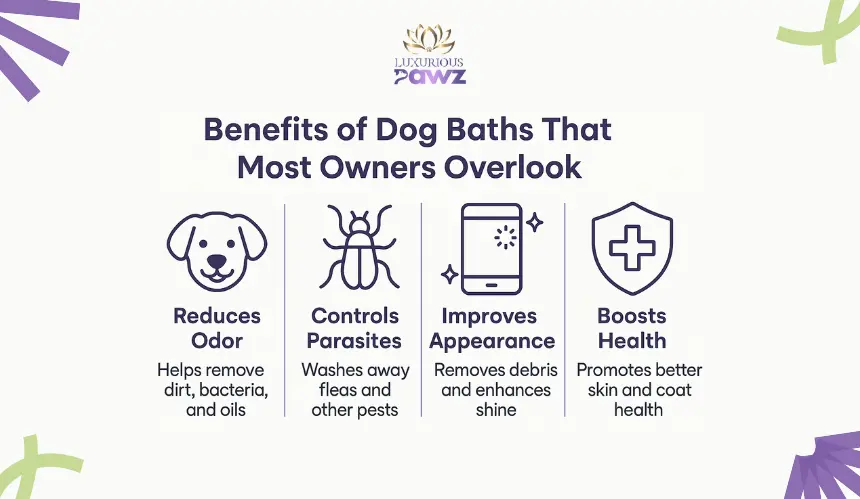
Many pet owners think of baths as a simple grooming task, but a good bath can do far more for a dog’s overall comfort and well-being.
When done consistently and with the right care, bathing becomes an experience that supports long-term health in ways that are easy to miss at first glance.
1. Early Detection of Skin Conditions and Parasites
Bath time gives owners a chance to look beneath the surface of the coat and notice changes they may not catch during everyday interaction. With the fur fully wet, small bumps, irritated patches, or areas of redness become easier to see.
This closer look helps uncover issues like dryness, hotspots, or early signs of fleas before they cause major discomfort. Catching these changes early gives dogs relief sooner and reassures owners that they are protecting their pet’s health.
2. Reducing Indoor Allergens and Improving Home Hygiene
A clean coat brings more comfort not only to the dog but also to the entire household. Bathing removes pollen, dust, loose dander, and tiny particles that cling to fur after outdoor play. These allergens often spread around the home and affect sensitive family members.
When the coat is freshly washed, the home feels cleaner, the air smells fresher, and everyone can relax a bit more knowing the environment is healthier.
3. Improving Coat Longevity and Minimizing Shedding
A well-bathed coat feels softer, looks brighter, and holds up better over time. Clean fur allows natural oils to distribute evenly, which strengthens each strand and supports long-term coat quality.
Bathing also helps release loose hair that would otherwise scatter around the home, especially during seasonal shedding periods. For many owners, seeing their dog’s coat shine a little brighter brings an emotional sense of reassurance that their care is making a difference.
Professional Dog Bathing vs. At-Home Baths
Choosing between at-home baths and professional grooming depends on a dog’s needs, the owner’s comfort level, and the amount of care the coat requires. Understanding when each option is most helpful makes the decision much easier.
When At-Home Bathing Is Best
Bathing at home works well for dogs with simple coat care needs or owners who enjoy hands-on bonding time. It offers a relaxed environment and gives dogs the comfort of familiar surroundings. Light maintenance, mild dirt buildup, and regular freshening sessions are usually manageable at home.
When Professional Grooming Is Worth It
Professional bathing becomes valuable when the coat is complex or when skin concerns require specialized products. Professional pet groomers use equipment that reaches deeper into dense or long coats and can address mats or buildup safely. Their experience helps reduce stress for dogs that struggle during home baths.
Common Dog Bathing Mistakes and How to Avoid Them
Even well-intentioned dog owners sometimes make small mistakes during bath time. These errors can affect skin comfort, coat quality, and the overall bathing experience. Understanding these issues helps create a safer, smoother routine for the dog.
1. Using Human Products on Dogs
Human shampoos and soaps do not match the natural pH balance of a dog’s skin, which can lead to irritation.
- Skin barrier disruption: Human products can strip essential oils and weaken the dog’s natural protective layer.
- Increased itchiness: The wrong formula often creates dryness that leads to scratching.
- Irritation in sensitive areas: Fragrances or strong detergents may cause redness and discomfort.
2. Incorrect Water Temperature or Rinsing Methods
Water that is too hot, too cold, or poorly distributed can make the dog uncomfortable and affect coat cleansing.
- Temperature discomfort: Lukewarm water helps prevent stress during the bath.
- Missed product removal: Incomplete rinsing leaves residue that causes dryness or flaking.
- Uneven wetting: Dry patches prevent shampoo from reaching the skin evenly.
3. Over-Bathing and Under-Bathing Risks
Bath frequency affects the skin’s natural balance, and inconsistency can lead to preventable issues.
- Dryness from over-bathing: Too many baths remove moisture and disrupt natural oil production.
- Odor and buildup from under-bathing: Going too long between washes allows dirt and oils to accumulate.
- Misaligned routine: Bath schedules should match coat type, lifestyle, and skin sensitivity.
If you want your dog to feel cleaner, happier, and more comfortable year-round, the grooming specialists at Luxurious Pawz are here to help. Our gentle care, quality products, and personalized bathing routines give every dog the comfort and confidence they deserve. Contact us and treat your pet to a bath experience that supports real wellness and lasting coat health.
Frequently Asked Questions
Can diet influence how effective a dog’s bath routine is?
Yes. A nutrient-rich diet supports healthier skin and improves coat texture, which makes baths more effective. Dogs that receive adequate omega fatty acids, vitamins, and hydration often show better coat shine and less dryness after bathing.
Are there certain times of day that work best for bathing a dog?
Many dogs respond better to baths when they are already calm, such as after a walk or in the early evening. Bathing during quiet parts of the day helps reduce stress and creates a smoother experience for both the owner and the dog.
How can owners help dogs who feel anxious during bath time?
Comfort-focused techniques like gentle handling, slow water introduction, and offering treats can help reduce anxiety. Some owners also use calming music or create a warm, stable environment to help the dog feel secure during bathing.
Do seasonal allergies affect how a dog’s coat reacts to bathing?
Yes. During high pollen months, dogs may experience more skin irritation or buildup on their coat. Bathing during allergy seasons helps rinse away irritants and provides relief, especially for dogs with sensitive skin.
What are signs that a dog might need a specialized bathing routine?
Indicators such as persistent dryness, recurring odor, unusual texture changes, or repeated scratching suggest the dog may need a tailored bathing plan. This often includes specific products or adjusted bath frequency recommended by a grooming professional.