
- admin
Best Dog-Friendly Parks in Pasadena, CA (And Grooming Tips After a Day Out)
Key Takeaways
|
Finding the right dog-friendly park in Pasadena depends on more than location. Dog size, energy level, leash rules, crowd patterns, shade, and surface type all affect how safe and comfortable the outing feels.A good park visit can turn stressful when dogs come home with dusty coats, irritated paws, burrs, loose fur, or outdoor allergens.
This guide explains the best dog-friendly park options in Pasadena, CA, and how simple grooming steps after the visit can protect your dog’s coat, skin, and paws.
Best Dog-Friendly Parks In Pasadena For Different Types Of Outings
Pasadena has different dog-friendly park options depending on whether a dog needs open running space, a short urban outing, or a nearby fenced alternative. The right choice depends on the dog’s size, energy level, comfort around other dogs, and how much cleanup the owner can manage afterward.
Why Is Alice’s Dog Park At Viña Vieja Park Best For Active Off-Leash Play?
Alice’s Dog Park at Viña Vieja Park is the strongest choice for dogs that need room to run, chase, and release energy in a structured off-leash environment. The dog park sits inside Viña Vieja Park on East Orange Grove Boulevard and includes separate areas for large and small dogs, which helps reduce size-related stress and improves play safety for puppies, smaller breeds, and high-energy larger dogs.
Its grassland setting, shade trees, benches, water stations, waste bag access, and small mounds make it suitable for longer visits where dogs can move, sniff, climb, and socialize without being limited to a short path. The larger surface area also means dogs are more likely to pick up dust, grass debris, loose fur, and outdoor allergens, so brushing and paw checks after the visit become more important.
Owners should also plan around the park schedule because Alice’s Dog Park is reported as closed on Tuesdays for maintenance. That closure matters for routine visitors because a dog used to heavy off-leash exercise may need a backup walking route or another fenced play option on maintenance days.
Do You Know? The American Veterinary Medical Association advises that fearful, aggressive, ill, or incompletely vaccinated dogs may not be good candidates for dog park settings. This makes Alice’s Dog Park better suited for dogs that can handle shared off-leash play calmly and safely. |
When Does Playhouse Village Park Dog Park Work Best For Quick City Outings?
Playhouse Village Park Dog Park works best for shorter visits, downtown walks, and quick exercise breaks when owners want a contained dog area without committing to a long park session. The park is located at 701 E. Union St. and includes a dog area for large and small dogs, walking paths, restrooms, open recreation space, and on-site parking, which makes it practical for people already near central Pasadena.
This park is better suited for controlled social time than extended high-speed running. Its urban layout supports quick bathroom breaks, leash-to-dog-run transitions, and moderate play, especially for dogs that enjoy brief interaction but do not need a large field-style environment. Nearby walking paths also give owners a way to warm up or cool down dogs before and after using the fenced area.
Because city dog parks often involve more pavement, foot traffic, and mixed surfaces, owners should check paws after leaving. Its compact layout makes it better for controlled social time, short exercise breaks, and leash-to-dog-run transitions than for long-distance running or extended high-speed play.
Is South Pasadena Dog Park A Good Nearby Alternative?
South Pasadena Dog Park can be a useful nearby option for Pasadena-area dog owners who want another fenced dog park experience close to the city, but it should be described accurately because it is in South Pasadena, not Pasadena proper. This distinction matters for local search accuracy and for readers comparing Pasadena city parks with nearby community alternatives.
It may appeal to owners who want a change of environment, especially when regular Pasadena dog parks are crowded, under maintenance, or less convenient based on the day’s route. Visit Pasadena identifies South Pasadena Dog Park as a popular local option, which makes it relevant for dog owners exploring the broader Pasadena-area dog park scene.
Because this park is outside Pasadena proper, it should be framed as a nearby alternative rather than a primary Pasadena city dog park. That distinction keeps the article accurate for readers comparing Pasadena parks with close surrounding options.
How To Choose The Right Pasadena Park For Your Dog
Choosing the right Pasadena park depends on how your dog behaves around other dogs, how long the visit will be, and how much outdoor exposure their coat and paws can handle. A calm senior dog, a nervous puppy, and a high-energy retriever will not need the same park setup.
How Should Dog Size And Social Confidence Shape Your Park Choice?
Separate small and large dog areas matter because size differences can change the safety of play. A small dog may become overwhelmed by fast-moving larger breeds, while a larger dog may accidentally injure a smaller one during normal chasing, jumping, or wrestling.
Puppies, shy dogs, and recently adopted dogs usually do better in quieter spaces where owners can observe behavior before allowing full interaction. A dog that freezes, hides, tucks its tail, or stays close to the fence may need a shorter visit instead of immediate off-leash social play.
High-energy breeds often need more open space and structured movement. For these dogs, a larger off-leash area can reduce frustration, but owners should still watch for overexcitement, rough play, and poor recall before extending the visit.
What Park Features Affect Comfort And Cleanup After The Visit?
Shade, water access, surface type, and crowd levels directly affect how comfortable the outing feels and how much grooming is needed afterward. Grass can be easier on paws but may hold pollen, moisture, loose clippings, and outdoor allergens in the coat.
Dirt and decomposed granite surfaces can create more dust around paws, legs, belly fur, and underarms. Dogs with long coats, curly coats, or double coats may need brushing after these surfaces because fine particles can settle near the skin and contribute to tangling.
Water stations help prevent overheating during active play, especially on warm Pasadena days. Crowd levels also matter because busy parks increase stimulation, dog-to-dog contact, and the chance of coat debris, saliva, or dirt transferring during rough play.
What Leash Rules Should Owners Know Before Visiting Pasadena Parks?
Off-leash play in Pasadena should stay inside designated dog areas. These spaces are designed for controlled dog interaction, with fencing and separate sections that reduce some of the risks linked to loose dogs in shared public areas.
In regular Pasadena parks, dogs should remain leashed unless they are inside an approved off-leash dog park zone. This protects other visitors, children, cyclists, wildlife, and dogs that may not be comfortable with unexpected greetings.
Leash rules also help owners manage transitions before and after play. Keeping a dog leashed while entering, exiting, or walking through shared park spaces reduces conflict, prevents sudden chasing, and gives owners better control before the post-park cleanup routine begins.
What To Pack Before Taking Your Dog To A Pasadena Park
A smooth dog park visit starts before leaving home. The right supplies reduce overheating risk, support leash control, prevent cleanup problems, and make the ride home easier after dusty or active play.
What Essentials Should Every Dog Owner Bring?
Water should be packed even when the park has drinking stations, because active dogs may need hydration before entering, during play breaks, and before the ride home. A collapsible bowl gives the dog a clean drinking surface and helps avoid shared water sources during crowded visits.
Waste bags are essential for keeping Pasadena parks clean and preventing waste from being tracked into play areas, walking paths, or nearby seating zones. Owners should also bring a secure leash because dogs still need controlled movement when entering, exiting, or walking outside designated off-leash spaces.
An updated ID tag adds protection if a dog slips through a gate or becomes startled around traffic, other pets, or crowds. Vaccination awareness also matters in shared dog areas because close contact can increase exposure to respiratory illness, parasites, or contaminated surfaces.
A towel is useful after water breaks, grass rolling, muddy paws, or dusty surfaces. It gives owners a quick way to clean the dog before dirt transfers to the car interior.
Pets that spend time outdoors in Pasadena, CA can quickly accumulate dust, loose fur, and debris in their coats, especially around areas like Old Pasadena, Playhouse Village, Bungalow Heaven, and neighborhoods near Viña Vieja Park. When brushing at home is no longer enough to keep the coat in good condition, professional dog grooming in Pasadena can help remove buildup, improve coat health, and make ongoing maintenance much easier for pet owners.
Which Grooming Supplies Should Stay In The Car?
Paw wipes are useful for removing dust, grit, pollen, and small debris before the dog jumps into the vehicle. They are especially helpful after visits to parks with dirt, decomposed granite, or high foot traffic surfaces.
A basic brush gives owners a quick way to remove surface debris before the dog settles into the car. Detailed coat-type brushing should be handled later at home, where the owner can work through the coat more carefully.
A microfiber towel absorbs moisture faster than a regular towel and works well for wiping paws, drying drool, or cleaning dust from the coat. A flea comb can help owners check around the ears, neck, tail base, and belly after time in grassy or shared outdoor areas.
A small mat or seat cover protects the car from loose fur, dirt, and park debris. It also gives the dog a cleaner surface to rest on after play, which reduces how much dust spreads through the vehicle.
What Should Owners Pack For Warm Or Dusty Pasadena Days?
Warm Pasadena weather can make dogs overheat faster during running, chasing, and social play. Extra water, cooling gear, and shaded rest breaks should be planned before the dog shows heavy panting, slowed movement, or repeated attempts to lie down.
Dogs with thin coats, light skin, short hair, or exposed noses may need pet-safe sunscreen on vulnerable areas. Human sunscreen should not be used unless a veterinarian approves it, because some ingredients can irritate skin or become unsafe if licked.
Dust control matters on dry days because fine particles can settle into paw pads, lower legs, belly fur, and coat layers. Packing cleanup tools in advance gives owners a practical way to manage dust before it spreads through the vehicle or settles into bedding at home.
Grooming Tips After A Day At A Dog-Friendly Park
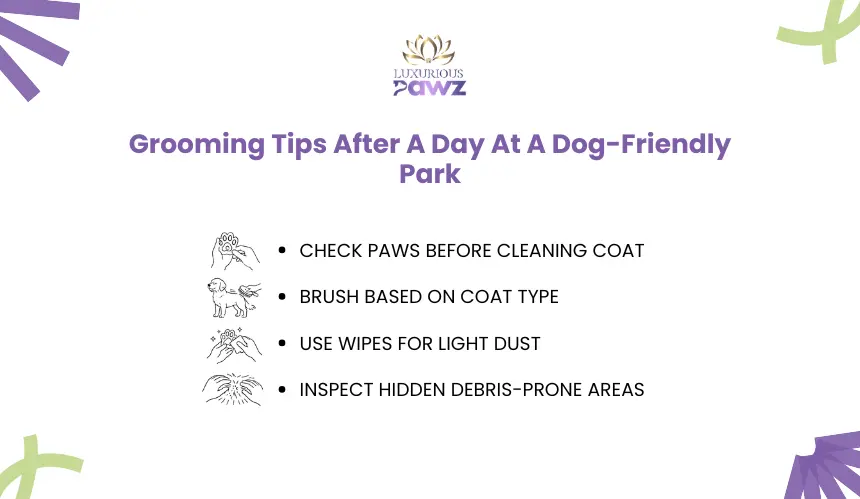
After a Pasadena dog park visit, grooming should start with inspection before cleaning. Dirt, pollen, grass seeds, loose fur, and surface dust can settle into areas that are easy to miss during a quick wipe-down.
After a day outside in Pasadena, CA, many dogs need more than a quick wipe-down to feel clean again. Pets that spend time around Old Pasadena, Playhouse Village, Bungalow Heaven, East Orange Grove Boulevard, or walking routes near Viña Vieja Park can collect dust, loose fur, pollen, and small outdoor debris in their coats. Over time, this buildup can make routine cleaning less effective, which is why pet bathing in Pasadena is helpful for removing trapped dirt, reducing odor, and keeping the coat fresh, soft, and easier to manage.
Why Should Owners Check Paws, Nails, And Paw Pads First?
Paws make direct contact with grass, dirt, gravel, mulch, pavement, and decomposed granite, so they collect the most debris during outdoor play. Small particles can lodge between the toes, while grass seeds or tiny stones may irritate the paw pads once the dog starts licking or walking indoors.
Owners should gently spread each paw and check between the pads, around the nails, and near the webbing between toes. Redness, limping, repeated licking, or sensitivity when touched can signal irritation from rough surfaces, trapped debris, or warm ground exposure.
Pasadena Public Health Department also recommends washing pet paws and toys after contact with soil as part of lead-safe cleaning precautions. For dog park visits, this makes paw cleaning more than a housekeeping step; it reduces what gets carried from outdoor soil into the car, home, bedding, and grooming areas.
How Should Different Coat Types Be Brushed After Outdoor Play?
Short-coated dogs usually need a quick surface brush or grooming mitt to remove dust, loose hair, and pollen before those particles spread indoors. The focus should be on the legs, chest, belly, and tail base because these areas collect debris during running, rolling, and sitting.
Medium and long-coated dogs need more detailed brushing because outdoor particles can sit deeper in the coat. A slicker brush or comb can help remove loose fur, grass fragments, and early tangles before they tighten into mats around the ears, legs, and hindquarters.
Curly-coated and double-coated dogs need the most careful post-park brushing. Curly coats can trap fine dust close to the skin, while double coats can hold loose undercoat, allergens, and dry plant material. Brushing in layers prevents surface grooming from missing buildup underneath.
When Are Wipes Enough, And When Does A Dog Need A Bath?
Wipes or a damp towel are usually enough after a light park visit when the coat has minor dust, dry grass, or surface pollen. This works best when the dog does not smell, the skin looks calm, and debris can be removed without soaking the coat.
A rinse may be better when dirt is concentrated on the paws, legs, or belly but the full coat is not dirty. Lukewarm water can remove grit without stripping natural oils, especially for dogs that visit parks often and do not need shampoo after every outing.
A full bath is more appropriate after mud, strong odor, sticky residue, heavy pollen exposure, or visible dirt near the skin. Shampoo should be dog-safe and fully rinsed out, because leftover product can create dryness, itching, or dull coat texture.
Which Hidden Areas Should Be Inspected Before The Dog Settles Indoors?
Ears, belly, tail, armpits, groin, and underarms should be checked because these areas trap debris during play but are often skipped during quick cleaning. Burrs, grass awns, dust, and tangled fur can stay hidden until they cause licking, scratching, odor, or matting.
The belly and underarms are especially prone to friction-based tangles after running or rolling in grass. Long-haired and curly-coated dogs may develop tight knots in these zones if moisture, dust, and loose fur are not removed soon after the outing.
A professional groomer may be needed when mats sit close to the skin, the coat keeps an odor after cleaning, the dog reacts sharply to brushing, or owners notice redness, flakes, hot spots, or persistent scratching. These signs indicate that the dog may need safer handling, closer coat separation, or professional grooming support before the irritation worsens.
Do You Know? UC Davis Veterinary Medicine explains that foxtails are dangerous because their barbed structure allows them to move forward through fur, skin, ears, or nasal passages instead of backing out naturally. Early removal matters because embedded foxtails can become a medical issue. |
Common Post-Park Grooming Mistakes To Avoid
Post-park grooming mistakes usually happen when owners clean too quickly or use the wrong method for the dog’s coat condition. Small issues like trapped dust, damp fur, or missed debris can lead to matting, odor, paw irritation, or skin discomfort after outdoor activity.
Why Is Letting Dirt Dry Into The Coat A Problem?
Letting dirt dry into the coat can make cleanup harder because dust, moisture, and loose fur begin to bind together as the dog rests. This is especially common after grass play, rolling, rough social play, or time on dry park surfaces.
The legs, belly, ears, tail, and underarms are the highest-risk areas because they experience the most friction during movement. When damp fur rubs against itself, small tangles can tighten into mats that pull on the skin and trap more debris underneath.
A quick towel wipe, paw cleaning, and light brushing before the dog settles indoors can prevent buildup from becoming a grooming problem. Owners do not need a full bath every time, but they should remove visible grit, plant fragments, and loose coat before it dries in place.
Can Over-Bathing After Every Park Visit Harm A Dog’s Skin?
Over-bathing after every outing can dry the skin and weaken the coat’s natural oil balance. Shampoo removes more than dirt, so frequent washing may lead to itching, flaking, dull coat texture, or increased sensitivity, especially in dogs with already dry or allergy-prone skin.
The cleaning method should match the dog’s actual condition. Light dust may only need brushing, paw wipes, or a damp towel, while muddy legs may need a targeted rinse instead of a full shampoo bath.
The bigger risk is using shampoo too often when the coat only needs light cleanup. Frequent shampooing can disrupt the skin’s natural oil balance, so owners should save full baths for cases where surface cleaning is not enough.
Why Should Flea, Tick, And Foxtail Checks Never Be Skipped?
Outdoor areas can expose dogs to fleas, ticks, grass awns, foxtails, burrs, and small plant debris. These can hide under the collar, around the ears, between toes, near the tail base, and along the belly where owners may not notice them during a quick cleanup.
Foxtails and sharp plant material are especially concerning because they can lodge in fur, paw webbing, ears, or skin folds. Repeated head shaking, paw licking, scratching, sneezing, or sudden irritation after a park visit can signal that something is stuck.
A short body check after every dog park outing reduces the chance of missed pests or embedded debris. Owners should separate the coat with their fingers, inspect common hiding spots, and contact a veterinarian or groomer if something appears painful, deeply lodged, or difficult to remove safely.
When To Schedule Professional Grooming After Park Visits
Home cleanup is usually enough after light park play, but professional grooming becomes useful when dirt, shedding, odor, or coat damage cannot be handled with basic brushing and wiping. The decision should be based on coat condition, skin response, and how deeply debris has settled after the outing.
Seasonal shedding can become more noticeable for pets in Pasadena, CA, especially for thick-coated and double-coated dogs that release loose fur throughout the year. Because of this, many owners look for pet de shedding services in Pasadena to help control excess hair before it spreads across furniture, floors, and bedding.
Dogs that spend time around Old Pasadena, Playhouse Village, Bungalow Heaven, East Orange Grove Boulevard, and parks near Viña Vieja Park can also collect dust, pollen, and outdoor debris in their coats. Regular coat maintenance helps remove buildup, reduce shedding, and keep the dog’s coat cleaner, lighter, and easier to manage after outdoor activity.
When Does A Muddy, Dusty, Or High-Shedding Outing Need Professional Grooming?
Professional grooming is helpful after heavy outdoor play when mud, dry dust, or loose undercoat spreads beyond the paws and surface coat. A groomer can use controlled bathing, coat-safe shampoo, proper rinsing, and high-velocity drying to remove buildup more thoroughly than a quick home wash.
Blow-drying also matters because damp coat layers can trap odor and create friction near the belly, legs, tail, and underarms. When the coat dries unevenly, loose fur and fine debris can tighten into tangles that become harder to remove later.
For high-shedding dogs, a de-shedding session removes dead undercoat before it collects more park dust, pollen, and outdoor debris. This reduces indoor shedding, improves airflow through the coat, and makes future post-park cleanup easier.
What Signs Mean A Dog Needs More Than Home Cleaning?
A dog needs more than home cleaning when odor remains after basic cleanup, mats sit close to the skin, or the coat feels packed even after brushing. These signs usually mean the problem is deeper than surface dirt.
Tangled fur, tight knots, scratching, redness, flaking, or repeated licking should not be ignored. These signs can point to matting, skin irritation, trapped allergens, or debris that is pulling against the coat and causing discomfort.
Professional grooming is also safer when burrs, sticky plant material, or hardened dirt sits close to the skin. Pulling these out at home can irritate the skin or break the coat, while a groomer can separate, soften, trim, or remove the debris with less stress for the dog.
Why Do Long-Haired, Curly-Coated, And Double-Coated Dogs Need More Structured Grooming?
Long-haired dogs need structured grooming because their coat can collect grass pieces, dust, and loose fur along the legs, belly, ears, and tail. If those areas are not brushed in sections, surface brushing may leave hidden tangles underneath.
Curly-coated dogs often need structured grooming because their coat shape can hide tight knots beneath the visible surface. Professional combing and drying help separate the coat fully instead of leaving compacted areas behind.
Double-coated dogs need careful de-shedding rather than shaving or aggressive brushing. Their undercoat can trap pollen, dry soil, and loose hair after outdoor play, so a professional groomer can remove buildup while preserving the coat’s natural insulation and protective function.
After a full day of play at a dog-friendly park in Pasadena, CA, your pet deserves more than a quick wipe-down. Luxurious Pawz helps remove dust, loose fur, outdoor debris, and park-day odor with gentle grooming care designed to keep dogs clean, comfortable, and refreshed. From bathing to de-shedding and coat maintenance, Luxurious Pawz makes post-adventure grooming easier for busy pet owners. Schedule a visit today and let your dog come home looking and feeling their best.
Frequently Asked Questions
What is the best time of day to take a dog to a Pasadena park?
Early morning or later afternoon is usually better for Pasadena dog park visits because surfaces are cooler, crowds may be lighter, and dogs are less likely to overheat during active play. Midday visits can be harder on paws, breathing, and stamina, especially for senior dogs, flat-faced breeds, puppies, and thick-coated dogs.
How can owners tell if a dog is too overwhelmed at a dog park?
A dog may be overwhelmed if it hides near the fence, avoids eye contact, tucks its tail, freezes, snaps, pants heavily without exercise, or repeatedly returns to the owner. These signs mean the dog needs space, a leash break, or a shorter visit before social pressure turns into defensive behavior.
Should puppies go to dog parks before they are fully vaccinated?
Puppies should not use shared dog park spaces until a veterinarian confirms they are protected enough for public exposure. Dog parks involve close contact, shared surfaces, unknown vaccination histories, and parasite risk. Before that stage, safer options include controlled puppy classes, short leash walks, and supervised play with healthy known dogs.
How long should a dog stay at a dog park?
Most dogs do better with shorter, focused visits than long, overstimulating sessions. Around 20 to 45 minutes is often enough, depending on age, breed, heat, fitness, and play intensity. Owners should leave before the dog becomes exhausted, irritable, overly rough, or too distracted to respond.
What should owners do if their dog rolls in grass or dirt at the park?
Rolling does not always require a full bath. Owners should first check for odor, sticky residue, burrs, grass awns, and skin irritation. If the coat only has dry dust or grass particles, brushing and a damp towel may be enough. Strong odor, mud, or residue usually needs bathing.