
- admin
How Does Dog Grooming Help Reduce Shedding and Allergens at Home?
Key Takeaways
|
Loose dog hair, dander, and outdoor allergens can quickly build up on furniture, carpets, bedding, and clothing. While shedding is natural, regular grooming helps control loose fur and reduce the particles that spread allergens throughout the home.
This blog will discuss how dog grooming helps reduce shedding, manage allergens, and support a cleaner, healthier living space.
Why Dogs Shed and How Allergens Spread Indoors?
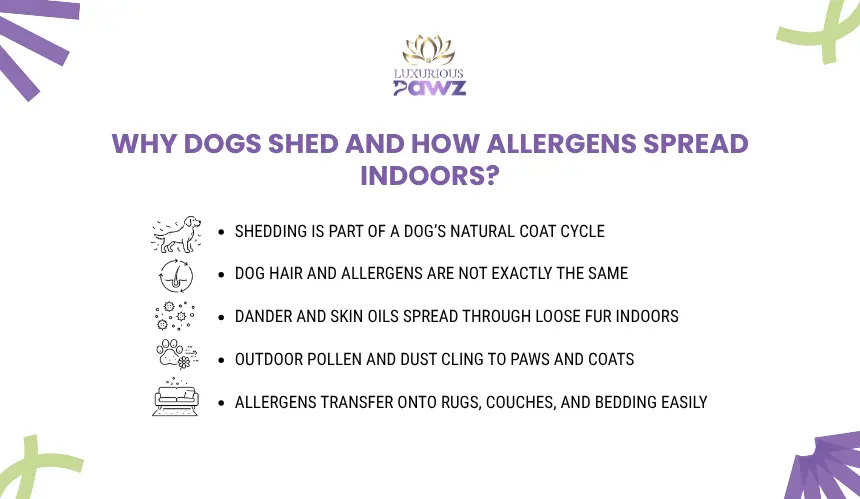
Shedding and allergens are connected, but they are not the same. Understanding the difference helps explain why regular grooming is important for keeping both your dog’s coat and your home cleaner.
Shedding Is a Natural Part of a Dog’s Coat Cycle
Dogs naturally lose old or damaged hair so new hair can grow in. Some breeds shed lightly all year, while others shed more during seasonal coat changes. Double-coated breeds often release more hair when the weather shifts. When shedding is not managed, loose fur can become harder to control during regular cleaning.
Dog Hair and Dog Allergens Are Not the Same
Loose dog hair and invisible allergens can quickly affect how clean and comfortable your home feels. Dog fur is visible, but many allergens are not. Common dog-related allergens are often linked to dander, saliva, skin oils, and tiny particles that can cling to the coat. This is why loose hair can carry allergens through the home, even though the fur itself is not always the main trigger.
Outdoor Allergens Can Enter the Home Through the Coat and Paws
Loose dog hair and invisible allergens can quickly affect how clean and comfortable your home feels.
Regular grooming helps limit this buildup through:
- Keeping the coat clean after outdoor activity
- Wiping paws after outdoor time
- Freshening the coat when outdoor residue builds up
- Cleaning high-contact areas
- Scheduling professional grooming for deeper coat care
In Sunland, CA, dogs can carry allergens indoors from dry, dusty neighborhood walks, warm weather, seasonal winds, and outdoor areas with grass, weeds, pollen, and loose soil. Because Sunland often has dry conditions, small particles can settle on a dog’s coat, paws, belly, and tail after time outside. Once indoors, that residue can transfer onto rugs, couches, bedding, and floors. Regular brushing, paw wiping, and coat freshening after outdoor activity can help limit how much local dust and pollen your dog brings into the home.
How Regular Brushing Reduces Shedding in Dogs
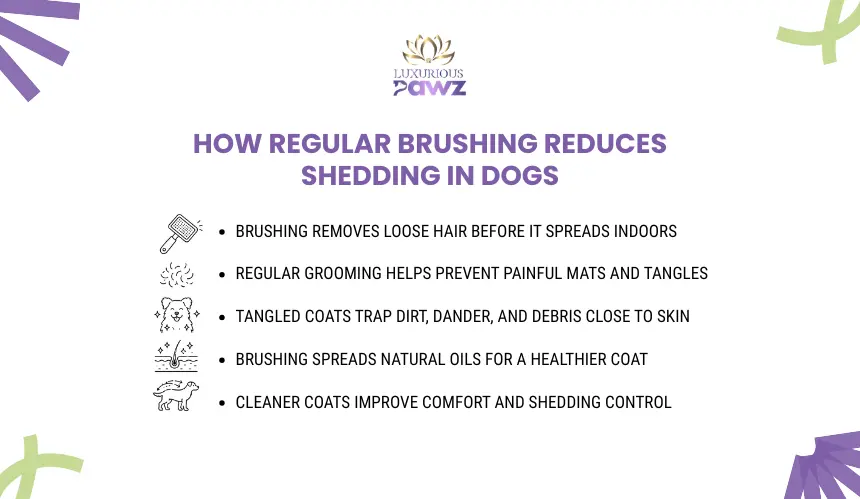
Regular brushing helps manage the coat at the source. It keeps fur under control, prevents tangles, and supports a cleaner, healthier coat between grooming appointments.
Removes Loose Hair Before It Falls Around the House
Brushing helps collect dead and loose hair directly from the coat before it lands on floors, couches, bedding, and clothing. This is especially helpful for dogs that shed daily or release more hair during seasonal changes.
Helps Prevent Mats and Tangles
Mats and tangles can hold loose hair, dirt, dander, and debris close to the skin. When the coat becomes tangled, it is harder to remove trapped fur and allergens with normal cleaning.
Regular brushing keeps the coat separated and smoother, which helps prevent buildup. This is especially important for long-haired dogs, curly-coated breeds, and dogs with thick undercoats. A tangle-free coat is also more comfortable for the dog and easier for a groomer to maintain.
Do you know? Mats can trap moisture, dirt, oils, and dead skin close to the body. Because they sit tightly against the skin, they can make it harder to notice irritation underneath. |
Supports a Healthier Coat
Brushing does more than remove loose hair. It helps spread the dog’s natural skin oils through the coat, which can support shine, softness, and overall coat condition.
A healthier coat is less likely to become dry, brittle, or irritated. When the skin and coat are properly maintained, shedding may be easier to manage, and loose hair is less likely to build up unnoticed. Regular brushing also supports better airflow through the coat, which helps keep the skin cleaner and more comfortable.
How Bathing Helps Control Allergens in Dogs
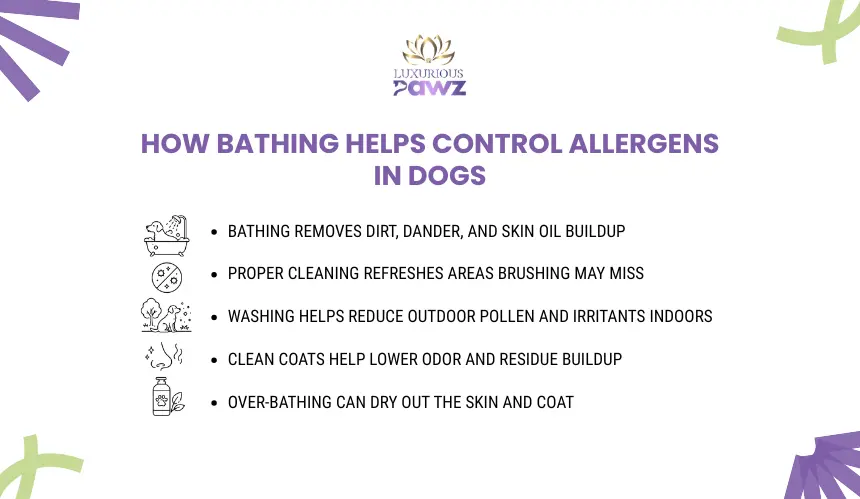
Bathing supports coat hygiene by clearing residue that brushing may not fully reach. It helps refresh areas close to the skin, remove buildup from daily activity, and keep the coat feeling cleaner without relying on brushing alone. When done with the right products and schedule, bathing can also support better comfort, reduce stale odors, and make regular grooming more effective.
Washes Away Dander, Dirt, and Skin Oils
Proper bathing helps clean the coat and skin before buildup transfers into the home. It removes everyday residue that brushing alone may not fully remove, especially near the skin.
A good bath cleans the coat at the surface while also helping remove particles close to the skin. This can make the home feel cleaner and more comfortable, especially for people who are sensitive to pet-related allergens.
Reduces Odor and Irritants
Dogs often pick up pollen, dust, grass, and other outdoor particles during walks, playtime, or time in the yard. These irritants can cling to the coat and later transfer to floors, rugs, and furniture.
Bathing helps remove these outside particles while also reducing pet odor caused by sweat, oils, dirt, and environmental buildup. This is especially helpful for active dogs, dogs that spend time outdoors, or pets that frequently roll, dig, or play in grass.
Avoid Over-Bathing
Bathing is helpful, but doing it too often can dry out the skin. Too much bathing can strip natural oils, making the coat less comfortable and harder to maintain.
Use a dog-safe shampoo made for your pet’s coat and skin type. The right bathing schedule depends on the dog’s breed, coat, activity level, and skin condition, so it is best to follow guidance from a professional groomer or veterinarian.
Do you know? Vacuuming visible fur helps, but some allergen particles are much smaller than hair. They can settle into fabric, float in the air, or remain on soft surfaces after the fur has been removed. That is why grooming and home cleaning work better when used together. |
The Difference Between Shedding Control and Allergy Control in Dogs
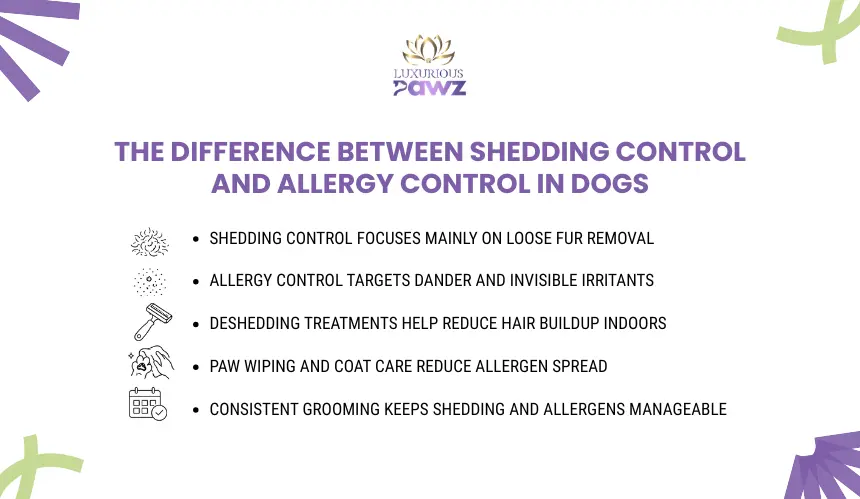
Shedding control and allergy control are connected, but they target different problems. Knowing the difference helps dog owners choose the right grooming routine for a cleaner home.
Shedding Control Focuses on Loose Fur
Shedding control focuses on managing dead hair at the source through brushing, deshedding treatments, and regular coat maintenance. Brushing, deshedding treatments, and regular coat maintenance help collect this hair directly from the dog’s coat.
This is especially useful for heavy-shedding breeds, double-coated dogs, and pets that shed more during seasonal changes. When loose fur is removed consistently, it becomes easier to keep the home clean and prevent hair from building up in carpets, corners, and resting areas.
Allergy Control Focuses on Dander and Irritants
Allergy control focuses on reducing invisible irritants that remain on the coat and skin, even when shedding is not heavy. This includes managing skin-related buildup and environmental particles through bathing, paw wiping, and routine coat care.
These particles can spread through the home even when shedding is not heavy. Bathing, coat wiping, paw cleaning, and proper grooming help remove these irritants before they settle into soft surfaces like rugs, blankets, couches, and pet beds.
Do you know? Dogs often return to the same sleeping spot, couch corner, rug, or bed area every day. Over time, that space can collect invisible dander, saliva residue, oils, and tiny skin particles. Even if the area looks clean, it may still hold buildup that affects indoor comfort. |
A Consistent Routine Makes Results Last
A steady grooming routine helps maintain the benefits of brushing, bathing, and coat care. When grooming is done on a regular schedule, shedding stays more manageable, and allergen-related buildup is less likely to become overwhelming.
Professional Grooming vs. At-Home Grooming for Dogs
Professional grooming gives deeper coat care, while at-home grooming helps maintain results between visits.
Grooming | Explanation |
What Professional Groomers Can Do Better | Groomers use deshedding tools, coat-specific techniques, deep cleaning, proper drying, and trimming. They can also notice coat changes that may need closer attention. |
What Pet Owners Should Do at Home | Owners should brush regularly, wipe paws after walks, wash dog bedding, clean grooming tools, and keep the dog’s favorite resting areas clean. |
Best Results Come from Both | Groomers provide deeper coat care, while owners maintain cleanliness between visits. This balance helps extend grooming results and keeps daily pet mess easier to manage. |
How Often Should Dogs Be Groomed to Reduce Shedding?
Grooming frequency depends on the dog’s breed, coat type, season, age, lifestyle, and skin health. A consistent schedule helps keep shedding manageable between professional grooming visits.
Dogs with thick double coats or heavy shedding may benefit from professional grooming every 4 to 8 weeks, especially during seasonal shedding periods. Long-haired or curly-coated dogs may also need regular grooming to prevent mats and trapped dander. Short-coated dogs may not need appointments as often, but they still benefit from routine brushing at home.
A good grooming routine may include:
- Coat maintenance based on breed and hair type
- Professional deshedding when shedding increases
- Bathing when the coat becomes dirty or oily
- Paw wiping after outdoor time
- Washing bedding and blankets often
In Sunland, CA, dogs may need more consistent grooming during warm, dry, or windy periods because loose fur, dust, pollen, and outdoor debris can build up quickly after walks, yard time, or visits near Sunland Park and Foothill Boulevard. Regular brushing at home, professional deshedding during heavier shedding seasons, paw wiping after outdoor activity, and washing bedding often can help reduce loose hair and limit the amount of outdoor residue your dog carries indoors.
When Excessive Shedding May Be a Warning Sign for Dogs
Some shedding is completely normal, but sudden or unusual shedding can point to an underlying issue. Pet owners should pay attention when hair loss looks different from the dog’s normal coat cycle.
Excessive shedding may be a concern if it comes with:
- Bald patches
- Constant scratching or licking
- Flaky or red skin
- Strong odor
- Greasy coat texture
- Skin irritation or sores
- Sudden thinning of the coat
These signs may be linked to allergies, parasites, skin infections, poor nutrition, stress, hormonal changes, or another health condition. When shedding becomes sudden, patchy, itchy, or unusual, it is best to contact a veterinarian for proper guidance.
Keep your dog comfortable, clean, and cared for with Luxurious Pawz. Our professional grooming services help manage shedding, reduce coat buildup, and refresh your dog after walks through California’s nearby communities.
Frequently Asked Questions
Does grooming really help with dog shedding?
Yes. Grooming helps remove loose and dead hair before it collects around the home. Brushing, deshedding, and coat maintenance are especially useful for dogs that shed daily or during seasonal coat changes.
How often should I groom my dog to control shedding?
It depends on the dog’s breed, coat type, and shedding level. Heavy-shedding or double-coated dogs may need professional grooming every 4 to 8 weeks, while short-haired dogs may need less frequent appointments with regular brushing at home.
Can dog grooming reduce pet allergies at home?
Grooming can help lower the amount of dander, residue, and particles that stay on the coat. It may not remove allergies completely, but it can make the home easier to manage for allergy-sensitive people.
What is the difference between dog hair and dog dander?
Dog hair is the visible fur your pet sheds. Dander is made of tiny skin flakes that can attach to fur, bedding, furniture, and clothing. Dander is often more connected to allergy symptoms than the hair itself.
Is bathing or brushing better for reducing allergens?
Both help in different ways. Brushing removes loose hair and helps prevent tangles, while bathing clears residue closer to the skin. A complete routine usually includes both.
Why does my dog shed more during certain seasons?
Many dogs shed more when the weather changes because their coat adjusts to the season. This is common in double-coated breeds, which often release more undercoat during warmer or cooler transitions.