
- admin
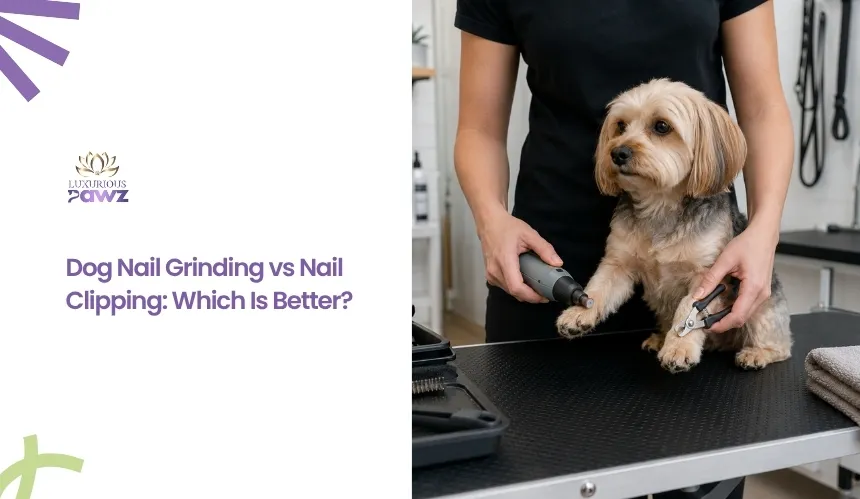
Dog Nail Grinding vs Nail Clipping: Which Is Better?
Key Takeaways
|
Dog nail care can become difficult when nails are thick, dark, brittle, or overgrown. A simple trim can turn stressful if the wrong method causes bleeding, rough nail edges, paw sensitivity, or grooming fear.
Dog nail grinding and nail clipping both manage nail length, but they work in different ways. Clipping is best for quick length removal, while grinding is better for careful shaping and smoother finishing.
How Dog Nail Grinding and Nail Clipping Work Differently
Dog nail clipping and dog nail grinding use different grooming actions. Clipping cuts the nail with blade pressure, while grinding files the nail surface with a rotary tool.
This difference affects how much nail is removed, how the dog feels during the process, and how the nail looks after grooming.
Do You Know?
A Royal Veterinary College VetCompass study found that 5.64% of dogs in UK primary veterinary care had their nails clipped at least once in one year. In more than half of those cases, 59.40%, nail clipping was the main reason for the veterinary visit. This shows that nail care is not just cosmetic grooming. It can become a real comfort and welfare concern when nails are left unmanaged.
How Does Nail Grinding Shape a Dog’s Nails?
Nail grinding uses a powered rotary file to wear down the nail surface in thin layers. Instead of cutting the nail tip off at once, the grinder reshapes it little by little.
This method is useful when the nail needs controlled shaping, edge refinement, or careful reduction. It can also help smooth rough tips that remain after clipping.
The main limitation is tool sensitivity. Some dogs dislike the sound, vibration, or warmth from the grinder, so short contact and light pressure are important during the process.
Why Do Nail Type and the Quick Matter?
The quick is the soft inner part of the nail that contains nerves and blood vessels. Safe nail care depends on shortening the outer nail without damaging this sensitive tissue.
Clear or light nails usually make the quick easier to see. Dark nails need closer inspection because the inner structure is hidden, which makes trimming less predictable.
Nail condition also affects method choice. Overgrown nails may have a longer quick, brittle nails may crack under clipper pressure, and very hard nails may respond better to slower filing or professional grooming support.
Do You Know?
The same RVC study reported that the most cited clinical reasons for nail-clipping-related veterinary visits were overgrown or ingrown nails at 12.66% and broken claws or dewclaws at 8.84%. This makes regular nail checks important because delayed nail care can lead to painful nail shape, breakage, and paw discomfort.
Which Method Is Safer and More Comfortable for Dogs?
Neither method is safer for every dog. Safety depends on nail shape, tool handling, paw movement, and the dog’s ability to remain calm during grooming.
Comfort depends on the sensation the dog tolerates better. Some dogs dislike clipper pressure, while others react more strongly to a powered grooming tool.
Dogs in Sunland, CA often deal with warm weather, dry outdoor dust, seasonal shedding, and regular exposure to dirt from walks, yards, and neighborhood activity. These conditions can make coat buildup, odor, loose fur, paw debris, and nail overgrowth harder to manage with basic home care alone.
Due to this, in Sunland, CA, dog grooming plays a major role in keeping dogs cleaner, more comfortable, and easier to maintain. A proper grooming session can support coat health, reduce shedding, check paws and nails, remove surface dirt, and help identify skin, ear, or hygiene concerns before they become more uncomfortable for the dog.
Is Nail Grinding Safer Than Clipping?
Nail grinding may be safer when a nail needs careful correction. The handler can remove small amounts and stop before the nail becomes too short.
The main risk with grinding is heat buildup. If the grinder stays in one spot for too long, friction can make the nail uncomfortable, especially for dogs with sensitive paws.
Nail clipping can also be safe when the nail length is easy to assess and the dog stays steady. The risk increases when the paw moves suddenly or the nail shape makes the cutting angle unclear.
Which Method Leaves a Better Nail Finish?
Grinding usually leaves a smoother nail finish because it rounds the edge instead of leaving a flat cut. This can reduce scratching, snagging, and rough contact after grooming.
Clipping removes length faster, but the cut edge may feel sharper depending on nail texture and blade quality. Some clipped nails look neat right away, while others may need light filing.
A smoother edge is useful after a larger trim because it makes the nail less likely to catch on bedding, fabric, flooring, or skin.
How Does Dog Temperament Affect the Better Choice?
A dog’s temperament often decides which method works better in practice. A relaxed dog may accept either option, while a nervous dog may resist the tool that feels more unfamiliar.
Some dogs handle clipping better because the process ends quickly. Others do better with grinding because it avoids the sudden squeeze of a clipper.
Puppies, senior dogs, and dogs with past grooming fear may need shorter sessions and careful handling. Calm positioning, steady paw support, and routine exposure can make nail care easier over time.
How to Choose a Better Nail Care Method for Each Dog
A practical choice starts with the dog’s nail length, nail texture, and response during handling. The goal is to keep nails short enough for healthy movement without creating pain, stress, or repeated resistance.
The same dog may not need the same method every time. Age, activity level, walking surface, and grooming frequency can change how much nail care is needed.
Dogs in Sunland, CA, may not always wear their nails down evenly through daily walks, especially when they spend more time indoors, walk on softer surfaces, or have thick and fast-growing nails. For this reason, Pet Nail Trimming in Sunland, CA, is important because overgrown nails can affect paw comfort, posture, balance, and the way a dog moves during everyday activity.
This service fits naturally in the blog because the topic already explains clipping, grinding, dark nails, thick nails, and quick sensitivity. Professional nail care can help dogs receive the right method, whether they need quick length removal, smoother grinding, or a combined approach for better comfort.
When Is Nail Clipping Better for Dogs?
Nail clipping is often better when the nails are already maintained and only need a small trim. It can work well for dogs that stay steady and do not need detailed nail shaping.
This method is also useful when a short grooming session is easier for the dog. If the handler can identify a safe cutting area, clipping can be simple and effective.
Clipping works best when small sections are removed instead of deep cuts. This keeps the process more controlled and lowers the chance of cutting too close.
When Is Nail Grinding Better for Dogs?
Nail grinding is often better when the nails are thick, dark, uneven, sharp, or difficult to judge by sight. It gives the handler more room to adjust the nail carefully.
This method is also useful when the goal is shaping rather than basic trimming. A grinder can refine the nail edge and create a cleaner finish after the main length has been reduced.
Grinding may not suit dogs that panic around sound or vibration. In that case, clipping may be easier unless the dog is slowly trained to accept the grinder.
When Does a Combined Approach Work Best?
A combined approach works well when nails need both shortening and finishing. The Clippers can remove extra length first, and a grinder can smooth the remaining edge.
This method reduces filing time while improving the final result. It is especially helpful when clipping alone leaves the nail tip rough or sharp.
Many professional groomers use both methods because nail needs can vary from paw to paw. Some nails may need trimming, some may need filing, and others may only need light finishing.
For safer, calmer nail care, Luxurious Pawz can help dogs receive the right grooming support based on their nail type, comfort level, and handling needs. Whether a dog needs clipping, grinding, paw checks, or a full grooming session, professional care can reduce stress and support cleaner, healthier movement. Pet owners in Sunland, CA can schedule a grooming visit to keep their dog comfortable from coat to claws.
Frequently Asked Questions
Is nail grinding better than nail clipping for all dogs?
No, nail grinding is not better for every dog. Grinding works well for shaping thick, dark, or sharp nails, while clipping is better for quick length removal. The better choice depends on nail type, dog temperament, and handling comfort.
Can dog nails be too overgrown for clipping?
Yes, severely overgrown nails may be harder to clip safely because the quick can extend farther into the nail. In these cases, gradual trimming, grinding, or professional nail care may be safer than trying to remove too much length at once.
Does nail grinding hurt dogs?
Nail grinding should not hurt when done correctly with light pressure and short contact. However, some dogs may dislike the sound, vibration, or warmth of the grinder. Slow introduction and calm handling can help reduce stress during the process.
Why do some dogs bleed during nail clipping?
Bleeding usually happens when the clipper cuts into the quick, which contains blood vessels and nerves. This is more likely with dark nails, sudden paw movement, or cutting too much nail at once without checking the safe trimming point.
Should dogs get nail clipping and grinding together?
Some dogs benefit from both methods. Clippers can remove extra nail length quickly, while grinding can smooth sharp edges afterward. This combined approach is useful when nails are long, uneven, thick, or rough after a basic trim.
How often should a dog’s nails be checked?
Dog nails should be checked regularly because growth depends on activity level, walking surfaces, age, and nail condition. Dogs that walk mostly indoors or on soft ground may need nail care more often than dogs that naturally wear nails down outside.