
- admin
How to Explain the Haircut You Want to a Pet Groomer
Key Takeaways
|
Explaining a haircut to a pet groomer requires more than describing a dog as “short” or “fluffy.” The groomer needs to understand the desired coat length, overall shape, areas that should remain longer, and how much maintenance you can manage afterward. Coat type and condition also affect what can be safely achieved.
For pet owners in Glendale, CA, clear communication helps the groomer translate the desired appearance into a practical grooming plan.
Describe the Cut Clearly
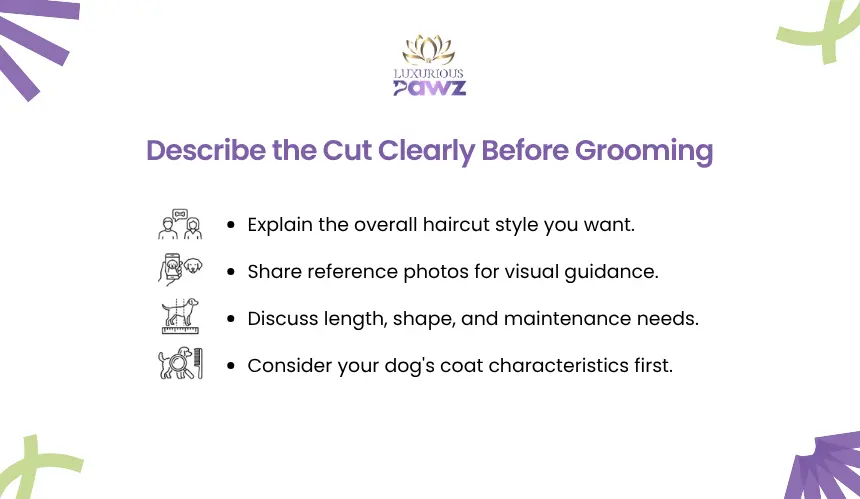
The first step is to communicate the overall result you want before discussing individual grooming areas. This gives the groomer a clear understanding of the appearance and maintenance level you expect.
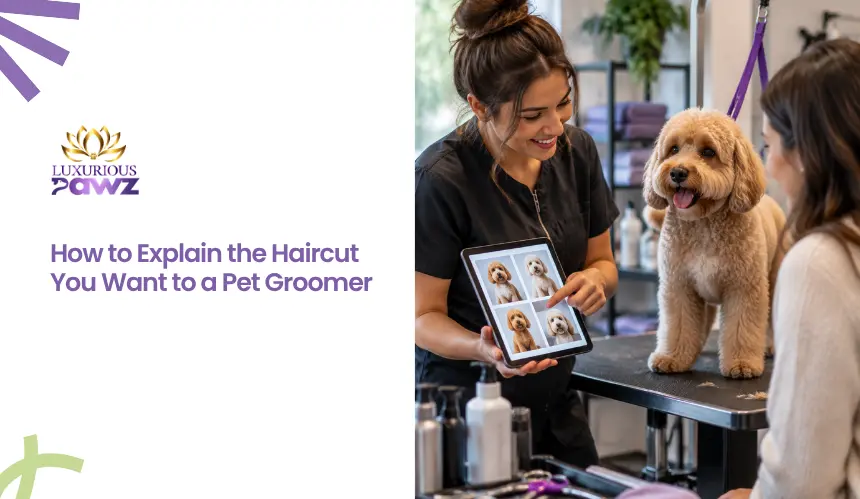
How Can a Reference Photo Make Your Pet Grooming Request More Accurate?
A reference photo gives the groomer visual information about coat length, proportions, facial shape, leg fullness, ear length, and overall finish that can be difficult to communicate with words alone. However, the image should be treated as a visual reference rather than an exact template.
A dog’s coat determines how a particular haircut will look after grooming. Coat texture, density, growth pattern, and whether the coat is curly, wiry, smooth, or continuously growing can substantially change the finished appearance.
The American Kennel Club’s professional grooming standards recognize different coat categories and require grooming techniques to be adapted to the coat being handled.
When showing a photograph, identify the characteristics that matter most to you. The groomer can then determine how those characteristics can be achieved on your dog’s specific coat rather than attempting to reproduce the photograph mechanically.
Did You Know? A dog’s coat provides insulation and helps protect the skin from sunlight. VCA advises against shaving dogs down to the skin unless there is a medical reason and recommends discussing appropriate coat length with a veterinary professional or groomer.
How Should You Explain the Length and Overall Style?
Describe the desired length separately for the body, legs, face, ears, and tail. This prevents the groomer from interpreting the request as one uniform length across the entire coat.
The distinction between length and coat weight is also important. A dog can have substantial bulk removed while retaining more visible length in selected areas. Conversely, reducing the overall length changes the silhouette and usually reduces the amount of coat available for shaping.
Your preferred maintenance level should form part of the haircut description. A longer, fuller coat generally requires more brushing and coat management between professional appointments, while a shorter trim can reduce the amount of daily coat maintenance. The appropriate balance depends on the dog’s coat type and the owner’s ability to maintain it.
Tell the Groomer What You Want Changed
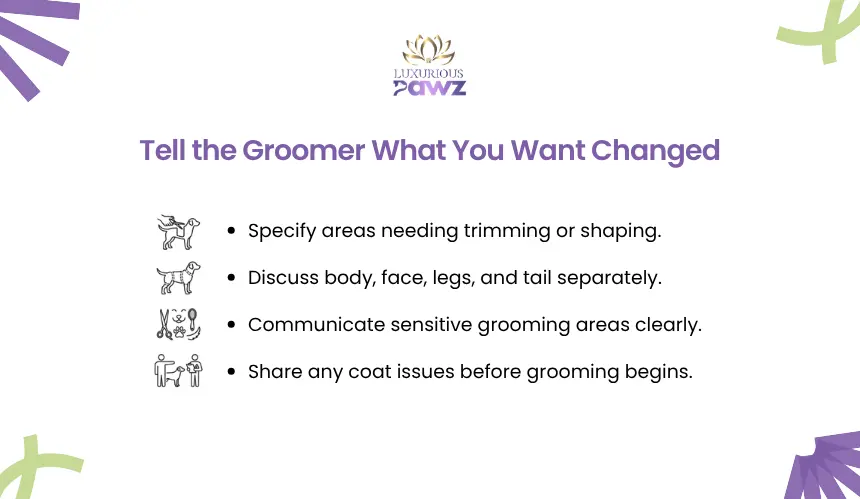
After establishing the overall style, identify the areas that need to be shortened, shaped, blended, or preserved. This allows the groomer to create a balanced result instead of interpreting the haircut as a single length.
For dogs in Glendale, CA, grooming needs can vary depending on how they spend their time outdoors. Pets that regularly walk around Montrose, North Glendale, Brand Park, or Verdugo Park may bring dirt, dry vegetation, and debris into longer coats, particularly around the paws, legs, and underside.
A pet haircut can be customized to keep these areas manageable while maintaining enough coat length for the dog’s comfort and natural appearance. For owners whose dogs frequently explore Glendale’s foothill areas, the groomer can also recommend a practical length based on the dog’s coat texture, tendency to tangle, and how easily the owner can brush and check the coat after outdoor activities.
How Should You Specify the Body, Face, Legs, and Tail?
Each major area of the coat can have a different length and finish. The body may require a shorter trim while the legs, tail, ears, or facial furnishings remain longer. Communicating these differences is particularly important for dogs whose coat is intentionally shaped to create a specific silhouette.
The face requires additional consideration because grooming takes place close to the eyes, nose, mouth, and ears. The desired facial length should therefore be discussed in relation to the dog’s coat and the amount of daily care required to keep the area clean and manageable.
The legs and tail also influence the overall proportions of the haircut. Removing too much coat from one area can make the finished style appear unbalanced. Professional grooming standards include evaluation of balance, symmetry, coat condition, and breed characteristics when assessing grooming work.
What Should You Tell the Groomer About the Face, Paws, and Sensitive Areas?
Face, paw, ear, and sanitary grooming should be communicated separately because these areas involve different handling and safety considerations.
Facial grooming requires controlled trimming around sensitive structures, while paw grooming involves managing hair around the pads and maintaining appropriate nail length. Ear care also requires appropriate technique because excessive manipulation or inappropriate hair removal can irritate the ear.
If your dog is nervous, reactive, elderly, physically uncomfortable, or has previously experienced difficulty during grooming, disclose this before the appointment. That information allows the groomer to adjust handling and determine whether certain services need additional precautions.
The AKC’s professional grooming standards include safe handling, behavior management, facial grooming, ear care, paw care, nail care, and sanitary trimming as separate areas of professional competency.
What If Your Pet Has Mats or Heavy Tangles?
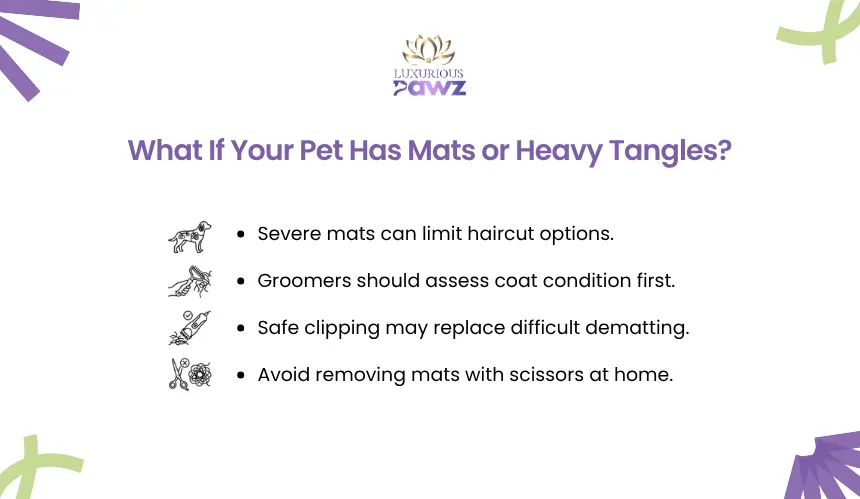
The existing condition of the coat can determine whether the requested haircut is achievable. Severe matting can restrict access to the skin and make brushing or preserving the existing length unsafe.
Professional grooming standards require assessment of matted coats and recognize that shaving may become necessary when mats cannot be safely removed through other methods.
Matting should therefore be disclosed before grooming begins. Attempting to remove severe mats at home with scissors can injure the underlying skin. VCA specifically advises against using scissors to remove mats because the skin can be pulled into the mat and accidentally cut.
The appropriate approach is for the groomer to evaluate the coat condition first and determine whether dematting or clipping is the safer option.
Confirm the Cut Before and During the Grooming
Before substantial hair is removed, confirm the important aspects of the grooming plan. This is particularly valuable when the dog is visiting a new groomer or undergoing a significant change in coat length.
Glendale’s dry, warm conditions and its transition from established residential neighborhoods into the San Rafael Hills and Chevy Chase Canyon can create different coat-maintenance needs for dogs that spend time outdoors.
Pets around Kenneth Village, Adams Hill, and Rossmoyne may encounter dust and fine plant material during neighborhood walks, which can collect around feathered legs, ears, and the underside of the coat.
Regular dog grooming can help address these issues through appropriate bathing, brushing, nail care, and coat maintenance based on the individual dog’s routine. For Glendale owners, adjusting grooming frequency to a pet’s outdoor activity can be more practical than following a fixed schedule designed for dogs with completely different environments.
How Should You Discuss Maintenance and Styling?
The grooming plan should reflect the amount of coat care you can realistically provide at home. A haircut that requires frequent brushing is not practical if the owner cannot maintain the coat between appointments.
Longer and denser coats generally require greater brushing frequency because loose hair and developing tangles can become trapped within the coat. The AKC recommends regular brushing and emphasizes that the appropriate brush or comb depends on the dog’s coat characteristics.
Maintenance should also account for the time between professional grooming appointments. A haircut that looks appropriate immediately after grooming can become difficult to manage if the coat grows quickly or mats easily.
For pet owners in Glendale, CA, seasonal conditions and outdoor activity can also influence maintenance requirements. Dogs spending considerable time outdoors may accumulate dirt, debris, and moisture in longer coats, making regular brushing and inspection more important.
Summer grooming should not automatically mean shaving a dog as short as possible. VCA explains that a dog’s coat provides insulation and protection from sunlight and advises against shaving down to the skin unless medically necessary.
What Should You Ask the Groomer to Confirm?
Before grooming begins, confirm the intended length, areas that will remain longer, facial and ear treatment, tail shape, paw grooming, and the expected maintenance requirements.
If the groomer recommends a different length from the one you initially wanted, ask for the reason. The recommendation may be based on coat condition, matting, density, breed characteristics, skin visibility, or the dog’s ability to tolerate the requested grooming process.
The goal is not simply to obtain a particular haircut name. The goal is to establish a grooming plan that is appropriate for the dog’s coat, condition, lifestyle, and ongoing maintenance.
Did You Know? American Kennel Club notes that severe matting can make a long or detailed haircut impractical because the groomer must first address the condition of the existing coat. Professional grooming standards specifically address mat assessment and the circumstances in which clipping may be necessary.
For pet owners seeking a luxurious pet grooming experience throughout the greater Los Angeles area, Luxurious Pawz offers personalized grooming tailored to each dog’s coat type, condition, lifestyle, and comfort.
From routine dog grooming and breed-appropriate haircuts to paw, nail, and hygiene care, their attentive approach helps keep pets comfortable, clean, and easier to maintain between appointments.
With service available across communities throughout LA, Luxurious Pawz is a refined choice for owners looking for professional, individualized care rather than a one-size-fits-all grooming experience.
Frequently Asked Questions
Should I bring a reference photo to a pet groomer?
Yes. A reference photo communicates the desired coat length, proportions, facial appearance, leg shape, ear length, and overall finish. The groomer should still evaluate the dog’s coat type and condition because those factors determine how closely the desired appearance can be reproduced.
What information should I give a pet groomer about the haircut?
Describe the desired length for the body, legs, face, ears, and tail, identify areas that should remain longer, and explain your preferred maintenance level. Also disclose matting, previous grooming problems, and any handling concerns.
Can every dog have the same haircut shown in a photograph?
No. Coat type, density, texture, growth pattern, breed characteristics, and current coat condition can affect the final result. The groomer may need to adapt the technique or length to suit the individual dog.
What happens if my dog's coat is severely matted?
The groomer should assess the matting before determining the haircut. Severe mats may need to be clipped rather than brushed out if removal would cause unnecessary discomfort or damage to the skin.
Should dogs be shaved during hot weather?
Not automatically. A dog’s coat provides insulation and protects the skin from sunlight. A veterinarian or professional groomer can determine an appropriate length based on the dog’s coat, condition, and circumstances.
How can I choose a haircut that is easier to maintain?
Discuss your normal brushing routine and how frequently you can schedule professional grooming. The groomer can recommend a coat length that balances the desired appearance with the amount of brushing, bathing, drying, and professional maintenance you can realistically provide.