
- admin
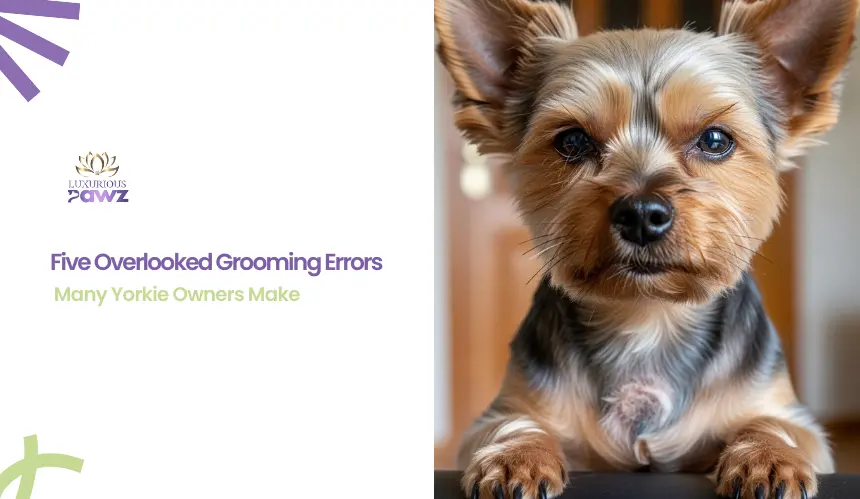
Five Overlooked Grooming Errors Many Yorkie Owners Make
Key Takeaways:
|
Yorkshire Terriers are known for their elegant appearance and silky coats that resemble human hair more than typical dog fur. Their coat structure grows continuously rather than shedding heavily like many other breeds. This makes grooming an essential part of their routine rather than an occasional task.
However, many Yorkie owners unknowingly make grooming mistakes that affect coat texture, skin comfort, and hygiene. Small errors such as incorrect brushing techniques, poor grooming schedules, or improper tools may not appear serious at first. Over time these habits lead to tangles, matting, coat breakage, and skin irritation.
Understanding these overlooked grooming mistakes helps Yorkie owners maintain coat health and avoid preventable problems. The following sections explain the most common grooming errors and practical ways to improve grooming routines for better coat care.
Do You Know? |
Understanding the Importance of Proper Yorkie Grooming
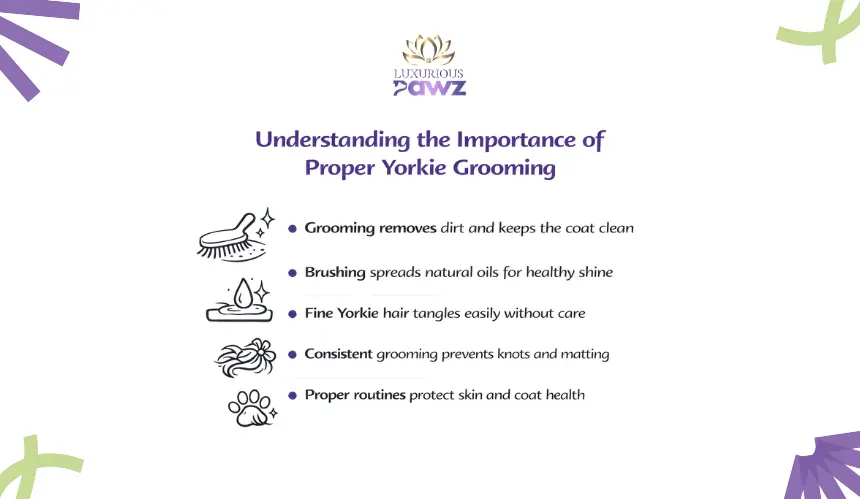
Grooming is not only about appearance. It plays an important role in maintaining a Yorkshire Terrier’s overall hygiene and skin health. When grooming routines are performed correctly, they help remove dirt, distribute natural oils, and prevent tangles from forming in delicate hair strands.
Because Yorkie coats are fine and lightweight, they are more vulnerable to friction and knot formation than thicker coats. Consistent grooming routines prevent these issues from developing into more serious coat problems.
Many grooming mistakes occur simply because owners are unaware of how Yorkie coats behave differently from other breeds. Learning about these mistakes makes it easier to adjust grooming routines and maintain a healthy coat.
5 Mistakes Done By Yorkie Owners
Yorkshire Terriers require attentive care because of their delicate coat structure and small body size. Many owners provide love and attention but unintentionally develop habits that negatively affect their dog’s grooming routine and overall comfort. These mistakes often arise from misunderstanding the breed’s specific grooming needs rather than from neglect.
1. Incorrect Brushing Techniques
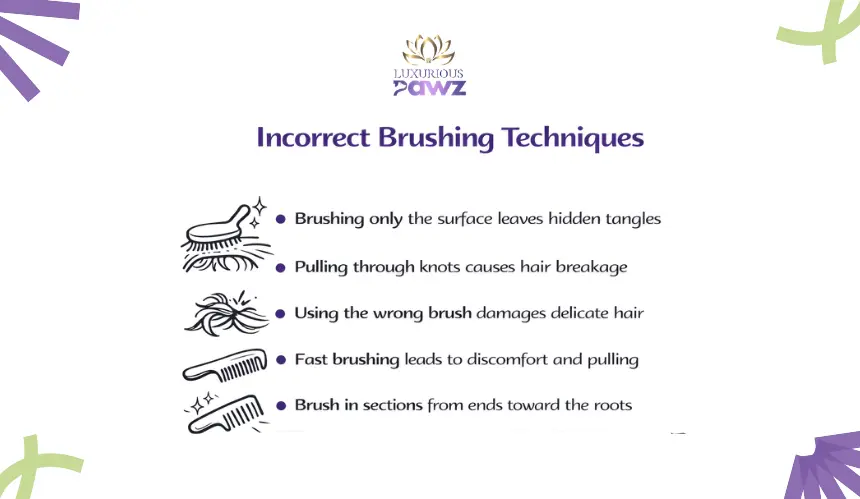
Brushing is one of the most important parts of Yorkie grooming. It removes loose hair, prevents tangles, and keeps the coat smooth. However, incorrect brushing methods can cause more harm than benefit.
Many owners brush only the top layer of the coat. While the surface may look smooth afterward, tangles often remain hidden close to the skin. Over time these knots tighten and turn into dense mats.
Signs of incorrect brushing
- Hidden tangles near the skin
- Coat appearing smooth on the surface but knotted underneath
- Hair breakage during grooming
- Discomfort when brushing sensitive areas
Brushing Mistakes and How to Improve Them
Brushing Mistake | Why is it problematic? | How to improve the technique |
Brushing only the surface layer | Tangles close to the skin remain untreated and eventually form mats | Divide the coat into sections and brush from the roots outward |
Pulling through knots | Hair breaks easily due to Yorkie’s fine coat texture | Use a detangling spray and gently separate knots with fingers |
Using the wrong brush | Some brushes are designed for thick shedding coats | Use a pin brush or slicker brush suitable for silky coats |
Brushing too quickly | Rapid brushing causes discomfort and coat damage | Brush slowly and follow the direction of hair growth |
Recommended brushing routine
Start brushing from the ends of the coat and gradually move upward toward the roots. This technique prevents pulling and makes detangling easier. Regular brushing helps distribute natural oils that keep the coat smooth and healthy.
2. Inconsistent Grooming Schedule
Yorkshire Terrier hair grows continuously and requires consistent maintenance. When grooming sessions are skipped, the coat quickly becomes tangled and difficult to manage.
Even small knots can tighten within a few days if they are left untreated. Once these knots become mats, they trap dirt and oils against the skin. This can lead to irritation and discomfort.
Maintaining a predictable grooming schedule helps prevent these problems and keeps the coat healthy.
Fact Box: Professional groomers report that matting is one of the most common coat problems in long-haired toy breeds like Yorkshire Terriers. Most severe matting cases occur when brushing routines are inconsistent. This reinforces the importance of consistent grooming routines and strengthens the credibility of the article with a factual insight. |
Signs grooming sessions are too infrequent
- Small knots appearing frequently
• Hair clumps in friction areas
• Increased difficulty brushing through the coat
• Coat appearing dull or uneven
Grooming Frequency Problems and Solutions
Grooming Habit | Potential Impact | How to Improve the Routine |
Brushing once or twice weekly | Tangles form between sessions | Brush daily for better coat control |
Delaying professional grooming | Coat becomes difficult to maintain | Schedule grooming every 4 to 6 weeks |
Ignoring coat inspections | Small knots go unnoticed | Check coat daily during brushing |
Skipping conditioning treatments | Hair becomes dry and brittle | Use conditioner after bathing |
Improving grooming consistency
A structured routine makes grooming easier. Daily brushing and regular professional grooming appointments help maintain coat length and prevent matting.
3. Using Incorrect Grooming Tools
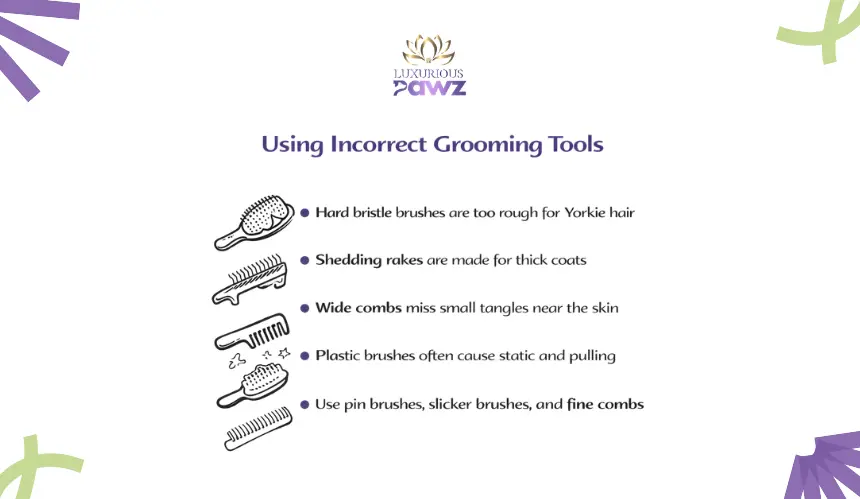
Many grooming tools available in pet stores are designed for thick double-coated breeds. Yorkshire Terriers have a single silky coat that requires gentler grooming equipment.
Using unsuitable tools can cause pulling, hair breakage, and uneven coat texture. Choosing the correct grooming tools makes the process easier for both the owner and the dog
Common tools that cause problems
- Hard bristle brushes
- Shedding rakes designed for heavy fur
- Wide combs meant for dense coats
Grooming Tools and Better Alternatives
Incorrect Tool | Why It Is Problematic? | Better Alternative |
Hard bristle brush | Too rough for delicate hair | Pin brush with rounded tips |
Shedding rake | Designed for thick coats | Fine metal grooming comb |
Wide tooth comb | Misses smaller tangles | Dual sided comb |
Plastic brushes | Often create static and pulling | Professional grooming brush |
Choosing the right grooming tools
Yorkshire Terriers respond best to gentle grooming tools that protect their delicate coat. High quality pin brushes, slicker brushes, and fine combs allow tangles to be removed safely without damaging the hair.
4. Incorrect Bathing Frequency
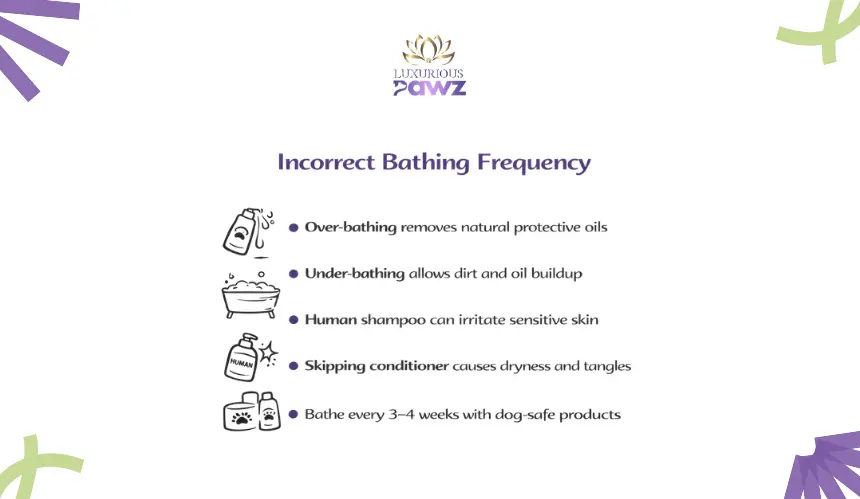
Bathing is essential for keeping a Yorkie’s coat clean and healthy. However, improper bathing frequency can cause coat damage.
Over bathing removes natural oils that keep the coat soft and smooth. Under bathing allows oils and dirt to accumulate, which makes the coat greasy and difficult to manage.
Maintaining a balanced bathing routine keeps the coat clean while preserving natural moisture.
Signs of improper bathing habits
- Dry or brittle hair
- Greasy coat texture
- Skin irritation or itchiness
- Coat losing its natural shine
Bathing Mistakes and Better Practices
Bathing Mistake | Impact on Coat | Improved Grooming Practice |
Bathing every week | Removes natural oils too frequently | Bathe every 3 to 4 weeks |
Using human shampoo | Incorrect pH irritates skin | Use dog specific shampoo |
Skipping conditioner | Hair becomes dry and tangled | Apply moisturizing conditioner |
Not drying properly | Damp coat tangles easily | Towel dry and brush gently |
Creating a balanced bathing routine
Using gentle dog shampoo and conditioner helps maintain coat softness. After bathing, drying the coat properly prevents tangles from forming.
5. Ignoring High Friction Areas Where Mats Form
Certain areas of a Yorkie’s body experience more movement and friction. These areas are more likely to develop tangles because the hair constantly rubs together.
Owners often focus on brushing the main body coat but overlook smaller areas where mats begin to form. Regular inspection of these areas prevents knots from tightening.
Common matting areas on a Yorkie
- Behind the ears
- Under the front legs
- Around the collar area
- Base of the tail
- Leg and paw hair
High Friction Areas and Prevention Methods
Area of the Body | Why Mats Form There | Prevention Strategy |
Behind the ears | Head movement creates friction | Inspect and brush daily |
Under the legs | Movement during walking | Use detangling spray while brushing |
Collar area | Collar rubs against coat | Remove collar during grooming |
Base of tail | Constant tail movement | Comb during every grooming session |
Preventing mat formation
Checking these areas daily during grooming helps remove small tangles early. Early detection prevents painful mats and keeps the coat comfortable.
Frequently Asked Questions
Why does my Yorkie’s coat tangle so quickly?
Yorkshire Terrier hair is extremely fine and silky, which makes individual strands more likely to twist together during movement. Friction from walking, playing, and sleeping can quickly create small knots, especially in areas like behind the ears or under the legs. Environmental factors such as dust and humidity can also contribute to tangling. Regular brushing and the use of conditioning products help keep the coat smooth and reduce knot formation.
How often should I brush my Yorkshire Terrier?
Yorkies with longer coats usually benefit from daily brushing because their hair tangles easily if left unattended. Daily grooming helps remove small knots before they develop into mats that are difficult to manage. For Yorkies with shorter trims, brushing several times a week may be sufficient to maintain coat smoothness. Consistent brushing also distributes natural oils, which improves coat shine and texture.
Do Yorkies shed like other dog breeds?
Yorkshire Terriers shed very little compared to many other breeds because their hair grows continuously rather than going through heavy seasonal shedding cycles. Their coat structure is closer to human hair than traditional dog fur. While minimal shedding occurs naturally, most loose hair remains trapped within the coat until it is brushed out. Regular grooming helps remove these loose strands and keeps the coat healthy.
Is professional grooming necessary for Yorkies?
Professional grooming can be very helpful for maintaining a Yorkie’s coat, especially when trimming, shaping, or removing stubborn tangles. Groomers are trained to handle delicate coats and can maintain a consistent style that suits the dog’s lifestyle. Many owners handle regular brushing and basic care at home while scheduling professional grooming every few weeks.
What type of brush works best for Yorkie coats?
Yorkshire Terrier coats respond best to gentle grooming tools that protect their delicate hair structure. A pin brush with rounded tips works well for daily brushing because it glides through silky hair without pulling. A fine metal comb is also useful for checking hidden tangles close to the skin. Using the right tools helps detangle the coat safely while maintaining its natural smooth texture.