
- admin
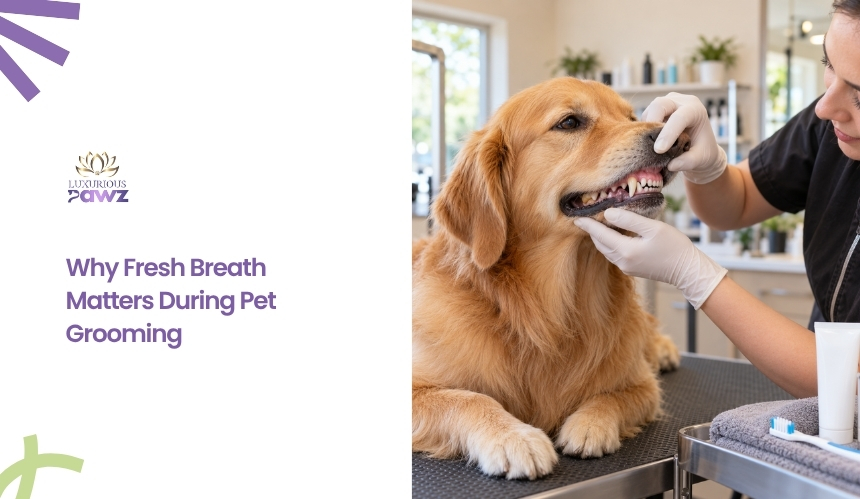
Why Fresh Breath Matters During Pet Grooming
Key Takeaways
|
A pet’s breath can reveal more than an unpleasant odor. Persistent halitosis is often an early, noticeable sign of plaque-related dental disease, even when a dog or cat is still eating and behaving normally.
During grooming, changes around the mouth can become easier to notice because the face, coat, and oral area are being handled closely.
For pet owners in Altadena, CA, recognizing when breath odor is a grooming concern versus a veterinary warning sign can prevent an underlying dental problem from going unnoticed.
Why Is Fresh Breath Part of Overall Pet Grooming?
Fresh breath is not simply a cosmetic result of grooming. It is one observable indicator of oral condition, making breath assessment a useful part of a broader grooming and hygiene routine.
A groomer may notice changes that owners do not routinely inspect, including stronger-than-usual mouth odor, food caught around the lips, excessive moisture around the muzzle, or visible changes to the teeth and gums. These observations do not diagnose dental disease, but they can identify a reason for closer veterinary evaluation.
For pets in Altadena, CA, where routine grooming may involve regular attention to facial hair, paws, skin, and coat condition, the mouth can easily become part of the same visual and hygiene assessment. The key distinction is that grooming can identify an abnormal change, while a veterinarian determines its medical cause.
For dogs in Altadena, CA, outdoor routines can mean regular exposure to dust, soil, dry vegetation, and debris, particularly around Loma Alta Drive, Mendocino Street, and the Altadena foothills. Keeping the coat and paws clean becomes especially relevant for pets moving between these outdoor environments and the home.
As part of this routine, dog grooming can help maintain the coat, paws, and facial areas while removing accumulated outdoor debris and supporting overall hygiene.
Why Can Bad Breath Be an Early Warning Sign?
Bad breath, or halitosis, is frequently one of the first noticeable signs of dental disease. Plaque begins as a bacterial biofilm on the tooth surface. Salivary minerals can then harden that plaque into calculus, while bacteria and inflammation develop around and beneath the gumline.
The important point is that the strongest source of dental disease may not be the visible brown or yellow tartar. Plaque beneath the gumline is particularly significant because it can damage the tissues supporting the teeth without being obvious during a casual inspection. Cornell notes that 80% to 90% of dogs over three years old have some component of periodontal disease, while early disease can remain difficult for owners to recognize.
What Does Normal Versus Persistent Breath Odor Look Like?
A temporary odor after eating can occur without indicating dental disease. Certain foods can also temporarily alter a pet’s breath. Persistent, increasingly strong, or foul-smelling breath is different because it may reflect ongoing bacterial activity, periodontal pockets, inflammation, infection, or another health problem.
The useful grooming observation is therefore changed over time. If a pet that normally has little noticeable odor suddenly develops strong breath, particularly alongside gum redness, drooling, chewing changes, or visible tartar, the change deserves attention rather than being treated as ordinary pet odor.
Do You Know?
By age three, most dogs and cats have some degree of periodontal disease. The American Animal Hospital Association (AAHA) identifies bad breath as one of the early signs owners may notice, while emphasizing that pets can conceal dental pain remarkably well.
What Can Cause Bad Breath in Dogs and Cats?
The most common explanation is oral disease, but the odor itself does not identify the exact cause. Understanding the underlying mechanism prevents owners from treating every case of bad breath as a simple cleanliness issue.
How Do Plaque, Tartar, and Food Buildup Create Odor?
Plaque is a bacterial biofilm that develops on teeth after eating. If it is not adequately disrupted, minerals in saliva can cause it to harden into calculus. The roughened surface then provides additional areas where plaque can accumulate.
Food particles can also become trapped within periodontal pockets around affected teeth. Bacterial metabolism produces compounds responsible for much of the characteristic foul odor associated with halitosis.
This explains why simply making the outside of a pet’s mouth look clean does not necessarily eliminate bad breath. Odor-producing bacteria can exist in areas that ordinary grooming cannot safely access.
Can Dental Disease Cause Persistent Bad Breath?
Yes. Periodontal disease is the most common cause of persistent halitosis in dogs and is also a major cause of oral odor in cats. As gingivitis progresses, inflammation can extend beneath the gumline and damage the tissues and bone that support the teeth.
Cats present an additional consideration because dental disease can involve conditions such as tooth resorption as well as gingivitis and periodontitis. Cornell reports that studies have found dental disease in 50% to 90% of cats older than four years, depending on the population studied.
Because much of the affected tooth structure and supporting tissue lies below the visible gumline, a pet can have clinically important dental disease without dramatic changes that an owner can see.
Can Bad Breath Come From Something Other Than Dental Disease?
Yes. Although oral disease is the dominant concern, persistent halitosis can also accompany conditions involving the respiratory system, kidneys, liver, diabetes, oral trauma, or other tissues around the mouth. Cornell specifically notes that unusual odor characteristics can sometimes provide additional clues, although they are not sufficient for diagnosis.
For example, a sweet or fruity odor can occur with diabetes, while an ammonia-like odor may accompany kidney disease. These possibilities are less common than periodontal disease, but they explain why persistent or unusual breath should not automatically be managed with grooming products.
Do You Know?
A clean-looking tooth does not necessarily mean the supporting structures are healthy. Cornell explains that the primary problem in periodontal disease is often plaque beneath the gums, an area that cannot be adequately assessed through a casual visual inspection.
How Can Grooming Support Better Breath and Oral Hygiene?
Grooming contributes to oral hygiene primarily through cleanliness, observation, and early recognition, not by replacing veterinary dentistry. That distinction keeps grooming recommendations practical without overstating what a groomer can safely accomplish.
Facial grooming can remove food, saliva, and debris from hair surrounding the mouth. This is particularly relevant for pets with longer facial furnishings, where trapped moisture and organic material can contribute to an unpleasant external odor. Keeping the muzzle clean also makes changes around the lips and face easier to observe.
During routine grooming, attention can be given to visible signs such as abnormal odor, gum redness, excessive drooling, visible calculus, facial swelling, or reluctance to tolerate handling around the mouth. These findings should be documented or communicated to the owner rather than interpreted as a diagnosis.
Dogs spending time around Eaton Canyon, Altadena Drive, and the Pasadena foothills may encounter dust and outdoor debris, making consistent hygiene particularly useful. Adding pet teeth brushing to routine grooming helps remove surface plaque and freshen breath while supporting ongoing oral hygiene without replacing veterinary dental care.
What Can Be Done at Home to Support Fresh Breath?
Daily dental care has a different role from grooming. Tooth brushing physically disrupts plaque before it mineralizes into calculus and is considered one of the most effective home-care measures for maintaining oral health.
Veterinary dental products, appropriate dental diets, selected dental chews, and certain water additives may also contribute to plaque control. AAHA recommends products carrying the Veterinary Oral Health Council (VOHC) seal when owners choose dental products designed to support oral hygiene.
Human toothpaste should not be substituted for pet-specific toothpaste because some human formulations contain ingredients that are unsafe for animals.
Why Does Grooming Not Replace a Veterinary Dental Cleaning?
Professional veterinary dentistry addresses areas that routine grooming cannot safely or adequately reach. A veterinary dental procedure can involve scaling above and below the gumline, polishing, dental probing, charting, and dental radiographs to evaluate structures that cannot be seen from the outside.
This matters because periodontal pockets and disease beneath the gumline can continue progressing even when the visible tooth surface appears relatively clean. A grooming appointment can therefore be valuable as an observation point, but it should not be presented as treatment for periodontal disease.
Do You Know?
Plaque can begin accumulating again within hours after a pet eats. AAHA therefore emphasizes that occasional professional cleanings alone are not sufficient for ongoing plaque control and recommends regular home dental care between veterinary evaluations.
When Does Bad Breath Mean Your Pet Needs More Than Grooming?
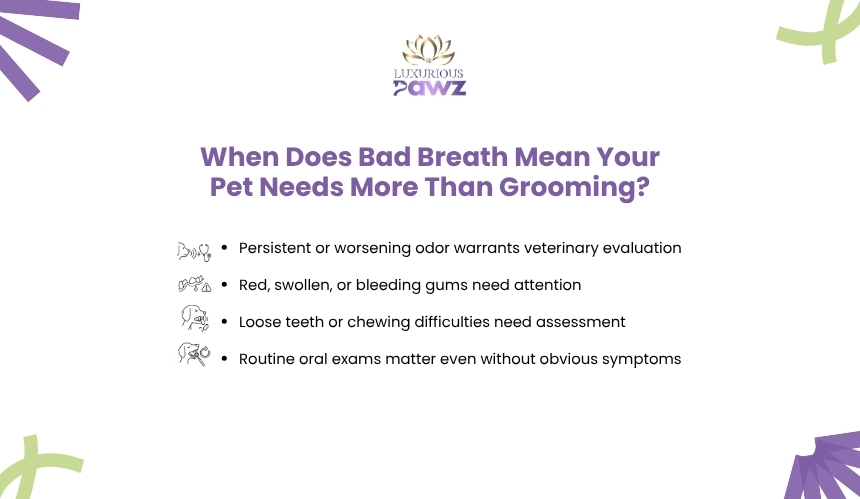
Persistent bad breath should move from a grooming observation to a veterinary concern when it occurs with other signs of oral disease or represents a clear change from the pet’s normal condition.
Owners should arrange veterinary evaluation when bad breath is accompanied by:
- Red, swollen, or bleeding gums
- Significant yellow or brown calculus
- Loose, damaged, or missing teeth
- Excessive drooling
- Difficulty chewing or swallowing
- Dropping food while eating
- Eating on only one side of the mouth
- Pawing at the mouth or face
- Facial swelling
- Reduced appetite or unexplained changes in eating behavior
- Persistent or progressively worsening odor
AAHA and Cornell both identify combinations of these signs as reasons for veterinary assessment.
The absence of obvious symptoms does not guarantee healthy teeth. Pets can hide oral pain, and early periodontal disease may produce few outward behavioral changes. This is one reason routine veterinary oral examinations remain important even when a pet appears comfortable.
For pets in Altadena, CA, routine grooming can provide another practical opportunity to notice changes between veterinary visits. A groomer may recognize an unusual odor or visible mouth-related change during handling, while the veterinarian remains responsible for diagnosis, dental imaging, periodontal staging, and treatment.
Do You Know?
Veterinary dental diagnosis often requires more than looking at the visible teeth. Cornell explains that definitive assessment can require anesthesia, dental probing and charting, and full-mouth dental X-rays because significant disease may exist below the gumline.
For pet owners in Altadena and throughout Greater Los Angeles, Luxurious Pawz provides professional pet grooming focused on maintaining a clean, comfortable appearance while giving owners another opportunity to notice changes in their pet’s overall condition.
Routine grooming can include careful attention to the face and surrounding areas where food, moisture, and debris may accumulate. For persistent bad breath or other signs of dental disease, grooming should be paired with appropriate veterinary dental care rather than used as a substitute for medical treatment.
Frequently Asked Questions
Why Does My Pet's Breath Smell Bad?
The most common cause is oral disease involving plaque, tartar, gingivitis, or periodontal disease. Persistent odor can also occur with other medical conditions, so unusual or worsening breath should be evaluated by a veterinarian.
Can Grooming Help With Bad Breath?
Grooming can improve cleanliness around the mouth and remove food or debris from facial hair, but it cannot treat disease beneath the gumline. Persistent halitosis requires evaluation of the underlying cause.
Does Bad Breath Always Mean My Pet Has Dental Disease?
No. Dental disease is a major cause, but diet, oral trauma, respiratory disease, kidney disease, liver disease, and diabetes can also contribute to abnormal breath odor.
How Often Should Pets Have Their Teeth Checked?
Veterinary oral examinations should be part of routine preventive care. AAHA recommends regular dental evaluations, with professional cleaning frequency determined according to the individual pet’s age, breed, oral condition, and risk factors.
What Are Signs That Bad Breath Needs Veterinary Attention?
Persistent odor combined with red or bleeding gums, heavy tartar, drooling, facial swelling, difficulty eating, dropped food, pawing at the mouth, or changes in appetite warrants veterinary evaluation.
Can Daily Tooth Brushing Improve My Pet's Breath?
Yes. Regular brushing physically disrupts plaque accumulation and is considered one of the most effective forms of home dental care. It should complement, rather than replace, professional veterinary dental examinations.