
- admin
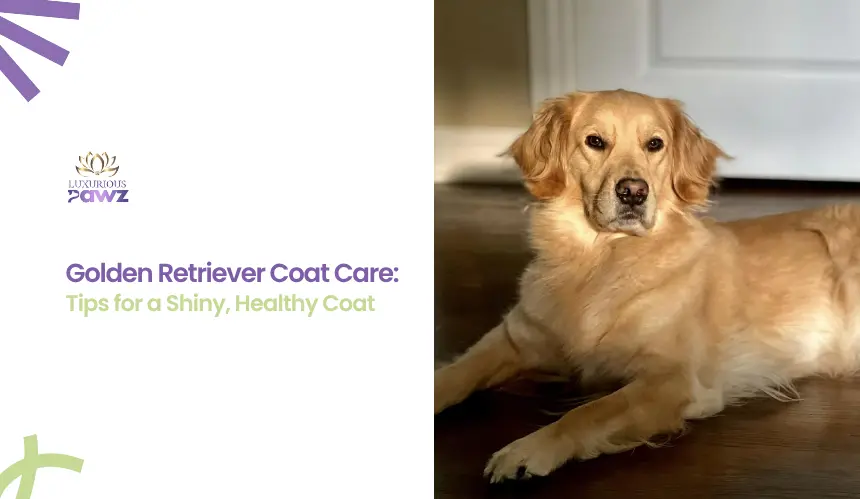
Golden Retriever Coat Care: Tips for a Shiny, Healthy Coat
Key Takeaways:
|
A Golden Retriever’s coat reflects its overall health, lifestyle, and care routine. That rich golden shine comes from a balance of grooming habits, skin health, and proper nutrition. Many owners deal with constant shedding, dryness, or tangled fur because they overlook how this breed’s coat actually functions. When care is aligned with the coat’s natural structure, the difference becomes visible within weeks. This guide addresses every essential query with precise, actionable insights so you can maintain a soft, radiant, and resilient coat without guesswork.
What Defines the Structure of a Golden Retriever’s Coat?
Golden Retrievers carry a dual-layer coat system designed for protection and insulation.
- The topcoat acts as a barrier against dirt, water, and environmental elements
- The undercoat regulates internal temperature and cushions the skin
This layered system traps air close to the body, helping maintain warmth in cold climates and preventing overheating during warmer months. Any grooming approach that interferes with this structure can disrupt the dog’s natural defense mechanism.
Which Factors Directly Influence Coat Texture and Shine?
Coat quality depends on both internal and external conditions.
Element | Effect on Coat Condition |
Balanced diet | Promotes smooth, glossy strands |
Hydration levels | Prevents brittleness and breakage |
Grooming frequency | Maintains uniform texture |
Skin health | Supports consistent hair growth |
Environmental exposure | Alters softness and color |
Do you know?: Clinical observations suggest that dogs receiving complete nutrition show up to 25% improvement in coat smoothness within two months, especially when fatty acids are included. |
How Often Should Brushing Be Done for Optimal Results for a Golden Retriever?
Routine brushing prevents buildup and supports natural oil distribution.
Recommended schedule:
- Maintenance phase: 3 to 4 sessions weekly
- High-shedding periods: Daily sessions
Bathing Techniques That Protect the Coat
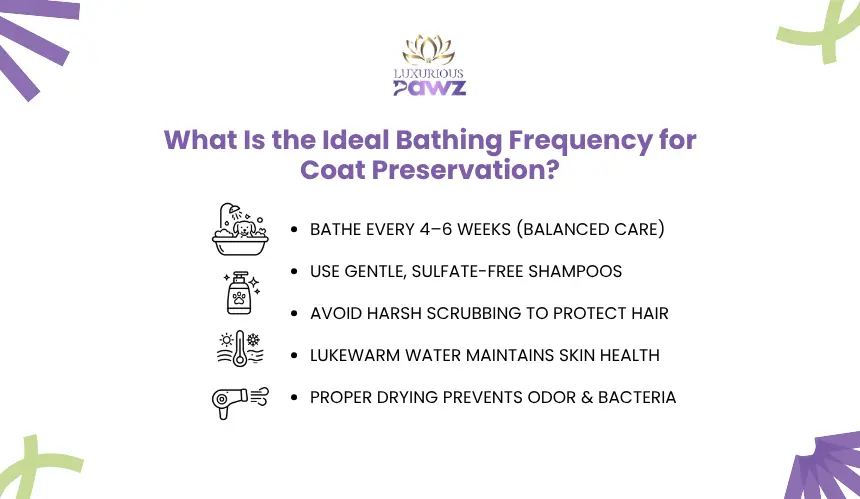
- Choose sulfate-free dog shampoos with moisturizing properties
- Avoid excessive scrubbing that can weaken hair shafts
- Use lukewarm water to preserve skin integrity
- Apply conditioners to support softness
Proper drying is critical. Residual moisture trapped in dense fur can encourage bacterial growth and unpleasant odor.
How Does Nutrition Shape Coat Quality?
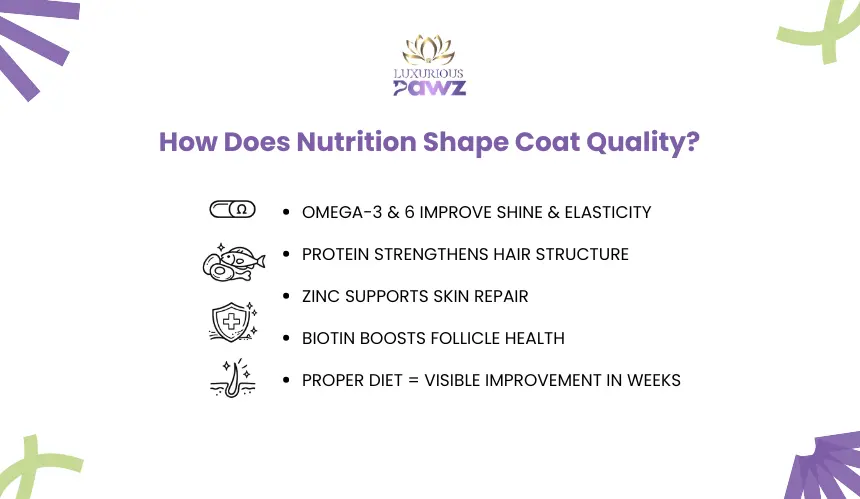
Hair growth relies heavily on nutrient intake. Without proper dietary support, even frequent grooming cannot produce a healthy appearance.
Key Nutritional Components
- Omega-3 and Omega-6 fatty acids improve elasticity and shine
- High-quality protein strengthens hair structure
- Zinc supports skin repair and prevents scaling
- Biotin enhances follicle function
Nutrient-Rich Food Sources
- Oily fish such as salmon
- Eggs for protein and biotin
- Vegetables like carrots and spinach
- Premium dog food formulated for skin and coat support
Fact: Scientific studies indicate that consistent omega supplementation leads to visible coat enhancement within 6 to 8 weeks. |
How Can Excessive Shedding Be Controlled Effectively?
Shedding is a natural process for this breed, but it can be managed.
Practical Control Methods
- Increase grooming frequency during seasonal transitions
- Use specialized tools to remove loose undercoat
- Maintain hydration to support skin elasticity
- Include fatty acids in daily meals
Regular removal of loose hair prevents accumulation and reduces indoor mess.
Is Trimming Necessary for Coat Maintenance?
Light trimming helps maintain cleanliness without altering coat function.
Areas Suitable for Trimming
- Hair around the paws for hygiene
- Feathering along legs for neatness
- Fur near ears to prevent tangling
Why Full Shaving Should Be Avoided
- Interferes with temperature regulation
- Leads to uneven regrowth patterns
- Exposes skin to harmful UV rays
Maintaining the natural coat length ensures proper insulation and protection.
How Can Matting Be Prevented in Dense Areas?
Matting usually develops in areas where friction and moisture combine, causing hair strands to twist and tighten over time. In Golden Retrievers, dense coat regions require extra attention because the undercoat can trap loose fur that quickly forms knots if ignored. Preventing matting is not about occasional grooming. It depends on consistent observation and timely action.
High-Risk Zones
- Behind the ears
- Under the chest
- Around the collar
These areas experience constant movement and pressure, which increases the chances of tangling. Moisture from bathing, swimming, or humidity can further worsen the situation by softening the hair and making it easier to clump together.
Prevention Techniques
- Regular inspection of hidden and dense coat areas
- Use of detangling sprays when resistance is noticed during brushing
- Complete drying after any exposure to water
Dealing with small tangles immediately prevents them from tightening into mats that can pull on the skin and cause discomfort.
How Do Environmental Conditions Impact Coat Health?
The surrounding environment plays a major role in how a coat looks and feels over time. Even with proper grooming, external factors can gradually affect texture, cleanliness, and overall appearance.
Common environmental influences include:
- Dry air, which reduces moisture and leads to brittle fur
- High humidity, which can create conditions for fungal growth
- Dust and pollution, which settle deep into the coat layers
- Sun exposure, which may fade color and weaken hair structure
Maintaining cleanliness and adapting grooming habits based on environmental exposure helps preserve coat strength and appearance.
How Should Coat Care Change Across Seasons?
Seasonal transitions directly influence shedding intensity, coat density, and skin hydration levels. As temperatures shift, a Golden Retriever’s coat adapts naturally, which means grooming routines must also evolve to support these changes. Ignoring seasonal needs can lead to excessive shedding, dryness, or an unbalanced coat texture. Adjusting care based on climate ensures that the coat remains healthy, functional, and visually consistent throughout the year.
Warm Months
During warmer weather, shedding increases as the dog releases its heavier undercoat. The focus during this period should be on managing loose fur and maintaining hydration without disrupting natural oils.
- Increase brushing frequency to control excess shedding
- Ensure consistent hydration to support skin and coat health
- Avoid frequent bathing to prevent removal of essential oils
Cooler Months
In colder conditions, the coat becomes thicker to provide insulation. Grooming during this time should focus on preserving this protective layer while preventing dryness and irritation.
- Maintain coat density to support natural insulation
- Use moisturizing grooming products to prevent dryness
- Check the skin regularly for flakes or sensitivity
Adapting grooming practices according to seasonal demands helps maintain a balanced coat, preventing common issues while supporting overall comfort and health.
Should You Choose Home Grooming or Professional Services?
Deciding between home grooming and professional care depends on your comfort level, time availability, and desired results. Each option offers unique benefits, and using both can create a well-rounded grooming routine.
Home grooming provides flexibility and allows for regular maintenance. It is cost-effective and helps you stay consistent with brushing and basic care. However, it requires some level of skill and the right tools to achieve good results.
Professional grooming, on the other hand, offers expert handling and access to specialized equipment. Groomers can manage complex tasks such as deep coat cleaning, trimming, and thorough detangling with precision.
Feature | Home Grooming | Professional grooming |
Flexibility | High | Fixed schedule |
Cost | Lower | Higher |
Skill Level | Moderate | Professional expertise |
Tools | Basic | Advanced |
A combination of both approaches ensures the coat stays clean, manageable, and healthy over time.
Give your Golden Retriever the care it truly deserves with Luxurious Pawz, where coat health meets expert grooming precision. From gentle detangling to premium coat treatments, every service is designed to enhance shine, reduce shedding, and protect the natural integrity of your dog’s double coat.
Frequently Asked Questions
How long does it take to groom a Golden Retriever properly?
A full grooming session can take anywhere from 1 to 2 hours depending on coat condition, thickness, and whether detangling is required.
Can I let my Golden Retriever air dry after a bath?
Air drying is not recommended because moisture can remain trapped in the undercoat, leading to odor or skin issues. Towel drying followed by blow drying is more effective.
How do I know if my dog’s coat is over-brushed?
Signs of over-brushing include hair breakage, frizz, or skin sensitivity. Grooming should be gentle and controlled rather than excessive.
Do Golden Retrievers need special grooming during puppy stages?
Yes, early grooming helps them get used to brushing and handling. Puppy coats are softer and require gentler tools and shorter sessions.
Can poor grooming affect my dog’s behavior?
Yes, discomfort from mats or skin irritation can make dogs restless or irritable. Proper grooming contributes to overall comfort and calmness.
Is it okay to use perfumes or sprays on my dog’s coat?
Only dog-safe grooming sprays should be used. Human perfumes can irritate the skin and disrupt natural coat balance.