
- admin
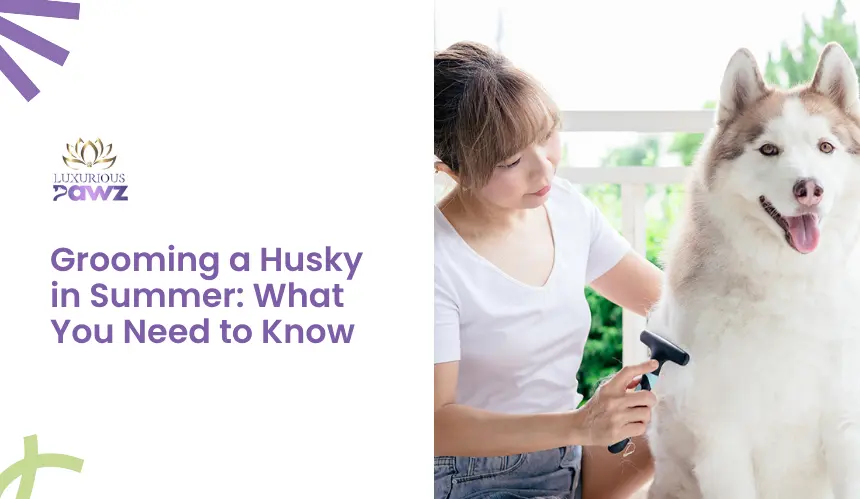
Grooming a Husky in Summer: What You Need to Know
Key Takeaways
|
Siberian Huskies may be known for their cold-weather coat, but summer grooming is still essential for keeping that coat clean, breathable, and comfortable. Their double coat should not be shaved for heat relief. Instead, it should be maintained through regular brushing, controlled bathing, proper drying, and seasonal coat management. Summer often brings heavier shedding, more outdoor debris, and greater risk of trapped undercoat, which is why a Husky’s grooming routine needs to become more careful and consistent during warmer months.
Why Summer Grooming a Husky Matters
Summer grooming matters because a Husky’s double coat changes with the season and can quickly become dense with loose undercoat if it is not maintained properly. Warm weather often triggers heavier shedding, and that excess fur can remain trapped close to the skin if brushing is inconsistent. This makes the coat feel heavier, reduces airflow, and can leave the dog less comfortable overall.
Coat Function Still Matters in Heat
A Husky’s coat is not only for warmth. It also helps regulate body temperature, protects the skin from direct sun exposure, and acts as a barrier against dirt and environmental debris. In summer, the goal is not to remove that coat but to keep it functioning properly by clearing out loose undercoat and maintaining good airflow through the fur.
Summer Changes the Grooming Demand
As temperatures rise, the undercoat often loosens more noticeably and begins shedding in greater volume. This means the grooming routine that worked in cooler weather may no longer be enough. Summer care usually requires more frequent brushing, closer coat checks, and better drying habits after baths or damp outdoor exposure.
Is Summer Shedding in a Husky Normal?
Yes, summer shedding is normal for Huskies. Their coat responds strongly to seasonal change, and warmer weather often causes the undercoat to release more heavily. This can make it seem like the dog is suddenly losing an extreme amount of fur, but in most cases, it is part of a normal coat transition.
Do You Know? According to AKC, double coats that are not maintained properly can become tangled, irritate the skin, and make shedding harder to control. |
Why the Undercoat Releases More
The undercoat serves as insulation, so when the weather becomes warmer, the coat begins adjusting by releasing excess fur. This process helps the coat rebalance itself for the season. Because Huskies have such a dense double coat, the amount of fur released can look dramatic compared to many other breeds.
What Summer Shedding Looks Like
Summer shedding often appears as loose clumps of undercoat, soft tufts separating from the coat, and noticeably larger amounts of fur on floors, furniture, and grooming tools. Some parts of the body may also look fuller or thinner than others for a short period as the undercoat releases unevenly.
Should You Shave a Husky?
No, shaving a Husky in summer is generally not recommended. A Husky’s double coat is part of a natural protective system, and removing it can interfere with how the coat regulates temperature and protects the skin.
Why Shaving Does Not Solve the Problem
Many owners assume that less fur automatically means a cooler dog, but a Husky’s coat does not work like a heavy blanket alone. It helps manage temperature by allowing the body to stay insulated from both cold and heat when the coat is healthy and properly maintained. Shaving removes that protection and can leave the skin more exposed to sun and environmental stress.
What Can Happen After Shaving
Shaving can disrupt the coat’s natural balance and sometimes affect how it grows back. The texture may change, the coat may regrow unevenly, and the dog may lose some of the natural protection the double coat is meant to provide. For that reason, maintenance is safer than removal.
Husky Summer Brushing Frequency and Coat Care
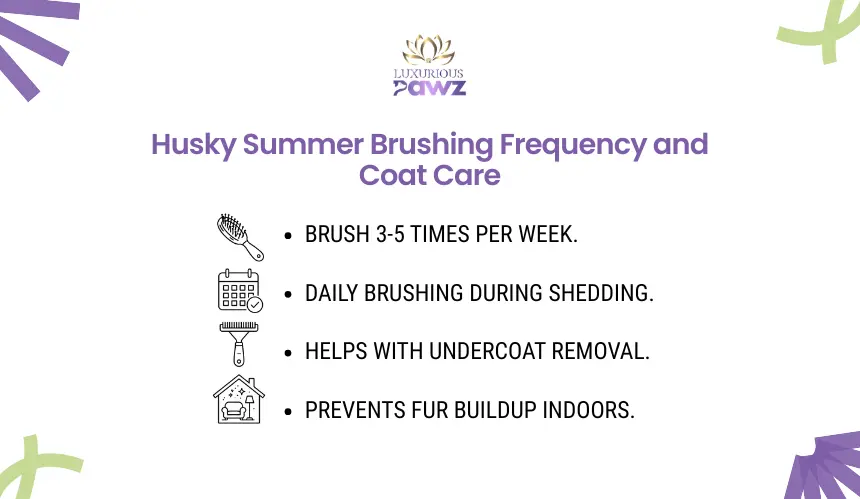
A Husky should typically be brushed at least 3–5 times per week in summer, and during heavy shedding periods, daily brushing is often ideal. This increased frequency helps manage the faster release of the undercoat and keeps the coat from becoming packed with loose fur.
Brushing Keeps the Coat Breathable
Brushing in summer is not about thinning the coat unnaturally. It is about clearing loose fur so air can move properly through the coat structure. When dead undercoat stays packed near the skin, the coat becomes denser and less efficient, which is why consistent brushing is so important during warmer months.
Summer Brushing Reduces Indoor Fur Buildup
Frequent brushing also helps control how much fur ends up around the home. When loose undercoat is removed gradually through grooming, it is less likely to fall out in large amounts across furniture, clothing, and floors.
What Is the Best Brushing Method for a Husky?
The best brushing method for a Husky in summer is a gentle, layered approach that reaches the undercoat without damaging the topcoat. Surface brushing may make the coat look tidier, but it often leaves deeper loose fur untouched.
Start With a Dry Coat
A dry coat is usually easier to evaluate because you can feel where the density is changing and see where undercoat is collecting. Damp fur tends to clump together more easily, which can make brushing less precise and more difficult.
Work in Sections
Brushing in sections helps ensure that no dense areas are missed. Instead of moving randomly across the body, work through one small area at a time so the undercoat is actually being reached. This method is especially useful around heavier coat zones such as the neck, chest, hips, and hindquarters.
Use Line Brushing
Line brushing means lifting one layer of coat and brushing beneath it before moving upward to the next layer. This method reaches deeper loose fur while protecting the outer guard hairs from rough over-brushing. It is one of the most effective ways to manage a Husky’s coat during summer shedding.
Which Tools Work Best for a Husky?
The best tools for summer Husky grooming are the ones that remove loose undercoat safely while preserving the coat’s protective outer layer. No single tool does every part of the job, so a combination usually works best.
1. Slicker Brush
A slicker brush is useful for regular maintenance because it lifts loose surface fur, smooths the coat, and helps open dense areas before deeper grooming. It works well for routine sessions when used gently and consistently.
2. Undercoat Rake
An undercoat rake helps remove dead fur from deeper within the coat, which makes it especially useful during summer shedding. It should be used slowly and carefully so it clears loose undercoat without scraping or damaging the coat structure.
3. Wide-Tooth Comb
A wide-tooth comb is helpful as a finishing tool because it shows whether the coat has been fully worked through. It can catch hidden resistance in dense spots and helps confirm that grooming went beyond the surface layer.
4. High-Velocity Dryer
A high-velocity dryer is especially effective during summer because it helps blow out loosened undercoat and push moisture outward after bathing. It also separates the coat, making dense areas easier to identify and groom more thoroughly.
Should You Bathe a Husky More Often?
A Husky may need occasional baths in summer, but not constant washing. Warmer weather often means more outdoor time, more dust, and more debris in the coat, so bathing may become useful when the coat is noticeably dirty or needs a grooming reset.
Do You Know? According to VCA Animal Hospitals ,bathing a dog too often can strip natural oils from the coat, which may lead to dryness, irritation, and reduced coat quality. |
When Summer Baths Help
Bathing is helpful when the coat has significant dirt buildup, when the dog has rolled in something that cannot be brushed out easily, when odor has started to build up, or when shedding season calls for a more thorough grooming session. In these situations, a bath can do more than simply clean the surface.
It can help loosen trapped debris, refresh the coat, and prepare it for more effective drying and brushing afterward. A proper bath during heavy shedding can also help release loose undercoat that would otherwise stay trapped in the fur. When followed by complete drying and careful brushing, bathing becomes a useful part of coat maintenance rather than just a cleaning step.
Why Too Much Bathing Is a Problem
Even in summer, over-bathing can do more harm than good because a Husky’s coat depends on natural oils to stay protective and balanced. Bathing too often can dry out the skin and strip away the oils that help the coat repel dirt, maintain flexibility, and support its natural insulating function. When those oils are removed too frequently, the coat may start to feel rougher, look duller, and become less smooth and manageable.
It can also lose some of the protective quality that helps the double coat function properly in changing weather conditions. A Husky may need extra grooming in summer, but that does not mean more frequent bathing should replace careful brushing, undercoat control, and proper drying.
Brush Before the Bath
Brushing before bathing helps remove excess loose fur and prevents water from making impacted coat even denser. It also allows shampoo and water to move through the coat more evenly, making the bath more effective and the drying process easier afterward.
Why Drying a Husky Matters More in Summer?
Section | Main Point | Explanation |
Why Drying Matters More in Summer | Moisture gets trapped easily in a Husky’s dense coat | The dense undercoat can stay damp near the skin even when the surface feels dry, making the coat heavier and less breathable. |
Towels Are Only the First Step | Towels do not fully dry the undercoat | They remove surface moisture well, but deeper layers usually stay damp without further drying. |
Airflow Works Better Than Rubbing | Gentle airflow dries more effectively | Airflow helps open the coat and move moisture out without creating excess friction. |
Damp Undercoat Creates Problems | Trapped moisture affects comfort and coat condition | A damp undercoat can make the coat compact, musty, and harder to manage. |
What Summer Mistakes Should You Avoid When Grooming a Husky?
Summer grooming mistakes often come from trying to make the dog cooler too quickly or using methods that work against the coat’s natural function. A Husky’s coat should be managed thoughtfully, not aggressively.
Surface Brushing Only
Brushing only the top layer leaves much of the deeper loose fur untouched, which can create a false sense that the coat is fully maintained. In a Husky’s thick double coat, hidden undercoat often collects closer to the skin, where it can begin to compact and restrict airflow without being immediately visible from the surface.
Even if the outer layer still looks smooth and neat, this trapped fur can make the coat feel heavier, less breathable, and harder for the dog to stay comfortable in warm weather. Thorough brushing should reach beyond the surface so the coat remains open, balanced, and able to function properly.
Using Harsh Deshedding Tools
Some tools can remove too much coat or damage the outer guard hairs when they are used too aggressively or too often. In a Husky, the goal is not to thin the coat excessively or strip it down for convenience, but to remove loose undercoat in a controlled way that preserves the coat’s natural structure.
The guard hairs play an important protective role, helping shield the skin from sun, dirt, and weather while supporting temperature regulation. A Husky needs careful undercoat management, not harsh grooming methods that weaken the protective outer layer and disrupt how the double coat is meant to function.
Skipping Drying Precision
A rushed drying session can leave moisture trapped deep inside the coat, even when the surface feels mostly dry to the touch. In a Husky’s dense double coat, the outer layer may seem dry quickly, but the inner coat can continue holding dampness close to the skin. This trapped moisture can reduce comfort, disrupt the coat’s natural balance, and create conditions that lead to odor, irritation, or compacted undercoat.
It can also cause the coat to dry unevenly, making it heavier, less breathable, and harder to manage afterward. Taking the time to dry the coat thoroughly helps preserve its lightness, airflow, and protective function, which is especially important during warm weather when comfort and coat performance need to work together.
Ignoring Seasonal Changes
A routine that is manageable in cooler months may not be enough during summer shedding. Owners need to adjust frequency and grooming depth based on what the coat is doing rather than using the exact same routine year-round.
How Can You Keep a Husky Comfortable?
Keeping a Husky comfortable in summer depends on supporting the coat rather than fighting it. Good grooming works best when it is paired with a cooler environment and practical daily care.
Focus on Coat Maintenance
Regular brushing, undercoat removal, occasional bathing, and complete drying are far more effective for summer comfort than shortening a Husky’s coat. These steps keep the double coat open, balanced, and able to regulate temperature as it should, while also improving cleanliness and reducing seasonal buildup.
- Regular brushing removes loose fur before it builds up and blocks airflow
- Undercoat removal helps reduce heavy shedding and keeps the coat from becoming dense and packed
- Occasional bathing clears dirt, debris, and excess oil that can weigh the coat down
- Complete drying prevents trapped moisture, which can lead to discomfort, odor, and coat imbalance
- These grooming steps help the coat stay lighter, cleaner, and more breathable in warm weather
- They support the coat’s natural cooling function without interfering with its protective structure
- Cutting the coat short does not improve summer comfort the way proper maintenance does
Support the Dog’s Environment
Shade, fresh water, and cool resting areas are essential companions to proper summer grooming because even a well-maintained Husky coat cannot do its job effectively without a comfortable environment. The double coat helps regulate body temperature, but its protective function works best when the dog is not exposed to excessive heat for long periods and has regular access to cooling support. Shade reduces direct sun exposure, helping prevent overheating and limiting unnecessary heat buildup on the outer coat.
Fresh, clean water supports hydration, which is critical for overall temperature regulation, skin condition, and coat health during warmer months. Cool resting areas, whether indoors with airflow or outside on a shaded surface, allow the dog’s body to recover and stay comfortable between activity periods. Together with steady grooming, these environmental factors reduce stress on the coat and the body, helping the Husky remain cleaner, cooler, and more comfortable throughout the summer.
Stay Consistent, Not Extreme
The best summer grooming approach for a Husky is calm, consistent, and controlled. Warm weather does not mean the coat needs drastic changes. Instead, the focus should be on maintaining the natural function of the double coat while keeping it clean, breathable, and free from excess undercoat buildup.
- Maintain a steady grooming routine rather than making extreme seasonal changes
- Focus on regular brushing to remove loose undercoat and improve airflow
- Keep the coat open and free from compacted fur that can trap heat
- Avoid shaving, as the double coat helps regulate temperature and protect the skin
- Bathe only when needed, using proper products that do not strip natural oils
- Check for hidden tangles, dense shedding areas, and moisture buildup
- Use grooming methods that support the coat’s natural insulation and protective role
A Husky’s summer grooming routine should support the coat, not fight against it. With steady maintenance and the right tools, the double coat can continue to regulate temperature effectively while staying cleaner, lighter, and healthier throughout the warmer months.
How Environmental Conditions Affect Huskies
In Altadena, CA, Sunland, CA, Pasadena, CA, Highland Park, CA, Glendale, CA, and La Cañada Flintridge, CA, environmental conditions can affect a Husky’s coat through heat, dry air, dust, and strong sun exposure. These factors can leave the coat feeling dirtier and drier more quickly, especially after time outdoors. Dry conditions may also increase skin dryness, while loose debris can collect in the outer coat and undercoat. Because of this, the coat often needs more consistent brushing and regular checks to keep it open, clean, and comfortable.
In Burbank, CA, Tujunga, CA, Shadow Hills, CA, Montrose, CA, La Crescenta, CA, and Eagle Rock, CA, similar environmental exposure can make summer coat care more demanding. Heat and airborne particles can cause the coat to trap more dust and feel heavier if loose undercoat is not removed regularly. Outdoor activity in these areas may also lead to faster buildup of dirt and debris, making grooming more important for comfort and coat balance. In these locations, a Husky benefits from steady brushing, proper drying, and a clean resting environment so the double coat can continue functioning properly.
Keeping a Husky comfortable in warm weather takes more than occasional brushing. It requires consistent coat care, proper drying, and attention to the environment your dog lives in every day. For owners who want expert help maintaining a healthy, breathable coat through every season, Luxurious Pawz offers professional grooming support designed to keep your Husky clean, comfortable, and properly cared for.
Frequently Asked Questions
How often should I groom my Husky in summer?
Most Huskies need more frequent brushing in summer, especially during heavy shedding. Several sessions a week are often helpful, and some dogs may need near-daily grooming during peak coat blow.
Can I trim a Husky’s coat for summer?
Light tidying in limited areas may sometimes be done by a professional, but the coat should not be shaved down for summer heat. The double coat needs to stay intact to perform its natural protective function.
Why does my Husky seem to shed more in summer?
Summer often triggers a seasonal undercoat release, which is why the dog may appear to shed much more heavily. This is usually part of a normal seasonal transition rather than a sign of a problem.
Is bathing enough to keep a Husky cool?
No, bathing alone is not enough. A Husky stays more comfortable when loose undercoat is removed, the coat is dried properly, and the dog has access to shade, water, and a cooler resting space.