
- admin
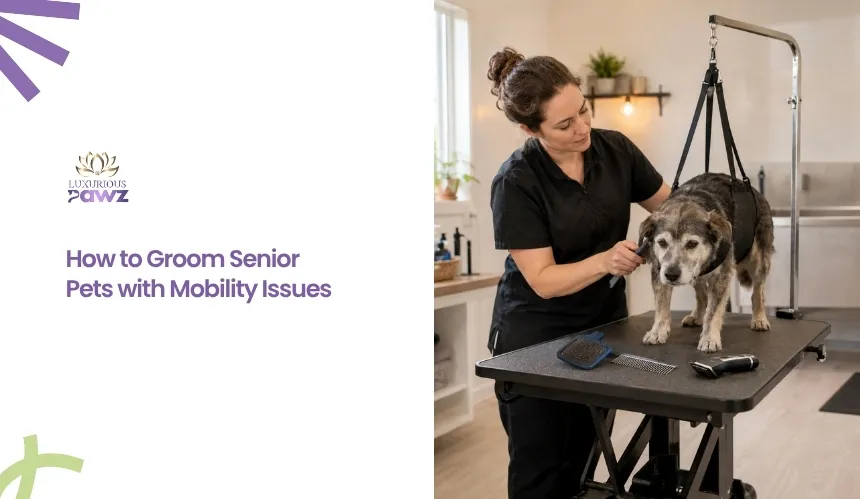
How to Groom Senior Pets with Mobility Issues
Key Takeaways
|
Grooming senior pets with mobility issues requires more control, patience, and physical support than routine grooming. Aging joints, arthritis, weak legs, and reduced stamina can make brushing, bathing, nail trimming, and repositioning painful if handled incorrectly.
The goal is to keep the pet clean without increasing stress, slipping risk, joint strain, or skin discomfort. This article explains how to adjust grooming methods so older pets stay safe, supported, and comfortable throughout the process.
Understand Your Senior Pet’s Mobility Limits

Senior pets cannot always tolerate the same grooming positions, pressure, or session length as younger pets. Their movement, posture, pain response, and energy level should guide every part of the grooming routine.
Watch For Pain, Stress, Or Discomfort
Before grooming begins, the pet’s body language should be checked carefully. Limping, shaking legs, heavy panting, whining, flattened ears, tucked tail, sudden stillness, or pulling away can show that the pet is uncomfortable.
Senior pets with arthritis, hip problems, spinal sensitivity, or muscle weakness may react strongly when certain areas are touched. The hips, back legs, paws, lower back, belly, and shoulders often need extra care because these areas carry body weight and are commonly affected by stiffness.
Pain signals should not be ignored during grooming. If the pet repeatedly moves away, growls, snaps, trembles, or tries to lie down, the session should pause. Continuing through discomfort can increase stress and make future grooming more difficult.
Do You Know? A 2024 veterinary study of dogs older than 8 years found radiographic osteoarthritis in 57.4% of elbows, 39.2% of shoulders, 36.4% of stifles, and 35.9% of hips among examined joints. This is why even small grooming movements around the legs, hips, and shoulders can feel uncomfortable for senior dogs. |
Avoid Forcing Stiff Joints Or Weak Limbs
Senior pets should not be forced into standing, turning, stretching, or lifting positions that their body cannot handle. Stiff joints have limited range of motion, and weak limbs may not support sudden movement.
When cleaning paws or trimming nails, the leg should be lifted only as far as the pet naturally allows. Pulling a limb forward, twisting the hip, or bending the paw sharply can increase joint pressure and cause pain.
For pets with severe stiffness, grooming should follow the position they can hold most safely. Some pets may tolerate sitting, while others may need to rest on their side with soft support. The grooming method should adjust to the pet’s body instead of forcing a standard position.
Set Up A Safe Grooming Area For Your Senior Pet
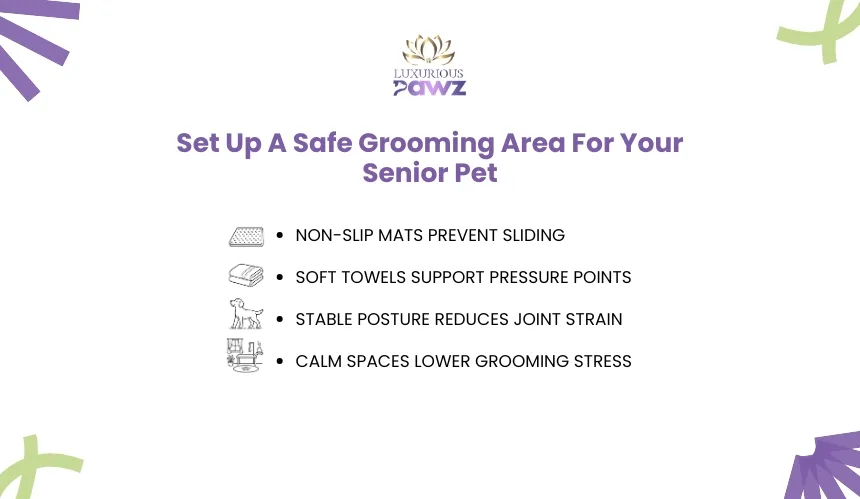
A safe grooming area reduces slipping, falling, and unnecessary movement. Senior pets need stable footing, soft support, and a calm space before brushing, bathing, trimming, or drying begins.
Use Non-Slip Mats Or Towels
Slippery floors, wet tubs, and smooth grooming tables are risky for senior pets. When a pet feels unstable, it may tense its muscles, spread its legs, or struggle to stay balanced. This puts more pressure on weak joints and can increase fatigue.
Non-slip mats, rubber bath mats, yoga mats, or thick towels give the paws better grip. Stable footing allows the pet to stand with less effort and reduces the chance of sliding during brushing or bathing.
Padded towels or soft mats can also protect bony pressure points during seated or lying-down grooming. This gives older pets a more comfortable surface without repeating long explanations about standing difficulty.
Reduce Strain With Stable Positioning
Senior pets should stay in a relaxed, natural posture during grooming. Small dogs may need light support under the chest or hips, while larger dogs may need a second person nearby to help steady them.
The pet’s body should not be twisted to reach difficult areas. Instead, brushes, towels, water, and grooming tools should be moved around the pet’s position. This reduces pressure on the back, hips, shoulders, and weak limbs.
The environment should also feel calm and physically comfortable. Warm water, soft towels, low noise, gentle handling, and a quiet room can help reduce stress for pets that are sensitive to cold surfaces, loud dryers, or long handling periods.
Use Gentle Grooming Techniques For Your Senior Pet
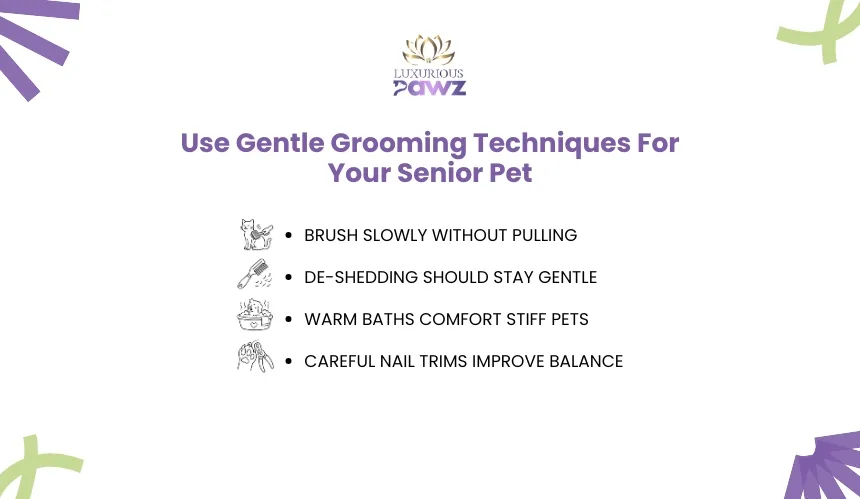
Senior pet grooming should protect the skin, joints, coat, paws, and overall comfort. Each grooming step should be slow, controlled, and adjusted to the pet’s physical tolerance.
Brush Slowly And Avoid Pulling
Senior pets often have thinner skin, less muscle padding, and more sensitivity around bony areas. Rough brushing can cause irritation, pulling, or pain, especially around the spine, shoulders, hips, elbows, and legs.
A soft brush, slicker brush, grooming comb, or detangling tool should be chosen based on coat type. Brushing should be done in small sections using light pressure. If the coat has tangles, the skin near the tangle should be supported to reduce pulling.
Mats should never be forced out. Tight matting can pull on the skin, hide irritation, and restrict movement. If mats are close to the skin or painful to touch, professional clipping is safer than aggressive brushing.
Manage Shedding Without Overworking The Coat
Senior pets that spend time around Little Landers Park, Commerce Avenue, Lowell Avenue, Hillrose Avenue, Woodward Avenue, Hartranft Avenue, and Grenoble Avenue may collect loose fur, dust, and outdoor debris during regular walks or short outdoor breaks. These conditions make pet de-shedding in Sunland helpful for removing excess undercoat without relying on aggressive brushing.
A gentle de-shedding approach can keep the coat lighter, reduce matting risk, and make grooming more comfortable for older pets with sensitive skin or limited stamina
Make Bathing Safer For Weak Or Stiff Pets
Bathing should be planned before the pet enters the tub or wash area. Shampoo, towels, rinse tools, and non-slip support should be ready so the pet does not need to remain wet, unsupported, or handled longer than necessary.
Warm water is usually more comfortable for stiff joints and aging skin. A mild pet-safe shampoo should be applied gently, especially around thin skin, bony areas, and sore joints.
Rinsing should be complete because leftover shampoo can cause itching or irritation. After bathing, towel drying should come first. If a dryer is used, the airflow should stay low and comfortable to avoid overwhelming the pet.
Pets in Sunland are often exposed to dry foothill air, dust, pollen, and outdoor debris during daily walks, backyard play, or time near Foothill Boulevard, Sunland Boulevard, La Tuna Canyon Road, Big Tujunga Canyon Road, and Sunland Recreation Center.
These local conditions make pet bathing in Sunland, CA helpful for removing dirt, loose fur, and allergens before they cause odor, coat buildup, or skin discomfort. Regular pet bathing is especially useful for thick-coated pets, senior pets, and pets with sensitive skin that need gentle handling, proper products, and thorough rinsing.
Do You Know? A study on professional dog grooming forced-air dryers found average sound levels of 105.5 to 108.3 dB SPL at 1 meter. For senior pets that are already anxious, weak, or pain-sensitive, low airflow and quieter drying methods can make the experience much easier to tolerate. |
Trim Nails Carefully For Better Balance
Nail length directly affects posture and movement. Overgrown nails can push the toes into an unnatural position, reduce traction, and make walking harder for pets with arthritis, weak legs, or balance problems.
Senior pets that walk around Apperson Street, Mount Gleason Avenue, Oro Vista Avenue, Wentworth Street, Verdugo Crestline Drive, and nearby residential hillside areas may place extra pressure on their paws because of uneven sidewalks, sloped streets, and outdoor surfaces.
These conditions make pet nail trimming in Sunland important for improving paw grip, reducing toe strain, and helping older pets walk more comfortably. Regular nail care can also support better balance for pets with arthritis, weak legs, or limited mobility.
Nail trimming should be slow and conservative. Cutting too far can hit the quick, causing pain and bleeding. Once that happens, the pet may become more fearful during future grooming.
If the pet cannot hold a paw up comfortably, only a small amount should be trimmed at a time. Some senior pets tolerate nail grinding better than clipping, but the sound and vibration should be introduced slowly. The goal is to improve paw comfort without creating stress.
Senior pets near McGroarty Arts Center, Howard Finn Park, Fehlhaber-Houk Park, Haines Canyon Park, Verdugo Mountain Park, and nearby hillside neighborhoods may need extra hygiene support as they age. Along with coat care, bathing, and nail care, pet teeth brushing in Sunland can help reduce mouth odor, support cleaner breath, and make grooming feel more complete.
This service is especially helpful for older pets that need calm handling, short sessions, and a gentle approach during routine care.
Break Grooming Sessions For Your Senior Pet Into Manageable Steps
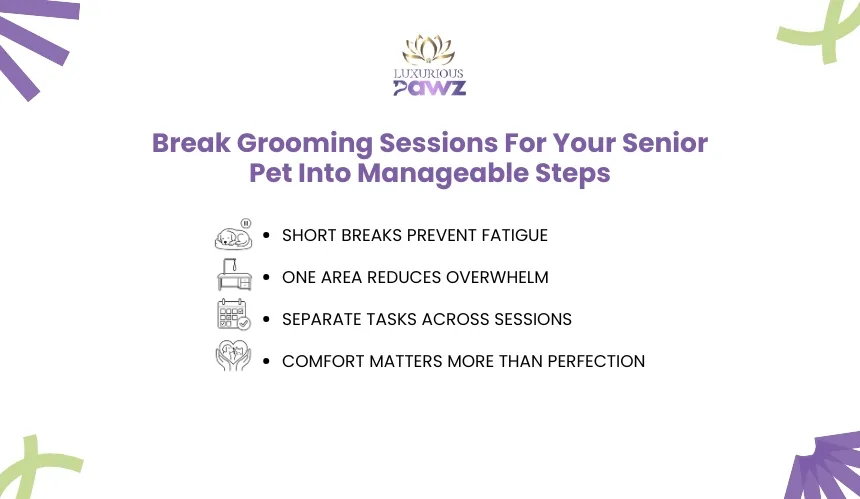
Senior pets often do better when grooming is divided into smaller tasks. Instead of completing every step at once, the session should be paced around the pet’s comfort, stamina, and tolerance for handling.
Take Breaks When Needed
A senior pet may seem calm at the start but become tired after a few minutes. Panting, trembling, shifting weight, sitting suddenly, lying down, or avoiding touch can mean the pet needs rest.
Breaks give the pet time to settle before grooming continues. They also help prevent the session from becoming overwhelming, especially when sensitive areas need extra care.
For pets with chronic pain or poor stamina, grooming should be divided across multiple sessions. Brushing can be done one day, nail trimming another day, and bathing only when the pet is physically ready.
Groom One Area At A Time
Grooming one area at a time makes the process easier for senior pets. Instead of completing the full body in one session, the owner can focus on the back, then the legs, then the paws, ears, or sanitary areas separately.
This method creates a calmer routine and makes each task easier to control. It also helps the owner focus on one grooming goal without rushing through the full body.
The goal is not a perfect full-body groom in one attempt. For senior pets, safe grooming means keeping the coat clean, the nails manageable, the skin protected, and the pet comfortable throughout the process.
Know When To Choose Professional Grooming
Home grooming is not always the safest choice for senior pets. Professional help may be needed when coat condition, mobility limits, skin problems, or anxiety make regular grooming too difficult to manage without added risk.
When Mats, Skin Issues, Or Health Conditions Need Expert Care
Some grooming problems are too risky to manage with home tools. Tight mats, irritated skin, sores, swelling, or coat buildup near the skin can make brushing painful and may lead to accidental cuts if handled incorrectly. In areas like Sunland, these cases are often handled with extra care due to a mix of senior pets and long-coated breeds that require more controlled grooming approaches.
Professional grooming is safer when the coat needs controlled clipping instead of brushing. This is especially important for senior pets with thin skin, arthritis, spinal sensitivity, or recent medical issues. Owners should share health details before the appointment, including mobility limits, painful areas, anxiety triggers, medications, and recent veterinary concerns. This helps the groomer choose safer handling methods.
When Grooming Requires Too Much Physical Support
Home grooming may become unsafe when the pet needs constant lifting, balancing, or restraint. At that point, the issue is not just grooming difficulty but the risk of falls, soreness, or panic during handling.
A senior-experienced groomer can adjust the process with padded surfaces, shorter handling periods, careful clipping, and low-stress movement. This can make grooming safer for pets that cannot tolerate a normal full-body session.
Veterinary advice should come first if the pet has sudden weakness, open wounds, severe pain, breathing trouble, or extreme anxiety. These signs may need medical attention before grooming is attempted.
Give your senior pet the gentle care they deserve with Luxurious Pawz. From careful brushing and soothing baths to safe nail trimming and low-stress handling, our grooming approach is designed to keep older pets clean, comfortable, and supported. Contact Luxurious Pawz today to schedule a grooming experience that puts your pet’s comfort first.
Frequently Asked Questions
How often should senior pets with mobility issues be groomed?
Senior pets usually need light grooming more often instead of long, full sessions. Gentle brushing several times a week can prevent coat buildup, while baths may only be needed when the coat is dirty, oily, or smelly. The schedule should depend on coat type, skin condition, comfort level, and veterinary advice.
What grooming products are safest for older pets with sensitive skin?
Senior pets often do better with mild, fragrance-light, pet-safe shampoos and conditioners made for sensitive or dry skin. Harsh deodorizing products, strong perfumes, and human shampoos can irritate aging skin. Hypoallergenic wipes, moisturizing sprays, and soft grooming tools may help maintain cleanliness between baths.
Should senior pets be groomed before or after exercise?
Grooming is usually easier when the pet is rested, calm, and not physically tired. A short bathroom walk before grooming can help the pet relax, but heavy activity may increase soreness or fatigue. For pets with arthritis or weakness, grooming should be scheduled during their most comfortable part of the day.
How can owners keep senior pets clean between full grooming sessions?
Owners can use pet-safe wipes, gentle brushing, paw cleaning, coat combing, and light sanitary-area maintenance between full grooming sessions. Bedding should also be washed regularly because older pets may spend more time lying down. Small hygiene steps can prevent odor, matting, skin irritation, and excessive bathing.
Is shaving a senior pet always a good option for easier grooming?
Shaving is not always the best choice because some coats protect the skin from temperature changes and sun exposure. However, controlled trimming may help when matting, hygiene issues, or coat thickness make grooming difficult. A groomer or veterinarian can help decide whether trimming, clipping, or coat thinning is safer.
What should owners tell the groomer before a senior pet appointment?
Owners should explain the pet’s age, mobility problems, pain areas, medical conditions, medications, anxiety triggers, hearing or vision loss, and past grooming reactions. They should also mention whether the pet struggles with stairs, standing, nail trimming, dryers, or handling. This helps the groomer plan a safer, calmer session.