
- admin
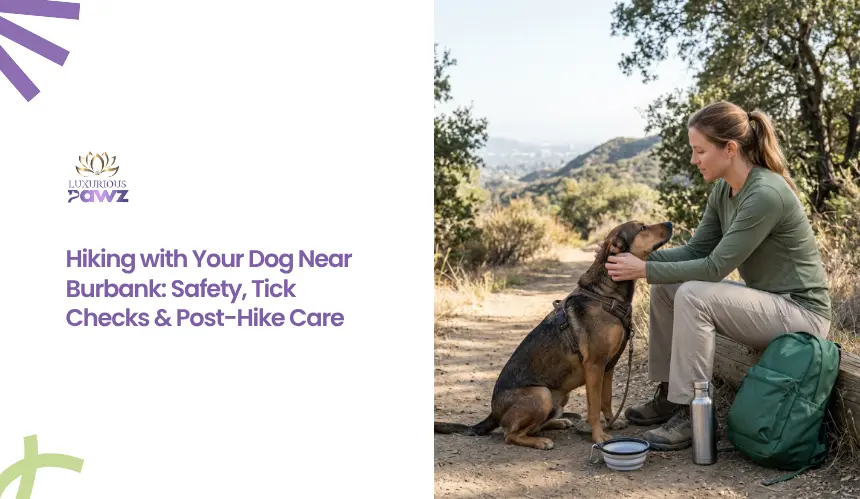
Hiking with Your Dog Near Burbank: Safety, Tick Checks & Post-Hike Care
Key Takeaways
|
Hiking with a dog near Burbank can be a fun way to enjoy fresh air, scenic foothill views, and active outdoor time together. However, local trails can also expose dogs to heat, dry brush, ticks, rough ground, wildlife, and hidden debris that owners may not notice right away. A safe hike depends on more than choosing a trail; it also requires awareness of how dogs respond to outdoor conditions before, during, and after the walk.
Proper care helps reduce discomfort, prevent avoidable health risks, and keep every trail experience more enjoyable. This blog explains how dog owners can hike more safely near Burbank while managing tick checks, trail safety, and post-hike care.
What Dog Owners Should Know Before Hiking Near Burbank
Burbank-area trails can be enjoyable for dogs, but the local terrain requires more planning than a casual neighborhood walk. Dry ground, sun exposure, uneven paths, and brush-heavy areas can create physical stress and increase the chance of irritation, overheating, or trail-related injury.
How Do Local Trail Conditions Affect Dogs?
Trails near Burbank often include foothill terrain, dusty paths, exposed slopes, and narrow areas lined with dry vegetation. These conditions can affect dogs through paw abrasion, heat absorption from the ground, and contact with ticks, burrs, or foxtails.
Seasonal heat adds another layer of risk. Even when the air feels manageable, trail surfaces can become much hotter and place pressure on paw pads. Dogs with thick coats or lower stamina may tire faster on inclines, especially where shade is limited.
Why Do Dogs Need Different Trail Planning Than Humans?
Dogs regulate heat differently from humans and rely heavily on panting rather than sweating.This makes pacing, planned pauses, and close observation more important than relying on distance alone. A dog may continue walking out of excitement even when early fatigue, paw discomfort, or overheating has already started.
Trail planning should also account for leash handling and terrain control. A secure harness, steady leash, and measured pace help prevent sudden pulling near slopes, rocky sections, cyclists, or wildlife. Owners should watch for slower movement, excessive panting, lagging behind, repeated stopping, or reluctance to continue.
When Is Hiking Not Safe For A Dog?
Hiking may be unsafe during extreme weather, poor air quality, wildfire smoke, or trail conditions that exceed the dog’s normal walking tolerance. Senior dogs, puppies, flat-faced breeds, overweight dogs, and pets with joint, heart, or breathing concerns may face higher strain on Burbank foothill trails.
A hike should be delayed or shortened if the dog shows low energy before leaving, has recently been ill, or struggles during normal walks. In these cases, a shorter shaded route, early morning timing, or a low-impact outdoor activity is safer than forcing a full trail session.
Trail Hazards Dog Owners Should Watch For Near Burbank
Southern California foothill trails can expose dogs to hazards that are easy to overlook during movement. Brush, wildlife, dry vegetation, and open sun can create health risks before visible symptoms appear.
How Do Ticks, Fleas, And Brush-Heavy Areas Affect Dogs?
Ticks often wait on grass blades, shrubs, and low vegetation, then attach when a dog brushes against them. Narrow trails with dense edges increase contact points, especially when dogs sniff, pause, or move close to trail margins. Fleas may also be present in wildlife-heavy areas where rodents, coyotes, or other animals pass through.
Dogs may carry parasites unnoticed after trail exposure because ticks can remain small, flat, and difficult to feel during a quick surface check. The risk is higher around the ears, neck, belly, armpits, groin, and between the toes because these areas are warm, protected, and harder to inspect quickly.
Do you know? California Department of Public Health confirmed that California has over 40 tick species, and adult ticks are often found on the tips of grasses and shrubs, especially along trails. This is why dogs that brush against trail edges, shaded vegetation, or narrow paths need a careful tick check after hiking. |
Rattlesnakes, Coyotes, And Wildlife Encounters
Burbank-area foothill environments may include rattlesnakes, coyotes, lizards, birds, and small mammals. Dogs can trigger unsafe encounters by chasing movement, investigating burrows, or stepping into dense brush where visibility is limited. A short leash gives owners faster control when a dog reacts suddenly to scent or motion.
Staying on marked trails reduces unpredictable contact with wildlife habitats. Dogs should not be allowed to run ahead near rocks, tall weeds, drainage areas, or shaded brush pockets because these spaces can hide animals before the owner sees them.
Why Are Foxtails, Burrs, And Plant Debris Dangerous After A Hike?
Foxtails and dry seed heads can lodge in a dog’s paws, ears, nose, eyes, or coat. Their sharp, barbed structure allows them to move deeper into skin or tissue instead of falling out naturally. This can lead to swelling, head shaking, sneezing, paw licking, eye irritation, or sudden limping.
This risk increases when plant material stays trapped close to sensitive areas, especially around the paws, ears, face, and lower body. Burrs and dry plant fragments can also create matting, skin pulling, and localized irritation.
Do you know? UC Davis explains that foxtails most commonly enter through a dog’s nose, mouth, ears, and eyes, but they can also penetrate the skin. Because their shape allows them to move forward, embedded foxtails may not come back out on their own. |
How Can Owners Spot Heat Stress And Overexertion On Exposed Trails?
Heat stress can develop when dogs hike on open trails with limited shade, dry air, or warm ground surfaces. Warning signs include excessive panting, drooling, slower pace, weakness, glassy eyes, repeated stopping, or refusal to continue. These signs require immediate rest, water access, and removal from direct sun.
Dogs may mask strain while walking because trail excitement keeps them moving. Owners should treat sudden slowing, repeated stopping, or poor coordination as early decision points to pause, turn back, or end the hike.
Do you know? Cornell University lists heavy panting, drooling, vomiting, weakness, confusion, seizures, and collapse as clinical signs of heatstroke in dogs. Prolonged elevated body temperature can damage organs, making fast action essential during hot hikes. |
How To Check A Dog For Ticks After Hiking
A tick check should happen as soon as the dog leaves the trail, before ticks have more time to attach firmly or move deeper into protected areas. A slow, hands-on inspection is more reliable than only looking at the coat surface.
Where Do Ticks Commonly Hide On Dogs?
Ticks prefer warm, sheltered areas where they can stay attached with less disturbance. Owners should inspect the ears, neck, collar line, armpits, groin, belly, tail base, and between the toes. Dogs with dense, curly, or long coats need extra attention because ticks can sit below the top layer of fur and remain unnoticed.
The collar and harness areas should be checked carefully because pressure points can trap ticks close to the skin. Running fingers slowly against the coat direction can reveal small bumps that may not be visible, especially on darker fur or thick undercoats.
Do you know? The CDC notes that ticks live in grassy, brushy, or wooded areas and can also be found on animals. Outdoor activities like walking a dog, camping, or hiking can bring people and pets into close contact with ticks. |
How Should A Tick Be Removed Safely?
A tick should be removed with fine-tipped tweezers or a dedicated tick removal tool placed as close to the dog’s skin as possible. The tick should be pulled upward with steady pressure, without twisting, squeezing, burning, or crushing it. Crushing the tick can increase irritation and may leave mouthparts embedded in the skin.
After removal, the bite area should be cleaned with a pet-safe antiseptic or mild soap and water. Owners should also clean the removal tool and wash their hands. If the tick breaks apart or the skin looks irritated, the area should be monitored closely for swelling, redness, or discharge.
When Should A Dog See A Veterinarian After A Tick Bite?
A veterinarian should be contacted if the dog shows any of these signs after a tick bite:
- Swelling, redness, warmth, pain, or discharge around the bite area
- Limping, stiffness, weakness, or reluctance to walk after the hike
- Fever, low energy, appetite loss, or unusual tiredness
- Excessive licking, scratching, or sensitivity near the bite site
- Behavior changes such as restlessness, discomfort, or reduced activity
- A tick that was attached for an unknown length of time
- Mouthparts that may still be stuck in the skin
- Uncertainty about whether the tick was fully removed
Early veterinary guidance can reduce the risk of delayed complications and confirm whether testing, treatment, or further monitoring is needed.
Post-Hike Care For Paws, Coat, And Overall Recovery
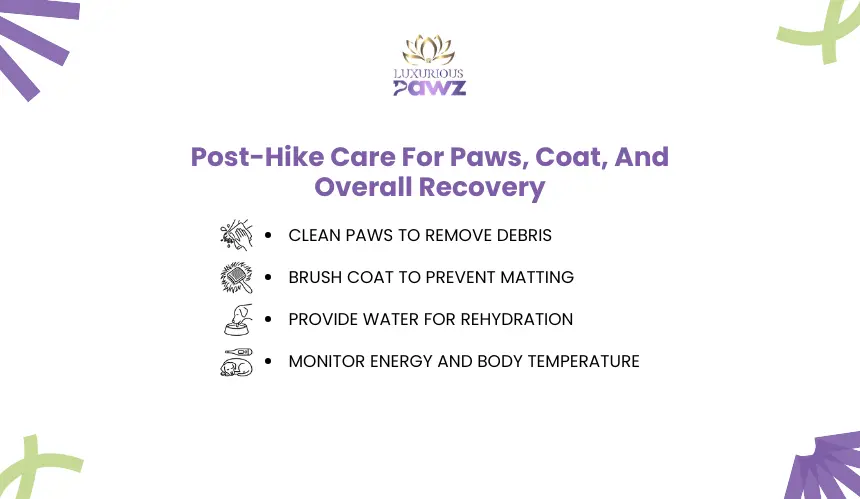
Post-hike care should start before small irritations become skin problems, soreness, or delayed fatigue. A structured post-hike check helps owners catch small physical changes before they turn into limping, skin sensitivity, or prolonged soreness.
How Should Owners Clean Paws And Inspect For Cuts Or Irritation?
Paws should be checked immediately after the hike because rough soil, gravel, hot surfaces, and dry trail edges can stress the pads. Owners should look for cracked skin, redness, small cuts, stuck thorns, embedded grit, or tenderness between the toes.
A gentle wipe with a damp towel can remove dust and small particles before they irritate the skin. If the dog limps, pulls a paw away, or repeatedly licks one foot, the area needs closer inspection. Deep cuts, bleeding, swelling, or persistent limping should be reviewed by a veterinarian.
Brush The Coat And Remove Trail Debris
Brushing after a hike gives owners a controlled way to separate the coat, check the skin, and remove outdoor buildup before it becomes harder to manage.This is especially important for dogs with long, curly, double, or dense coats because hidden debris can create matting, skin pulling, and localized irritation.
Owners should move slowly through high-risk areas such as the legs, belly, chest, tail, ears, and under the collar or harness. Any sharp seed head, burr, or tangled plant material should be removed carefully rather than pulled aggressively, since forceful removal can irritate the skin or break the coat.
After dusty foothill walks, brushing may not remove every layer of trail buildup, especially when dirt, allergens, or outdoor residue settle close to the skin. Pet Bathing in Sunland, CA gives active dogs a deeper clean after hikes, helping rinse away grime, reduce coat odor, and leave the skin and fur feeling fresher after outdoor activity.
How Can Owners Support Rehydration And Recovery After A Hike?
Dogs should be offered clean water in small, controlled amounts after the hike, especially after warm or exposed trails. Drinking too fast after intense activity can cause discomfort, so steady hydration and quiet rest are safer than immediate feeding or high-energy play.
Owners should monitor breathing, appetite, posture, and energy for the rest of the day. Excessive panting, unusual tiredness, stiffness, soreness, refusal to eat, or reluctance to move may signal overexertion. A calm recovery period allows the dog’s muscles, paws, and body temperature to return to normal after outdoor activity.
Building A Safer Dog Hiking Routine Around Burbank
A safer hiking routine reduces guesswork before each trail visit. When owners use the dog’s condition, weather, terrain, and coat care as decision points, hiking becomes more controlled and less reactive.
How Should Owners Choose Trails Based On A Dog’s Size, Age, And Stamina?
Trail choice should match the dog’s physical capacity, not the owner’s preferred distance. Smaller dogs may handle short routes well but struggle with steep grades, rocky footing, or long exposed sections. Senior dogs may need flatter paths with frequent rest points, while high-energy dogs still require pacing to avoid overexertion.
Owners should assess distance, elevation gain, shade, trail width, and surface texture before choosing a route near Burbank. A dog that slows down early, avoids uneven ground, or tires after regular walks should start with shorter trails before progressing to longer foothill hikes.
Why Should Hikes Stay Shorter During Hot Or Dry Seasons?
Hot and dry conditions increase paw strain, dehydration risk, and body temperature stress. In Southern California weather, exposed trails can become uncomfortable quickly because dogs absorb heat through their paws and release heat less efficiently than humans.
Early morning hikes are safer because ground surfaces are cooler and sun exposure is lower. Midday hikes should be avoided when trails have limited shade, dry brush, or warm pavement near parking areas. During warmer months, reducing distance is often safer than relying only on extra water.
Make Grooming And Tick Prevention Part Of Trail Care
Trail safety should include routine grooming, coat checks, and parasite prevention before outdoor activity becomes frequent. Regular grooming keeps the coat easier to examine and reduces the chance that outdoor buildup stays hidden close to the skin.
Dogs that hike often near Burbank may benefit from consistent flea and tick prevention recommended by a veterinarian. Professional grooming can also support trail care by managing thick coats, reducing matting risk, trimming excess paw fur, and making post-hike inspections faster and more accurate.
Regular trail activity can make coat care more important for dogs that hike around Burbank and nearby foothill areas. Dog Grooming in Sunland, CA gives pet parents a practical way to manage loose fur, paw-area buildup, overgrown hair, and coat tangles that can make post-hike checks harder. For active dogs, consistent grooming keeps the coat easier to inspect and supports a cleaner, more comfortable routine after outdoor walks.
After every trail adventure, a clean coat and healthy paws matter just as much as the hike itself. Luxurious Pawz provides gentle grooming care that helps remove dirt, loose fur, paw buildup, burrs, and hidden coat irritation picked up during outdoor activity. For pet parents near Burbank, it’s a practical way to keep dogs cleaner, more comfortable, and ready for the next walk.
Frequently Asked Questions
Should a dog wear boots on Burbank hiking trails?
Dog boots can help on hot pavement near trail entrances, rocky paths, or dry terrain with sharp debris. They are most useful for dogs with sensitive paws, previous pad injuries, or low tolerance for rough ground. Owners should introduce boots gradually at home first because poor fit can cause rubbing or gait changes.
How soon after hiking should a dog be bathed?
A full bath is not always needed after every hike. A paw rinse, coat wipe-down, and brushing are often enough after light trail exposure. Dogs should be bathed when they carry strong odors, sticky plant residue, heavy dirt, allergens, or skin irritants that cannot be removed with brushing alone.
What should owners do if a dog keeps licking its paws after a hike?
Persistent paw licking after hiking can signal irritation, a small cut, trapped grit, a thorn, foxtail, or heat-related pad sensitivity. Owners should inspect between the toes, under the nails, and across the paw pads. Ongoing licking, swelling, bleeding, or limping should be checked by a veterinarian.
Are Burbank trails safe for dogs after rain?
Post-rain trails can create slippery surfaces, mud buildup, unstable footing, and hidden debris washed into low areas. Dogs may also pick up more dirt between the toes and under the belly. Shorter routes, slower pacing, and post-walk paw cleaning are safer than treating wet trails like normal dry paths.
How can owners tell if a trail is too difficult for their dog?
A trail may be too difficult if the dog slows early, pulls toward shade, avoids rocky sections, pants heavily, stumbles, or stops responding normally. Distance alone is not the best measure. Elevation gain, surface texture, temperature, shade, age, breed type, and current fitness all affect hiking tolerance.
Should dogs eat before or after a hike?
A large meal right before hiking can cause discomfort, especially during active movement or warm weather. Many dogs do better with normal feeding several hours before exercise and a calm recovery period before eating again. Water should be offered throughout, but heavy post-hike feeding should wait until breathing and energy stabilize.