

- admin
Essential Dog Grooming Tips to Prevent Health Problems
A Quick Answer: Dog grooming helps prevent common health issues by keeping the skin clean, reducing bacteria and allergens, removing mats that trap moisture, and allowing early detection of parasites or hidden irritations. When a dog is routinely groomed, small changes in their coat, skin, and hygiene are spotted before they turn into infections or more serious medical conditions. |
Many pet owners see grooming as cosmetic care, but the process supports several essential health functions. Clean coats reduce the chances of dermatitis, routine brushing improves circulation, and consistent hygiene lowers the risk of irritation caused by debris buildup.
This article explores how different grooming practices contribute to a dog’s overall health, and why certain problems develop when grooming is neglected.
How Does Grooming Support A Dog’s Health Beyond Appearance?
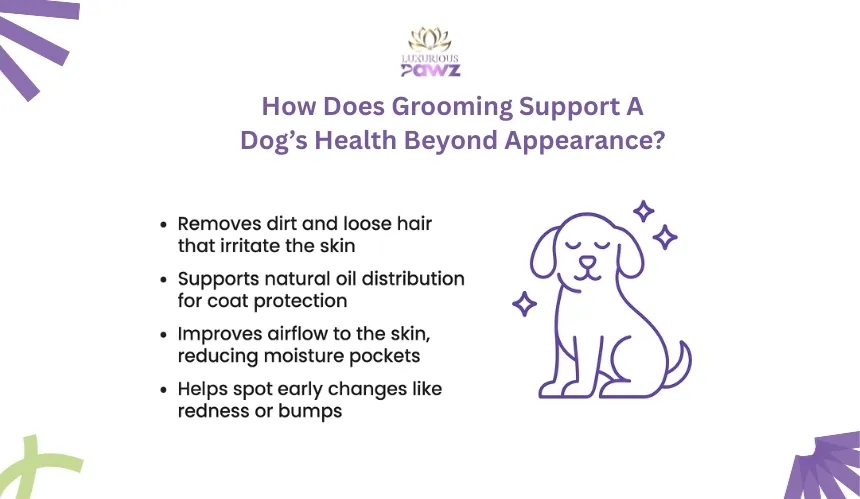
Regular grooming influences several essential health functions by keeping the coat free of debris, encouraging proper airflow to the skin, and reducing factors that contribute to discomfort. Brushing removes loose hair and environmental particles that may cause irritation.
It also helps distribute natural oils that protect the coat barrier, supporting a healthier and more stable hygiene cycle.
How Does Dog Grooming Help Maintain A Healthy Skin And Coat Environment?
A well-maintained coat supports the natural skin microbiome, which keeps the skin balanced and less prone to irritation. When mats form or dirt accumulates, this balance is disrupted.
Regular brushing and appropriate bathing remove excess oils, shedding hair, and contaminants that interfere with the skin’s ability to function normally, creating a healthier surface for the coat to grow and repair.
What Early Health Changes in Dogs Can Be Detected Through Routine Grooming?
Consistent grooming reveals small changes that might stay hidden during day-to-day care. Minor bumps, redness, thinning patches, or early signs of parasites become easier to identify when the coat is clean and brushed out. Spotting issues early gives pet owners the chance to address concerns before they develop into larger problems, which is why understanding the broader health benefits of regular dog grooming strengthens preventive care.
Preventable Health Issues Linked To Poor Grooming Habits
Did you know? In a large survey of animal-welfare / veterinary clinic records, grooming-related concerns (mostly matting, hair overgrowth, untreated nails, hygiene neglect) appeared in 4–6% of all veterinary service appointments, across multiple programs. |
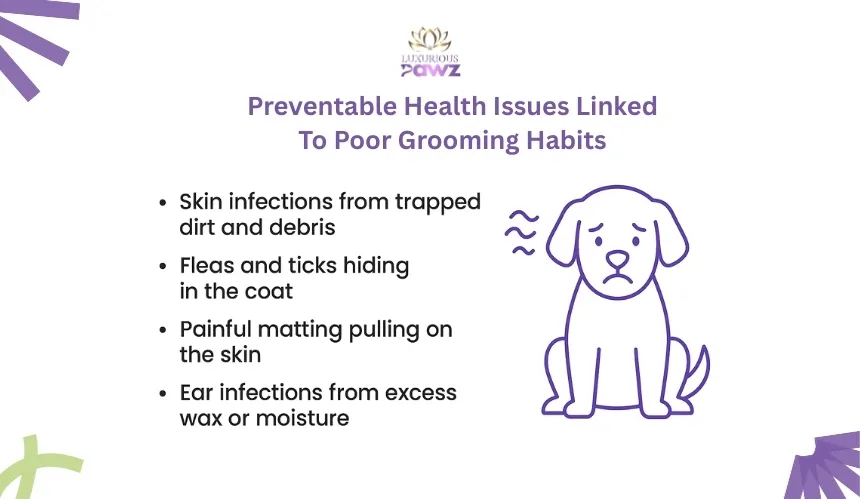
When grooming is inconsistent, small hygiene problems can quickly turn into avoidable health issues. Dirt buildup, moisture retention, and untreated coat changes create conditions where infections and discomfort develop.
How Do Skin Irritations And Infections Develop When Dogs Are Not Groomed?
Skin problems often begin when mats, dirt, or excess oils create warm, trapped areas that irritate the skin. These areas can become tender and itchy, and bacteria may multiply in the affected spots.
Over time, the irritation can develop into hot spots or full skin infections that require medical care. Proper grooming reduces the buildup of irritants so the skin stays clean and less reactive.
Why Are Ear Problems Common In Dogs With Poor Grooming Routines?
Without regular ear cleaning, wax, debris, and moisture can collect inside the ear canal. This buildup creates an ideal environment for yeast and bacteria. Dogs with long or floppy ears are especially vulnerable because airflow to the ear canal is limited. Grooming helps reduce this accumulation, so the ears stay dry and are less likely to develop infections.
How Does Neglected Oral Hygiene Lead To Dental Issues in Dogs?
When teeth are not cleaned regularly, plaque begins to form on the surface. This plaque eventually hardens into tartar, and the gums can become irritated or swollen.
Over time, the inflammation can affect the tooth structure and contribute to discomfort while eating. Integrating dental cleaning into the grooming routine helps reduce these risks before they progress.
Why Do Overgrown Nails Create Physical Health Problems in Dogs?
Long nails alter how a dog distributes weight while walking. This change in movement can strain the joints and cause discomfort in the paws. In severe cases, the nails can curl into the paw pads. Consistent professional nail trimming for dogs prevents this pressure and helps maintain a natural and comfortable gait.
How Can Poor Grooming Lead To Parasite Infestations in Dogs?
Parasites often go unnoticed in dense or tangled coats. Fleas, ticks, and mites thrive in areas that are not brushed or checked routinely. When grooming is neglected, parasites can multiply and cause itching, redness, and skin irritation. Regular grooming exposes hidden pests early so treatment can begin before the infestation spreads.
Step-by-Step: How Professional Grooming Reduces Health Risks
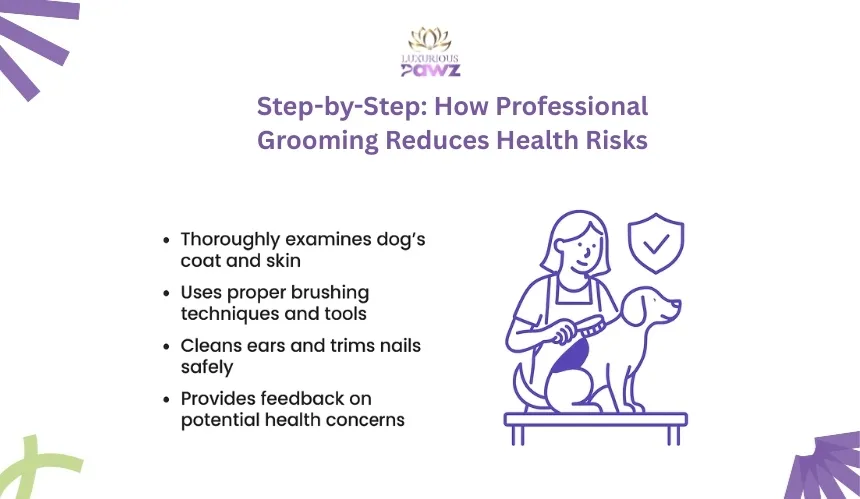
Professional grooming provides deeper cleaning, coat management, and health monitoring than most owners can perform at home.
Groomers rely on coat-specific tools, controlled bathing techniques, and careful inspection methods that help reduce the conditions where common health problems begin. This section explains how each grooming step directly supports preventive care.
1. Professional Brushing And Deshedding Techniques
Professional brushing and structured deshedding treatments for heavy undercoats remove loose fur, break apart early mats, and clear trapped debris that often settles close to the skin.These techniques support cleaner airflow through the coat and help prevent the warm, tangled areas where irritation and moisture pockets develop.
Tools such as slicker brushes, undercoat rakes, and deshedding combs allow groomers to reach layers of the coat that at-home brushing often misses.
2. Bathing Methods For Skin Health
During a structured professional pet bathing session, groomers choose shampoos and conditioners based on coat type and skin sensitivity so cleansing does not disrupt the natural oil balance. Gentle lathering loosens dirt, dander, and environmental particles that can trigger irritation.
Proper rinsing removes residues that might cause itching, and controlled drying prevents moisture from becoming trapped in thick areas of the coat. These steps lower the risk of irritation and help maintain a stable skin environment.
3. Sanitary Trims And Hygiene Cuts
Sanitary trims keep the areas around the tail, belly, and paws clean by reducing the chance of debris sticking to longer hair. When these regions are left untrimmed, friction, dampness, and bacteria can cause discomfort or irritation. Groomers trim these sections with precision so the dog stays clean and less vulnerable to hygiene-related issues.
4. Ear, Eye, And Paw Cleaning Protocols
During grooming appointments, professionals gently clean the outer ear area, wiping away wax or debris that may contribute to irritation or odor. They also attend to tear stains and check the eyes for signs of redness or discharge.
Paw pads are inspected for cracks, dryness, or foreign particles that often go unnoticed at home. These routine checks help reduce minor problems that can develop into more serious concerns if ignored.
DIY Grooming vs Professional Grooming: When Each Approach Is Appropriate
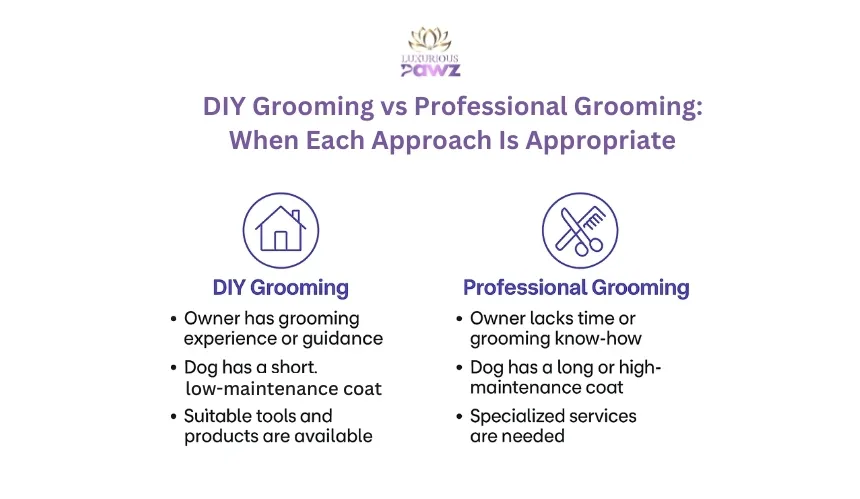
Pet owners often wonder whether at-home grooming is sufficient or if a professional appointment is the safer choice. Both options can be effective, but each serves a different purpose. Understanding where each approach works best helps prevent health issues and ensures that coat, skin, and hygiene needs are consistently met.
When Routine At-Home Grooming Is Enough for Dogs
Basic grooming tasks such as brushing, simple bathing, and light coat upkeep can be managed at home, especially for dogs with short coats or low-maintenance fur types. Regular brushing helps remove loose hair and surface debris while keeping the coat comfortable.
Routine baths with gentle, coat-safe shampoos support hygiene without overwhelming the skin. These at-home efforts work best when the coat is free of knots, the skin is healthy, and the dog tolerates grooming comfortably.
When Professional Groomers Are The Safer Option
Some grooming needs require specialized tools, breed-specific knowledge, and experience with coat textures or sensitive skin. Dogs with thick double coats, curly coats, heavy shedding patterns, or previous matting issues often benefit from professional care.
Groomers can handle anxious dogs more safely and identify areas of discomfort that may not be obvious at home, which highlights the benefits of choosing a professional dog groomer for long-term coat health. Professional pet grooming services are also important for senior dogs, pets with mobility challenges, and those who need precise trimming around delicate areas.
The Health Risks Of DIY Dog Grooming Mistakes
At-home mistakes often occur when tools are misused or when coat and skin needs are misunderstood. Over-bathing can dry out the skin, the wrong shampoo can trigger irritation, and uneven trimming can cause discomfort or small injuries.
Incorrect nail clipping may hurt the paw or affect how the dog walks. Improper ear cleaning can push debris deeper into the ear canal. These mistakes increase the likelihood of irritation, infection, or stress, which is why understanding limits is essential.
How Often Dogs Need Grooming To Prevent Health Problems
Fact: Expert-advice sources suggest most dogs benefit from a light “once-over” grooming at least weekly (to trim nails, clean ears, detangle fur, check skin) even if full bathing is less frequent. |
Grooming frequency, especially when following a structured dog grooming schedule by breed, has a direct impact on coat condition, skin comfort, and overall hygiene.When grooming is done on a schedule that matches the dog’s coat type and lifestyle, it becomes easier to prevent irritation, odors, and buildup that contribute to health concerns.
1. Grooming Frequency By Coat Type
Each coat type has unique maintenance requirements that influence how often brushing, bathing, and trimming should be done.
- Short-coated dogs typically need less frequent grooming because their fur does not trap much debris, and most benefit from brushing every one to two weeks and a bath every four to six weeks.
- Double-coated breeds require regular brushing to manage shedding cycles and prevent compacted undercoat, with most needing brushing three to four times per week and full grooming every six to eight weeks.
- Curly or wool-coated dogs need frequent grooming to prevent matting and maintain coat texture, which usually means brushing several times per week and professional grooming every four to six weeks.
- Wire-coated dogs benefit from consistent hand-stripping or brushing to keep the coat healthy, often requiring weekly brushing and hand-stripping or grooming every six to eight weeks.
- Hairless breeds still require regular skin care to remove oils and maintain comfort, typically needing gentle cleansing every one to two weeks along with weekly moisturizing.
2. Seasonal Grooming Schedule For Allergy, Flea, And Shedding Management
Seasonal changes affect coat thickness, shedding intensity, and the presence of environmental allergens. In spring, dogs often shed heavily and need more brushing to remove loose undercoat. Summer grooming may involve more frequent checks for fleas and ticks, along with baths that remove pollen or dust.
Fall grooming helps manage pre-winter shedding and prepares the coat for colder months. Winter routines may include paw care to remove salt or ice buildup and keep the skin from drying out.
3. Age-Based Grooming Needs
A dog’s age influences how often grooming sessions should occur. Puppies benefit from short, frequent sessions that help them develop positive grooming habits and make handling easier as they grow. Adult dogs generally follow coat-based schedules, but active lifestyles may require more frequent bathing or brushing.
Senior dogs need gentle, regular grooming to prevent discomfort from mats, overgrown nails, or dry skin. Age-sensitive grooming also helps identify health changes that develop as dogs grow older.
Tools And Products That Support Health-Focused Grooming At Home
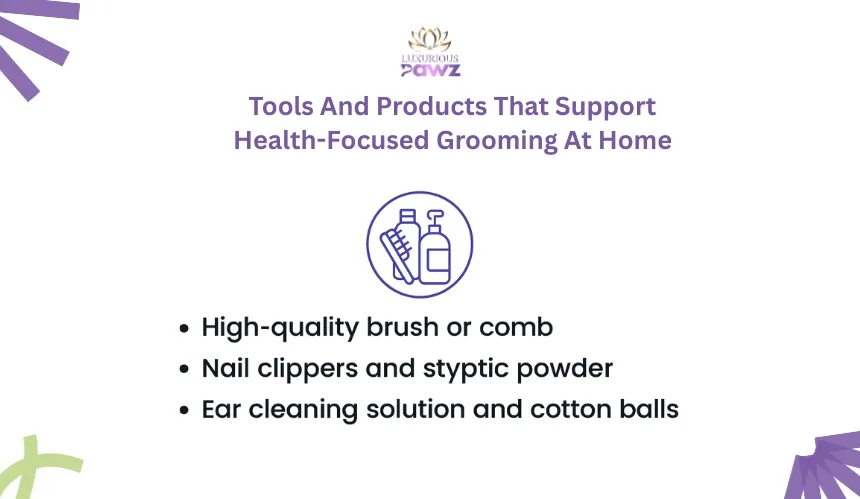
Using the right grooming tools at home helps maintain coat cleanliness, reduce irritation, and support preventive care between professional sessions.
Each tool has a specific purpose, and selecting the right products helps pet owners manage coat texture, skin sensitivity, and hygiene more effectively.
What Brushes And Combs Work Best For Dog Grooming At Home?
Slicker brushes help remove loose hair from medium and long coats, while bristle brushes work well for short-coated dogs that shed lightly. Undercoat rakes and deshedding tools lift compacted undercoat and reduce buildup that may cause irritation.
Fine-tooth combs help locate small tangles and check for early signs of parasites. Matching brushes to coat type makes home grooming smoother and more effective.
Which Shampoo Should Dog Owners Choose?
Dog-safe shampoos vary based on skin needs and coat conditions. Oatmeal shampoos soothe dry or irritated skin. Hypoallergenic shampoos help reduce reactions in allergy-sensitive dogs. Medicated formulas relieve fungal or bacterial concerns when recommended by a veterinarian.
Moisturizing shampoos support coat softness and help reduce itching. Using the right shampoo helps maintain a balanced and comfortable skin environment.
What Nail Tools Help Keep Dogs Safe?
Guillotine and scissor-style clippers allow controlled trimming for most breeds. Nail grinders smooth rough edges and are helpful for dogs who are sensitive to clipping. Styptic powder can be used if a minor cut occurs during trimming. Choosing the right tools helps prevent overgrown nails and supports comfortable, healthy movement.
Which Dog Grooming Tech Tools Make Home Care Easier?
Modern grooming tools improve convenience and consistency. Self-cleaning brushes remove collected hair with one button. Grooming gloves offer gentle brushing for anxious or sensitive dogs. Automated dryers help dry thick or curly coats evenly.
Mobile grooming apps track grooming schedules, coat condition, and product needs. These tools support smoother home grooming routines.
Frequently Asked Questions
Can Grooming Help Reduce Allergy Symptoms In Dogs And Their Owners?
Yes. Regular grooming helps remove pollen, dust, and shed hair that often trigger allergy flare-ups for both dogs and people. Clearing these allergens from the coat reduces irritation and helps maintain cleaner indoor air. Consistent grooming also removes dander, which supports a more comfortable environment for allergy-sensitive households.
Can Dog Grooming Reveal Early Signs Of Chronic Conditions?
Grooming sessions often expose gradual changes in a dog’s health. Subtle shifts such as unusual skin texture, uneven coat growth, increased oiliness, or recurring dry patches may indicate underlying conditions that require attention. Early visibility of these signs encourages timely veterinary evaluation.
Does Grooming Improve A Dog’s Comfort During Hot Weather?
Yes. Removing excess hair, reducing matting, and cleaning the coat help improve airflow across the skin. This supports better temperature regulation and makes dogs more comfortable on warm days. Clean fur also reduces the chances of heat-related skin irritation.
Can Improved Grooming Habits Help Reduce Stress Or Anxiety In Dogs?
For many dogs, a predictable grooming routine reduces stress by building familiarity with touch and handling. Gentle brushing and warm baths can also create calming sensations. Regular grooming establishes a rhythm that helps nervous dogs feel more secure and comfortable with physical contact.
Can Grooming Support Better Mobility For Senior Dogs?
Yes. Keeping nails trimmed, removing minor tangles, and maintaining clean paws help older dogs move more easily. Senior dogs often struggle with stiffness, so clean, well-maintained paws and coat surfaces reduce friction and prevent small discomforts that make walking or standing harder.