

- admin
How Grooming Affects Your Pet's Mental Health
Key Takeaways
|
Grooming is more than a hygiene routine; it can influence how relaxed, comfortable, and emotionally secure a pet feels every day. When basic grooming needs are ignored, pets may show emotional changes that owners mistake for stubbornness, fear, or bad behavior.
A well-managed grooming routine can also make pets easier to observe, support, and care for before discomfort affects their behavior. This blog explains how grooming affects your pet’s mental health and why regular care plays an important role in their emotional well-being.
Why Grooming Is Connected To Your Pet’s Emotional Well-Being

A pet’s emotional state is closely tied to how secure and comfortable they feel in their body. Grooming supports that connection by reducing avoidable sources of tension before they shape behavior. This connection matters because emotional changes often appear before owners recognize the physical cause.
How Does Grooming Reduce Physical Discomfort That Can Trigger Stress?
Tangled fur, matted coats, overgrown nails, dirty skin, and trapped debris can create constant low-level discomfort for pets. This discomfort may not always appear as obvious pain, but it can make a pet more restless, defensive, or sensitive to touch.
Mats can pull against the skin when a pet walks, lies down, or turns its body. Overgrown nails can affect posture and paw pressure, which may make movement feel awkward or uncomfortable. Dirty coats and skin buildup can also contribute to itching, odor, and irritation, increasing the pet’s stress response.
When grooming removes these physical triggers, the pet has fewer reasons to avoid handling, resist movement, or react sharply. Regular brushing, nail trimming, bathing, and coat inspection support both physical comfort and emotional regulation.
Known for its walkable neighborhoods, outdoor parks, and pet-friendly spaces, Pasadena, CA gives many pets plenty of opportunities for daily activity around areas like Old Pasadena, Brookside Park, and the Rose Bowl Loop. Frequent walks on pavement and uneven paths can place pressure on overgrown nails, making regular Pet Nail Trimming in Pasadena, CA important for comfort and mobility. With gentle handling and careful trimming, pets can stay more relaxed while avoiding issues linked to long or uneven nails.
Do you know? Canine atopic dermatitis has been estimated to affect about 3–15% of dogs, according to veterinary dermatology research. Because this condition is linked with chronic itching and skin discomfort, routine coat and skin checks during grooming can help owners notice patterns that may be affecting a pet’s comfort and behavior. |
How Does Cleanliness Support A Calmer Daily Routine?
Cleanliness supports routine behavior by reducing the small interruptions that disrupt rest, feeding, play, and normal interaction. Pets that are not constantly distracted by itching, odor, or coat heaviness are more likely to settle into predictable daily patterns.
Comfort directly influences behavior. This makes the pet’s behavior easier to interpret because reactions are less likely to be influenced by avoidable hygiene-related discomfort.
Why Does Grooming Shape A Pet’s Response To Handling?
Grooming shapes how pets respond to being touched because it involves sensitive body areas such as paws, ears, face, tail, and belly. If these areas are handled carefully, pets become less guarded during routine care, home checks, and veterinary visits.
The goal is not only to complete the grooming task but to reduce handling sensitivity over time. When pets are introduced to body contact in a measured way, they are less likely to treat every brush, towel, or paw lift as a threat.
How Grooming Helps Reduce Anxiety And Stress In Pets
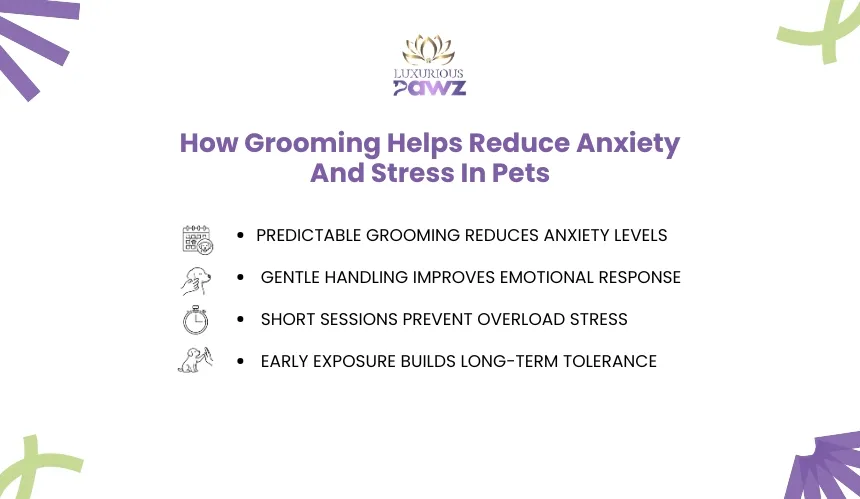
Grooming can reduce anxiety when it is managed as a controlled sensory experience, not just a cleaning task. Pets respond better when handling stays below their fear threshold and each step feels manageable.
With its pet-friendly neighborhoods and busy outdoor spaces, Pasadena, CA gives dogs plenty of opportunities for walks and daily activity around areas like Eaton Canyon, Victory Park, and Central Park Pasadena. Regular dog grooming in Pasadena, CA helps remove dirt, loose fur, and outdoor debris that pets can collect from trails, grassy areas, and city sidewalks throughout the area. Services such as bathing, nail trimming, ear cleaning, brush outs, and coat maintenance help support healthier skin, cleaner coats, and greater comfort during Pasadena’s active outdoor lifestyle.
Predictable Grooming Routines Create Emotional Stability
A structured grooming routine lowers anxiety by reducing sudden changes in touch, sound, and movement. Pets are more likely to stay calm when brushing, bathing, trimming, and nail care happen in a familiar sequence instead of being rushed or unpredictable.
This matters because many pets react to uncertainty before they react to the grooming itself. A brush, towel, clipper sound, or lifted paw can trigger stress if the pet does not understand what comes next. Repeated low-pressure sessions help the brain treat grooming as a known event rather than a threat.
Regular care also keeps each session shorter and less intense. Instead of waiting until the coat, nails, or hygiene issue becomes difficult to manage, routine grooming spreads care into smaller steps that are easier for the pet to tolerate.
Gentle Grooming Can Support Relaxation
Gentle grooming reduces stress by limiting pressure on the pet’s body and nervous system. Slow brushing, relaxed posture, soft voice cues, and light handling can help prevent panic behaviors such as freezing, pulling away, trembling, or defensive snapping.
Short sessions are especially useful for pets with grooming anxiety. A brief brush-through, paw touch, or towel introduction allows the pet to process the experience without reaching overload. Stopping before distress escalates protects future cooperation.
The groomer’s body language also affects the pet’s response. Firm restraint, fast movements, and tense handling can increase resistance, while calm pacing and controlled touch support better emotional recovery after each session.
Early Grooming Exposure Prevents Fear-Based Behavior
Puppies, kittens, and newly adopted pets benefit from early grooming exposure because it builds tolerance before fear patterns become established. Light handling around the paws, ears, coat, face, and tail prepares the pet for normal care without creating strong resistance.
This process works best through gradual conditioning. Early exposure helps pets build familiarity with being handled before fear, avoidance, or defensive behavior becomes a learned response. Each stage should feel neutral or positive rather than forced.
This early familiarity can lower the risk of long-term grooming avoidance during home care, professional grooming, or veterinary handling. This makes future care easier because the pet has already built tolerance for normal handling before grooming becomes urgent or stressful.
How Grooming Strengthens The Human-Pet Bond

Grooming gives owners repeated opportunities to read, respond to, and support their pet’s comfort level. When handled correctly, it becomes a form of communication that improves trust, cooperation, and emotional connection.
Positive Touch Builds Trust Over Time
Trust grows when owners respond to the pet’s body language during grooming instead of pushing through resistance. Pausing when a pet stiffens, turns away, or pulls back teaches the pet that human contact can stop before it becomes overwhelming.
This response-based handling gives the pet a sense of control, which is essential for animals that have become guarded during brushing, bathing, nail care, or body inspection.
Over time, grooming becomes more than physical maintenance. It creates a repeated touch-based interaction where the pet experiences attention, patience, and body comfort in the same setting.
Do you know? A peer-reviewed study found that shelter dogs given about 45 minutes of human interaction, including grooming and petting, had lower cortisol levels on day 3 than dogs without that contact. Cortisol is a key stress hormone, so calm grooming-related touch can have measurable stress-reduction value. |
Grooming Helps Owners Notice Emotional And Physical Changes Early
Regular grooming gives owners a closer view of changes that may not appear during normal play or feeding. Skin irritation, sore spots, new lumps, coat thinning, ear sensitivity, paw discomfort, or sudden resistance to touch can signal that something has changed physically or emotionally.
These observations help owners separate grooming resistance from possible physical sensitivity, especially when the reaction appears suddenly or affects one specific body area.
Regular grooming creates a baseline for what feels normal for the pet. When the owner knows how the pet usually responds to brushing, paw handling, ear checks, or coat inspection, even small changes become easier to recognize.
From morning walks near Pasadena City Hall to afternoons spent around Grant Park and Hamilton Park, many pets in Pasadena, CA stay active throughout the day. With regular eating habits, treats, and outdoor activity, consistent Pet Teeth Brushing in Pasadena, CA helps reduce plaque buildup, support fresher breath, and maintain cleaner teeth over time. Gentle dental care also helps pets stay more comfortable while supporting better overall oral hygiene as part of routine grooming.
Do you know? Studies cited by Cornell University College of Veterinary Medicine show that 80–90% of dogs over age 3 have some level of periodontal disease. This matters for grooming because oral discomfort can quietly affect mood, eating habits, cooperation, and social behavior before owners notice visible symptoms. |
Reward-Based Grooming Improves Cooperation
Reward-based grooming improves cooperation by giving pets a clear reason to participate instead of resist. Treats, praise, short pauses, and calm release points help the pet understand which behaviors lead to comfort and positive outcomes.
This approach works best when rewards are timed around small successes. A pet may be rewarded for staying still during one brush stroke, allowing a paw touch, accepting a towel, or remaining calm near grooming tools. These small wins build handling tolerance without overwhelming the pet.
Breaks are also part of effective cooperation. Pausing before the pet becomes distressed protects emotional control and keeps the session productive. When pets feel they have room to recover, they are more likely to remain engaged during future grooming.
Signs Grooming Is Affecting Your Pet’s Mental Health
Grooming can produce clear emotional signals before, during, and after care. Owners should watch body language, recovery time, movement, and willingness to interact because these signs show whether grooming is supporting comfort or creating stress.
Positive Signs After Grooming
A pet that benefits from grooming often shows relaxed body language after the session. Loose posture, normal breathing, soft eyes, steady tail movement, and calm resting behavior suggest that the pet feels physically relieved rather than emotionally drained.
Improved playfulness is another strong signal because pets often become more socially engaged when grooming leaves them feeling settled rather than overstimulated.
Better sleep can also indicate improved comfort. A pet that settles easily after grooming may be experiencing less itching, pulling, paw discomfort, or sensory irritation. Easier movement, smoother walking, and reduced scratching often show that grooming has improved both body comfort and emotional balance.
A willingness to be handled after grooming is especially important. If the pet allows light touch, stays near people, or accepts brushing more easily later, the grooming experience is likely supporting confidence instead of creating avoidance.
Warning Signs Of Grooming-Related Stress
Grooming-related stress often appears through defensive or shutdown behavior. Trembling, hiding, panting, freezing, growling, tucked posture, wide eyes, or repeated attempts to escape can show that the pet feels overwhelmed by the process.
Some pets show stress after grooming instead of during it. Excessive licking, refusing contact, pacing, hiding under furniture, sudden clinginess, or becoming reactive when touched may indicate that the session exceeded the pet’s tolerance level.
A major warning sign is a behavior change that repeats after grooming appointments or home care. If the pet consistently avoids brushes, towels, bath areas, nail tools, or the person who handled them, the grooming experience may be creating a negative emotional pattern.
Stress signals should not be dismissed as stubbornness. They often point to fear, pain, sensory overload, or poor handling tolerance. Adjusting the grooming method early can prevent mild anxiety from developing into stronger resistance.
When Professional Grooming Support May Help
Professional grooming support may be needed when the pet’s condition requires careful handling beyond routine home care. Severe matting, compacted undercoat, painful nail overgrowth, skin sensitivity, ear discomfort, or heavy shedding can make grooming difficult and emotionally intense.
Pets with fear, aggression, senior sensitivity, or previous negative grooming experiences may also need an experienced groomer who can work slowly, use safer handling techniques, and reduce unnecessary restraint. This is especially relevant when the pet snaps, freezes, panics, or cannot recover calmly after grooming.
Professional support can also protect the owner-pet relationship. When grooming becomes a repeated conflict at home, pets may begin associating the owner with pressure or discomfort. A skilled groomer can manage the technical part of care while the owner focuses on maintaining trust and emotional security.
How To Make Grooming Mentally Healthy For Pets

Mentally healthy grooming depends on building a routine around the pet’s sensory tolerance, body condition, and response patterns. The goal is to make grooming easier to process before the pet begins linking care with stress.
Use Gradual Desensitization Before Full Grooming
Pets handle grooming better when each trigger is introduced separately before a full session. A brush, towel, nail clipper, dryer sound, water contact, or paw lift should be introduced in small stages so the pet can adjust without becoming defensive.
This approach helps owners identify which part of grooming creates the strongest reaction. Some pets tolerate brushing but panic around water, while others accept bathing but resist nail handling. Separating the steps makes the routine easier to modify.
Match Grooming Frequency To The Pet’s Coat, Age, And Temperament
Grooming frequency should be based on the pet’s actual care load, not a fixed schedule for every animal. Long-haired pets may need more brushing to prevent tangles, while short-haired pets may need less coat work but still require nail, ear, and skin checks.
Senior pets often need slower sessions because joint stiffness, thin skin, reduced balance, or fatigue can make grooming harder to tolerate. An anxious pet may benefit from shorter, more frequent handling, while an active outdoor pet may need extra coat checks for dirt, burrs, allergens, or trapped debris.
The right frequency should be adjusted when behavior changes. If a pet becomes more resistant, tired, itchy, or sensitive during grooming, the schedule may need shorter intervals, gentler tools, or separate appointments for coat care, nails, ears, and bathing.
Set Up A Grooming Space That Reduces Sensory Stress
The grooming space should reduce slipping, loud noise, harsh restraint, and unstable body positioning. A non-slip mat, familiar towel, steady surface, and quieter tools can lower the stress load before grooming begins.
Water temperature, dryer distance, brush pressure, and lighting also affect how the pet responds. When the environment feels stable, the pet is less likely to fight balance, sound sensitivity, or sudden touch while being groomed.
Track Stress Signals And Adjust The Routine Early
Owners should track which part of grooming causes the strongest reaction, such as water contact, dryer noise, nail handling, brushing near sensitive areas, or being held in one position for too long.
From there, the routine can be adjusted through gentler tools, shorter handling time, or separate care stages before the reaction becomes harder to manage. This keeps the routine flexible and prevents one difficult grooming step from turning the entire session into a negative experience.
Frequently Asked Questions
Why does my pet act tired or quiet after grooming?
Some pets feel tired after grooming because the session requires sensory processing, physical handling, standing, sounds, water exposure, or restraint tolerance. Mild tiredness can be normal, but hiding, trembling, refusing food, or avoiding contact may show the session was too stressful and needs a gentler approach next time.
Can grooming anxiety get worse if it is ignored?
Grooming anxiety can become stronger when a pet repeatedly connects brushes, baths, nail tools, or clippers with fear or discomfort. Over time, the pet may start reacting before grooming even begins. Early adjustment, slower handling, and shorter care steps help prevent avoidance from becoming a learned behavior.
How can owners tell if grooming stress is emotional or physical?
Emotional stress often appears as fear, escape behavior, freezing, or avoidance across several grooming tasks. Physical sensitivity is more likely when the pet reacts to one specific area, such as the paws, ears, back, mouth, or skin. Sudden reactions should be watched closely because pain may be involved.
Is professional grooming better for pets with anxiety?
Professional grooming may be better when the pet has severe matting, strong fear responses, aggression, senior sensitivity, or repeated grooming resistance at home. An experienced groomer can separate tasks, use safer positioning, and reduce handling pressure. For medical pain, skin disease, or extreme distress, veterinary input may be needed first.
Can grooming affect a pet’s appetite or sleep?
Grooming can affect appetite or sleep if the pet feels physically relieved, overstimulated, stressed, or sore afterward. Improved sleep may signal better comfort, while reduced appetite, restlessness, or withdrawal may suggest stress or discomfort. Owners should track whether these changes happen once or repeat after each grooming session.