
- admin
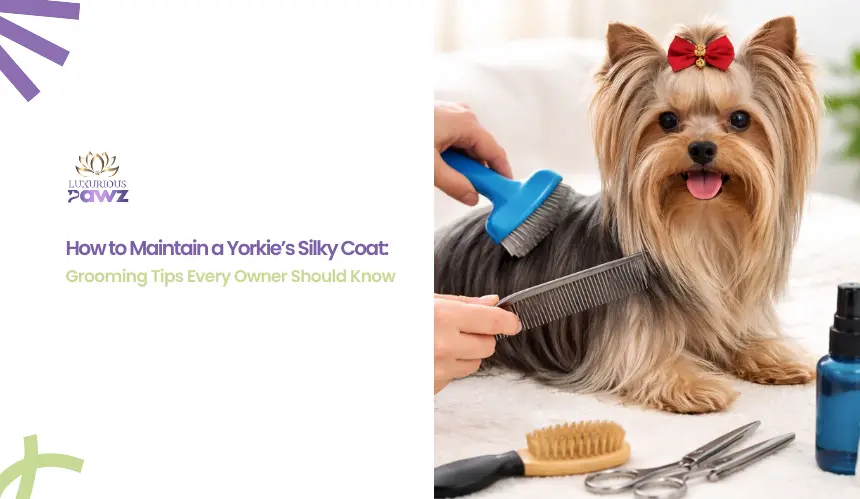
How to Maintain a Yorkie’s Silky Coat: Grooming Tips Every Owner Should Know
Key Takeaways:
|
A Yorkshire Terrier’s coat is one of the breed’s most defining characteristics. The long, glossy hair is naturally fine, straight, and smooth, giving Yorkies their elegant appearance. Unlike many other breeds, their coat resembles human hair and continues growing throughout life. Because of this unique structure, maintaining a Yorkie’s silky coat requires a consistent grooming routine, proper nutrition, and the right grooming tools. With attentive care, the coat stays smooth, healthy, and free from tangles.
Understanding the Yorkie Coat
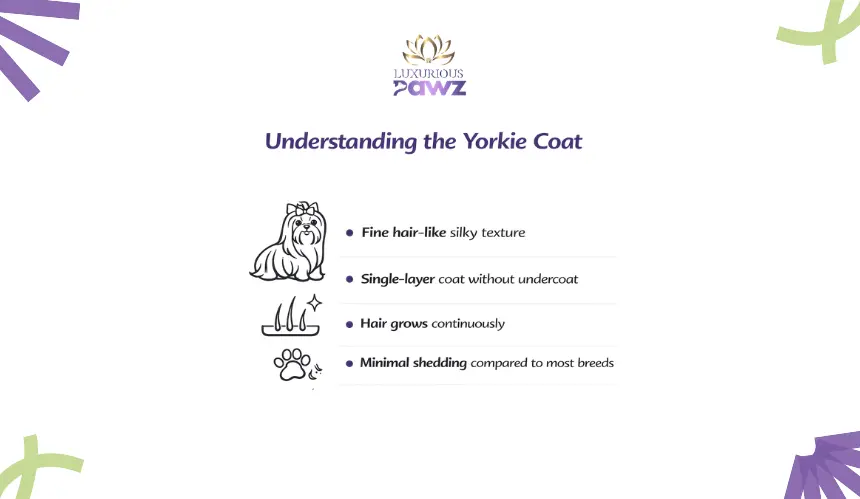
The Yorkshire Terrier’s coat is a defining feature of the breed and requires specialized care. Unlike many dogs that have thick fur and seasonal shedding cycles, Yorkies possess a fine, straight coat that grows continuously. This distinctive structure creates the breed’s signature silky appearance but also demands consistent grooming and maintenance. Understanding how this coat functions helps owners maintain its smooth texture and prevent common issues such as tangling, dryness, or breakage.
What Makes a Yorkshire Terrier’s Coat Unique?
Several biological and structural traits distinguish the Yorkshire Terrier’s coat from the fur seen in most dog breeds.
- Hair-like texture
The coat closely resembles human hair rather than traditional canine fur. Each strand is fine, smooth, and capable of growing to considerable length when properly maintained. - Single-layer structure
Yorkshire Terriers do not have an insulating undercoat. This single-layer coat lies flat against the body and develops its characteristic silky sheen when regularly groomed. - Continuous growth cycle
The hair grows steadily instead of shedding seasonally. Because the strands remain attached longer, routine brushing and trimming are necessary to keep the coat manageable. - Minimal shedding tendency
Yorkies release very little loose hair compared with double-coated breeds. This quality contributes to their reputation as a low-shedding companion dog.
These characteristics explain why a Yorkshire Terrier’s coat requires careful grooming practices and consistent maintenance to preserve its smooth and healthy appearance.
Best Grooming Tools for Yorkshire Terrier Coat Care
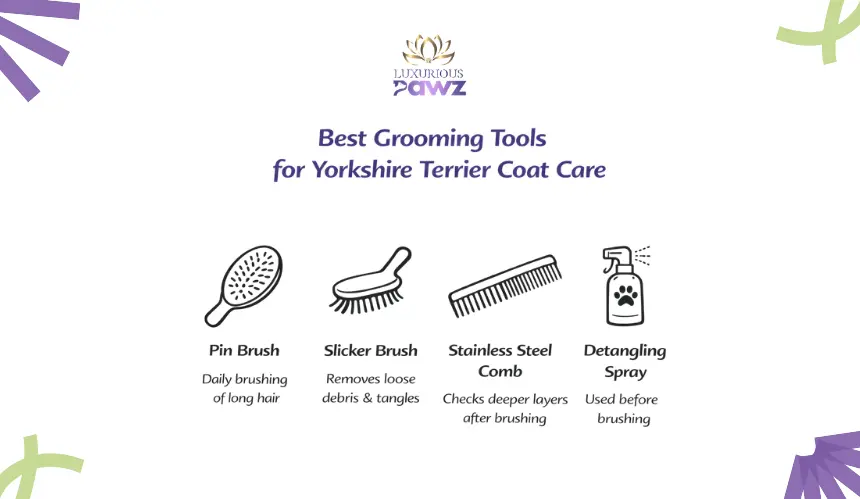
Selecting the right grooming tools protects delicate Yorkie hair and keeps the coat smooth and manageable.
Grooming Tool | Purpose | Benefit for Yorkie’s Coat |
Pin Brush | Daily brushing of long hair | Maintains smooth texture and prevents breakage |
Slicker Brush | Removes loose debris and light tangles | Keeps coat clean and detangled |
Stainless Steel Comb | Checks deeper layers after brushing | Detects hidden knots and small mats |
Detangling Spray | Applied before brushing | Reduces friction and eases grooming |
High-quality grooming tools help maintain the silky texture, shine, and manageability of a Yorkshire Terrier’s coat.
Essential Grooming Routine for a Yorkie
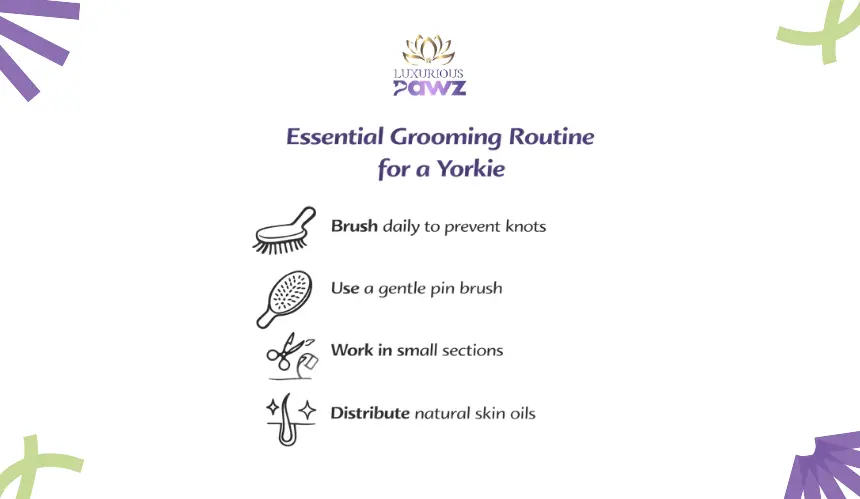
Maintaining a Yorkshire Terrier’s silky coat requires a consistent grooming routine rather than occasional brushing. Because the coat is fine and continuously growing, neglecting daily maintenance allows small tangles to tighten and eventually form mats close to the skin. A structured grooming routine keeps the hair smooth, supports natural shine, and prevents discomfort caused by pulling or knotting.
Regular grooming also improves overall coat health by distributing natural oils produced by the skin. These oils travel along the hair shaft during brushing, which helps maintain softness and a glossy appearance.
Daily Brushing Practices for Silky Yorkie Hair
Consistent brushing plays a central role in preserving coat quality. Fine strands can twist together quickly if left unattended, especially in areas that experience movement or friction.
Important brushing habits include:
- Brush the coat daily to prevent knots from tightening and forming mats.
- Use a gentle pin brush designed for long-haired breeds to protect delicate strands.
- Work in small sections so deeper layers are properly detangled rather than only smoothing the surface.
- Begin at the ends of the hair and gradually move upward toward the roots to avoid pulling.
- Hold the hair close to the skin when detangling to reduce discomfort during brushing.
Regular brushing distributes natural skin oils along the hair shaft, which improves shine, keeps the coat manageable, and preserves the silky texture that Yorkshire Terriers are known for.
Preventing Tangles and Matting
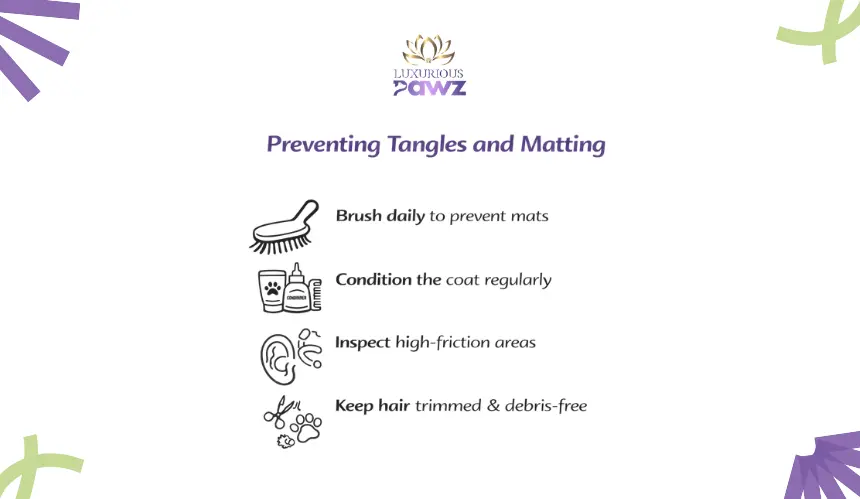
Maintaining a Yorkshire Terrier’s long, silky coat requires consistent preventive care. Because Yorkie hair is fine and continuously growing, it can easily twist together and form knots if not brushed regularly. Small tangles often begin as loose strands rubbing together during normal movement, but without proper grooming they can quickly tighten into dense mats that are difficult and uncomfortable to remove.
Preventing tangles involves gentle daily brushing, proper coat conditioning, and regular inspection of areas exposed to friction. When the coat remains smooth and separated, it allows air to circulate through the hair and keeps the skin underneath clean and healthy.
Areas Where Yorkie Hair Tangles Most Frequently
Certain regions of the body experience more friction, which increases the likelihood of matting.
Common problem areas include:
Behind the ears
Hair behind the ears is delicate and constantly rubbed by head movement and scratching. Because the area is often overlooked during brushing, small knots can quickly tighten into compact mats if not gently combed out.
Under the legs
The hair in the armpit area experiences frequent friction from walking, running, and lying down. Moisture and movement make this region highly prone to tangles, so it requires careful and regular brushing.
Around the collar area
Collars rub against the coat throughout the day, causing strands to twist and knot together. Regularly removing the collar during grooming and brushing this area helps prevent mat formation.
At the base of the tail
Hair near the tail base is exposed to constant movement and friction when the dog sits or wags its tail. Without routine combing, loose hairs can collect and develop into tight tangles.
Routine inspection of these areas helps prevent small knots from developing into dense mats.
Practical Methods to Prevent Matting
Preventative coat maintenance keeps grooming manageable and reduces discomfort for the dog. Because Yorkie hair is extremely fine, even small knots can tighten quickly if ignored. Establishing simple grooming habits helps keep the coat smooth, improves manageability, and protects the delicate hair structure.
Important preventative steps include:
- Brush the coat consistently
Daily brushing keeps hair strands separated and prevents them from intertwining. Regular brushing also spreads natural oils across the coat, improving smoothness and shine. - Apply detangling conditioners before grooming sessions
Light conditioning sprays reduce friction between hair strands. This allows grooming tools to glide through the coat more easily and minimizes hair breakage during brushing. - Maintain a manageable coat length through regular trimming
Excessively long hair tangles faster, especially around the legs and belly. Routine trimming keeps the coat easier to maintain and reduces grooming time. - Remove debris immediately after outdoor activities
Grass seeds, dust, and small particles can become trapped in the coat. Cleaning the coat after walks prevents debris from contributing to tangles.
Paying attention to these small grooming practices helps maintain the Yorkie’s silky coat while preventing minor knots from developing into dense mats.
Nutrition and Coat Health
Proper nutrition plays a critical role in maintaining the quality, strength, and shine of a Yorkshire Terrier’s coat. Because Yorkie hair grows continuously, the body requires a steady supply of nutrients to support healthy hair follicles and skin. When the diet lacks essential vitamins, fatty acids, or protein, the coat may become dull, dry, or fragile. A balanced diet ensures the coat remains smooth, resilient, and naturally glossy.
How Diet Influences Yorkie Coat Quality
The condition of a dog’s coat often reflects its internal health. Nutrients consumed through food directly affect the skin, which in turn supports hair growth and texture. When a Yorkie receives proper nourishment, the hair strands develop stronger structure and maintain their silky feel. On the other hand, poor nutrition may weaken hair shafts and reduce coat luster over time.
Important nutrients for coat health include:
Omega-3 and Omega-6 Fatty Acids
These essential fatty acids play a major role in maintaining healthy skin and coat hydration. They support the natural oil production that keeps Yorkie hair smooth and glossy. Omega fatty acids also help reduce skin dryness and irritation, which can otherwise lead to brittle hair and uneven coat texture.
High-Quality Protein Sources
Protein is a fundamental component of hair structure because the coat is primarily made of keratin, a type of protein. Providing high-quality protein supports strong hair growth and helps maintain coat density. Diets containing balanced protein sources promote healthier hair strands that are less prone to breakage.
Biotin
Biotin is a B-vitamin known for its role in supporting hair strength and follicle health. It contributes to the formation of keratin, which improves the resilience of individual hair strands. Adequate biotin intake helps reduce brittleness and supports steady coat growth in Yorkshire Terriers.
Vitamin E
Vitamin E functions as a powerful antioxidant that protects skin cells from environmental damage. Healthy skin creates an ideal environment for hair follicles to produce strong strands. This vitamin also contributes to coat softness and helps maintain the silky texture Yorkies are recognized for.
A balanced diet containing these nutrients supports consistent hair growth, healthy skin function, and the glossy coat that defines the Yorkshire Terrier breed.
Best Shampoo and Conditioner for Yorkie Hair
Using a gentle, dog-specific shampoo and moisturizing conditioner helps maintain the Yorkie’s silky coat and prevents dryness. These products clean the coat effectively while preserving natural oils that keep the hair smooth and manageable.
Mild Dog Shampoo
Choose a gentle dog shampoo formulated for long or silky coats to cleanse the hair without stripping natural oils. Mild shampoos remove dirt and buildup while preserving the coat’s softness and maintaining the healthy balance of the skin.
Moisturizing Conditioner
A quality moisturizing conditioner restores hydration after washing and keeps Yorkie hair smooth. It also improves coat manageability, reduces tangles, and helps protect delicate strands from dryness and breakage.
Ingredient Considerations
Look for products that contain skin-friendly ingredients such as oatmeal, aloe vera, and natural oils. These ingredients soothe the skin, maintain moisture balance, and enhance the coat’s natural shine and silky texture.
Professional Grooming Support
Home grooming maintains daily coat health, but professional grooming ensures deeper maintenance that may require specialized tools and experience. Groomers are trained to handle delicate coats like those of Yorkshire Terriers and can identify early signs of matting, skin irritation, or coat damage. Regular professional care helps maintain the coat’s structure while keeping the dog comfortable and clean.
When Should Yorkies Visit a Groomer?
Professional grooming provides additional coat maintenance that may be difficult for owners to perform at home. A groomer not only improves the dog’s appearance but also supports overall coat health through proper trimming, cleaning, and detangling techniques. Regular appointments also help maintain manageable hair length and prevent severe matting.
Most Yorkies benefit from grooming appointments every four to eight weeks, depending on coat length and grooming style. During these sessions, professional groomers assist with:
- Trimming excess hair
Keeps the coat neat and prevents overly long hair from tangling. - Maintaining coat shape
Ensures the Yorkie’s coat remains balanced and well-structured. - Removing stubborn tangles
Safely detangles knots that may be difficult to remove at home. - Cleaning sensitive areas
Includes trimming around the eyes, paws, and sanitary areas for hygiene.
Professional grooming works alongside regular brushing and bathing at home, creating a complete care routine that helps maintain the Yorkshire Terrier’s silky and healthy coat.
Common Yorkie Coat Problems
Yorkshire Terriers have a delicate, continuously growing coat that requires consistent care. Because the hair is fine and silky, it can easily become dry, tangled, or fragile if grooming and nutrition are not properly maintained. Environmental factors, grooming habits, and diet all influence coat condition. Recognizing common coat problems early allows owners to correct grooming routines and maintain healthy hair growth.
Causes of Dry or Dull Yorkie Hair
Causes | Description | Effet on Coat |
Insufficient Dietary Nutrients | A diet lacking essential fatty acids, vitamins, and high-quality protein can weaken hair structure. Proper nutrition supports healthy follicles and steady coat growth. | Coat appears dull, thin, and fragile |
Inconsistent Grooming Routine | Irregular brushing allows dirt, oils, and loose hair to accumulate. This buildup prevents natural oils from spreading evenly through the coat. | Hair loses shine and becomes tangled |
Excessive Bathing | Washing too frequently removes protective oils produced by the skin. Without these oils, the coat may become dry and less flexible. | Hair becomes brittle and rough |
Environmental Dryness | Dry air, indoor heating, or harsh weather conditions can reduce skin moisture. This often affects the coat’s softness and natural luster. | Coat feels coarse and looks less silky |
Addressing these factors through balanced nutrition, proper grooming habits, and gentle coat care products helps restore the Yorkie’s smooth and healthy coat texture.
Frequently Asked Questions
How long does it take for a Yorkie’s coat to grow fully?
Yorkshire Terrier hair grows continuously and may take 12 to 18 months to reach full show-coat length. Growth speed can vary depending on genetics, nutrition, and grooming practices.
Should Yorkies have their facial hair tied up?
Many owners tie the hair on the top of a Yorkie’s head into a topknot to keep it away from the eyes. This helps maintain clear vision and prevents irritation caused by long hair rubbing against the eyes.
Can weather conditions affect a Yorkie’s coat?
Yes, environmental conditions can influence coat health. Dry indoor heating in winter or excessive humidity in summer may affect hair texture, making the coat appear dry or slightly frizzy.
Is trimming necessary if a Yorkie’s coat is kept long?
Even when maintaining a long coat, regular trimming of split ends and uneven strands is beneficial. Light trimming helps maintain coat strength and prevents breakage along the hair shaft.