
- admin
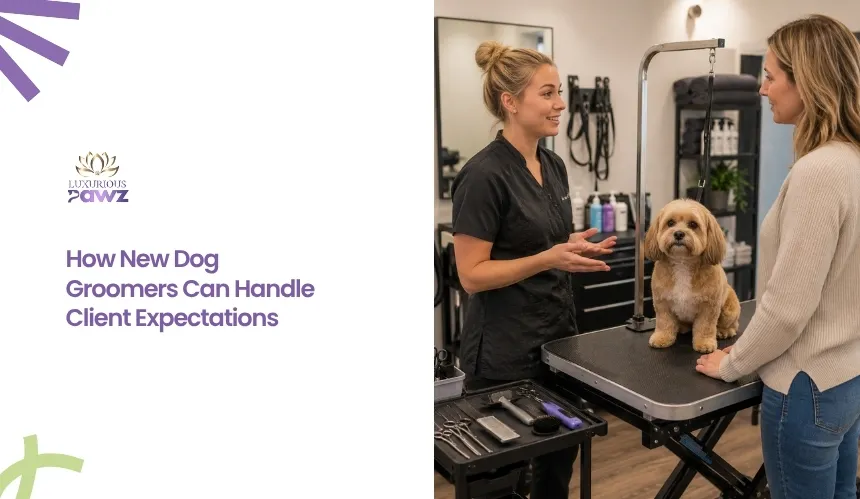
How New Dog Groomers Can Handle Client Expectations
Key Takeaways
|
New dog groomers can handle client expectations by making the grooming process clear before the appointment begins. Many client concerns come from a gap between the look the owner wants and what the dog’s coat, behavior, skin condition, or grooming history can safely allow. A strong groomer does not simply accept every request.
They assess the dog, explain realistic options, confirm limits, and guide the client toward a result that protects comfort while still respecting the owner’s preferences.
Do You Know? According to the American Veterinary Medical Association, 42.6% of U.S. households own dogs, representing about 56.3 million dog-owning households. This shows why new groomers need strong communication habits. With so many dog owners seeking care, every appointment may involve different coat types, behavior concerns, owner preferences, and maintenance habits. |
Start With a Clear Grooming Consultation
A proper consultation gives the groomer control over the appointment before any grooming work begins. It helps identify what the dog needs, what the client expects, and where the service plan may need adjustment.
Dogs in La Crescenta often spend time around foothill neighborhoods, dry outdoor spaces, and trail-adjacent areas where dust, loose debris, and seasonal shedding can build up quickly. For pets in Crescenta Valley, Briggs Terrace, and Crescenta Highlands, dog grooming in La Crescenta, CA helps remove dirt from the paws, belly, ears, and tail before it turns into odor, tangles, or coat discomfort.
The area’s warm, dry conditions can also make coat care more important for dogs with long, curly, thick, or double coats. Regular brushing, bathing, nail trimming, and coat checks help manage shedding, reduce matting, and support cleaner skin between outdoor routines. In La Crescenta, grooming is not only about appearance; it helps keep active local dogs more comfortable and easier to maintain.
Ask About the Dog’s Coat, Behavior, and Grooming History
The first step is to collect useful information from the owner. A groomer should ask about the dog’s coat type, brushing routine, allergies, skin sensitivity, previous grooming experience, and behavior during handling. These details help the groomer understand whether the requested service matches the dog’s current condition.
The owner may not always know which details matter. A dog that dislikes the dryer, reacts during nail trimming, or becomes nervous on the grooming table may need slower handling. A dog that has not been brushed regularly may need a maintenance cut instead of a styled trim. Asking the right questions prevents the groomer from making assumptions that can create problems later.
Do You Know? APPA’s 2024 Dog and Cat Owner Insight Report found that 58% of dog owners take their dogs to parks, while 50% take their dogs with them on foot at least once a week and 53% take them in the car for errands or routines. More outdoor activity can mean more dirt, tangles, shedding buildup, odor, and coat maintenance needs, which is why groomers should ask about the dog’s daily lifestyle during consultation. |
A focused grooming consultation may include questions such as:
- When was the dog last professionally groomed?
- How often is the coat brushed at home?
- Does the dog have allergies, irritated skin, or sore areas?
- Does the dog react to brushing, bathing, drying, or nail trimming?
- Is the owner mainly looking for style, comfort, shedding control, or easier maintenance?
These questions turn the appointment into a planned service instead of a guess based only on appearance.
Inspect the Coat Before Agreeing to a Style
A coat assessment should happen before the groomer confirms the final haircut. The dog’s visible appearance may not show hidden mats, tangles, impacted undercoat, skin redness, fleas, coat breakage, or sensitive areas. If these issues are found after a style has already been promised, the client may feel disappointed.
The groomer should check high-friction areas carefully. These include behind the ears, under the collar, armpits, belly, legs, tail base, and around the paws. These areas often collect tangles because of movement, collars, harnesses, and daily activity.
The explanation should be factual and calm. Instead of saying the coat is too bad, the groomer can say, “There are tight mats close to the skin in these areas, so the haircut may need to be shorter for comfort.” This gives the client a clear reason without making the conversation feel personal or critical.
Confirm the Most Realistic Grooming Plan
After inspecting the coat, the groomer should explain what can be done during that appointment. The plan should include the likely coat length, any areas that may need to be shorter, expected service time, possible handling limits, and any changes from the client’s original request.
This step prevents confusion at pickup. If the client wants a fluffy finish but the body needs to be clipped shorter, that should be explained before the dog goes to the grooming table. If the face can stay fuller but the legs need to be shortened because of tangles, the owner should understand that difference in advance.
New pet grooming professionals should treat this conversation as a clear agreement. The client should know what result is likely, why that result is being recommended, and how it supports the dog’s comfort.
Explain Grooming Limits Before the Service Begins
Grooming limits should be explained before the work starts, not after the client sees the finished result. This keeps the appointment transparent and reduces the chance of complaints.
Be Direct About Matting and Coat Condition
Matting is one of the most common reasons a requested style cannot be completed. A client may want to keep the coat long, but tight mats can pull on the skin and make brushing painful. In these cases, forcing the preferred style may create stress, irritation, or discomfort for the dog.
The groomer should explain the condition in simple terms. A clear statement may be: “These mats are too close to the skin to brush out comfortably, so a shorter trim is the safer option today.” This keeps the focus on the dog’s comfort instead of blaming the owner.
A useful structure is to explain the condition, give the safest option, and offer a future plan. For example, the groomer can explain that the current cut will reset the coat, while regular brushing and future appointments can help the dog grow back into the owner’s preferred style.
Do You Know? A Frontiers in Veterinary Science study on grooming-related concerns found that 13% of ASPCA-NYPD Partnership cruelty cases involved general hair matting concerns or strangulating hair mat wounds, and 93% of those cases involved long-haired dog breed types. This supports why groomers should explain matting as a comfort and welfare issue, not just a styling problem. |
Set Boundaries Around Safety-Based Decisions
Some dogs need a modified service because of age, anxiety, pain, skin sensitivity, or difficult handling. Senior dogs may need breaks. Puppies may need shorter sessions. Nervous dogs may not tolerate long scissoring. Dogs with irritated skin may not be suitable for heavy brushing or strong product use.
New dog groomers should avoid promising a perfect finish when the dog’s comfort may limit the service. A better approach is to say, “The groom will be completed as neatly as the dog can comfortably tolerate today.” This gives the client a realistic expectation without lowering the professional standard.
Safety-based decisions should be presented as part of responsible grooming. When the groomer explains that comfort comes before appearance, the client is more likely to understand why a service may need to be shortened, adjusted, or completed in stages.
Discuss Time and Price Before Extra Work Begins
Time and price changes should be discussed as soon as the groomer identifies extra work. Mat removal, deshedding, flea handling, coat repair, slow handling, and difficult drying can all require more labor than a standard appointment.
Clients often become frustrated when they hear about added costs after the service is finished. To avoid this, the groomer should connect the cost to the work being done. A heavily coated dog may require more brushing and drying time. A reactive dog may need pauses and slower handling. A matted dog may need careful clipping to avoid pulling the skin.
Clear pricing language protects both the groomer and the client. The owner understands what is included, what is extra, and why the appointment may take longer than expected.
Do You Know? The U.S. Bureau of Labor Statistics projects 11% employment growth for animal care and service workers from 2024 to 2034, with about 81,700 openings each year on average. BLS also notes that groomers may schedule appointments, sell products, identify concerns that may need veterinary attention, and provide grooming services such as bathing, nail trimming, and coat styling. This shows why new groomers need both technical skills and client communication skills. |
Manage Style Requests and Photo References Professionally
Style requests should be handled with care because clients often arrive with a specific image in mind. The groomer’s role is to translate that idea into a realistic grooming option for the dog in front of them.
Treat Photos as Style Direction, Not a Guaranteed Result
Reference photos can be helpful, but they should not be treated as an exact promise. The dog in the photo may have a different breed, coat texture, coat length, coat density, grooming history, or maintenance routine.
The groomer should ask what the client likes about the image. It may be the rounded face, shorter body, fluffy legs, clean paws, or balanced outline. Once the preferred details are clear, the groomer can explain which features can be adapted for that dog.
This approach keeps the conversation positive. The groomer is not rejecting the client’s idea. The groomer is using the photo as a guide while setting realistic styling limits.
Clients around Montrose, Pickens Canyon, and the Foothill Boulevard corridor may request cleaner, easier-to-maintain trims because dogs can pick up dust, dry debris, and tangles during walks, yard play, or trail-adjacent routines. In this context, pet haircut in La Crescenta, CA becomes more than a style request because the right trim can reduce matting risk, make brushing easier, and help the coat stay cleaner between grooming visits.
For new groomers, haircut expectations should be explained through the dog’s coat condition and daily routine. A fluffy style may not work if the coat is tangled or uneven, while a shorter maintenance cut may suit active dogs better. Clear explanation helps clients understand why the safest haircut may differ from the photo they bring.
Explain the Technical Reason Behind Style Differences
Some grooming styles require enough coat length, proper coat density, and regular upkeep. A teddy bear trim, fuller face, blended legs, or rounded shape may not be possible if the coat is too short, thin, patchy, damaged, or tangled.
The groomer should explain the technical reason in simple language. If the coat is not long enough, it cannot be shaped into the same rounded finish. If the dog cannot tolerate brushing, drying, or scissoring, the groom may need to stay simpler and more practical.
This keeps grooming expectations realistic without sounding negative. The owner learns that the requested look may be possible later, but only if the coat is maintained and the dog can tolerate the process.
Offer a Practical Alternative for the Current Visit
When the exact style is not possible, the groomer should offer a practical option instead of stopping at “no.” A shorter maintenance trim, comfort cut, fuller head with a shorter body, blended face, or staged grooming plan may still meet the client’s main goal.
New dog groomers can also explain how future appointments can move closer to the requested look. If the coat needs to grow, the client can be given a brushing routine and a grooming schedule. If the dog needs more confidence, shorter and more frequent appointments may help build tolerance.
A practical alternative turns a limitation into a plan. It shows the client that the groomer is solving the problem rather than dismissing the request.
Build Trust Through Clear Pickup Communication
Pickup communication closes the appointment properly. It helps the client understand the finished result, the decisions made during the service, and what should happen before the next visit.
Explain What Was Done and Why
At pickup, the groomer should summarize the service in clear, simple language. If the cut was shorter than expected, if some areas were adjusted, or if a task was limited because of stress or sensitivity, the client should hear the reason immediately.
The explanation should connect the result to the dog’s condition. For example, the groomer may say, “The body was shortened because the mats were close to the skin, but the head was kept fuller where the coat allowed it.” This prevents the client from assuming the original request was ignored.
This conversation does not need to be long. It only needs to explain the main grooming decisions before the owner forms an opinion based only on appearance.
Give Aftercare Guidance the Client Can Actually Use
Aftercare guidance should be specific to the dog’s coat and service result. The groomer may explain brushing frequency, bathing intervals, ear care, nail trimming, deshedding needs, or the best timing for the next appointment.
The advice should match the dog’s needs. Curly coats often require regular brushing to prevent mats. Double coats may need undercoat management. Short coats may need routine bathing, nail care, and skin checks. Dogs with sensitive skin may need gentler products and lighter brushing.
Specific instructions work better than general reminders. Instead of saying “brush more often,” the groomer can point out which areas mat first and how often those areas should be checked.
Dogs around Dunsmore Park, Two Strike Park, and the Rosemont Avenue area may shed more noticeably after outdoor walks, dry-weather activity, and seasonal coat changes. For thick-coated or double-coated breeds, pet de-shedding in La Crescenta helps remove loose undercoat before it collects on furniture, causes tangles, or traps dust close to the skin.
This service is especially useful for active local dogs that spend time in yards, parks, or foothill-adjacent walking routes. Regular de-shedding can make the coat lighter, cleaner, and easier to brush between appointments while helping owners manage loose hair during warmer or drier parts of the year.
Do You Know? The ASPCA explains that brushing frequency depends on coat type. Smooth short coats may need weekly brushing, while long silky coats may need daily attention to remove tangles and prevent mats. This supports why groomers should give specific aftercare instructions instead of telling every client to “brush more.” |
Keep Records for Future Consistency
Notes and photos help prevent confusion across appointments. A groomer can record blade length, shampoo choice, coat condition, behavior triggers, client preferences, and any service changes approved by the owner.
Photos are useful when the coat condition affects the haircut. They show why a shorter trim, extra brushing, or modified service was necessary. This documentation is not about blaming the client. It creates a shared record of the dog’s condition and the grooming decisions made.
Professional grooming services use records to make future visits smoother. When the groomer knows what happened last time, the next appointment can be planned with more accuracy and less explanation.
For pet owners who want a smoother grooming experience, Luxurious Pawz provides careful, comfort-focused grooming that starts with clear communication and ends with practical aftercare guidance. Their team helps set realistic expectations based on the dog’s coat condition, temperament, and grooming needs, so every appointment feels more informed and less stressful. Whether a pet needs routine maintenance, coat care, or a fresh style, Luxurious Pawz focuses on safe handling, clean results, and a grooming process built around the dog’s well-being.
Frequently Asked Questions
How Can New Dog Groomers Manage Client Expectations?
They can manage expectations by asking practical questions, inspecting the coat before confirming the style, explaining service limits, discussing time or price changes early, and reviewing the result at pickup. The client should understand what is possible before the grooming work begins.
What Should a Groomer Say When a Client Wants an Unsafe Haircut?
The groomer should explain the risk clearly and recommend a safer option. For example, if the requested haircut may irritate the skin, pull on mats, or increase stress, the groomer should explain why the request is not suitable for that appointment and offer a more comfortable alternative.
How Should Groomers Handle Clients Who Bring Photo References?
Photo references should be treated as inspiration. The groomer should ask which features the client likes, then explain which parts can be recreated based on the dog’s coat length, texture, density, condition, and grooming tolerance.
When Should a Groomer Discuss Extra Charges?
Extra charges should be discussed before the extra work begins. If the dog needs mat removal, deshedding, flea handling, slow handling, or additional drying time, the client should understand the reason for the added cost before approving the service.
How Can Groomers Reduce Complaints After the Appointment?
Groomers can reduce complaints by confirming the plan before grooming, explaining necessary changes, documenting coat condition, and reviewing the finished result at pickup. Most complaints are easier to prevent when the client understands the reason behind each decision.