
- admin
How Often Should You Get Your Dog Groomed? (By Coat Type & Breed)
Key Takeaways
|
Dog grooming frequency is not the same for every dog. A dog’s coat type, breed, shedding pattern, skin condition, haircut length, and daily activity all affect how quickly grooming is needed. Some dogs can stay comfortable for several weeks with basic brushing and nail care, while others need professional grooming much sooner because their coats grow, tangle, shed, or trap debris quickly.
For dog owners in Sunland, CA, grooming schedules may also depend on outdoor exposure, dry weather, dusty walking routes, park visits, and how often the dog spends time outside. The right grooming routine keeps the coat clean, controls shedding, prevents painful mats, supports healthy skin, and helps owners notice early signs of discomfort before they turn into bigger problems.
How Often Should Dogs Be Groomed by Coat Type?
A dog’s coat type is one of the strongest factors in grooming frequency. Coat length, texture, density, shedding cycle, and matting risk determine whether a dog needs grooming every few weeks or only every couple of months. A coat-based schedule gives owners a practical starting point because it focuses on how the hair behaves, not just how the dog looks.
Dogs in Sunland often deal with more than routine indoor shedding. The area’s foothill setting, dry weather, dusty walking routes, and nearby outdoor spaces can leave dirt, pollen, loose hair, and debris trapped in the coat. For dogs that spend time around local parks, trails, yards, or neighborhood walks, Dog Grooming in Sunland, CA helps keep the coat cleaner, reduces odor, and lowers the risk of tangles, packed undercoat, and irritated skin.
Regular grooming is also important because Sunland’s warm and outdoor-friendly environment can make coat buildup easier to miss until it becomes uncomfortable. Brushing, bathing, deshedding, nail trimming, ear checks, and paw care help dogs stay comfortable after daily walks, dry-weather exposure, and seasonal shedding.
A consistent grooming schedule gives owners a practical way to protect coat health while keeping their dogs cleaner between outdoor activities.
How Often Should Short-Haired Dogs Be Groomed?
Short-haired dogs usually need professional grooming every 8 to 12 weeks, depending on shedding level, odor, skin condition, and outdoor activity. Their coats do not usually grow long enough to need haircuts, but they still collect loose hair, dander, dirt, body oil, and pollen. These materials can settle close to the skin and create odor or irritation if grooming is ignored.
Breeds such as Beagles, Boxers, Dalmatians, Labrador Retrievers, and French Bulldogs often fall into this category. These dogs may look easy to maintain, but their coats still benefit from routine brushing, bathing, nail trimming, ear checks, and shedding control. Short-haired dogs can shed heavily because their small hairs release quickly and stick to clothing, furniture, bedding, and carpets.
Short-coated breeds with skin folds, such as French Bulldogs, may need extra attention around the face, ears, paws, and folds. Moisture and debris can collect in these areas, especially after walks, baths, or play. A simple grooming routine can reduce odor, remove dead coats, and keep the skin cleaner between professional appointments.
How Often Should Long-Haired Dogs Be Groomed?
Long-haired dogs often need professional grooming every 4 to 8 weeks because their coats tangle more easily and collect debris faster. Longer hair moves against itself when the dog walks, lies down, plays, or wears a harness. This friction can create tangles around the ears, legs, belly, chest, tail, and armpits.
Breeds such as Shih Tzus, Maltese, Yorkshire Terriers, Afghan Hounds, and Lhasa Apsos usually need a tighter grooming schedule than short-haired breeds. Their coats can trap grass, dust, loose hair, and moisture. If tangles are not removed early, they can turn into mats that pull on the skin and make brushing painful.
Long-haired dogs kept in longer coat styles need regular brushing at home between appointments. Dogs kept in shorter trims may go slightly longer, but they still need grooming before the coat becomes uneven, dirty, or difficult to maintain. Delayed grooming can lead to coat breakage, skin irritation, trapped moisture, and painful matting close to sensitive areas.
How Often Should Curly or Wavy-Coated Dogs Be Groomed?
Curly and wavy-coated dogs usually need professional grooming every 4 to 6 weeks. These coats often keep growing and do not release loose hair in the same way as many short-haired or double-coated dogs. Instead, dead hair can remain inside the curl pattern and mix with new growth, which increases the risk of dense tangles and mats.
Poodles, Bichon Frises, Doodle breeds, and Portuguese Water Dogs often need consistent brushing, bathing, drying, and trimming. Their coats may look soft and fluffy on the outside while tight mats are forming closer to the skin. This is one reason curly-coated dogs can become uncomfortable even when they do not look extremely dirty.
Proper drying is especially important for curly coats. If moisture remains inside the coat after bathing or swimming, the hair can tighten as it dries. This can make mats worse and increase skin discomfort. A professional groomer can use coat-safe drying methods, trimming techniques, and tools that help maintain the coat without pulling or damaging the skin.
How Often Should Double-Coated Dogs Be Groomed?
Double-coated dogs generally need professional grooming every 6 to 10 weeks, with extra deshedding during seasonal coat changes. These dogs have a protective outer coat and a softer undercoat. The undercoat sheds in cycles and can become packed if loose hair is not brushed out regularly.
Breeds such as Huskies, German Shepherds, Golden Retrievers, Corgis, and Australian Shepherds need routine brushing and deshedding to manage undercoat buildup. When the undercoat becomes compacted, airflow through the coat decreases. This can trap heat, dirt, moisture, and loose hair close to the skin.
Double-coated dogs often shed more heavily during spring and fall. During these coat-blowing periods, grooming may need to happen more often than usual. Regular deshedding removes dead undercoat without damaging the protective outer coat. Shaving is usually not the best solution because the coat helps protect the dog from sun exposure, weather, and temperature changes.
Grooming Frequency by Breed Needs
Breed gives owners another useful way to plan grooming because different breeds have different coat textures, growth rates, ear shapes, body structure, and skin needs. Two dogs may be the same size but require completely different grooming schedules because one has a smooth coat and the other has a long, curly, or dense coat.
1. Low-Maintenance Breeds
Low-maintenance breeds can usually go longer between professional grooming appointments because their coats are short, smooth, or naturally easier to keep clean. Boxers, Beagles, Dalmatians, Dobermans, French Bulldogs, and similar breeds often need less frequent full grooming than dogs with fast-growing or mat-prone coats.
Low-maintenance does not mean grooming-free. These dogs still need nail trimming, ear checks, tooth brushing, paw care, bathing, and regular brushing. A short coat can still collect dirt, dead skin, loose hair, and oils. If basic care is ignored, the dog may develop odor, itchy skin, excessive shedding, or buildup around the ears and paws.
Some short-haired breeds also have features that change their grooming needs. Dogs with skin folds may need gentle wiping and drying to prevent moisture buildup. Dogs with floppy ears may need more frequent ear checks because less airflow can allow odor or debris to develop faster. A low-maintenance coat reduces haircut needs, but it does not remove the need for routine hygiene.
2. High-Maintenance Breeds
High-maintenance breeds need a stricter grooming schedule because their coats grow faster, tangle easily, or hold debris close to the skin. Poodles, Doodles, Shih Tzus, Maltese, Cocker Spaniels, and Old English Sheepdogs often need regular professional care because their coats can become difficult to manage when grooming is delayed.
Curly, long, or dense coats can hide early tangles. A dog may look fine from a distance while mats are forming near the ears, collar area, chest, legs, belly, or tail. Once mats tighten, brushing can become uncomfortable, and the groomer may need to trim the coat shorter than the owner expected.
High-maintenance breeds also need consistent at-home brushing. Brushing keeps the coat separated, removes loose hair, and reduces friction. The longer the coat style, the more frequent the brushing needs to be. Dogs kept in fluffy trims, breed-specific styles, or longer coat lengths usually need more maintenance than dogs kept in short practical trims.
3. Breeds With Seasonal Shedding Problems
Breeds with heavy seasonal shedding may need extra grooming during spring and fall because the undercoat releases in larger amounts. German Shepherds, Huskies, Golden Retrievers, Corgis, Australian Shepherds, and similar double-coated breeds often shed in cycles that create noticeable loose hair around the home.
Seasonal shedding is not just a cleaning issue. When loose undercoat stays trapped, it can reduce airflow, create clumps, and increase skin discomfort. Regular brushing and deshedding help remove dead coat before it spreads across floors, furniture, clothing, and bedding.
Shaving double-coated breeds is usually not recommended as a routine shedding solution. The outer coat protects the skin, while the undercoat supports insulation. Removing the coat too aggressively can affect natural coat function and may change how the coat grows back. A better approach is routine deshedding, coat-safe bathing, proper drying, and consistent brushing during high-shedding months.
Dogs that spend time around Sunland’s dry sidewalks, foothill routes, yards, and outdoor spaces can shed more noticeably as loose hair, dust, and pollen collect in the coat. Pet De-Shedding in Sunland, CA, helps remove dead undercoat before it spreads across furniture, bedding, clothing, and floors. This is especially useful for double-coated and heavy-shedding breeds that release more hair during seasonal coat changes.
Regular de-shedding also supports better coat airflow and comfort for dogs that stay active in Sunland’s warm, outdoor-friendly environment. When a loose undercoat stays trapped, it can create clumps, hold dirt close to the skin, and make the coat feel heavier. A professional de-shedding routine helps reduce buildup, manage seasonal shedding, and keep dogs cleaner between grooming appointments.
What Factors Change a Dog’s Grooming Schedule?
A breed or coat-type schedule is a strong starting point, but it is not always enough. Dogs from the same breed may still need different grooming timelines because activity level, skin condition, home care, coat style, and behavior all affect how quickly grooming problems develop.
Activity Level and Outdoor Exposure
Active dogs often need grooming sooner because outdoor exposure adds dirt, pollen, moisture, burrs, grass, and debris to the coat. Dogs that hike, swim, visit parks, roll in grass, or walk through dusty areas may need more frequent baths, brushing, paw cleaning, and coat checks.
Moisture is especially important. When water stays inside thick, long, or curly coats, it can create odor and tighten tangles. Dogs that swim or get wet often should be dried properly, especially around the ears, belly, legs, paws, and undercoat. Wet hair that dries unevenly can make mats form faster.
Outdoor activity can also affect paws and nails. Dirt can collect between paw pads, while rough surfaces can irritate the skin. Nails may wear unevenly depending on the surfaces the dog walks on. Dogs that spend time on trails, sidewalks, yards, or sandy ground may need more frequent paw checks than dogs that stay mostly indoors.
Skin Sensitivity or Allergies
Dogs with sensitive skin, allergies, dryness, hot spots, recurring odor, or itching may need a customized grooming routine. Their schedule may depend on coat-safe shampoo, bathing frequency, drying method, brushing pressure, and guidance from a veterinarian or professional groomer.
Overbathing can strip natural oils and make dry skin worse. Delayed bathing can allow allergens, yeast, bacteria, dirt, or oil to remain on the skin longer. The best schedule balances cleanliness with skin protection. This is especially important for dogs that scratch often, lick their paws, develop redness, or smell unusual soon after bathing.
Dogs with allergies may also need gentle products and careful rinsing. Shampoo residue can irritate the skin if it is not removed completely. Professional groomers can help select suitable grooming methods, but ongoing skin problems should be checked by a veterinarian because grooming alone cannot treat medical skin conditions.
Home Brushing Routine
A consistent home brushing routine can extend comfort between professional grooming appointments. Brushing removes loose hair, separates the coat, improves airflow, and catches small tangles before they become tight mats. It also gives owners a chance to notice skin changes, bumps, fleas, ticks, redness, or sore spots.
Dogs that are not brushed at home often need grooming sooner, especially long-haired, curly-coated, and double-coated breeds. When a loose coat stays in place, it can mix with dirt and body oils. This makes the coat harder to brush and may increase the time needed for professional grooming.
The right brush also matters. A slicker brush may help with curly or long coats, while an undercoat tool may be more useful for heavy-shedding double-coated dogs. Using the wrong tool or brushing too aggressively can irritate the skin. Groomers can recommend tools based on coat type and maintenance goals.
Haircut Length and Coat Style
Haircut length changes how often a dog needs professional grooming. Shorter trims can make the coat easier to maintain and may allow more time between appointments. This is often useful for dogs that mat quickly, play outdoors often, or do not tolerate long brushing sessions at home.
Longer coat styles need more frequent brushing, shaping, and maintenance because longer hair catches debris and tangles faster. Dogs kept in fluffy trims, teddy bear cuts, show-style coats, or breed-specific styles usually need grooming on a tighter schedule. The longer the coat stays, the more responsibility shifts to daily or near-daily brushing at home.
Coat style should match the dog’s comfort and the owner’s maintenance ability. A long style may look attractive, but it can become uncomfortable if brushing is inconsistent. A shorter practical trim can reduce matting risk and make the coat easier to manage between appointments.
Signs Your Dog Needs Grooming Sooner
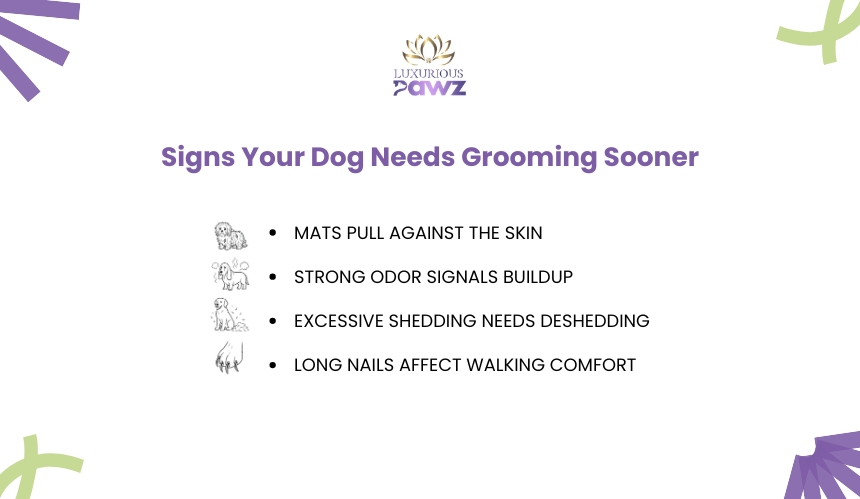
A grooming schedule should be adjusted when visible or physical signs show that the dog is uncomfortable, dirty, tangled, or overdue for care. Waiting until the coat looks severely messy can make grooming harder and more stressful for the dog.
Matting, Tangling, or Coat Clumping
Mats are one of the clearest signs that grooming should not be delayed. Tangled hair can pull on the skin every time the dog moves. Mats can also trap moisture, dirt, and bacteria close to the skin. This may hide redness, sores, irritation, or parasites until the problem becomes more serious.
Coat clumping is common in long-haired, curly-coated, and dense-coated dogs when loose hair is not brushed out regularly. Small tangles are easier to remove when caught early. Once mats tighten close to the skin, brushing can become painful, and professional trimming may be safer than detangling.
Owners should check high-friction areas often. The ears, collar line, chest, armpits, belly, legs, tail, and behind the legs are common matting zones. If the coat feels tight, clumpy, or difficult to separate with fingers, the dog may need grooming sooner than planned.
Strong Odor or Greasy Coat
A strong odor or greasy coat can mean that dirt, oil, moisture, or debris has built up on the skin and hair. Odor may come from the coat, ears, paws, skin folds, or undercoat. Some dogs smell stronger when loose hair and body oils stay trapped close to the skin.
Bathing, brushing, ear cleaning, and proper drying can reduce normal buildup. However, persistent odor may point to a skin or ear issue. If the smell returns quickly after grooming, the dog may need veterinary attention rather than repeated bathing.
Greasy buildup can also make the coat feel heavy or sticky. This can attract more dirt and make tangles form faster. Dogs with oily skin, allergies, or thick coats may need a grooming plan that controls buildup without drying out the skin.
Excessive Shedding Around the Home
Excessive shedding on floors, furniture, bedding, and clothing may signal that loose hair is not being removed efficiently. This is common in Labrador Retrievers, German Shepherds, Huskies, Golden Retrievers, Corgis, and other heavy-shedding breeds.
Shedding cannot be stopped completely because it is part of the natural hair cycle. However, regular brushing and deshedding can remove dead coat before it spreads through the home. For double-coated breeds, deshedding also helps prevent compacted undercoat.
If shedding increases suddenly outside the normal seasonal pattern, owners should look for other signs such as itching, bald patches, redness, dandruff, or skin odor. Sudden coat changes may need professional evaluation because they can be linked to stress, nutrition, allergies, parasites, or skin problems.
Overgrown Nails or Paw Hair
Overgrown nails can affect how a dog stands, walks, and grips the floor. Long nails may place pressure on the toes, increase slipping, or make movement uncomfortable. Some dogs change their posture when nails are too long, which can add stress to the feet and legs.
Excess paw hair can collect dirt, moisture, burrs, and debris between the pads. It can also reduce traction on smooth floors. Trimming paw hair keeps the feet cleaner and helps the dog move more comfortably.
Dogs that click loudly on hard floors, slip often, lick their paws, or resist walking may need nail or paw care sooner. Paw maintenance is especially important for senior dogs because reduced grip can increase the risk of slipping.
Professional Grooming vs At-Home Grooming
At-home grooming supports coat health between appointments, but it does not replace every professional service. The best routine combines owner maintenance with professional grooming based on the dog’s coat type, behavior, health, and styling needs.
Do You Know? According to the American Pet Products Association, U.S. pet owners spent $158 billion on pets in 2024. Out of that, $14.3 billion went toward “Other Services,” a category that includes grooming, boarding, training, pet sitting, pet walking, insurance, and other non-veterinary services. |
What Dog Owners Can Maintain at Home
Dog owners can manage brushing, basic bathing, paw wiping, ear checks, eye-area cleaning, and coat monitoring at home. These habits reduce dirt buildup, tangles, odor, and loose hair between professional appointments. They also make professional grooming easier because the coat stays in better condition.
Brushing should match the dog’s coat type. A short-haired dog may only need weekly brushing, while a long-haired or curly-coated dog may need brushing several times a week. Dogs with heavy undercoats may need more frequent brushing during shedding season.
Basic bathing can be done at home when the dog’s coat is not matted and the skin appears healthy. The dog should be rinsed thoroughly because leftover shampoo can irritate the skin. Drying matters as much as washing, especially for thick or curly coats. Moisture trapped near the skin can lead to odor, tangling, or irritation.
Do You Know? Cornell University College of Veterinary Medicine reports that 80% to 90% of dogs over the age of 3 have some level of periodontal disease. This is why grooming conversations should not stop at the coat. Tooth brushing, mouth odor, and routine oral checks also matter when building a complete care routine for dogs. |
What Professional Groomers Handle Better
Professional groomers are better equipped for haircut shaping, deshedding treatments, sanitary trims, nail trimming, ear cleaning, mat removal, coat-safe drying, and breed-specific styling. These services require proper tools, controlled handling, and knowledge of different coat structures.
Haircut shaping is especially important for breeds with fast-growing coats. Uneven trimming can affect comfort around the eyes, paws, sanitary areas, and ears. Groomers can also adjust coat length based on matting risk, season, lifestyle, and owner maintenance ability.
For dogs in Sunland, CA, professional grooming can be helpful when outdoor dust, warm weather, and frequent walks cause buildup around the coat, paws, and ears. A groomer can remove loose coats, check friction areas, trim nails, and keep the dog’s coat easier to manage at home.
When Not to Delay a Grooming Appointment
A grooming appointment should not be delayed when the dog has painful mats, skin redness, foul odor, ear odor, parasites, compacted undercoat, severe shedding, or nails that affect walking. These signs can move beyond appearance and start affecting comfort or skin health.
Dogs that resist brushing may already be uncomfortable. A dog may pull away because mats are tight, the skin is irritated, or the brushing tool is catching on tangled hair. Forcing brushing at home can make the dog fearful and may worsen discomfort.
Owners should also avoid delaying grooming when a dog has mobility issues, senior-dog sensitivity, or heavy coat buildup. Shorter, more frequent appointments may be easier for dogs that cannot stand for long periods. Gentle handling and a practical coat length can make grooming less stressful.
Best Grooming Schedule by Dog Type
The best grooming schedule should match the dog’s coat structure, skin needs, shedding pattern, age, and comfort level. These timelines are practical starting points, but owners should adjust them when matting, odor, shedding, skin irritation, or nail overgrowth appears earlier.
Dog Type | Recommended Grooming Frequency | When to Adjust the Schedule |
Short-haired dogs | Every 8 to 12 weeks | Book sooner if shedding, odor, oily skin, dirty ears, or skin-fold buildup becomes noticeable |
Long-haired dogs | Every 4 to 8 weeks | Book sooner if tangles form around the ears, legs, belly, tail, collar line, or armpits |
Curly-coated dogs | Every 4 to 6 weeks | Book sooner if the coat feels dense, clumpy, tight near the skin, or difficult to brush through |
Double-coated dogs | Every 6 to 10 weeks | Book sooner during spring or fall shedding when loose undercoat increases or becomes packed |
Wire-coated dogs | Every 6 to 8 weeks | Book sooner if the coat loses texture, looks uneven, traps debris, or needs breed-specific shaping |
Hairless dogs | Every 1 to 4 weeks | Book sooner if the skin looks oily, dry, irritated, clogged, or sensitive after outdoor exposure |
Puppies | Every 4 to 6 weeks | Book sooner for nail care, coat handling, early brushing comfort, and grooming training |
Senior dogs | Based on comfort and health needs | Book shorter, gentler sessions if mobility, fatigue, skin sensitivity, or coat condition changes |
Give your dog the comfort, care, and clean-coat confidence they deserve with Luxurious Pawz. From routine grooming and de-shedding to nail trimming, bathing, and coat maintenance, our team helps pets look fresh, feel lighter, and stay comfortable between every appointment. Book with Luxurious Pawz today and let your dog enjoy grooming that feels as good as it looks.
Frequently Asked Questions
Is Mobile Dog Grooming Better for Nervous Dogs?
Mobile dog grooming can be helpful for nervous dogs because the service usually happens in a quieter, one-on-one setting. Dogs that feel stressed around other pets, loud dryers, or busy grooming salons may respond better to a calmer grooming environment.
When Should a Puppy Have Its First Grooming Appointment?
A puppy can usually start gentle grooming once vaccinations and handling readiness are confirmed by the owner’s veterinarian. Early grooming should focus on comfort, brushing, paw handling, nail trimming, ear checks, and short positive sessions instead of a full haircut right away.
Should Double-Coated Dogs Be Shaved in Summer?
Double-coated dogs should not be shaved as a routine summer grooming method. Their coat helps protect the skin and supports natural temperature regulation. Deshedding, brushing, bathing, and proper drying are safer ways to reduce loose undercoat without damaging coat function.
How Can Grooming Help Dogs With Allergies?
Grooming can help remove pollen, dust, dirt, loose hair, and surface allergens from the coat. Dogs with allergies may need gentle shampoos, thorough rinsing, proper drying, and a schedule recommended by a groomer or veterinarian to avoid dryness or irritation.
What Should Owners Ask Before Choosing a Dog Groomer?
Dog owners should ask about the groomer’s experience with their dog’s coat type, mat removal process, drying methods, handling approach, nail care, and policy for anxious or senior dogs. These questions help owners choose a groomer who can match the dog’s comfort and coat needs.
Why Does My Dog Still Smell After Grooming?
A dog may still smell after grooming if the odor comes from the ears, teeth, skin folds, paws, or an underlying skin issue. If the smell returns quickly after bathing, the dog may need a veterinary check instead of another routine grooming session.