
- admin
Expert Guide to Caring for Long, Short & Curly Pet Coats
Caring for a pet’s coat is not just about appearance. It directly affects comfort, skin health, and overall well-being. One of the most common mistakes pet owners make is following generalized grooming advice without considering coat type.
Long-haired, short-haired, and curly coats behave differently, respond differently to grooming tools, and require distinct care approaches to stay healthy.
This article focuses on practical, coat-based care guidance. Each section addresses one coat type independently, explaining the care principles that work best for that structure.
Understanding the Three Main Coat Types and Their Care Requirements
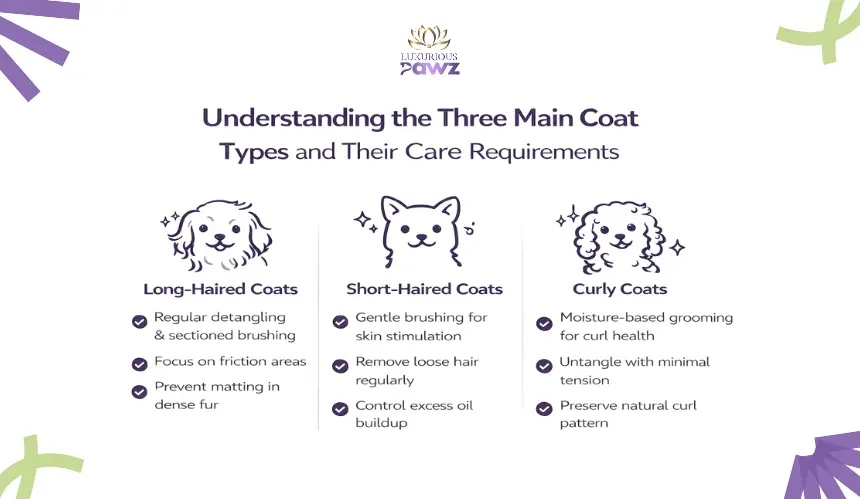
Before choosing grooming tools or setting a care schedule, it is important to understand how different coat types behave at a structural level. Coat length, density, and curl pattern determine how hair grows, how it sheds, and how it interacts with the skin. When these factors are clearly defined, grooming decisions become more accurate and far less trial-and-error driven.
Long-Haired Coats
Long-haired coats grow continuously and tend to overlap in layers. This layered growth increases surface friction, making the coat more prone to tangling and mat formation, especially when early warning signs of severe coat matting are overlooked. Loose hair often remains trapped within the coat instead of shedding away, which can restrict airflow and hold moisture close to the skin.
Because natural oils must travel farther along the hair shaft, uneven distribution is common. Without consistent grooming, the coat may appear dull near the ends while becoming oily closer to the skin. Effective care for long-haired coats focuses on separation, airflow, and controlled detangling rather than aggressive brushing.
Short-Haired Coats
Short-haired coats lie close to the skin and shed more freely than longer coats. While tangling is rarely an issue, shedding and oil buildup are far more noticeable. Loose hair tends to embed into furniture and clothing, and excess oils can accumulate quickly on the skin’s surface.
Since there is minimal hair length to absorb friction, the skin itself takes on more stress from grooming. This makes tool choice and pressure control especially important. Proper care for short-haired coats emphasizes skin stimulation, loose hair removal, and maintaining balanced oil levels rather than coat shaping.
Curly Coats
Curly coats grow in tight or semi-tight patterns that compress naturally. This compression traps shed hair within the curls, increasing the risk of internal matting even when the surface appears neat. The curl structure also makes the coat more sensitive to tension, dryness, and improper brushing techniques.
Moisture plays a central role in maintaining curl integrity. When curls lose hydration or are handled incorrectly, they stretch, frizz, or lose definition. Grooming curly coats requires methods that protect elasticity, preserve curl formation, and reduce unnecessary manipulation that disrupts the natural pattern.
Understanding these three coat types creates a clear foundation for targeted grooming care. With this structure in place, it becomes easier to apply the right techniques without mixing methods that may work for one coat but cause problems for another.
How to Care for Long-Haired Coats Without Causing Breakage or Matting
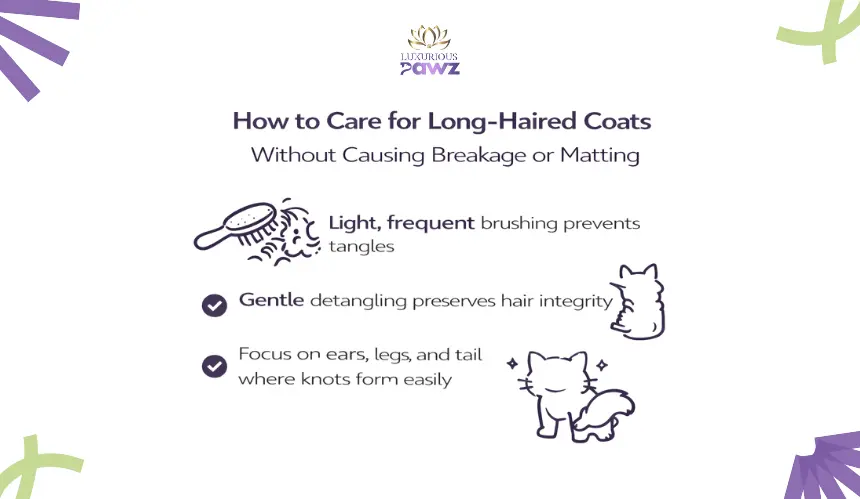
Long-haired coats require a care approach that prioritizes control, patience, and structure. Because hair length increases friction and overlap, improper handling can quickly lead to breakage, hidden knots, or dense mats close to the skin. Effective care focuses on reducing tension within the coat while keeping hair separated and breathable.
How Often Should Long-Haired Coats Be Brushed to Prevent Tangles?
Brushing frequency depends on how easily the coat tangles and how active the pet is. Most long-haired coats benefit from light, frequent brushing rather than occasional heavy sessions. This approach removes loose hair before it binds with surrounding strands and creates resistance.
Brushing should always begin at the ends and work gradually toward the roots. Starting close to the skin pulls against resistance and increases breakage. Separating the coat into small sections improves control and allows tangles to be addressed before they tighten.
Consistent spacing between sessions keeps friction low and reduces the chance of mat formation in high-movement areas.
Detangling Technique Matters More Than Brushing Pressure
Detangling is not about force. Applying pressure to push through knots often compresses tangles deeper into the coat. Instead, controlled finger separation followed by gentle tool use helps release tension without snapping hair fibers.
Using short, controlled strokes prevents unnecessary pulling. When resistance is felt, the goal is to loosen the knot gradually rather than remove it in one motion. This method preserves coat length, reduces discomfort, and keeps the hair shaft intact. Over time, proper detangling improves the coat’s natural flow and manageability.
Which Areas of Long-Haired Coats Need Extra Attention?
Certain zones experience more friction due to movement and contact. Areas behind the ears, under the legs, around the collar line, and near the tail base tend to mat faster than the rest of the coat. These regions often trap shed hair and moisture, making them more vulnerable to tangling.
Focusing brief daily attention on these sections prevents small knots from becoming compact mats. Targeted care in friction-prone areas reduces overall grooming time and helps maintain a uniform coat texture without constant full-body brushing.
When long-haired coat care is approached with consistency and structure, grooming becomes less reactive and more predictable. Proper brushing frequency, gentle detangling, and attention to high-risk areas allow the coat to stay smooth, comfortable, and healthy without unnecessary stress.
Proper Care Techniques for Short-Haired Coats That Still Shed
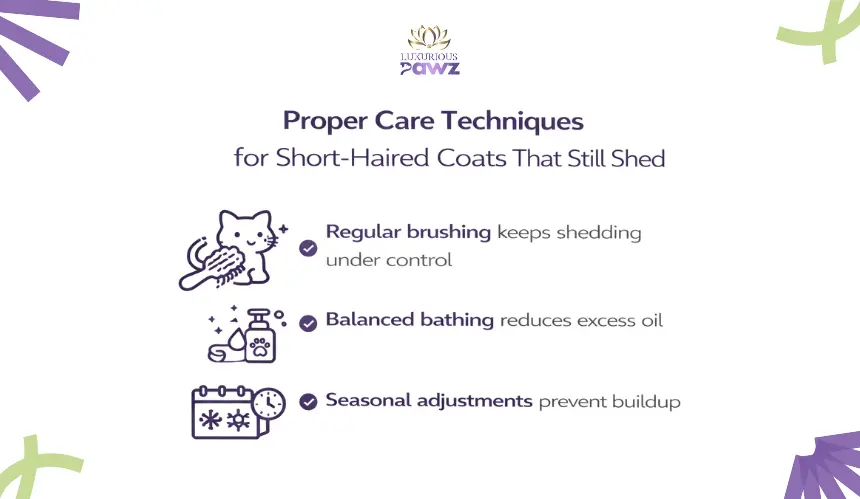
Short-haired coats are often mistaken for low-effort, but their care demands precision rather than length management. Because the hair sits close to the skin, shedding is more visible, oils accumulate faster, and skin sensitivity becomes a primary concern.
Effective care focuses on supporting skin health while managing loose hair before it spreads throughout the home.
Why Do Short-Haired Coats Shed So Consistently?
Short-haired coats shed more evenly because loose hair is not held in place by surrounding strands. As hair completes its growth cycle, it detaches quickly and spreads across surfaces. Seasonal changes, indoor heating, and natural oil production can intensify this shedding pattern.
Regular grooming and targeted deshedding treatments for heavy shedders help intercept loose hair before it disperses. Light but consistent brushing removes shed hair at the source and reduces buildup on furniture and clothing. This approach also prevents excess hair from collecting on the skin, where it can interfere with natural oil balance.
How Does Brushing Support Skin Health in Short-Haired Coats?
With minimal hair length to absorb pressure, brushing directly affects the skin. Gentle brushing stimulates circulation, supports even oil distribution, and helps remove dead skin cells that can cause flaking or irritation if left behind.
Tool pressure matters more than frequency. Overly aggressive brushing can irritate the skin, while controlled, even strokes encourage a healthy coat sheen. The goal is not coat separation but surface renewal, keeping the skin comfortable and the coat smooth without overstimulation.
What Is the Right Balance Between Bathing and Oil Control?
Short-haired coats show oil buildup faster because oils are not absorbed along long hair shafts. While this may tempt more frequent bathing, excessive washing can strip natural oils, which is why learning the right way to bathe your pet is essential. and trigger increased production as a rebound response.
A balanced routine combines brushing for oil distribution with occasional professional pet bathing services when necessary. This helps maintain a clean feel without disrupting the skin’s protective barrier. When oil levels remain stable, shedding becomes easier to manage, and the coat retains a healthy, natural finish.
Maintaining Curly Coats Without Disrupting Curl Structure
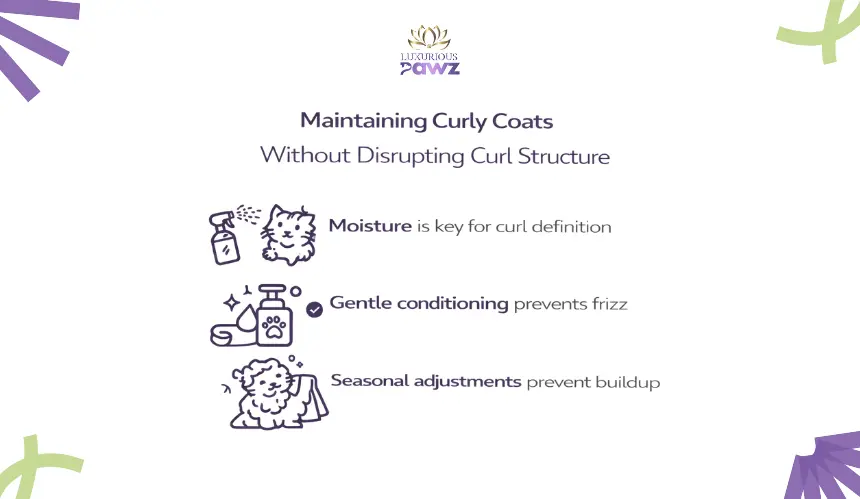
Curly coats require a care approach that protects shape, elasticity, and moisture balance. Unlike straight or short coats, curls rely on internal structure to maintain their form.
When grooming methods ignore this structure, curls lose definition, become frizzy, or compact into hidden mats beneath the surface. Proper care focuses on preserving how curls naturally form rather than forcing them into straightened patterns.
Why Does Dry Brushing Damage Curly Coats?
Dry brushing pulls curls apart, stretching the hair shaft beyond its natural elasticity. This disrupts curl memory and causes uneven texture across the coat. Over time, repeated dry brushing weakens the hair, increases breakage, and creates a frizzed surface that masks deeper matting.
Curly coats respond best when hair is slightly damp or conditioned. Moisture allows strands to glide past each other instead of resisting separation. This reduces tension, protects curl formation, and prevents unnecessary stress on the hair shaft during grooming.
How Does Moisture Affect Curl Definition and Coat Health?
Moisture is essential for maintaining curl shape and flexibility. When curls are adequately hydrated, they coil naturally and resist friction. Dry curls lose their ability to spring back, making them more vulnerable to tangling and compression near the skin.
Conditioning products and controlled hydration help maintain elasticity throughout the coat. Proper moisture balance allows curls to separate cleanly during grooming and reform naturally afterward. This not only improves appearance but also reduces internal matting that often develops unnoticed in dry coats.
What Drying Methods Preserve Natural Curl Patterns?
The drying technique has a direct impact on curl consistency. Aggressive airflow or excessive heat stretches curls unevenly and flattens their structure. This leads to irregular texture and weakens curl alignment across the coat.
Controlled drying methods that limit airflow disturbance help curls set in their natural shape. Allowing curls to dry with minimal manipulation preserves uniformity and reduces the need for corrective grooming later. When drying supports the curl pattern instead of fighting it, the coat remains softer, more defined, and easier to maintain.
Tools and Products That Match Each Coat Type
Selecting grooming tools without considering coat structure often leads to frustration and coat damage. Each coat type responds differently to tension, pressure, and surface contact. The right tools support the coat’s natural behavior, while the wrong ones can undo even a well-planned grooming routine. This section focuses on aligning tools with coat mechanics rather than general convenience.
Which Tools Work Best for Long-Haired Coats?
Long-haired coats benefit from tools designed to separate hair gently without snapping strands. Detangling tools with flexible pins help release knots gradually instead of compressing them further. Wide-tooth combs are especially useful for checking deeper layers near the skin after surface brushing.
Tools that glide smoothly reduce friction, which is essential for maintaining length and preventing split ends. The goal is controlled separation rather than aggressive hair removal, allowing the coat to stay airy and manageable between grooming sessions.
What Grooming Tools Support Short-Haired Coat Health?
Short-haired coats require tools that focus on loose hair removal and skin stimulation. Rubber brushes and soft-bristle tools lift shed hair efficiently while maintaining even contact with the skin. These tools help collect hair that would otherwise shed freely throughout the environment.
Because the skin is more exposed, tools should distribute pressure evenly and avoid sharp edges. Proper tool selection ensures shedding control without irritation, supporting both coat appearance and skin comfort.
How Should Tools Be Chosen for Curly Coats?
Curly coats need low-tension tools that respect curl elasticity. Wide-spaced combs and flexible brushes reduce pulling and allow curls to separate without losing shape. Tools that resist snagging are critical, as curls naturally wrap around rigid pins.
Products that support moisture retention also play a role. Conditioning aids and detangling solutions help tools move through curls smoothly, minimizing resistance. When tools complement curl behavior, grooming preserves definition instead of breaking it down.
Choosing coat-specific tools creates a foundation for effective grooming. When equipment matches coat structure, grooming sessions become shorter, gentler, and more predictable, reducing the risk of long-term coat damage.
Creating a Sustainable Grooming Routine Based on Coat Type
A grooming routine only works when it can be maintained consistently. Sustainable routines are built around coat behavior, not rigid schedules. When grooming frequency and methods align with coat type, care becomes preventative instead of corrective, saving time and reducing stress for both pet and owner.
This section focuses on structuring routines that adapt naturally to each coat’s needs without over-grooming or neglect.
How Often Should Each Coat Type Be Groomed?
- Long-haired coats: Light brushing every 1–2 days keeps hair separated and airflow consistent, with a more thorough detangling session once a week to address deeper layers and friction-prone areas before mats form.
- Short-haired coats: Brief grooming 1–2 times per week is usually sufficient to remove loose hair and support skin circulation, with slightly increased frequency during seasonal shedding periods to control buildup.
- Curly coats: Structured grooming every 7–10 days works best when paired with moisture support, while light touch-ups between sessions focus on hydration rather than manipulation to preserve curl structure and prevent internal matting.
How Can Grooming Routines Stay Flexible Over Time?
Coat needs to change with seasons, activity levels, and age. Shedding cycles may intensify at certain times of year, while older pets may require gentler handling. A sustainable routine allows adjustments without abandoning core principles.
Monitoring how the coat responds after each session helps guide small changes. If tangles appear more frequently or shedding increases, the routine can be refined rather than completely restructured. This adaptability keeps grooming aligned with real conditions instead of fixed assumptions.
When Does Professional Grooming Become Part of the Routine?
Home grooming supports daily maintenance, but some coat types benefit from periodic professional care. Long-haired and curly coats, in particular, may require professional attention to reset the coat structure, address compacted areas, or manage seasonal changes.
Professional dog grooming services work best as a complement, not a replacement, for routine care. When combined thoughtfully, home maintenance and professional services create a balanced system that protects coat health over the long term.
A sustainable grooming routine respects coat type, adapts to change, and prioritizes prevention. When care methods are realistic and coat-specific, grooming becomes a manageable part of regular care rather than a recurring challenge.
Every coat tells a story of comfort, care, and trust. When grooming feels confusing or overwhelming, having the right support makes all the difference. Luxurious Pawz understands that no two coats are the same, and every pet deserves care that feels gentle, thoughtful, and tailored to who they are.
Frequently Asked Questions
Can a pet’s coat type change over time?
Yes, coat texture and behavior can shift with age, hormonal changes, health conditions, or climate exposure. Puppies may develop thicker or curlier coats as they mature, while senior pets often experience thinning or dryness. Monitoring these changes helps adjust grooming methods before new issues develop.
How does indoor living affect coat condition?
Indoor environments can influence coat health through temperature control and air quality. Heating and air conditioning may reduce humidity, leading to dryness or static buildup. Adjusting hydration and grooming frequency helps counteract these environmental effects without altering core care techniques.
Are shedding patterns linked to diet or nutrition?
Nutrition plays a significant role in coat strength and shedding cycles. Diets lacking essential fatty acids or protein may increase hair loss or reduce coat resilience. Consistent nutrition supports healthier growth cycles and improves how the coat responds to regular grooming.
What signs indicate that a grooming routine needs adjustment?
Increased tangling, sudden shedding changes, dull texture, or visible skin sensitivity often signal that current care methods are no longer effective. These signs suggest a need to reassess frequency, tools, or handling approach rather than intensifying the same routine.
Can stress affect coat health and grooming tolerance?
Stress can influence both coat condition and a pet’s response to grooming. Anxiety may increase shedding or make handling uncomfortable. Creating calm, predictable grooming sessions helps reduce stress-related coat changes and improves overall cooperation over time.