

- admin
How to Choose the Right Haircut for Your Dog’s Breed and Lifestyle
Key Takeaways
|
The right dog haircut must do more than create a neat appearance. It should suit the dog’s coat structure, activity level, skin condition, climate exposure, and tolerance for grooming. A style chosen without these factors may increase matting, expose sensitive skin, or require more maintenance than the owner can provide. The safest choice balances breed characteristics with the dog’s everyday needs.
How Does Breed and Coat Type Affect the Right Haircut?
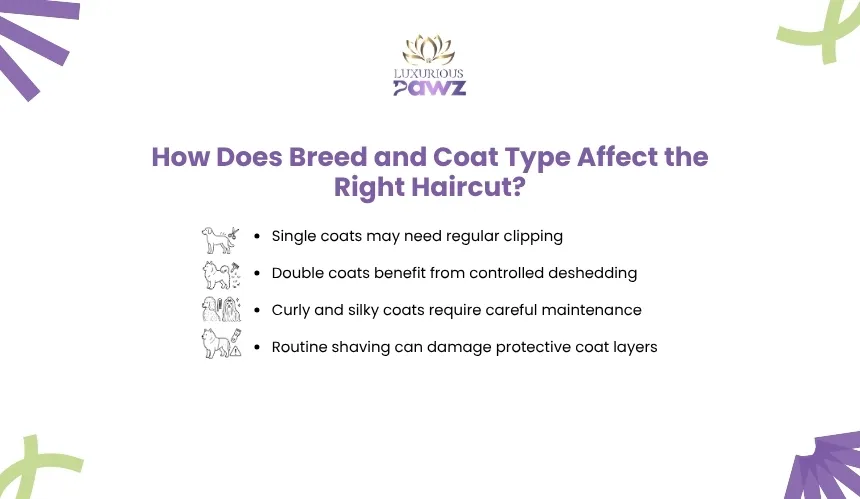
Coat structure determines whether a dog needs regular clipping, controlled shaping, deshedding, or minimal trimming. Identifying the coat type first helps prevent unnecessary shaving and supports healthier coat management.
Single Coats, Double Coats, and Continuously Growing Coats
Single-coated dogs have one primary layer of hair and usually lack the dense undercoat found in many shedding breeds. Some single-coated breeds, including Maltese and Yorkshire Terriers, grow long hair that can develop knots when brushing or trimming is delayed.
Poodles, Bichon Frises, and similar breeds also have continuously growing coats that require scheduled clipping. These dogs can wear different haircut lengths, but the final choice should reflect coat condition, brushing frequency, and the amount of time available for home maintenance.
Double-coated breeds have a soft undercoat beneath longer guard hairs. German Shepherds, Golden Retrievers, Siberian Huskies, Pomeranians, and Australian Shepherds are common examples. Their coats naturally shed and usually benefit from brushing, undercoat removal, sanitary trimming, and light shaping rather than routine close shaving.
Haircuts for Curly, Silky, Wiry, and Thick Coats
Curly coats hold loose hair close to the skin, allowing tangles to tighten without being immediately visible. A short or moderate puppy cut can make brushing easier, but areas behind the ears, beneath the legs, and around the tail still require regular combing.
Silky coats are fine and prone to friction-related knots. Long styles can work when the owner brushes consistently, while a shorter body trim may be more practical for dogs that wear harnesses, play outdoors, or frequently become wet.
Wiry coats may be clipped or hand-stripped, depending on the breed, coat condition, and owner’s goals. Hand-stripping removes mature outer hairs and can help preserve a traditional coarse texture. Clipping is often more convenient for companion dogs, although it may gradually change the coat’s texture or colour intensity.
Thick coats usually need controlled deshedding and shaping rather than aggressive thinning. Removing loose undercoat and tidying the paws, belly, and feathering can improve cleanliness without unnecessarily reducing coat protection.
Why Should Some Dog Breeds Not Be Shaved?
Routine shaving is generally unsuitable for many healthy double-coated dogs. Guard hairs help protect the skin from sunlight, moisture, dirt, and minor environmental irritation, while the undercoat contributes to insulation.
Cutting both layers very short may expose the skin and alter how the coat grows back. Regrowth varies between dogs and may appear uneven, softer, or temporarily patchy. Age, health, hormones, coat condition, and clipping length can all affect recovery.
Safer grooming options may include:
- Removing loose or compacted undercoat
- Shortening long feathering around the legs and belly
- Trimming hair between the paw pads
- Tidying sanitary areas
- Brushing more frequently during seasonal shedding
- Shaping the coat without clipping close to the skin
Close clipping may still be necessary when severe matting cannot be removed comfortably or when a veterinarian requires access to the skin. In these situations, comfort and medical needs take priority over preserving a particular appearance.
Breed Features That Affect Face, Paw, and Ear Trimming
Facial shape influences how hair should be managed around the eyes, mouth, and skin folds. Hair that touches the eyes can cause irritation, while damp facial hair may collect food, saliva, or debris. Flat-faced breeds may also need careful cleaning around skin folds.
Long or heavily furnished ears can develop knots where they rub against the neck and shoulders. Ear hair may also collect water, dirt, and food. Trimming should improve hygiene without exposing delicate skin or interfering with the natural shape of the ear.
Hair between the paw pads should remain short enough to support traction and prevent compacted mud, grass seeds, or snow. Tail, beard, eyebrow, and leg furnishings should also be adjusted when they interfere with vision, eating, movement, or cleanliness.
Match the Haircut to the Dog’s Lifestyle
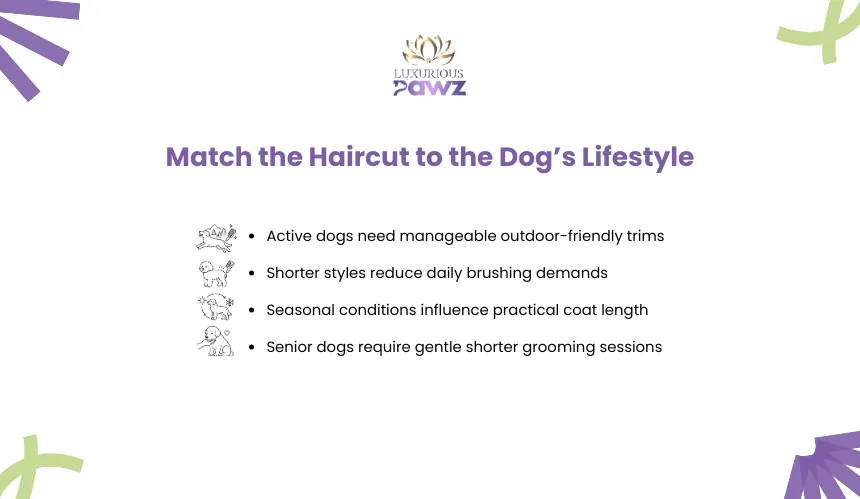
A haircut must remain practical after the dog leaves the grooming salon. Exercise, outdoor exposure, household routines, age, health, and brushing habits all affect how easily a style can be maintained.
Active Dogs That Spend More Time Outdoors
Dogs that hike, swim, visit parks, or run through long grass often collect burrs, seeds, twigs, mud, and moisture. Long feathering around the legs, belly, ears, and tail can make these materials harder to detect and remove.
A moderate trim can simplify cleaning while preserving the natural coat structure. Paw-pad trimming also makes it easier to inspect for ticks, cuts, thorns, cracked pads, or trapped debris after outdoor activity.
Swimming dogs require thorough drying because dense, damp fur can irritate the skin and create odour. Their haircut should make rinsing and drying manageable without removing more protective coat than necessary.
Harnesses, collars, life jackets, and protective clothing can also create friction. Hair beneath contact points should be checked regularly for knots, breakage, redness, or trapped moisture.
Sunland’s foothill location and access to canyon trails expose active dogs to dry soil, loose plant material, burrs, and foxtails that can become trapped around the paws, ears, belly, and longer coat areas. In Sunland, CA regular dog grooming is performed to remove loose fur and outdoor debris, control matting, trim overgrown paw hair, and make skin changes or embedded plant material easier to detect. Foxtails are especially concerning because their barbed seeds can penetrate a dog’s skin, ears, eyes, or paws and may cause serious infection when left unnoticed.
Did You Know?
A 10-year veterinary study documented 791 confirmed foxtail-related cases and found foxtail-associated disease in 0.25% of dogs examined during the study period. UC Davis explains that an embedded foxtail cannot reverse direction and may migrate through tissue toward the lungs, brain, or other organs. For dogs exploring dry, grassy areas around Sunland, manageable hair around the paws, ears, legs, and belly can make post-walk inspections easier.
Low-Maintenance Haircuts for Busy Households
A shorter haircut can reduce daily brushing, but no style removes the need for coat care. Bathing, nail trimming, ear care, skin checks, and professional grooming remain necessary regardless of coat length.
Before selecting a low-maintenance style, owners should consider:
- How often the dog can be brushed
- Whether the dog tolerates combing
- How quickly the coat grows
- Which areas mat first
- How often appointments can be scheduled
- How frequently the dog becomes wet or dirty
An even-length puppy cut is often practical for curly or continuously growing coats. The groomer should leave enough length to protect sensitive skin while reducing the areas most likely to knot.
Longer styles can remain manageable when the owner follows a reliable brushing routine. Maintenance depends on density, texture, activity, and grooming frequency, not simply whether the coat looks long or short.
Seasonal Comfort and Local Weather Conditions
Weather affects coat maintenance, but temperature alone should not determine haircut length. The dog’s natural coat type, health, activity, and access to shade or shelter must also be considered.
During warm weather, removing loose undercoats can improve airflow through the coat. Mats and compacted shedding restrict ventilation and hold moisture or debris close to the skin. Regular brushing, hydration, shade, and suitable exercise times remain essential for heat management.
Rainy conditions may justify shorter hair around the belly, legs, and paws because these areas collect mud and moisture. In snowy regions, trimming excess paw hair can reduce ice buildup between the toes.
Dogs with continuously growing coats may wear a slightly longer trim in cold conditions, but excessive length can still mat beneath sweaters or coats. The chest, shoulders, neck, and armpits should be checked frequently where clothing creates friction.
Sunland sits between the San Gabriel and Verdugo Mountain foothills, where dogs often encounter dry trails, dusty yards, weeds, and seasonal grass seeds during outdoor activity. A well-planned pet haircut in Sunland, CA shortens excess hair around the paws, belly, ears, and legs, making foxtails, burrs, dirt, and skin irritation easier to detect before they become hidden beneath the coat. The haircut should match the dog’s coat type rather than simply removing length, especially because close shaving can reduce protection from Sunland’s strong sun and dry outdoor conditions.
Did You Know?
Sunland is located in the northeastern San Fernando Valley, where the National Weather Service notes that heat-wave temperatures can exceed 115°F. Canine heatstroke studies cited by the Royal Veterinary College reported fatality rates ranging from 36% to 63%. A shorter haircut should therefore never replace shade, water, reduced midday exercise, and coat-appropriate grooming.
Haircut Adjustments for Senior Dogs and Sensitive Skin
Senior dogs may find long grooming sessions difficult because of reduced balance, joint stiffness, respiratory problems, or muscle weakness. A simple haircut with fewer detailed finishing steps can reduce standing time and physical strain.
Some older dogs benefit from shorter hygiene trims around areas affected by incontinence. The groomer may also use rest breaks, supportive positioning, or quieter equipment based on the dog’s tolerance.
Dogs with sensitive skin may react to close blades, fragranced products, excessive heat, or repeated brushing over one area. Leaving additional coat length and using gentle handling can reduce the risk of redness or clipper irritation.
Persistent itching, sores, unusual hair loss, lumps, scaling, or strong odour should be evaluated by a veterinarian. A groomer can observe visible changes, but skin disease, allergies, infections, and pain require veterinary diagnosis.
Did You Know?
Royal Veterinary College research found that at least one lipoma was diagnosed in 1.94% of dogs during a single year. Dogs between 9 and 12 years old had more than 17 times the odds of receiving a lipoma diagnosis compared with dogs aged 3 to 6. Grooming cannot diagnose a lump, but handling the coat closely may help an owner notice a new bump that requires veterinary examination.
What Should Owners Discuss With a Professional Groomer?
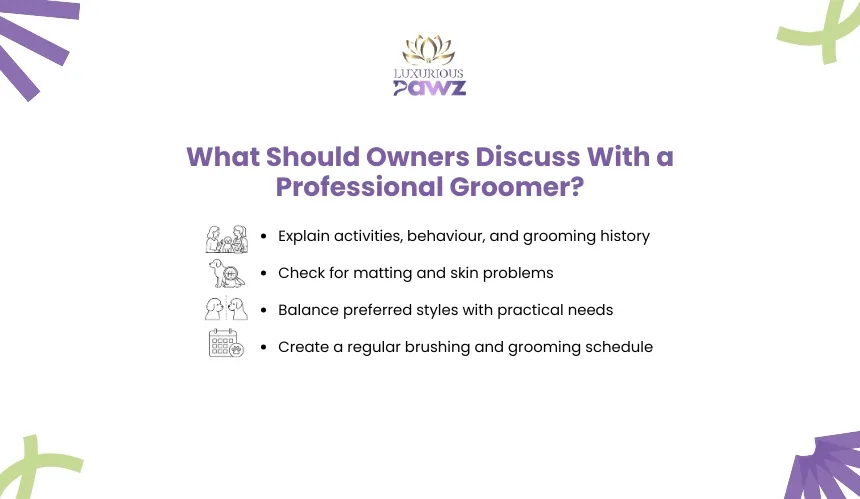
A grooming consultation helps determine whether a preferred style is safe, achievable, and realistic to maintain. Owners should provide details about the dog’s routine, health, behaviour, and previous grooming experiences.
Explain the Dog’s Routine and Grooming History
The groomer should know whether the dog swims, hikes, attends daycare, wears clothing, or spends significant time outdoors. These activities influence where tangles, moisture, and debris are most likely to develop.
Owners should explain how often the dog is brushed, bathed, and professionally groomed. They should also mention any difficulty with clippers, dryers, nail handling, facial trimming, or standing for extended periods.
Reference photographs can communicate appearance preferences, but the same haircut will not look identical on every dog. Coat density, texture, growth direction, body structure, and current coat condition affect the final result.
A simpler style may be safer for dogs that become highly stressed during grooming. Behavioural information allows the groomer to plan realistic handling methods rather than attempting a complicated finish the dog cannot tolerate comfortably.
Check for Matting, Skin Problems, and Coat Damage
A coat assessment should take place before the final haircut length is confirmed. Mats often develop close to the skin behind the ears, beneath collars, inside the legs, around the tail, and in areas where harnesses create friction.
Severe matting pulls on the skin and may make movement uncomfortable. Attempting to brush out tightly packed mats can cause pain or skin irritation. Clipping beneath the mats may therefore be safer, even when the resulting haircut is shorter than the owner originally requested.
A pre-grooming check may identify:
- Redness, scabs, or moist areas
- Fleas, ticks, or visible parasites
- Lumps or changes in skin texture
- Excessive oil, flakes, or odour
- Hair breakage caused by friction
- Staining around the face or paws
Visible abnormalities should be documented and discussed with the owner. Grooming may need to be modified or delayed when a condition appears painful, infected, or medically significant.
Compare Style Preferences With Practical Coat Needs
A haircut shown in a photograph may depend on a coat type different from the dog being groomed. Curl pattern, density, growth direction, ear shape, muzzle length, and body proportions all influence whether the style can be reproduced.
A professional groomer can adapt individual features instead of copying the entire haircut. A shorter body, rounded face, shaped ears, and tidy feet may create a similar overall appearance while remaining suitable for the dog’s actual coat.
Owners should also ask how the style will grow out. Sculpted trims often require frequent appointments to preserve their shape, while even-length haircuts may remain presentable for longer.
The right haircut for a dog’s breed and lifestyle should remain comfortable between appointments. A practical variation is safer than forcing a style that increases matting, exposes the skin, or requires an unrealistic level of home care.
Create a Brushing and Grooming Schedule Between Haircuts
The grooming routine should be based on coat type, chosen length, activity level, and the areas most likely to tangle. The groomer can demonstrate suitable tools and explain how much pressure to use.
Curly and silky coats often need brushing followed by a metal comb to identify knots hidden near the skin. Double coats may require an undercoat rake or suitable deshedding tool during heavier shedding periods. Wiry coats need care based on whether they are clipped or hand-stripped.
High-friction areas should receive particular attention, including behind the ears, beneath the collar, under the front legs, around the tail, and below harness straps. Pulling forcefully through a knot can injure the skin, so difficult tangles should be handled carefully.
Many continuously growing coats require professional grooming approximately every four to eight weeks, but no single schedule suits every dog. Coat growth, haircut length, health, behaviour, and home brushing may shorten or extend the interval.
Choosing a manageable style and maintaining it consistently protects coat condition, makes skin changes easier to notice, and gives the groomer more safe haircut options at future appointments.
Choosing the right haircut can improve coat manageability, support daily comfort, and make grooming easier between appointments. Luxurious Pawz provides breed-aware pet haircuts and professional dog grooming tailored to coat type, activity level, age, and skin sensitivity. Schedule an appointment to give your dog a practical, comfortable style that fits life in Sunland.
Frequently Asked Questions
Is a Puppy Cut the Same for Every Dog Breed?
No. “Puppy cut” is a general grooming term rather than one fixed haircut. The coat is usually trimmed to an even, manageable length, but the exact finish depends on coat texture, body shape, facial features, and owner preference. A groomer should confirm the desired length before starting.
Can a Haircut Reduce a Dog’s Shedding?
A haircut does not stop the natural shedding cycle. For double-coated dogs, professional deshedding and regular brushing are usually more effective than cutting the coat short. Trimming may make loose hair less noticeable on some long-haired dogs, but it does not change how much hair the follicles release.
When Should a Puppy Have Its First Professional Haircut?
A puppy can usually begin introductory grooming after receiving appropriate veterinary guidance for vaccinations and public exposure. Early appointments may involve brushing, bathing, nail care, and gentle clipper exposure rather than a complete haircut. Short, positive sessions can help the puppy become comfortable with future grooming.
Are Breed-Standard Haircuts Practical for Household Pets?
Breed-standard cuts are designed to highlight traditional appearance and structure, but they may require frequent brushing, shaping, and professional maintenance. A simplified version is often more practical for family pets. Owners can preserve recognizable breed features while choosing a shorter or easier-to-manage body length.
Should a Dog Be Bathed Before or After a Haircut?
Professional groomers commonly bathe and dry the dog before completing the final haircut because clean, straightened hair allows more even clipping and scissoring. However, heavily matted coats may need preliminary clipping before bathing. The safest sequence depends on coat condition, mat severity, and the planned style.