
- admin
How to De-shed a Short-Haired Dog Fast?
Key Takeaways
|
Short-haired dogs can shed more noticeably than their coat length suggests because their fine, stiff hairs release quickly and cling to fabric, flooring, and clothing.
For dog owners in Altadena, CA, fast deshedding requires a controlled grooming method, not aggressive brushing. The goal is to remove the dead coat efficiently while keeping the skin calm and the top coat intact.
This guide explains a quick, safe deshedding routine for short-haired dogs, including the right brushing sequence, tool choices, and signs that shedding may need professional attention.
Why Do Short-Haired Dogs Still Shed Heavily?
Short-haired dogs shed when older hairs complete their growth cycle and detach from the follicle. Because these hairs are small, firm, and easy to dislodge, shedding can look sudden even when the coat appears smooth.
Short Coat Does Not Mean Low Shedding
A short coat only describes hair length, not how much hair the dog releases. Many short-haired dogs have a high coat turnover rate, meaning dead hairs are replaced frequently and shed before owners notice buildup on the body.
Some breeds also carry a compact undercoat beneath the visible topcoat. When that layer loosens, it may not form obvious mats, but it still needs to be lifted out with a tool that can reach the coat surface without dragging across the skin.
What Causes Sudden Shedding In Short-Haired Dogs?
Sudden shedding often follows a trigger that changes the skin or coat cycle. Seasonal temperature shifts, indoor heating, dry air, stress, food changes, allergies, parasites, and inconsistent grooming can all increase the amount of hair released at once.
In Altadena, CA, dry weather and outdoor dust can make shedding more noticeable because loose hair and fine debris sit closer to the coat’s surface. When brushing is delayed, the dog may release larger amounts during petting, bathing, or normal movement.
Do You Know? VCA notes that many people expect shedding to slow down after summer, but dogs often shed more in fall as their coats prepare for colder months. This seasonal coat change can make short-haired dogs release more hair even when their coat still looks sleek and low-maintenance. |
What Is The Fastest Way To De-Shed A Short-Haired Dog At Home?
The fastest safe method is to work in a simple order: loosen the dead coat, brush it out with controlled strokes, bathe only when buildup is present, and finish with a wipe-down. This sequence saves time because each step prepares the coat for the next.
Start With A Rubber Curry Brush Or Grooming Glove
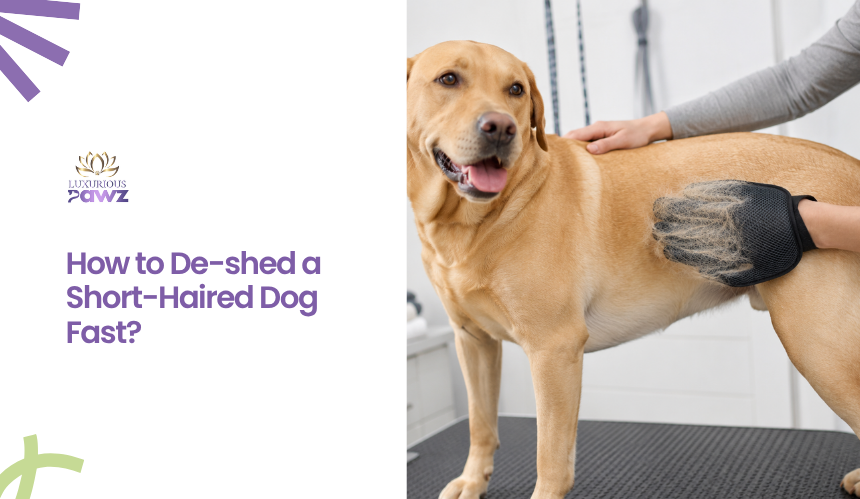
Begin with a rubber curry brush or grooming glove because flexible rubber catches short, loose hairs without pulling the live coat. Use light pressure and work in small sections across the shoulders, back, sides, chest, and hips.
This first step is about breaking up surface shedding before it spreads. A grooming glove works well for dogs that resist brushes because the hand movement feels more familiar and keeps the dog calmer during a quick grooming session.
Brush In The Direction Of Hair Growth
Brushing in the direction of hair growth removes loose coat while reducing friction on the skin. Short strokes work better than long, rushed passes because they give better control over pressure and prevent repeated rubbing over one area. The goal is to lift loose hair, not polish the coat aggressively.
Avoid pressing hard over thin-skinned areas such as the belly, armpits, inner thighs, and near the tail base. If the dog flinches, turns away, scratches, or licks the same spot, reduce pressure or stop applying pressure to that area. Fast deshedding should leave the skin calm, not red or tender.
Do You Know? According to the American Kennel Club, for some short-coated dogs, brushing against the direction of hair growth first can help loosen dead hair, then brushing with the coat direction helps remove it and smooth the natural oils across the coat. This method should be gentle and used only if the dog tolerates it comfortably. |
Should You Bathe A Short-Haired Dog Before Deshedding?
A quick bath can help when loose hair, dust, dander, or coat oil is holding shed fur close to the skin. Use lukewarm water and a dog-safe shampoo, then rinse thoroughly so residue does not dry out the coat. Bathing too often can strip natural oils, so it should be used when the coat feels dirty, greasy, dusty, or heavily loaded with loose hair.
Dogs in Altadena often spend time walking near Eaton Canyon, passing through neighborhood streets around Lake Avenue, or enjoying outdoor routines close to Farnsworth Park. These everyday activities can leave short-haired dogs with dust, dander, pollen, and coat oil that brushing alone may not fully remove. That is why regular bathing can be helpful for keeping the coat cleaner, fresher, and easier to manage between grooming visits.
Pet bathing in Altadena, CA is especially useful for dogs that shed heavily after outdoor walks, warm weather, or dry seasonal conditions. A proper bath helps loosen trapped hair, clear surface buildup, and prepare the coat for more effective deshedding. For pet owners near areas like Altadena Drive, and Lincoln Avenue, routine bathing can support better coat comfort while reducing loose fur around the home.
After the bath, drying matters as much as washing. A damp coat can trap loose hairs against the skin, while a properly dried coat releases them more easily. Towel-dry first, then use a low-heat or cool setting if a dryer is needed and the dog tolerates it.
Finish With A Microfiber Towel Or Soft Bristle Brush
After the main brushing pass, use a microfiber towel to collect fine hairs, loose dander, and any remaining moisture from the coat. This is especially useful after bathing or after brushing a dog with very short, sleek hair.
A soft bristle brush can then give the coat a clean finish by smoothing the top layer and spreading natural oils. This step should feel light and brief, not like a second full brushing session.
Best Tools For Fast Short-Haired Dog Deshedding
Tool choice should match the dog’s coat density, skin sensitivity, and tolerance for handling. The best short-coat tools remove dead hair through grip and surface contact rather than sharp edges or heavy force.
1: Rubber Grooming Brush
A rubber grooming brush is best for routine deshedding on smooth or short coats. Its flexible teeth create enough traction to gather dead hair while staying gentle on areas where the coat lies close to the skin.
Choose this tool when the dog sheds regularly but does not have packed undercoat. It is also useful before a bath because it loosens surface hair before water and shampoo reach the coat.
2: Grooming Glove
A grooming glove is a better fit for sensitive, nervous, or restless dogs. It gives the owner more contact control and allows quick grooming during petting, which can reduce resistance in dogs that dislike standing still.
The glove also helps detect skin changes during grooming. Dry patches, bumps, scabs, or tender spots are easier to feel by hand, so the owner can avoid irritated areas instead of brushing over them.
3: Soft Bristle Brush
A soft bristle brush works best as a finishing tool, not the main deshedding tool. It removes tiny surface hairs, smooths the topcoat, and helps the coat look cleaner after the heavier loose hair has already been lifted out.
For short-haired dogs, the bristles should bend easily against the hand. Stiff bristles can create unnecessary friction over the elbows, hips, spine, and other bony areas.
4: Deshedding Rake Or Blade Warning
Deshedding rakes, metal blades, and undercoat tools should be used carefully on short-haired dogs. Many are designed for thicker double coats and can scrape the skin or break coat hairs when used at the wrong angle.
These tools are not automatically unsafe, but they require correct coat matching and controlled handling. For most fast at-home short-coat grooming, rubber tools, grooming gloves, microfiber towels, and soft bristle brushes are more predictable.
How Can You Keep Shedding Under Control After Fast Deshedding For Short Haired Dogs?
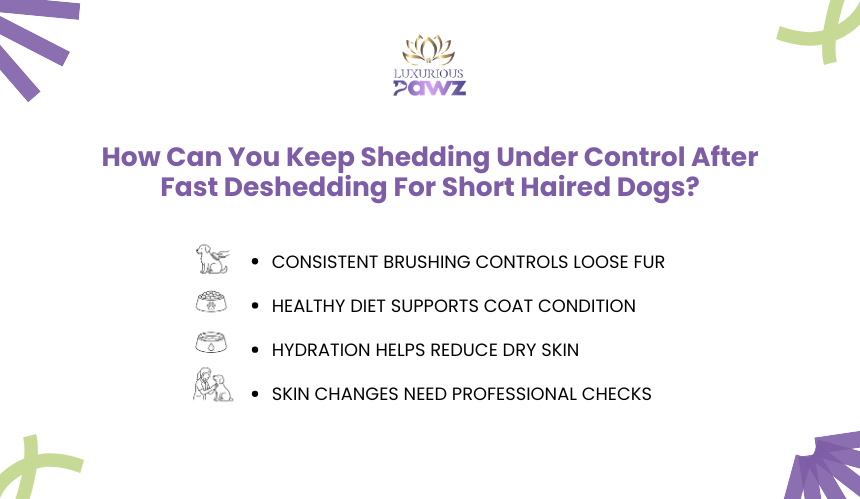
After a quick deshedding session, maintenance determines how long the results last. A steady routine limits heavy coat release, supports skin condition, and helps owners notice abnormal shedding early.
Brush Short-Haired Dogs Consistently
Most short-haired dogs do well with light brushing two to four times per week. Dogs that shed heavily, spend time outdoors, or leave visible hair on bedding may need shorter, more frequent sessions instead of one long grooming attempt.
In Altadena, CA, routine brushing can also remove dust and fine debris before they settle against the skin. Keeping sessions brief makes the process easier for dogs that become restless or overstimulated.
Support Coat Health Through Diet And Hydration
Coat condition depends partly on nutrition, hydration, and skin barrier health. Adequate protein supports hair structure, while essential fatty acids can help maintain skin comfort and coat quality when included appropriately in the diet.
Clean drinking water also matters because dry skin can make shedding appear more noticeable. Supplements should not be added blindly, especially if the dog already has allergies, digestive issues, or a medical condition.
When Should Shedding Be Checked By A Groomer Or Vet?
Shedding requires professional attention when accompanied by bald spots, redness, flakiness, odor, sores, constant scratching, excessive licking, or uneven hair loss. These signs may point to allergies, parasites, infection, hormonal imbalance, or another skin issue.
A groomer can help when the coat is overloaded with loose hair or the dog resists handling at home. A veterinarian is the better choice when shedding is accompanied by discomfort, visible skin changes, or a sudden change in overall coat quality.
Some short-haired dogs need more than routine brushing when a loose coat keeps returning quickly or becomes difficult to manage at home. Dogs that spend time around Lincoln Avenue, or the foothill neighborhoods of Altadena may pick up dust and outdoor buildup that makes shedding more noticeable between regular grooming sessions.
Pet de-shedding in Altadena, CA is helpful when owners want a deeper coat cleanup without using harsh tools at home. A professional groomer can choose the right brush, bathing support, drying method, and finishing technique based on the dog’s coat density, skin sensitivity, and shedding pattern.
If shedding keeps returning even after regular brushing, Luxurious Pawz can help your dog get a cleaner, lighter, and more comfortable coat with professional grooming care. Our team uses coat-safe handling, proper deshedding techniques, and gentle tools suited for short-haired dogs, so loose fur is removed without stressing the skin. Schedule a grooming visit with Luxurious Pawz to keep your dog’s coat fresher, smoother, and easier to manage at home.
Frequently Asked Questions
Can you de-shed a short-haired dog too much?
Yes, over-deshedding can irritate the skin, weaken the topcoat, and make the dog uncomfortable during future grooming. Short-haired dogs do not need long or aggressive brushing sessions. A few controlled passes with the right tool are usually enough, especially when the coat is maintained consistently.
How long should a fast deshedding session take for a short-haired dog?
A fast deshedding session for a short-haired dog usually takes 10 to 20 minutes, depending on coat density, shedding level, and the dog’s tolerance. Smaller dogs or dogs with sleek coats may need less time, while heavier shedders may need short breaks to avoid stress.
Is it normal for a short-haired dog to shed right after grooming?
Some shedding after grooming is normal because loosened hairs may continue releasing for several hours. A final towel wipe, soft brush pass, or light vacuuming around resting areas can help manage leftover fur. If shedding becomes patchy or skin looks irritated, it may need professional attention.
Can I use a vacuum attachment to deshed my short-haired dog?
A pet-safe vacuum attachment may help some calm dogs, but it should never replace brushing or be used on dogs that fear the sound or suction. Start slowly, use low suction if available, and avoid sensitive areas. For anxious dogs, a grooming glove is usually safer and less stressful.
Do short-haired puppies need deshedding?
Short-haired puppies usually need gentle coat care rather than full deshedding. Their skin is more sensitive, and their adult coat may still be developing. A soft brush or grooming glove can help them get used to handling while removing light surface hair without making grooming feel uncomfortable.
Why does my short-haired dog shed more after sleeping?
Dogs often shed more after sleeping because body heat, pressure, and friction loosen hairs while they rest. When the dog gets up, loose hair transfers onto bedding, blankets, rugs, or furniture. Regular brushing and washing pet bedding can reduce visible fur buildup between grooming sessions.