
- admin
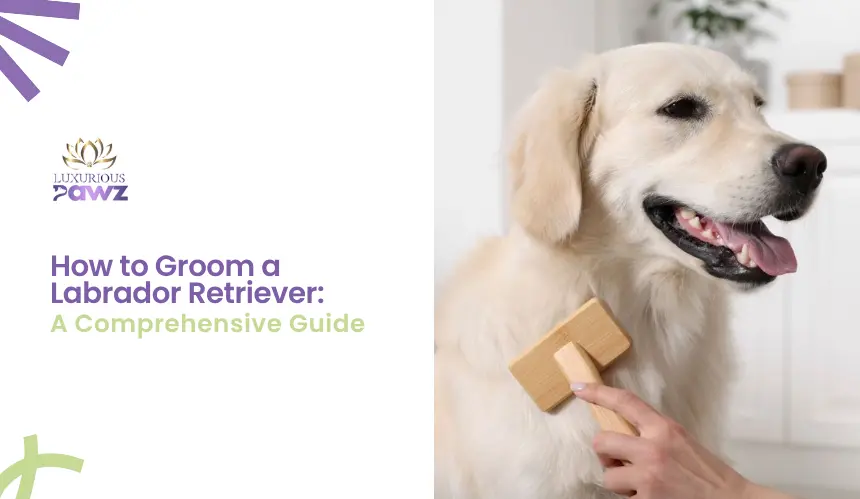
How to Groom a Labrador Retriever: A Comprehensive Guide
Key Takeaways:
|
Labrador Retrievers are world-famous for their “otter tails” and water-resistant coats, but keeping that signature look requires more than just a quick bath. While they are relatively low-maintenance compared to long-haired breeds, their dense double coats present unique challenges in shedding management and skin health that require a strategic, consistent approach.
Understanding the Labrador Double Coat
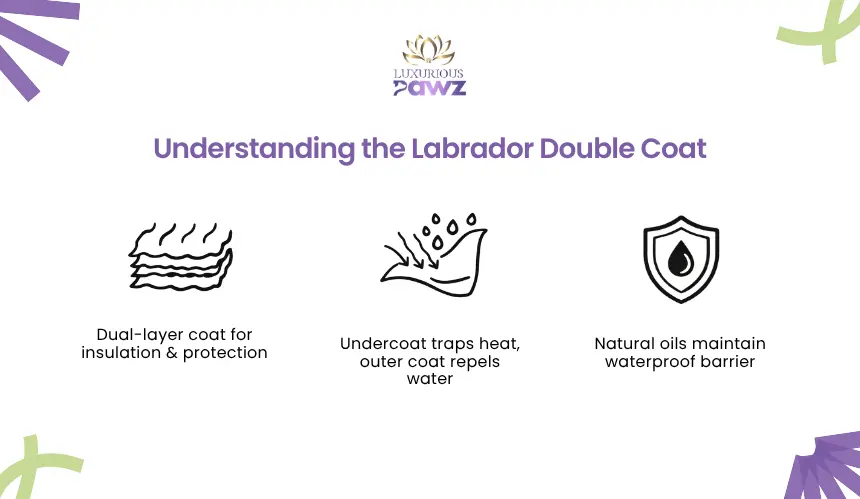
To master the art of grooming a Labrador, you must first understand the biological engineering behind their fur. Unlike breeds with a single layer of hair, the Labrador is equipped with a sophisticated double coat, a structural adaptation that served as their survival suit in the frigid North Atlantic. This coat isn’t just for show; it is a high-performance textile designed for thermal regulation and moisture management.
The Anatomy of Weather Resistance
To groom a Lab effectively, you must understand the biological structure of their fur. Labradors possess a double coat consisting of a soft, downy insulating undercoat and a coarse, oily outer layer known as guard hairs. This combination was evolutionarily designed to keep them warm and dry while retrieving waterfowl in icy Canadian waters. The natural oils act as a raincoat, repelling moisture and debris.
The "Blowout" Phenomenon
Twice a year, typically in spring and fall, Labs experience a seasonal shift known as “blowing the coat.” During these periods, the undercoat sheds in massive clumps to make room for a new layer suited for the upcoming season. Understanding this cycle helps you adjust your grooming frequency; during a blowout, you may need to transition from weekly brushing to daily sessions to prevent “tumbleweeds” of fur from taking over your home.
Seasonal Adaptation Strategies
The transition between seasons isn’t just about hair volume; it’s about skin health. In the winter, the undercoat is thick and woolly to trap body heat. In the summer, the guard hairs become more prominent to provide UV protection and allow airflow. Failing to remove the dead winter undercoat in spring can lead to overheating and skin irritation as the trapped fur prevents the skin from “breathing.”
The Essential Grooming Toolkit for Labrador Retriever
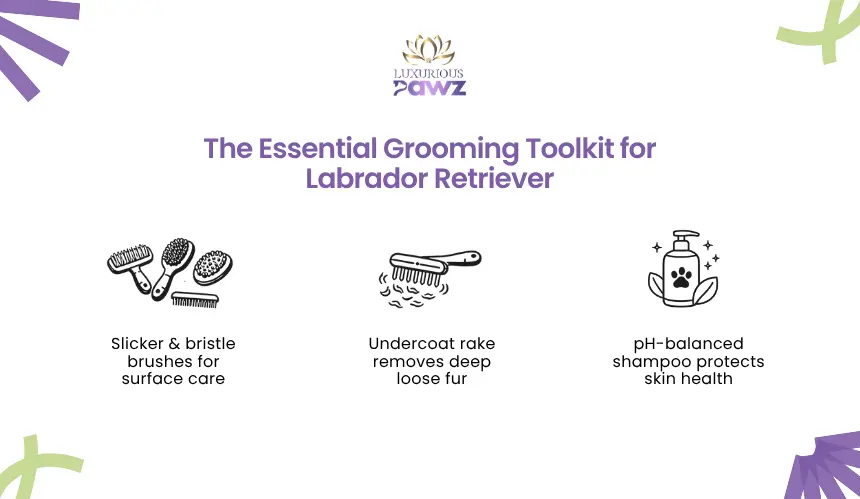
To maintain a Labrador’s coat to professional standards, you cannot rely on a “one-size-fits-all” brush. Because their fur is composed of two distinct layers, your toolkit must feature implements designed to penetrate the coarse topcoat while gently extracting the dense, woolly underlayer. Equipping yourself with the right gear ensures the grooming process is efficient for you and comfortable for your dog.
Primary Brushing Implements
Investing in the right tools prevents skin irritation and ensures you reach the undercoat rather than just skimming the surface.
- Slicker Brush: This features fine, short wires close together. It is best for removing surface debris, breaking up minor tangles, and smoothing the topcoat.
- Undercoat Rake: A high-priority tool with long, rounded teeth designed to reach through the guard hairs. It pulls out a dead undercoat before it hits your carpet.
- Bristle Brush: Ideal for finishing the groom. The natural or nylon bristles distribute skin oils across the coat, creating a healthy, glossy shine.
- Rubber Curry Comb: This is a multifaceted tool. Used in a circular motion, it stimulates blood flow to the skin and is perfect for use during baths to loosen stubborn hairs.
Do you know?: Labradors don’t just have oily hair; they have a “sebum-saturated” coat. If you feel a slight waxy residue on your hands after petting your Lab, don’t reach for the soap immediately. That is the natural lanolin-like oil that prevents water from ever touching their skin. Without it, a Lab would become waterlogged and sink while swimming |
Advanced De-shedding Gear
For owners dealing with “heavy shedders,” specialized de-shedding tools like a stainless steel deshedding edge can be a game-changer. These tools are designed to reach beneath the topcoat to gently remove loose undercoat hair without cutting the skin or damaging the topcoat.
Hygiene and Safety Supplies
Beyond the fur, specialized equipment is required for the “fine details” of canine maintenance.
- Styptic Powder: Accidents happen. This powder is essential to stop bleeding instantly if a nail is cut into the “quick” (the vein inside the nail).
- pH-Balanced Shampoo: Canine skin has a different pH than human skin. Using human soap can strip their natural oils and cause chronic dryness or dermatitis.
- Ear Cleaning Solution: Because Labs have heavy, floppy ears, they trap moisture and heat. A dedicated drying cleanser is necessary to prevent yeast and bacterial overgrowth.
Step-by-Step Grooming Process For Labrador Retriever
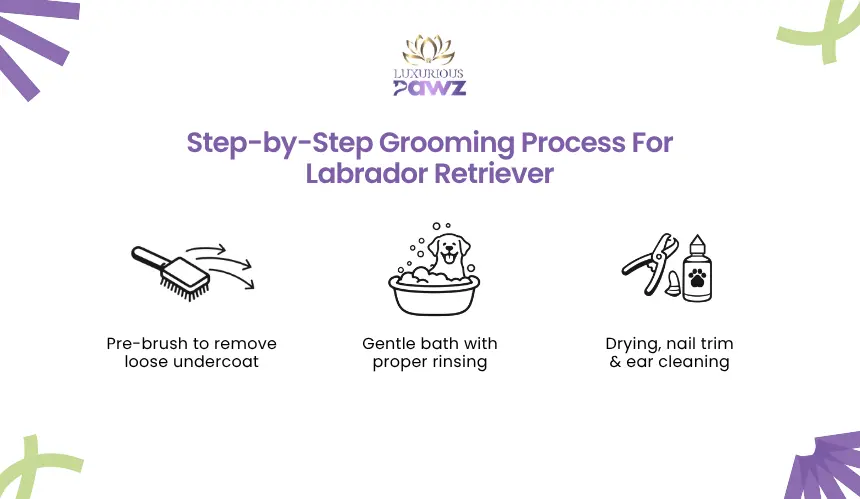
Mastering the Labrador grooming routine requires a systematic approach. Because their water-resistant coats are designed to repel liquid, simply pouring water over a Lab won’t achieve a deep clean. You must follow a specific sequence to penetrate the dense undercoat and ensure the skin remains healthy and irritation-free.
Phase 1: De-shedding and Pre-Bath Prep
Never start a bath without a thorough brushing. Wetting a shedding Lab without removing dead hair first creates “fur mats” that tighten as they dry, making them nearly impossible to remove later. Focus your efforts on the areas with the densest fur: the neck, the “trousers” (back of the thighs), and the thick base of the tail.
Phase 2: The Bathing Ritual
Use lukewarm water, never hot, as Labs can overheat easily. Apply shampoo starting from the neck and working your way back toward the tail, saving the head for last to minimize the time soap is near their eyes.
- Massaging: Use your fingers or a rubber mitt to ensure the soap penetrates the water-resistant outer coat to reach the skin.
- Rinsing: This is the most critical step. Residual soap is a leading cause of “hot spots” (moist dermatitis). Rinse until the water runs completely clear and the fur feels “squeaky” rather than slippery.
- Drying: Use a high-velocity dryer if available to blow water out of the dense undercoat. If using a towel, pat dry rather than rubbing vigorously, which can cause tangles. Avoid high-heat settings on human hair dryers.
Phase 3: Paw and Ear Care
Once the dog is dry, focus on the extremities.
- Nails: Trim every 3–4 weeks. A good rule of thumb: if you can hear clicking on the floor, they are too long. Long nails can cause skeletal misalignment over time.
- Ears: Apply a vet-approved cleanser to a cotton ball and wipe the visible inner ear. Never insert a Q-tip into the ear canal, as this can push debris deeper and rupture the eardrum.
Fact: The 25% Rule: A Labrador’s body is so dedicated to its coat that it uses up to 25% of its daily protein intake just to maintain skin and hair health. If their coat looks dull, it’s often the first sign that their diet is lacking in high-quality animal proteins. |
Phase 4: Dental Maintenance
Often overlooked in grooming, dental health is vital. Use a dog-specific toothbrush and enzymatic toothpaste at least three times a week. This prevents the buildup of tartar and plaque, which can lead to gum disease and systemic health issues in the long run.
Nutritional Support for a Healthy Coat of Labrador Retriever
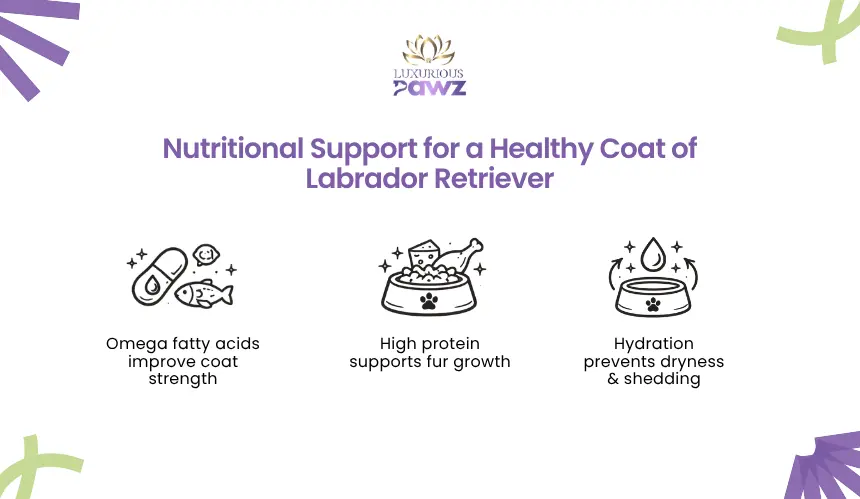
A Labrador’s coat is often described as a window into their internal health. While external grooming removes dead hair and debris, the actual quality, strength, and luster of the fur are determined by the nutrients circulating in the bloodstream. Because a dog’s body redirects up to 25% of its daily protein intake solely toward skin and coat maintenance, dietary deficiencies manifest quickly as brittle hair, flaky skin, or excessive non-seasonal shedding.
The Role of Omega Fatty Acids
Topical grooming is only half the battle. A Lab’s coat reflects their internal health. Supplements containing Omega-3 and Omega-6 fatty acids (such as salmon oil or flaxseed) strengthen the hair follicles and reduce non-seasonal shedding by maintaining skin elasticity. These lipids provide the building blocks for the sebum that gives the Lab coat its waterproof quality.
Hydration and Protein
Hair is primarily composed of a protein called keratin. To maintain a lush coat, ensure your Lab is on a high-quality diet where animal protein is the first ingredient. Dehydration can lead to brittle fur and flaky skin, so fresh water must be available at all times to maintain the “glow.”
Behavioral Conditioning for Stress-Free Grooming For Labrador Retriever
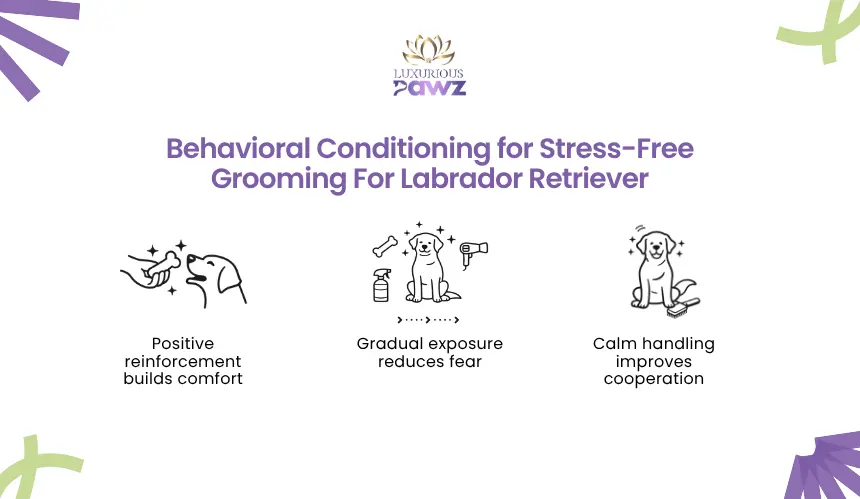
Grooming a 70-80 lb Labrador is an impossible feat if the dog is resistant, anxious, or fearful. Because Labradors are naturally high-energy and physically powerful, “forcing” a groom often leads to injury for the owner or a lifetime of phobias for the dog. The secret to a seamless session lies in behavioral conditioning specifically, shifting the dog’s perception of grooming from a chore they must endure to a rewarding activity they choose to participate in.
By leveraging the Labrador’s legendary food motivation, you can implement a “Cooperative Care” framework. This approach uses positive reinforcement to desensitize them to the unique triggers of grooming: the high-pitched hum of a dryer, the sensation of metal teeth on their skin, and the vulnerable feeling of having their paws handled.
The "Cooperative Care" Framework
Since Labs are highly food-motivated, you can use “Counter-Conditioning” to make the grooming table or bathtub their favorite place. Cooperative care involves giving the dog a sense of control, which reduces the “fight or flight” response during invasive procedures.
- The Lick Mat Technique: Spread xylitol-free peanut butter or plain Greek yogurt on a silicone mat suctioned to the tub wall at eye level. This keeps the dog’s head steady and provides a high-value distraction that lowers their heart rate through the repetitive action of licking.
- Desensitization to Sound: High-velocity dryers are loud and can be terrifying. Start by running the dryer in a separate room while feeding treats. Gradually move closer over several days, rewarding calm behavior before ever touching their fur with the air stream.
Handling Paw Sensitivity
Many Labs are protective of their feet, often due to past experiences of having their nails “quicked.” To move from a struggling session to a calm one, practice “touch desensitization” daily. Rub their paws, spread their toes, and tap the nails with a metal spoon to mimic the sound of clippers, clicking and treating for every second of stillness. This breaks the negative association and builds a “consent-based” grooming relationship.
Environmental Impact On Labrador Retriever’s Coat
In the foothills and canyons of the San Gabriel and Verdugo Mountains, Labradors’ water-resistant coats can trap pollen, dust, fungal spores, and even fine particles from seasonal wildfires. These particles may be carried indoors in North Los Angeles homes near Eaton Canyon and Tujunga Wash, potentially affecting indoor air quality. Additionally, the use of certain synthetic flea treatments and non-biodegradable shampoos may contribute to chemical runoff, which can impact sensitive watersheds in areas such as Altadena, Pasadena, and La Cañada Flintridge.
In neighborhoods like Shadow Hills, Sunland, and Highland Park, dog waste if not properly managed, can introduce excess nutrients into the soil. Over time, this may influence local plant growth and contribute to environmental imbalance. Meanwhile, in the brushy corridors of Eagle Rock, Burbank, and Glendale, free-roaming dogs or those with strong prey instincts may unintentionally disturb native wildlife, including lizards and ground-nesting birds.
Pamper your Labrador while being mindful of your local environment with Luxurious Pawz. Our eco-friendly grooming products are designed to clean and condition effectively while reducing the potential for harmful environmental impact.
Frequently Asked Questions
Why is my Lab shedding excessively outside of the spring/fall seasons?
This is often “Indoor Shedding.” Because our homes are climate-controlled and we use artificial lighting, a Lab’s biological clock gets confused. Constant 72°F (22°C) temperatures signal to the body that it doesn’t need a heavy winter coat, leading to year-round shedding. Regular brushing is the only cure.
My Lab has a "dry" tail but a greasy back. Is this normal?
Yes. The “Stud Tail” gland (supracaudal gland) is located on the top of the tail. In some Labs, this area can become particularly oily or even lose hair. If it becomes red or inflamed, consult a vet, but generally, it just requires a bit more scrubbing during bath time.
Can I use human "Head & Shoulders" on my Lab's dander?
Absolutely not. Human skin has a pH of about 5.5 (acidic), while dog skin is closer to 7.0 to 7.5 (neutral). Using human dandruff shampoo will destroy their acid mantle, leaving them vulnerable to bacteria and yeast infections.
How do I stop the "Wet Dog Smell"?
The smell is actually caused by bacteria and yeast that live on the skin. When they get wet, they release volatile organic compounds. To minimize this, use an enzymatic shampoo and ensure the dog is 100% dry down to the skin; don’t let them “air dry” if they have a very thick coat.
Are "Shedding Supplements" worth the money?
Most shedding supplements are just overpriced Vitamin E and Omega oils. You can usually achieve the same (or better) results by adding a high-quality sardine or salmon oil to their standard high-protein kibble.