
- admin
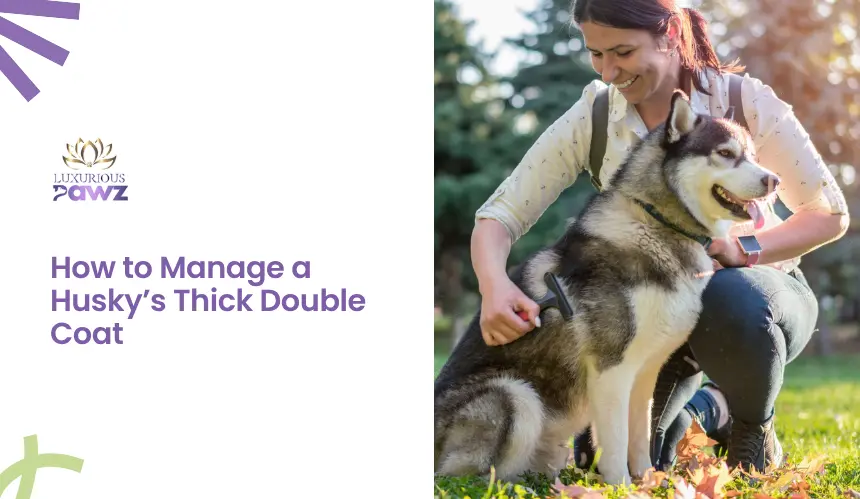
How to Manage a Husky’s Thick Double Coat
Key Takeaways
|
Siberian Huskies are known for their striking appearance, but their thick double coat requires consistent and proper care. Unlike a single-layer coat, a Husky’s coat is designed for insulation, temperature regulation, and protection from dirt and moisture, so managing it is not just about appearance but also about skin health, shedding control, and preventing undercoat buildup. Many owners assume Huskies need frequent bathing or trimming, but proper coat care depends more on regular brushing, the right tools, and seasonal grooming adjustments.
When maintained correctly, the coat stays cleaner, lighter, and easier to manage. This blog explains how to manage a Husky’s thick double coat through proper brushing, seasonal grooming adjustments, bathing habits, and coat-care practices that protect its natural function.
Why Is a Husky’s Double Coat So Difficult to Manage?
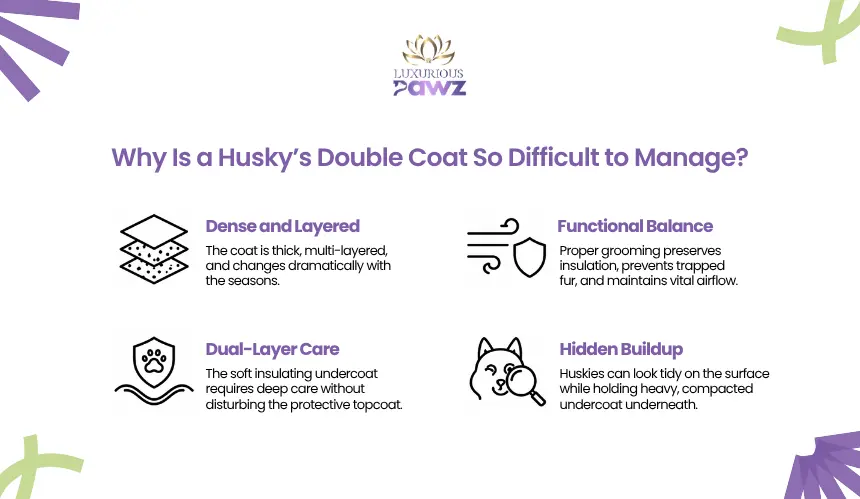
A Husky’s coat is difficult to manage because it is dense, layered, and changes with the seasons. It has a soft insulating undercoat beneath a weather-resistant topcoat, and both layers need proper care without disturbing the coat’s natural balance. Grooming is not just about removing loose hair. It also helps preserve insulation, prevent trapped fur, and keep air flowing through the coat, since a Husky can look fine on the surface while still holding compacted undercoat underneath.
The Role of the Undercoat
The undercoat is soft, dense, and responsible for insulation. It helps keep the dog warm in cold conditions and also supports temperature regulation by creating a controlled layer of air between the skin and the environment.
When loose undercoat is not removed properly, it begins to compact. This makes the coat heavier, less breathable, and harder to manage during shedding seasons.
The Function of the Topcoat
The topcoat consists of coarser guard hairs that protect the dog from dirt, moisture, UV exposure, and environmental debris. These hairs should not be stripped out aggressively because they form the outer protective barrier of the coat.
A healthy topcoat helps the Husky repel outdoor buildup while maintaining the breed’s signature appearance and coat texture.
Why Coat Density Changes Grooming Needs
A Husky’s coat does not require the same amount of work at all times. Some weeks the coat stays relatively open and easy to maintain, while at other times it becomes denser and holds more loose fur beneath the surface. This changes how much time, sectioning, and tool control grooming requires. Instead of following one fixed routine all year, owners should pay attention to how full, compact, or loose the coat feels during each session.
What Makes a Husky’s Coat Different From Other Double-Coated Breeds?
Many double-coated dogs shed, but Huskies are especially known for dramatic seasonal coat release. Their coat is designed for demanding environmental conditions, which means it can hold a large volume of loose undercoat before it visibly falls away.
This creates a misleading situation for owners. The dog may appear manageable one week, then suddenly release large amounts of fur across the home, furniture, and brush sessions the next.
Seasonal Coat Blow Is a Major Factor
Huskies commonly go through seasonal shedding cycles often called coat blowing. During these periods, the undercoat releases in large quantities rather than shedding out slowly and lightly.
This phase can make the coat seem unmanageable unless the owner understands that it is a natural process requiring temporary grooming adjustments rather than panic grooming.
The Coat Is Built for Function, Not Convenience
A Husky’s coat evolved for performance. It protects against cold, wind, and environmental stress. Because of this, owners should avoid treating it like a decorative coat that needs reshaping or thinning for convenience.
The goal is to support the coat’s function while keeping it clean, open, and free of excess dead undercoat.
How Often Should You Brush a Husky’s Double Coat?
A Husky should usually be brushed at least several times a week, but the exact frequency depends on the season, coat density, and current shedding level. During non-peak shedding periods, consistent maintenance brushing helps remove loose fur before it builds up. During coat blow, daily or near-daily grooming may be necessary.
Consistency matters more than occasional heavy brushing. Waiting too long between sessions allows dead hair to accumulate deeper in the coat, making removal harder and increasing the risk of impacted undercoat.
Brushing During Normal Shedding Periods
Outside of major seasonal shedding, routine brushing helps:
- remove loose hair before it spreads through the home
- reduce tangling in high-friction areas
- keep the coat open and breathable
- distribute natural oils more evenly
- help owners monitor skin and coat condition
Brushing During Seasonal Coat Blow
During coat blow, brushing should become more structured rather than simply more aggressive. The best approach is to work in sections, clear one area fully, and then move on before loose fur shifts deeper into neighboring parts of the coat. Sessions may need to be longer or more frequent, but the focus should remain on controlled coat release, not forceful hair removal. This helps the coat transition more cleanly while reducing discomfort and uneven pulling.
Why Irregular Brushing Creates Bigger Problems
When brushing is delayed too long, the coat often becomes harder to work through because loose hair starts collecting in deeper layers. Grooming then takes more time, produces heavier fur release at once, and may require extra effort in dense areas such as the neck, rear, and thighs. Delayed maintenance also makes bathing, drying, and follow-up brushing less efficient because the coat is already overloaded before the session begins.
What Is the Best Way to Brush a Husky’s Thick Coat?
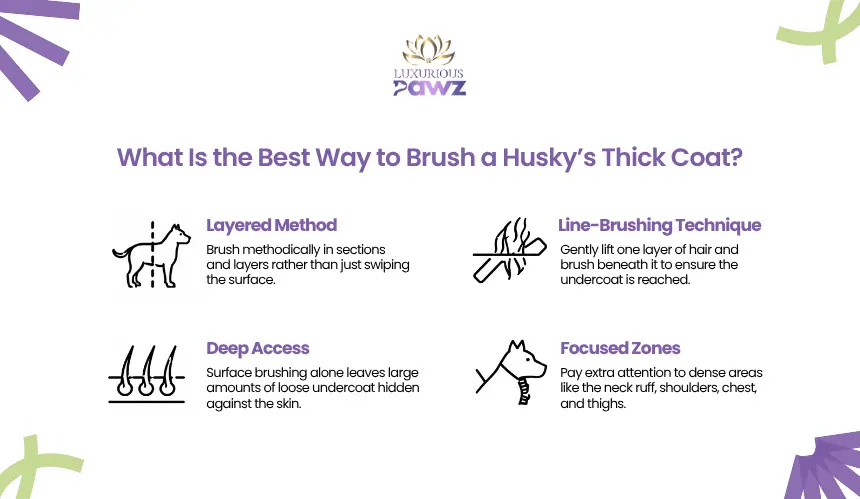
The best way to brush a Husky is to work in layers, moving methodically through the coat instead of brushing only the surface. Surface brushing may make the coat look tidy, but it often leaves large amounts of loose undercoat hidden underneath.
Proper technique matters as much as tool choice. A gentle, thorough, layered method is far more effective than quick repeated passes over the same visible areas.
Start With a Dry, Untangled Coat
A Husky’s coat is usually easiest to assess when dry. This allows you to feel density changes, identify areas of buildup, and see where loose undercoat is collecting.
Before using any undercoat-focused tool, make sure the coat is not damp and that there are no tight tangles pulling against the skin.
Brush in Sections
Divide the coat into small, manageable sections and work through it systematically rather than brushing randomly across the body. This approach reduces missed areas and helps ensure the undercoat is actually being reached instead of only smoothing the surface. A section-based method is especially effective around dense areas such as the neck ruff, shoulders, chest, hips, thighs, and tail base, where loose undercoat tends to collect more heavily.
Use a Line-Brushing Approach
Line brushing is a controlled grooming method where you gently lift one layer of hair and brush beneath it before moving upward to the next section. Instead of brushing only the surface, this technique helps reach the deeper coat where loose undercoat tends to stay hidden. It is especially effective in dense zones because it improves coverage, reveals buildup more clearly, and supports a more even grooming result without rough handling of the outer coat.
Which Grooming Tools Work Best for a Husky’s Double Coat?
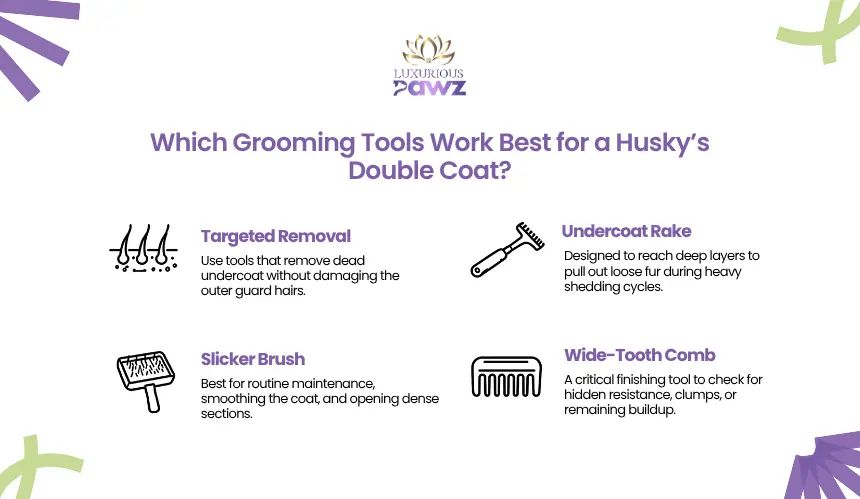
The best grooming tools for a Husky are the ones that remove loose undercoat without damaging the outer guard hairs. Not every brush labeled for shedding is appropriate for a heavy functional double coat.
The ideal grooming setup usually includes more than one tool because different tools perform different jobs during the session.
Slicker Brush
A slicker brush is one of the most useful tools for regular Husky coat maintenance. It helps lift loose fur from the surface, smooth the outer coat, and work through light to moderate buildup before it becomes harder to manage. It is especially helpful for opening dense sections of the coat so follow-up tools can reach deeper more effectively. When used gently and consistently, a slicker brush supports routine grooming without being overly harsh on the coat.
Undercoat Rake
An undercoat rake is designed to reach deeper into the coat and remove dead fur that sits beneath the top layer. This makes it especially valuable during seasonal shedding, when large amounts of loose undercoat begin to collect close to the skin. When used carefully, it helps clear trapped fur without relying on rough scraping or excessive pulling. It is most effective when worked slowly through dense sections rather than dragged quickly across the coat.
Wide-Tooth Comb
A wide-tooth comb is useful as a checking and finishing tool after brushing. It helps confirm whether the coat has been fully worked through and can reveal spots where loose fur or resistance still remains. This makes it especially helpful for identifying hidden buildup in thicker areas of the coat. It also gives a clearer sense of whether grooming has reached beyond the surface and into the deeper coat layers.
High-Velocity Dryer
A high-velocity dryer is especially useful for Huskies because it helps separate dense coat layers and push out loosened undercoat more efficiently than brushing alone. It is most beneficial after bathing, when the coat needs to be dried fully from the inside out rather than just on the surface. Used correctly, it supports a cleaner grooming result and makes it easier to identify areas where more brushing is still needed.
Tools to Use With Caution
Some deshedding tools should be used carefully because they can remove too much coat or damage the outer guard hairs when overused. A Husky’s coat should not be aggressively stripped just to reduce visible shedding. Over-thinning the coat can interfere with its natural insulation, protective barrier, and overall texture. The goal of grooming is to remove loose undercoat safely while preserving the coat’s normal function and structure.
Should You Bathe a Husky Often?
A Husky usually does not need frequent bathing compared to many other breeds. Their coat naturally resists dirt to a degree, and excessive bathing can dry the skin, strip beneficial oils, and make the coat less balanced.
Bathing should be purposeful rather than routine for the sake of freshness alone. A clean coat is important, but over-washing can create avoidable skin and coat issues.
When Bathing Is Helpful
Bathing is helpful when the coat needs more than routine brushing to return to a clean and manageable condition. While Huskies do not require frequent baths, there are times when washing becomes necessary to remove buildup, refresh the coat, and make deeper grooming more effective:
- the coat has significant dirt buildup
- the dog has rolled in something difficult to remove
- shedding season requires a reset before blow-drying and brushing
- odor or environmental debris has built up
- the skin and coat need proper cleansing before deeper grooming
Why Over-Bathing Is a Mistake
Bathing too often can make coat maintenance harder instead of easier. When the coat is washed unnecessarily, the skin may become drier and the fur may lose some of the texture that helps it stay balanced and easier to manage. A Husky usually benefits more from well-timed bathing paired with proper brushing and drying than from frequent washing.
Always Brush Before Bathing
Bathing a heavily impacted coat can make loose undercoat and hidden tangles even harder to manage, as water tends to tighten compacted fur and make the coat denser. Brushing before the bath helps remove excess dead hair, loosen buildup, and reduce the chance of mats becoming more difficult after washing. It also allows water and shampoo to move through the coat more evenly, making the bath more effective and the drying process easier.
How Do You Dry a Husky’s Coat Properly?
Drying is one of the most important but often overlooked parts of Husky coat management. A thick double coat can hold moisture close to the skin even when the surface feels mostly dry. Poor drying habits can leave the coat dense, flattened, and uncomfortable.
The goal is not just surface dryness. It is complete drying through the full coat depth.
Towel Drying Has Limits
Towels help remove excess surface water, but they usually do not reach the full depth of a Husky’s dense undercoat where moisture can remain trapped close to the skin. That is why towel drying is best used as the first step rather than the complete method. It helps reduce initial dampness, but deeper drying is still needed to fully dry the coat and prevent heaviness, clumping, or lingering moisture underneath.
Airflow Matters More Than Rubbing
Aggressive rubbing can create unnecessary friction, disturb the coat’s natural lay, and make the fur more difficult to manage after bathing. In some cases, it can also tighten loose undercoat or contribute to tangling in denser areas. Controlled airflow is far more effective because it helps open the coat gently, push moisture outward, and separate loose undercoat without putting excess stress on the hair or skin.
Why Incomplete Drying Causes Problems
A Husky’s coat can appear dry on the outside while still holding dampness deep underneath. When the coat is not dried fully, it may start to sit unevenly, feel denser in certain areas, and become harder to brush smoothly afterward. Complete drying helps restore the coat’s natural lift and makes the next stage of grooming much more effective.
What Happens During a Husky’s Seasonal Shedding Cycle?
A Husky’s seasonal shedding cycle is the period when large amounts of undercoat release in response to environmental and seasonal changes. This process is natural, but it can feel overwhelming without the right grooming approach.
The coat often loosens in patches or thick clumps, especially around the rear, sides, neck, and chest. Owners sometimes think the coat is unhealthy during this phase, but in many cases it is simply transitioning normally.
Signs of Coat Blow
Common signs of coat blow include large clumps of loose undercoat, the coat separating in soft tufts, and a sudden increase in fur around the home. You may also notice that brushing sessions produce much heavier loads of hair than usual, especially from dense areas such as the neck, sides, and hindquarters. During this stage, the coat can begin to look uneven in volume or slightly patchy in fullness as the undercoat releases at different speeds across the body.
How to Manage It Effectively
During coat blow, focus on more frequent brushing to keep loose undercoat from building up and spreading excessively through the coat and home. Grooming should also become more thorough, using a deeper section-based approach so dense areas are not missed. Undercoat removal needs to be patient and controlled rather than forceful, especially in heavy shedding zones. When needed, a proper bath can help loosen released fur, but it should be followed by thorough drying and follow-up brushing to fully clear the coat and restore airflow.
What to Avoid During Heavy Shedding
During heavy shedding, avoid rushing through the coat with harsh pressure or overusing strong deshedding tools out of frustration. Pulling too aggressively can make grooming less comfortable and may disturb the coat unevenly. Heavy shedding should be managed with patience, thorough sectioning, and steady removal of loose undercoat rather than rough coat reduction.
Is Shaving a Husky Ever a Good Idea?
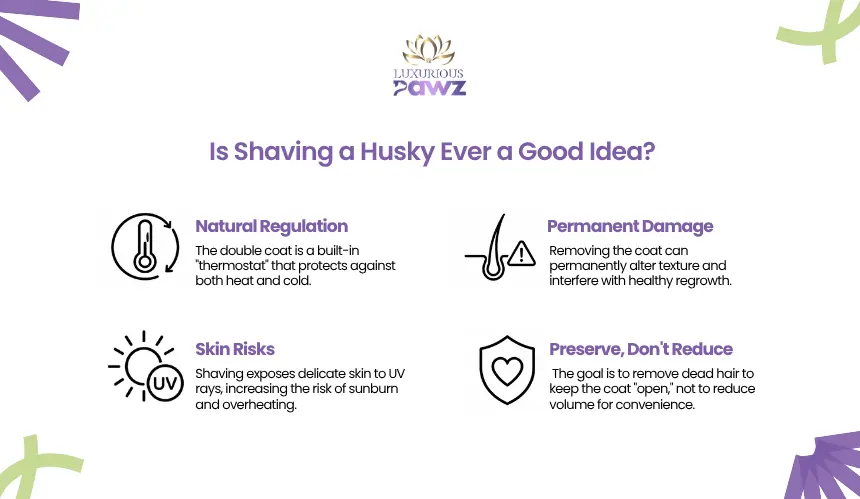
In most cases, shaving a Husky is not recommended. A double coat is not simply extra fur that makes the dog hot. It is part of the dog’s natural temperature regulation and environmental protection system.
Removing it can expose the skin, alter insulation, increase sun risk, and interfere with normal coat texture as it regrows.
Why the Double Coat Should Be Preserved
A Husky’s coat should be maintained with the goal of preserving its structure rather than reducing its volume for convenience. Once the coat is unnecessarily altered, it may lose some of its normal balance, texture, and manageability. Good grooming works with the coat as it is designed to function, removing what is loose while leaving the healthy protective structure intact.
What Owners Often Misunderstand
Some owners assume that removing more coat will automatically make maintenance easier. In reality, coat care improves when loose undercoat is managed properly, not when the entire coat is reduced. A Husky’s grooming needs are better handled through regular brushing, proper drying, and seasonal adjustment than by trying to remove the coat’s natural fullness.
Better Alternatives to Shaving
A Husky stays more comfortable when the coat is maintained correctly rather than removed. The better approach is to keep loose undercoat under control, maintain cleanliness through targeted bathing when needed, and make sure the coat is dried and brushed thoroughly during heavier shedding phases. This preserves the coat’s natural structure while making it easier for the dog to stay comfortable throughout seasonal changes.
Which Areas of a Husky’s Coat Need Extra Attention?
Some areas of the Husky’s body collect more loose undercoat and friction than others. These zones often become dense faster and are more likely to be missed during rushed grooming.
Neck and Ruff
The neck area can hold a surprising amount of dense undercoat, especially because it naturally appears fuller than many other parts of the body. This makes loose buildup harder to notice until the coat starts feeling heavier or releases in larger amounts during grooming. Regular checking and deeper brushing in this area help prevent hidden undercoat from compacting close to the skin.
Behind the Ears
Behind the ears is a sensitive area that is prone to friction, especially in dogs that wear collars or move around actively outdoors. Because the skin here is more delicate, brushing should be gentle and controlled to avoid discomfort. This area should also be checked often, since loose fur can collect and become harder to manage if ignored for too long.
Rear and Hindquarters
The rear and hindquarters often release some of the heaviest amounts of coat during shedding season, making this one of the most important areas to monitor during coat blow. Loose undercoat tends to gather here in thick amounts and may begin separating in visible tufts. More frequent attention in this region helps keep the coat lighter, more even, and easier to work through during heavy seasonal shedding.
Tail Base and Feathering
The tail region can trap a considerable amount of shedding fur, especially during coat blow when loose undercoat begins collecting in thicker sections. Because the hair here can be dense and feathered, it should be brushed carefully to avoid pulling or causing discomfort. Gentle, steady grooming helps keep the tail coat open, neat, and free from trapped loose fur without disrupting its natural fullness.
How Does Diet Affect a Husky’s Coat Condition?
A Husky’s coat quality is influenced not only by grooming but also by internal health. Nutrition plays a role in coat texture, shedding quality, skin balance, and overall coat resilience.
A dry, brittle, or lackluster coat may reflect grooming issues, but it can also indicate that the dog’s nutritional support is not optimal.
Do You Know? VCA Animal Hospitals explains that the skin and coat form the largest organ system in dogs and cats, accounting for about 10% to 15% of total body weight, and that healthy skin and hair depend on a properly balanced diet. |
Protein Supports Hair Structure
Hair is primarily made of protein, which is why coat quality depends in part on a diet that supports healthy hair growth and maintenance. When protein intake is balanced and appropriate, it helps the coat stay stronger, more resilient, and better able to maintain its natural texture. Poor nutritional support can gradually affect coat condition, making the fur look duller or feel weaker over time.
Essential Fatty Acids Help Coat Smoothness
Essential fatty acids help maintain coat softness, flexibility, and overall skin comfort. When the coat is better conditioned, it tends to feel smoother and is less likely to become dry or rough from friction. These fats also support the skin barrier, which plays an important role in keeping the coat healthy and more manageable.
Hydration Supports Skin and Coat Balance
Proper hydration supports normal skin function and helps maintain overall coat balance, especially during warmer weather or heavier shedding periods. Well-hydrated skin is better able to support healthy hair growth and coat condition, while dehydration can contribute to dryness and reduced coat quality. Even with good grooming, internal hydration remains an important part of keeping the coat in better shape.
Can Grooming Needs for a Husky Change?
Yes, a Husky’s grooming needs can change depending on factors like shedding cycles, coat buildup, and how much the dog moves between indoor and outdoor spaces. These influences affect how often brushing is needed and how the coat should be maintained overall.
Seasonal Coat Changes Require Adjusted Grooming
A Husky’s grooming schedule should respond to the condition of the coat rather than stay identical every week. When the coat feels fuller, denser, or more resistant in certain areas, grooming may need to become more detailed and frequent. When the coat is lighter and easier to work through, maintenance can be simpler. This flexible approach keeps grooming practical and more closely aligned with the dog’s actual coat condition.
Dust and Outdoor Debris Affect the Topcoat
A Husky that spends more time outdoors may collect more dirt, pollen, dust, and environmental debris in the outer coat, especially after walks, playtime, or time spent in dry or windy conditions. Because the topcoat acts as the first protective layer, it tends to catch and hold this material before it reaches the skin. This makes routine maintenance more important even when the dog is not in peak shedding mode, as regular brushing helps keep the coat cleaner, lighter, and better able to function properly.
Moisture Changes Coat Texture Temporarily
Rain, damp ground, and post-bath moisture can temporarily change how a Husky’s coat sits and responds to brushing. The coat may feel flatter, denser, or less evenly separated until it has been dried properly. In these situations, grooming should focus on restoring coat lift and checking whether deeper sections have dried evenly before the session is considered complete.
What Is the Best Grooming Routine for a Husky?
The best Husky grooming routine is one that stays consistent, adapts to the season, and protects the double coat instead of fighting against it.
Weekly Maintenance Routine
A basic maintenance routine helps keep a Husky’s coat manageable between heavier grooming sessions and reduces the chances of hidden undercoat buildup. When done consistently, it supports better airflow through the coat, keeps the outer layer cleaner, and makes seasonal shedding easier to handle.
- full-body brushing in sections
- checking dense zones for trapped undercoat
- light comb-through for missed areas
- monitoring skin and coat condition
- cleaning debris from the outer coat
Long-Term Coat Management Mindset
Good coat care is not about making a Husky shed less than normal. It is about managing normal shedding efficiently, protecting skin health, and keeping the double coat functioning as it should.
Do You Know? The AKC specifically notes that weekly brushing helps keep a Siberian Husky’s coat and skin in good condition, which reinforces the idea that regular grooming matters more than occasional aggressive sessions |
Environmental Effects on the Coat of Huskies
In the foothill and suburban areas of Altadena, Sunland, Pasadena, Highland Park, Glendale, and La Cañada Flintridge, Huskies are influenced by warm temperatures, dry air, and seasonal sun exposure that can increase shedding and make the coat collect dust and pollen more easily.
In nearby hillside and canyon communities such as Burbank, Tujunga, Shadow Hills, Montrose, La Crescenta, and Eagle Rock, wind and dry ground conditions often lead to additional debris buildup in the outer coat, especially for outdoor-active dogs. Overall, changing weather patterns like occasional rain and damp mornings can affect coat texture, making regular brushing and proper drying essential for maintaining a clean, breathable, and comfortable coat.
At Luxurious Pawz, we understand that managing a Husky’s thick double coat takes more than basic grooming. It requires the right tools, proper technique, and a careful approach that protects the coat’s natural function while keeping your dog clean, comfortable, and looking its best. Whether your Husky needs seasonal shedding support, routine coat maintenance, or a more thorough grooming session, our team is here to provide attentive, breed-conscious care.
Frequently Asked Questions
How often should a Husky be groomed during heavy shedding?
During heavy shedding, a Husky usually needs more frequent grooming than usual to keep loose undercoat from building up. Brushing several times a week, and sometimes daily during peak coat blow, helps reduce trapped fur, improve airflow, and keep the coat easier to manage.
Can a Husky’s coat become matted?
A Husky’s coat is less prone to severe matting than some curly or long-coated breeds, but the undercoat can still become compacted if grooming is inconsistent. Dense trapped fur can make the coat heavier, less breathable, and more difficult to brush through over time.
What type of brush is best for a Husky?
There is not just one best brush for a Husky because different tools serve different purposes. A slicker brush is useful for regular maintenance, an undercoat rake helps remove deeper loose fur, and a wide-tooth comb is helpful for checking missed areas and finishing the grooming session.
Should you shave a Husky in summer?
No, shaving a Husky in summer is generally not recommended. The double coat helps regulate body temperature, protect the skin, and maintain proper insulation, so removing it can interfere with the coat’s natural protective function.