

- admin
Why Face, Paw, and Sanitary Trims Matter
Key Takeaways
|
Face, paw, and sanitary trims are more than cosmetic grooming choices. For dogs with longer or denser coats, excess hair in these areas can trap moisture and debris, interfere with visibility, contribute to matting, or make routine hygiene harder to maintain. In Altadena, CA, warm weather and outdoor activity can make practical coat maintenance particularly relevant.
What Are Face, Paw, and Sanitary Trims?
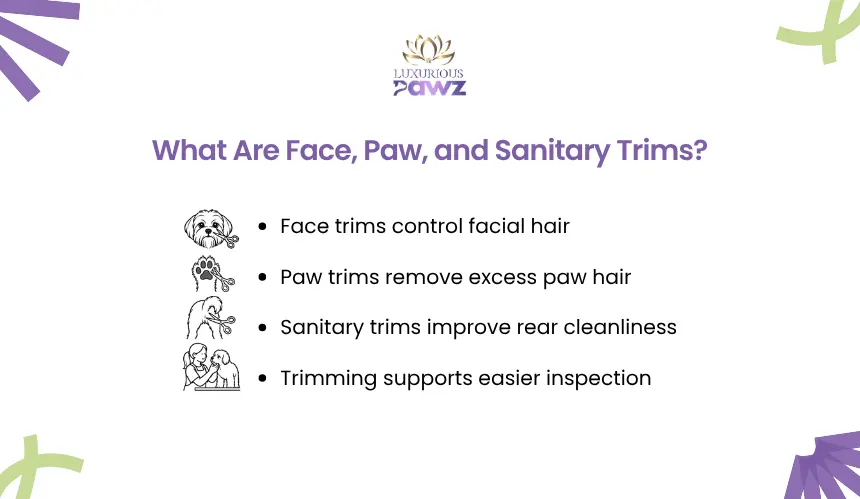
These targeted trims remove or control hair in areas where excessive coat length can interfere with cleanliness, visibility, movement, or routine inspection. The amount of trimming should depend on the dog’s coat, anatomy, lifestyle, and grooming needs rather than applying the same cut to every breed.
What Is a Face Trim?
A face trim controls hair around the eyes, muzzle, cheeks, and other facial areas. Its practical purpose is to keep hair from repeatedly contacting the eyes, accumulating discharge or food, and forming damp or crusted areas around the muzzle.
Facial trimming also gives owners and groomers a clearer view of the skin and eyes. This matters because changes such as redness, unusual discharge, swelling, or persistent irritation can otherwise remain hidden beneath a longer coat.
Veterinary ophthalmology guidance notes that facial hair contacting the eye can contribute to irritation and, in some circumstances, more serious corneal problems.
The trim should not be confused with treating an eye condition. Excessive tearing, squinting, redness, or abnormal discharge warrants veterinary evaluation rather than simply cutting the surrounding hair.
What Is a Paw Trim?
A paw trim removes excess hair around and between the paw pads and toes. For long-coated dogs, this area can collect small pieces of vegetation, dirt, moisture, and other debris during walks.
Keeping excessive paw hair controlled also makes the pads easier to inspect. The ASPCA specifically recommends checking paws for foreign objects and trimming hair between the toes to prevent painful matting.
The objective is controlled maintenance, not shaving the paw excessively close. Paw-pad skin is sensitive, and professional guidance recommends appropriate equipment and technique when trimming this area.
What Is a Sanitary Trim?
A sanitary trim keeps coat length controlled around areas that are easily exposed to urine, fecal material, and moisture, particularly beneath the tail and around the rear and genital region.
This creates a shorter, easier-to-clean surface and reduces the amount of material that can become caught in longer hair. It can be especially useful for dogs with dense, curly, or continuously growing coats where debris can remain concealed.
A sanitary trim is not the same as expressing anal glands or treating skin disease. If a dog develops persistent odor, redness, discharge, swelling, excessive licking, or discomfort, grooming alone should not be used as a substitute for veterinary assessment.
Why Do Face Trims Matter for Dogs?
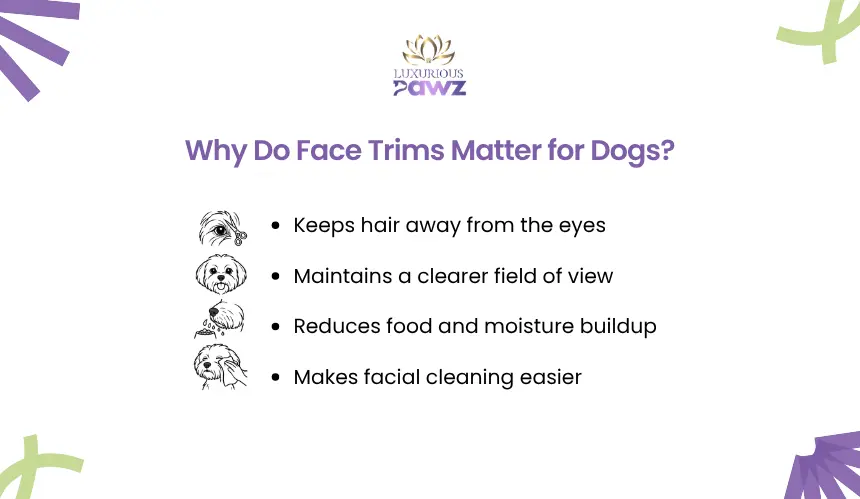
Facial grooming has a functional role because the eyes and muzzle are areas where uncontrolled hair can create repeated contact with moisture, food particles, and environmental debris.
How Does a Face Trim Help Prevent Hair From Blocking the Eyes?
Long facial hair can fall across the visual field or repeatedly brush against the ocular surface. Keeping appropriate hair around the eyes controlled can maintain an unobstructed field of view and reduce unnecessary physical contact with the eye.
This is particularly relevant for long-coated breeds and dogs whose facial anatomy causes hair to remain close to the eyes. Veterinary sources recognize facial hair contact as a potential contributor to irritation and tear-related buildup.
A useful grooming benefit is also improved observation. When the area around the eyes is not covered by excessive hair, owners can more readily notice changes in discharge, redness, cloudiness, swelling, or squinting that may indicate a medical problem.
How Does a Face Trim Reduce Food, Moisture, and Debris Buildup?
Hair around the muzzle can become contaminated when a dog eats or drinks. If the coat remains damp afterward, particles can adhere to it and form a sticky or crusted accumulation.
A controlled facial trim reduces the amount of coat available to hold this material. It also makes routine wiping and inspection more practical, particularly for dogs with beards or dense facial furnishings.
For dogs with recurring tear staining, trimming may reduce the amount of hair that remains wet around the eyes, but it does not eliminate the underlying causes of excessive tearing. New or abnormal eye discharge should be evaluated by a veterinarian.
Why Do Paw Trims Matter for Dogs?

Paw grooming addresses a high-contact area that interacts directly with floors, pavement, vegetation, moisture, and outdoor debris. The value of trimming depends heavily on coat type and how much hair grows between the pads.
How Does a Paw Trim Reduce Matting and Debris?
Hair between the toes can collect dirt, grass fragments, small plant material, and other particles. When moisture is added, the hair can clump together and form mats close to the skin.
These mats are more than a cosmetic issue. They can make inspection difficult and may pull on surrounding skin as the dog moves. The ASPCA recommends keeping excessive hair between the toes controlled and checking paws for foreign objects.
For dogs regularly walking around Altadena, including routes with landscaped areas or uneven outdoor surfaces, routine paw inspection can reveal debris before it becomes embedded or difficult to remove.
Can Paw Trimming Support Grip and Paw Comfort?
Excess hair extending beyond the paw pads can reduce direct contact between the pad surface and a smooth floor. Controlling that excess hair can therefore help maintain more consistent pad contact in appropriate cases.
However, paw hair is not the only factor affecting traction. Nail length, paw-pad condition, surface type, and the dog’s age and mobility also influence stability. Paw trimming should therefore be viewed as one component of paw maintenance rather than a universal solution for slipping.
Altadena’s warm conditions also make pavement awareness important. A trim does not make a dog immune to hot surfaces, and excessive shaving should not be used as a strategy for preventing heat exposure. Local veterinary guidance recommends trimming rather than shaving the coat and avoiding hot pavement during warmer periods.
Why Do Sanitary Trims Matter for Dogs?
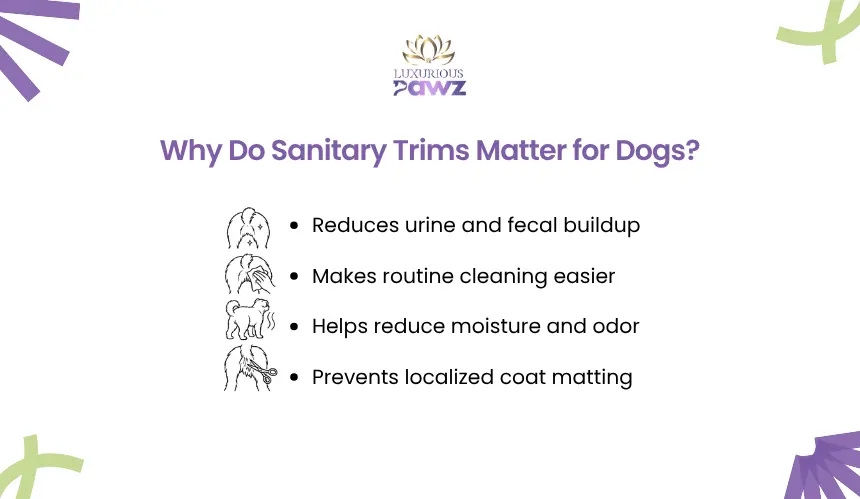
Sanitary grooming focuses on reducing the amount of coat exposed to contamination in areas where cleanliness is difficult to maintain with a longer coat.
How Does a Sanitary Trim Help Manage Urine and Fecal Debris?
When hair around the rear or genital region is long, urine or fecal material can adhere to the coat rather than remaining isolated from it. Curly and densely coated dogs can be particularly prone to retaining this material.
A shorter sanitary area makes routine cleaning easier and reduces the amount of coat that must be washed when contamination occurs. It can also make it easier for owners to inspect the skin for irritation, swelling, or other abnormalities.
This does not mean the area should be shaved aggressively. The goal is sufficient hair control while preserving comfortable skin coverage and avoiding unnecessary irritation.
How Can a Sanitary Trim Reduce Moisture, Odor, and Matting?
Persistent moisture trapped in dense hair can contribute to matting and create an environment where unpleasant odor becomes noticeable more quickly. Removing excessive length allows the area to dry more efficiently after urination, bowel movements, bathing, or other exposure to moisture.
Sanitary grooming is therefore particularly useful for dogs whose coat structure makes the rear difficult to keep clean. It can reduce maintenance demands without requiring the entire body coat to be shortened.
If odor continues despite appropriate grooming and cleaning, however, the cause may not be the coat itself. Skin inflammation, infection, anal-sac problems, urinary issues, or other medical conditions require appropriate veterinary assessment rather than increasingly close trimming.
How Do These Trims Support Overall Dog Grooming?
Face, paw, and sanitary trims are targeted maintenance techniques rather than replacements for complete grooming. Their frequency should reflect the dog’s coat growth, anatomy, activity level, hygiene needs, and ability to tolerate grooming.
Do You Know?
An ASPCA analysis reported that 28% of USDA veterinary-care citations involving dog breeders were related to matting and hair loss. Severe matting can interfere with normal movement, conceal injuries, and contribute to skin problems.
Which Breeds and Coat Types May Need More Frequent Trimming?
Dogs with continuously growing or densely furnished coats often require more frequent attention to high-maintenance areas than short-coated dogs. Poodles, Doodle-type coats, Shih Tzus, Maltese, Yorkshire Terriers, Bichon-type coats, and similar long-haired dogs may develop facial, paw, or sanitary overgrowth more quickly.
Curly coats can also hide mats and retained debris because individual hairs interlock rather than separating easily. Dogs that spend considerable time outdoors may accumulate more environmental material in their paws and facial furnishings.
There is no universal trimming interval. A better indicator is the condition of the coat. If hair begins obscuring the eyes, matting between the toes, retaining contamination around the rear, or interfering with routine inspection, the relevant area may need attention.
For dogs living in Altadena, CA, coat length can become harder to manage when regular outdoor activity exposes longer coats to dry grasses, dust, and plant debris common around the foothill environment.
In areas such as Altadena Heights, Fair Oaks Avenue, and the neighborhood around Farnsworth Park, a properly selected pet haircut can help control excess coat length without relying on an unnecessarily short shave, particularly for curly or dense coats that retain debris and develop localized mats.
The haircut should be adapted to the dog’s coat type and outdoor routine so high-maintenance areas remain manageable while enough coat is retained for normal protection from sun and environmental exposure.
When Is Professional Grooming Appropriate?
Professional grooming becomes especially useful when trimming involves sensitive areas, dense mats, an anxious dog, or a dog that moves unpredictably during grooming. The skin around the eyes, paw pads, and sanitary areas leaves little margin for an accidental cut.
The AKC advises against attempting difficult clipping or shaving without appropriate training and specifically recommends professional assistance for sensitive grooming tasks.
For Altadena dog owners, professional grooming can also be useful when outdoor activity, warm weather, or a rapidly growing coat makes localized maintenance difficult to manage between full grooming appointments. The appropriate approach is usually targeted trimming rather than removing large amounts of the dog’s protective coat.
A groomer should also recognize when a finding falls outside normal grooming. Foreign objects lodged in sensitive areas, significant skin irritation, abnormal eye discharge, wounds, or persistent odor may require veterinary attention rather than a grooming adjustment.
For dogs living in Altadena, CA, grooming needs can vary with outdoor exposure, coat type, and the amount of dry vegetation or debris picked up around foothill neighborhoods and walking areas such as Chaney Trail and Lake Avenue.
A routine tailored to the local environment can help manage paw hair, facial buildup, localized matting, and sanitary areas, while dog grooming provides a practical way to keep these high-maintenance areas under control without unnecessarily removing the protective body coat.
For Altadena dogs with curly, dense, or continuously growing coats, this targeted approach can also make it easier to notice trapped plant material, paw irritation, or developing mats before they become more difficult to manage.
Frequently Asked Questions
Are face, paw, and sanitary trims necessary for every dog?
No. The need depends on coat length, growth pattern, breed characteristics, anatomy, activity level, and hygiene requirements. Short-coated dogs may need little or no localized trimming, while long or curly-coated dogs can require regular maintenance.
How often should a dog get a sanitary trim?
There is no fixed interval that applies to every dog. The trim should be considered when hair begins retaining urine or fecal material, becoming matted, or making the area difficult to clean. Coat growth and hygiene are better indicators than an arbitrary schedule.
Does trimming paw hair improve a dog's traction?
It can help when excessive hair extends beyond the paw pads and interferes with pad contact, particularly on smooth indoor surfaces. However, traction also depends on nails, paw-pad condition, flooring, and mobility, so paw trimming is not a complete solution for slipping.
Can trimming facial hair prevent tear stains?
It may reduce hair contact with the eye and limit the amount of wet facial hair that collects discharge, but it does not necessarily address the underlying cause of excessive tearing. Persistent or newly developed eye discharge should be assessed by a veterinarian.
Should a dog's paw or body coat be shaved during hot Altadena summers?
Not routinely. Local veterinary guidance recommends trimming long coats rather than shaving them because the coat can provide protection from sunlight and participate in temperature regulation. Hot pavement remains a separate paw hazard regardless of coat length.
Can I perform face, paw, and sanitary trims at home?
Basic maintenance may be possible for a calm dog and an appropriately trained owner, but sensitive areas require particular care. The AKC recommends professional grooming when owners lack the training or tools needed for safe clipping, especially around delicate areas.