
- admin
Why Is Regular Dog Grooming Important for Coat and Skin Health?
Key Takeaways
|
Regular dog grooming does more than keep your dog looking neat. It supports your dog’s daily comfort, cleanliness, coat condition, and skin wellness through consistent care. A proper routine also helps owners better understand their dog’s grooming needs based on lifestyle, coat type, and seasonal changes. This blog discusses why regular grooming is important for your dog’s coat, skin, comfort, and overall care routine.
How Grooming Keeps Your Dog’s Coat Healthy
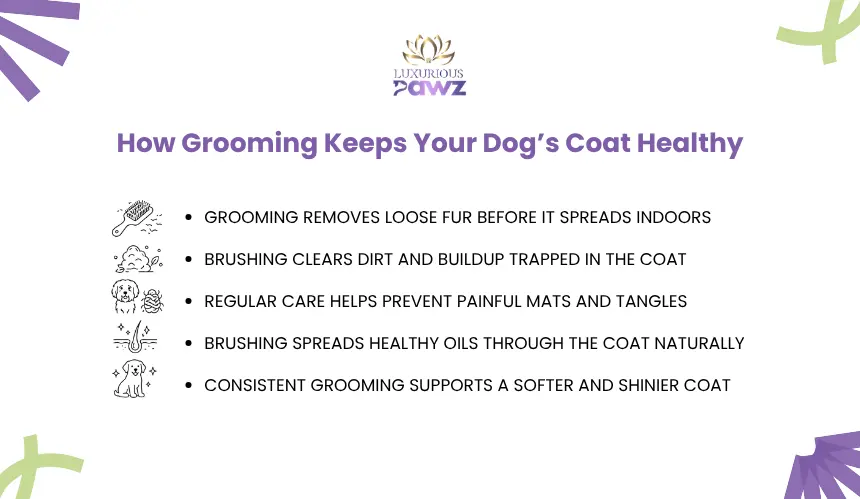
Regular grooming helps maintain the coat’s texture, movement, and overall condition. With the right routine, your dog’s coat becomes easier to manage and more comfortable for everyday activity.
Removes Dirt, Debris, and Loose Fur
Brushing helps clear away dust, outdoor debris, loose hair, and everyday buildup that can collect in your dog’s coat. This is especially important for dogs that spend time outside, roll in grass, or shed frequently. By removing this buildup before it settles deeper into the coat, grooming helps your dog stay cleaner and more comfortable between baths.
- Helps remove loose fur before it spreads around the home
- Keeps dirt and debris from getting trapped near the skin
- Supports better coat cleanliness between bathing appointments
- Helps manage shedding in a natural, routine way
Did You Know? The American Veterinary Medical Association reports that the U.S. dog population has reached 87.3 million dogs, showing how common dog care needs are across American households. With so many dogs living active indoor-outdoor lifestyles, routine coat care plays an important role in keeping everyday buildup under control. |
Prevents Mats and Tangles
Mats and tangles can become uncomfortable when they pull tightly against the skin. If left untreated, they may trap moisture, dirt, and bacteria, which can lead to irritation or sore spots. Dogs with long hair, curly coats, wavy coats, or thick double coats are more likely to develop mats without regular brushing.
- Prevents small tangles from turning into painful knots
- Reduces pulling and pressure on the skin
- Helps improve airflow through the coat
- Helps preserve the coat’s shape and keeps daily movement more comfortable
Distributes Natural Skin Oils
Brushing helps spread your dog’s natural skin oils from the skin through the hair shaft. These oils help keep the coat soft, shiny, and protected. Regular brushing can support a healthier-looking coat without relying on frequent bathing, which may dry the skin if harsh shampoos or over-washing are used.
- Helps maintain a softer, smoother coat
- Adds natural shine by spreading healthy oils
- Supports the coat’s protective barrier
- Reduces the need for unnecessary or overly frequent baths
How Dog Grooming Supports Skin Health
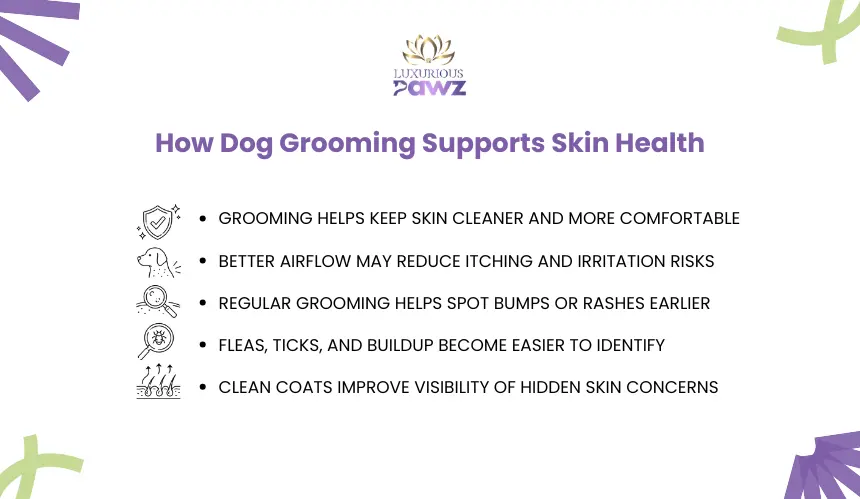
Healthy skin is easier to support when grooming is done consistently and carefully. Grooming allows you to check, maintain, and care for the skin beneath the coat as part of your dog’s regular wellness routine.
Helps Prevent Skin Irritation
Skin irritation can develop when moisture, trapped particles, or tight mats sit against the skin for too long. These issues may cause discomfort in sensitive areas such as the belly, underarms, behind the ears, and around the legs. Regular grooming helps keep these areas cleaner and allows better airflow to the skin, which can reduce the chances of redness, itching, flaking, and hot spots.
Allows Early Detection of Skin Problems
Grooming gives owners and professional groomers a chance to notice changes that may not be visible during everyday activities. When the coat is brushed, parted, bathed, or dried, it becomes easier to spot bumps, rashes, dry patches, minor wounds, fleas, ticks, or irritated areas early. If you notice swelling, bleeding, open sores, persistent itching, or sudden skin changes, it is best to contact a veterinarian.
Reduces Parasites and Skin Buildup
A clean, well-maintained coat makes it easier to see what is happening at the skin level. Grooming can help reveal fleas, ticks, skin flakes, scabs, or residue that may otherwise stay hidden under thick or tangled fur. While grooming should not replace veterinary parasite prevention, it supports regular monitoring and helps keep your dog’s skin cleaner and more comfortable.
In Burbank, CA, dogs can pick up dust, pollen, dry grass, and urban residue from warm sidewalks, neighborhood parks, and windy outdoor areas. These particles often settle around the paws, belly, ears, legs, and underarms, where skin can become itchy or irritated. De-shedding in Burbank, CA helps remove trapped buildup, improve visibility of hidden skin concerns, and make it easier to spot fleas, ticks, dry patches, redness, or bumps early.
Why Bathing Your Dog Matters
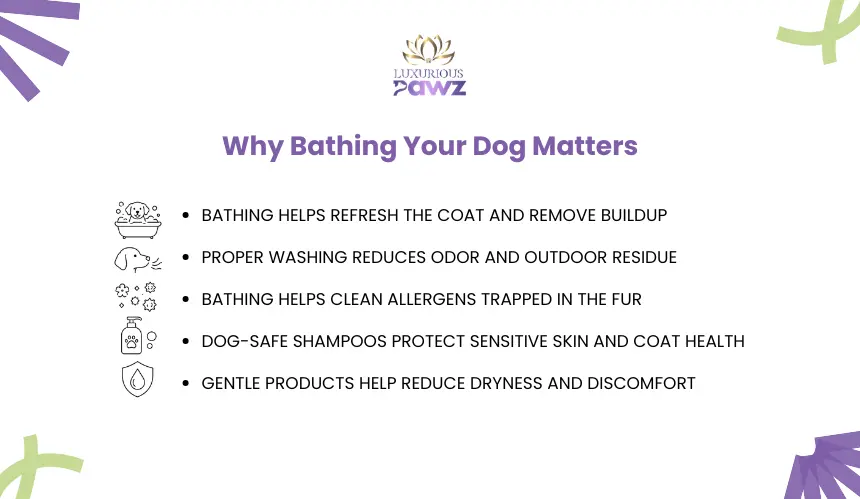
Bathing is an important part of dog grooming because it refreshes the coat and, when done correctly, helps maintain skin comfort. The goal is not to bathe too often, but to use the right schedule and products based on your dog’s specific needs.
Removes Odor, Allergens, and Surface Buildup
Bathing helps wash away odor-causing residue, pollen, dander, and surface buildup that brushing alone may not fully remove. This is especially helpful for dogs that spend time outdoors, have active lifestyles, or are exposed to seasonal allergens. The ideal bathing schedule depends on your dog’s breed, coat type, activity level, and skin sensitivity, so some dogs may need baths more often than others.
Protects the Skin When the Right Products Are Used
Using dog-safe shampoo is important because a dog’s skin has different needs than human skin. Human shampoos can be too harsh and may leave the skin dry or uncomfortable. For dogs with sensitive, dry, or easily irritated skin, moisturizing or gentle shampoos may help support comfort, but any ongoing skin concern should be discussed with a veterinarian.
Grooming Needs for Different Dog Coat Types
Every coat type has its own grooming needs. Matching your dog’s grooming routine to their coat helps make care more effective, comfortable, and easier to maintain over time.
Dog Coat Type | Grooming Needs | Why It Matters |
Short-Haired Dogs | Short-haired dogs usually need light routine care, occasional bathing, and simple maintenance around the ears, paws, and skin. They may not require frequent haircuts, but they still benefit from a consistent grooming routine. | Helps maintain a neat coat and makes routine care simple without requiring frequent trimming. |
Long-Haired Dogs | Long-haired dogs often need scheduled coat maintenance, trimming, and careful attention to areas where hair grows heavily, such as the legs, tail, ears, and belly. | Keeps longer coats easier to manage and reduces the chance of grooming becoming difficult or uncomfortable. |
Curly or Wavy-Coated Dogs | Curly and wavy-coated dogs often need scheduled shaping and coat maintenance because their hair can grow densely and hold its form. | Helps preserve coat shape, texture, and structure as the hair continues to grow. |
Double-Coated Dogs | Double-coated dogs need care that respects the natural function of the topcoat and undercoat. Improper shaving should be avoided unless recommended by a professional groomer or veterinarian. | Supports the coat’s natural insulating function and helps protect it from improper grooming methods. |
Signs Your Dog May Need Grooming More Often
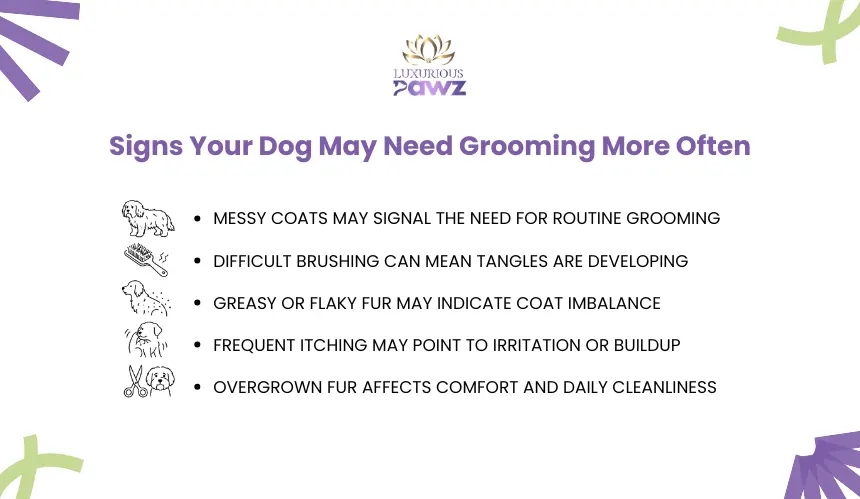
Some dogs show clear signs when their grooming routine needs to be adjusted. These signs may appear in how the coat looks, how your dog behaves, or how easily certain areas can be maintained.
Coat Looks Messy Quickly
If your dog’s coat starts looking messy soon after grooming, they may need more frequent care. This can happen with active dogs, thick-coated dogs, or pets that spend more time outdoors.
Coat Becomes Hard to Brush
When brushing becomes difficult, or your dog resists it more than usual, the coat may need attention sooner. Regular grooming can help keep the coat easier to manage before it becomes uncomfortable.
Freshness Does Not Last Long
If your dog loses that clean feeling shortly after grooming, their routine may need to be adjusted. This can depend on outdoor activity, coat type, weather, and how quickly their coat collects residue.
Greasy or Flaky Coat
A greasy coat can point to oil buildup, while flakes may suggest dryness or irritation. Grooming helps you monitor these changes and keep the coat cleaner and more balanced.
Itching or Red Skin
Frequent scratching, licking, or visible redness can be signs that your dog’s skin needs attention. Grooming can help reveal irritated areas, but ongoing itching or skin changes should be checked by a veterinarian.
Overgrown Hair Around Key Areas
Hair covering the eyes, paws, or sanitary areas can affect comfort, cleanliness, and movement. Regular trimming helps keep these areas clear and makes daily care easier.
In Burbank, CA, dogs may need coat care more often when warm pavement, dry air, park dust, and seasonal winds leave fur looking dull or messy soon after grooming. Dogs spending time on neighborhood sidewalks, local parks, or dry grassy areas can collect buildup around the paws, belly, tail, and legs. If brushing becomes harder, shedding increases, freshness fades quickly, or loose fur starts gathering around the eyes, paws, or sanitary areas, it may be time to schedule professional dog grooming in Burbank, CA.
Professional Grooming vs. At-Home Grooming for Dogs
At-home care and professional grooming serve different purposes. Home routines help with simple upkeep, while professional appointments are useful for detailed grooming tasks, proper tools, and careful handling when a dog needs extra support.
What You Can Do at Home
At home, you can handle simple upkeep such as gentle coat maintenance, basic paw care after walks, and keeping your dog’s visible areas neat between appointments. These small habits help your dog stay presentable and make professional grooming sessions easier.
When Professional Grooming Is Helpful
Professional grooming is helpful for services that require training, control, and the right equipment. This may include full haircuts, detailed trims, nail care, ear cleaning, sanitary trimming, and careful handling for dogs that are nervous, sensitive, or difficult to groom at home.
How Often Should Dogs Be Groomed?
A dog’s grooming schedule should be based on how quickly their coat changes and how much maintenance they need between appointments. Some dogs do well with simple upkeep, while others need a more consistent routine to stay neat and comfortable.
As a general rule, light maintenance can be done throughout the week, while baths and professional appointments should be planned around your dog’s coat condition, activity level, and grooming needs. Dogs with higher-maintenance coats often benefit from scheduled grooming every 4 to 8 weeks, while lower-maintenance dogs may need less frequent appointments.
Common Dog Grooming Mistakes to Avoid
Some grooming mistakes happen because owners use the wrong schedule, tools, or approach for their dog’s needs. Avoiding these errors can make grooming smoother and help prevent unnecessary stress.
Bathing Too Often
Too many baths can work against your dog’s grooming routine, especially when strong products are used. Instead of bathing automatically, pay attention to your dog’s coat condition, activity level, and any product recommendations from your groomer or veterinarian.
Did You Know? Cornell University explains that most topical flea and tick products should be left to dry for two days before bathing or swimming. This is a useful reminder because grooming schedules, baths, and parasite prevention products should work together rather than interfere with each other. |
Waiting Too Long Between Grooming Sessions
Delaying grooming can make small coat issues harder to handle later. A consistent schedule helps prevent grooming from becoming more difficult, especially for dogs with longer, thicker, curly, or fast-growing coats.
Using the Wrong Brush
Different coat types need different grooming tools. A brush that works well for a short-haired dog may not be effective for a long-haired, curly-coated, or double-coated dog. Using the right brush makes grooming easier and helps protect the coat from unnecessary pulling or breakage.
Missing Changes in Your Dog’s Condition
Grooming is also a chance to notice whether your dog’s coat, skin, or behavior seems different than usual. If anything looks unusual, feels sensitive, or does not improve, it is best to ask a veterinarian for guidance.
Make your dog’s next appointment a positive experience from start to finish with patient handling, thoughtful service, and attention to the little details that matter. Luxurious Pawz provides grooming care designed around your pet’s personality, routine, and individual needs, helping them leave each visit looking polished, feeling refreshed, and ready to enjoy the day.
Frequently Asked Questions
Is mobile dog grooming less stressful for dogs?
Yes. Mobile grooming can be less stressful for some dogs because it removes the need for car rides, crowded salons, and long wait times. This can be especially helpful for anxious dogs, senior dogs, puppies, or pets that feel overwhelmed around other animals.
What should I do before my dog’s grooming appointment?
Before a grooming appointment, make sure your dog has had a chance to use the bathroom and is not overly tired, hungry, or stressed. It also helps to mention any sensitive areas, recent health changes, behavior concerns, or special handling needs to the groomer.
Can puppies start grooming early?
Yes. Puppies can benefit from short, positive grooming introductions early in life. These early sessions help them become more comfortable with the grooming process, new sounds, gentle handling, and appointment routines as they grow.
How can grooming help senior dogs?
Senior dogs often need a slower and more patient grooming approach. Shorter sessions, gentle handling, and extra support while standing can make grooming easier for older pets with stiffness, lower energy, or age-related sensitivity.
Why does my dog still smell after grooming?
A dog may still smell after grooming if the odor comes from the ears, mouth, skin folds, anal glands, or an underlying health issue instead of the coat itself. If the smell returns quickly or seems unusually strong, a veterinarian may need to check the cause.
What should I tell my groomer before the appointment?
Tell your groomer about your dog’s behavior, handling preferences, past grooming experience, and any areas your dog dislikes being touched. You can also mention the style, length, or finish you prefer so the appointment matches your expectations.