
- admin
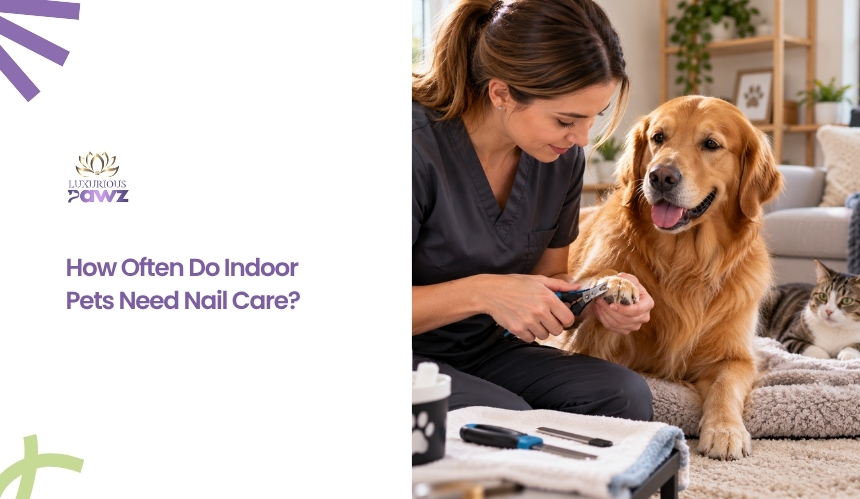
How Often Do Indoor Pets Need Nail Care?
Key Takeaways:
|
Indoor pets may spend most of their time on flooring that does little to wear down their nails, so a fixed calendar schedule is not always enough. Nail growth also varies by species, age, activity level, claw structure, and how much natural wear the pet gets.
In Sunland, CA, where indoor pets may spend even more time inside during periods of intense summer heat, owners may need to monitor nail length rather than assume normal household activity will keep claws short.
A practical routine combines a baseline trimming interval with regular checks for changes in nail length, gait, and paw position.
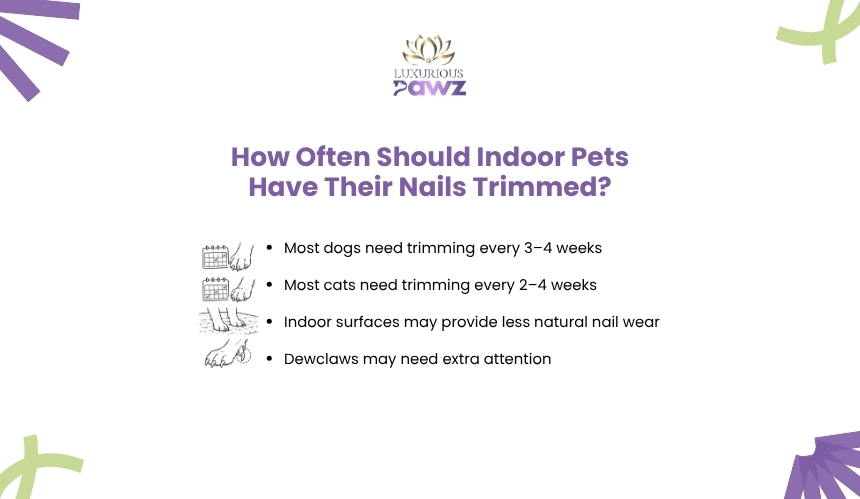
How Often Should Indoor Pets Have Their Nails Trimmed?
For most indoor pets, nail care is measured in weeks rather than months. The appropriate interval depends on how quickly the nails grow and how effectively the pet naturally wears them down.
Sunland’s hot, dry climate can reduce outdoor activity during intense summer heat, meaning pets may get less natural nail wear from regular walks. For dogs and cats in Sunland-Tujunga, Shadow Hills, and nearby foothill areas, pet nail trimming can help maintain appropriate nail length when activity shifts indoors. Regular checks are especially useful during prolonged hot-weather periods.
What Is the Typical Nail-Trimming Frequency for Indoor Pets?
A useful starting point is every 3 to 4 weeks for most dogs and every 2 to 4 weeks for most cats, although individual pets can fall outside these ranges. Veterinary guidance from VCA specifically identifies these intervals as common maintenance schedules. Some dogs may require weekly attention when their nails grow quickly or receive little natural wear.
Indoor living can make natural nail wear less predictable. A dog that regularly walks on concrete, rough pavement, or other abrasive surfaces may wear portions of the nails naturally, while a dog that spends most of its day on carpet, hardwood, rugs, or soft bedding may experience less mechanical abrasion.
Cats also have a different pattern because scratching changes the outer layers of the claws but does not necessarily eliminate the need for trimming.
The schedule should therefore be treated as a maintenance baseline rather than a universal rule. Checking the nails regularly provides a more accurate indication of whether the interval needs to be shortened.
Why Do Some Indoor Pets Need More Frequent Nail Care?
Nail growth is influenced by individual biology, while nail wear depends largely on movement and surface contact. Two dogs living in the same household can therefore require different trimming schedules.
Age can also change the equation. Puppies and kittens have rapidly developing bodies and may need owners to monitor their nails more closely as handling habits are established. Older pets may have reduced activity, altered gait, or less opportunity for natural nail wear.
Another easily missed factor is the dewclaw. Unlike nails that contact the ground during ordinary walking, dewclaws may receive little or no mechanical wear. VCA notes that neglected dewclaws can become overgrown and even curve into the paw pad.
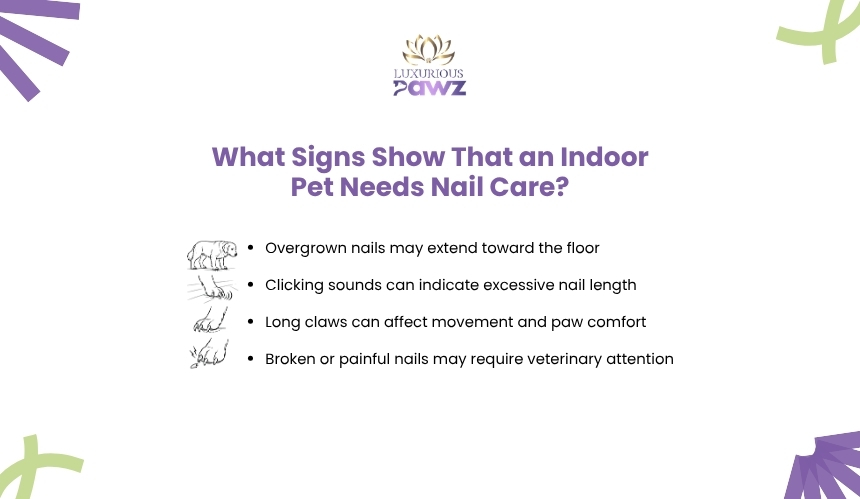
What Signs Show That an Indoor Pet Needs Nail Care?
A calendar reminder can miss rapid nail growth or overlook a claw that is developing differently from the others. Physical indicators provide a more reliable secondary check, particularly for indoor pets whose activity does not consistently wear down their nails.
What Does an Overgrown Nail Look Like?
One of the clearest indicators is excessive nail length relative to the paw. In dogs, nails that visibly extend toward or beyond the floor during normal standing can indicate that they are becoming too long. VCA also identifies the characteristic clicking sound while a dog trots as a practical warning sign.
Cats require a different visual assessment. When a cat’s claw develops a pronounced sharp tip or extends beyond the normal triangular shape of the claw, trimming may be appropriate. This is particularly relevant for indoor cats because their claws are not exposed to the same range of outdoor surfaces.
Long nails can also change how the foot contacts the ground. Veterinary guidance notes that excessively long claws can interfere with proper foot placement and may contribute to structural changes in the foot.
How Can Nail Length Affect Movement and Paw Comfort?
Nail overgrowth is not merely a cosmetic issue. A long claw can alter the angle at which a pet places its foot, particularly when the nail contacts the ground before the paw settles naturally.
A long nail can also snag on carpet, fabric, or household materials. If the claw breaks, the exposed structures can be painful and may bleed because the quick contains blood vessels and nerves.
For indoor pets in Sunland, this matters because household flooring can create a misleading impression of nail wear. Sunland’s hot, dry conditions can cause indoor cats to shed heavily during seasonal changes, making coat maintenance more demanding. For cats in Hansen Dam, Verdugo Hills, and Sunland Village, cat grooming can help manage loose fur and reduce matting as indoor routines change during peak heat. Long-haired cats may need more frequent brushing during heavier shedding periods to keep the coat manageable.
A pet may be active around the home while still receiving insufficient abrasion to keep its claws at an appropriate length.
Owners should also distinguish nail-related movement changes from signs of an unrelated paw or orthopedic problem. Persistent limping, sudden reluctance to walk, swelling, or obvious pain warrants veterinary assessment rather than simply shortening the nails.
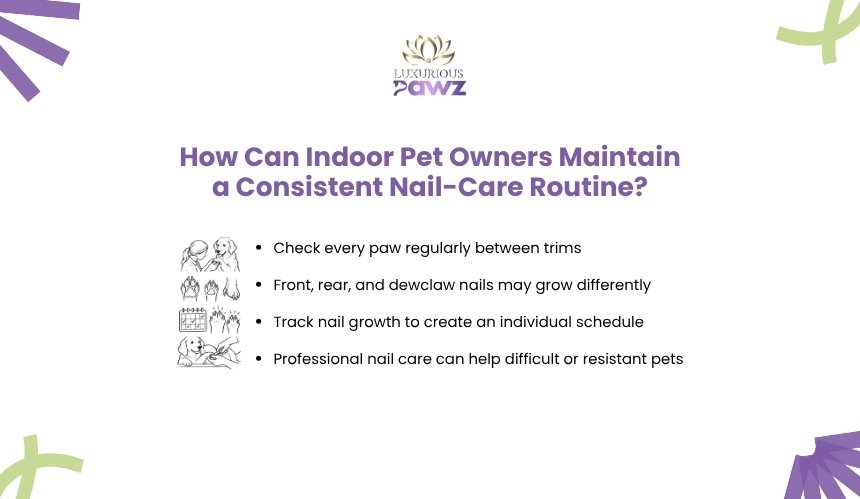
How Can Indoor Pet Owners Maintain a Consistent Nail-Care Routine?
Effective nail maintenance depends on monitoring rather than waiting for obvious overgrowth. A routine should make it possible to identify changes early while keeping nail handling predictable for the pet.
How Should You Check an Indoor Pet's Nails Between Trims?
A quick inspection can be incorporated into ordinary grooming or handling sessions. Look at each paw individually rather than checking only the most visible nails. Front and rear nails may wear at different rates, and dewclaws can remain long even when the other nails appear appropriately maintained.
For dogs, observe the nails while the pet is standing and walking. Clicking on hard flooring, visible contact with the floor, or a noticeably altered foot position can indicate that the current schedule needs adjustment.
For cats, inspect the claws when they naturally extend during handling. Scratching behavior should not automatically be interpreted as sufficient nail maintenance. Scratching serves behavioral and claw-maintenance functions, but indoor cats can still require periodic clipping.
Cornell University’s College of Veterinary Medicine recommends regular nail trimming as one method of managing scratching-related damage.
Instead of automatically scheduling every pet on the same interval, track how quickly the nails become visibly prominent after each trim. That creates an individualized maintenance pattern based on the pet’s actual growth and wear.
When Is Professional Nail Care the Better Choice?
Professional nail care becomes particularly useful when a pet strongly resists paw handling, has dark nails that make the quick difficult to identify, or has nails that have become substantially overgrown.
Dark nails require additional caution because the quick may not be visually obvious. VCA recommends removing very small portions and progressively shortening the nail rather than attempting a large cut.
Professional handling can also be valuable for pets that have learned to associate nail tools with restraint or discomfort. VCA describes desensitization and counterconditioning as techniques for gradually building tolerance to nail handling and equipment.
For Sunland households, this can be particularly practical during periods of extreme heat. The National Weather Service has recently issued heat warnings covering Sunland and surrounding Los Angeles-area valleys, with temperatures reaching the upper 90s to above 100°F during heat events. When outdoor activity is reduced during these periods, an indoor pet may receive even less natural nail wear, making regular inspection more useful.
Do You Know?
During a recent 2026 heat event affecting Sunland and surrounding Los Angeles-area valleys, the National Weather Service reported expected temperatures commonly reaching 98°F to 108°F.
For pet owners who prefer professional handling, Luxurious Pawz provides grooming support for families across Greater Los Angeles, including households looking for dependable nail-care maintenance. Professional nail care can be especially useful for pets that resist paw handling, have dark or difficult-to-assess nails, or require a consistent grooming routine.
Frequently Asked Questions
How often should indoor dogs have their nails trimmed?
Most dogs require nail trims approximately every 3 to 4 weeks, but some may need them weekly. Growth rate, activity level, flooring, age, and natural nail wear can change the appropriate interval.
How often do indoor cats need their claws trimmed?
Most cats need claw trims every 2 to 4 weeks, although the ideal schedule varies from one cat to another. Claw growth rate, scratching habits, age, activity level, and how quickly the claws become visibly sharp or extended can all affect how often trimming is needed. Regular checks help owners adjust the interval before the claws become excessively long.
Does indoor living make nail trimming more important?
It can. Indoor flooring such as carpet, rugs, hardwood, and other smooth household surfaces may provide less natural abrasion than outdoor ground. As a result, some pets can remain active indoors while their nails continue growing faster than they wear down, making routine nail checks necessary.
Is clicking on the floor a sign that a dog's nails are too long?
It can be. VCA identifies audible clicking on hard flooring while a dog walks or trots as a sign that the nails may be too long. As nails grow, they can contact the floor more often and affect natural paw placement. Regular checks help owners adjust the trimming schedule before overgrowth leads to discomfort or nail damage.
Do dewclaws need to be trimmed?
Yes. Dewclaws may receive little natural wear because they often do not contact the ground normally. If they continue growing unchecked, they can become excessively long and potentially curve into the paw pad.
Should I trim my pet's nails myself or use a professional?
Either approach can work when the pet tolerates handling and the owner can safely identify an appropriate trimming point. Professional nail care is preferable when the pet strongly resists, the nails are significantly overgrown, or identifying the quick is difficult.