
- admin
How to Handle a Labrador’s Short Coat During Grooming
Key Takeaways:
|
Labradors are often misunderstood when it comes to grooming because their coat appears short and easy to manage. In reality, their dense double-layer system requires a structured approach that balances brushing, bathing, and coat preservation.
Proper handling is not about removing hair aggressively but about working with the coat’s natural design to maintain skin health, control shedding, and enhance durability.
Understanding the Structure of a Labrador’s Short Coat
A Labrador’s coat is engineered for protection, temperature regulation, and water resistance. It consists of a smooth outer layer and a compact insulating undercoat that continuously cycles hair.
The Functional Layers of the Coat
- Topcoat (Guard Hair):
Protects against dirt, moisture, and environmental exposure while giving the coat its sleek appearance. - Undercoat (Dense Layer):
Regulates body temperature and sheds regularly, which is the main source of loose hair in your home. - Oil Barrier System:
Natural oils coat each strand, creating water resistance and preventing dryness when preserved correctly.
A Labrador’s coat is not designed to be altered drastically. Any grooming approach that removes too much hair or strips oils will interfere with its protective function and lead to imbalance.
Fact Box: According to VCA Animal Hospitals, natural oils (sebum) produced by a dog’s skin coat each hair strand, helping repel moisture and maintain coat flexibility when not stripped away by excessive grooming. |
Core Grooming Approach for a Healthy Labrador Coat
Handling a short coat requires controlled grooming rather than aggressive methods. The goal is to guide shedding, not eliminate it.
Brushing Techniques That Work with the Coat
- Use Layer-Specific Tools:
Rubber brushes lift loose surface hair, while bristle brushes smooth and redistribute oils evenly. - Follow Natural Hair Direction:
Brushing along the coat’s growth prevents micro-damage and keeps the coat aligned and glossy. - Apply Gentle Pressure:
Excess force can irritate the skin and weaken follicles, especially in dense undercoat areas. - Maintain a Consistent Schedule:
Grooming two to three times per week prevents buildup and keeps shedding manageable.
Brushing is more than hair removal; it stimulates circulation, spreads natural oils, and keeps the coat breathable. When done correctly, it enhances both appearance and skin function.
Fact Box: According to VCA Animal Hospitals, regular brushing helps remove dead hair, improve air circulation to the skin, and distribute natural oils across the coat, which supports healthier skin and reduces irritation. |
Bathing Without Disrupting Coat Balance
Bathing should be strategic and minimal. Labradors do not benefit from frequent washing because their coat relies heavily on its natural oil layer.
Smart Bathing Practices
- Use Mild, Breed-Appropriate Shampoo:
Products designed for double coats maintain hydration and prevent stripping essential oils. - Limit Bath Frequency:
Bathing every 4–6 weeks is sufficient unless the dog is excessively dirty. - Ensure Thorough Rinsing:
Residue left in the coat can cause irritation and dullness over time. - Dry the Undercoat Completely:
Moisture trapped beneath the surface can lead to odor, irritation, and bacterial growth.
Bathing should support the coat’s ecosystem rather than reset it. Overwashing leads to dryness, increased shedding, and reduced coat resilience.
Fact Box: According to the American Kennel Club (AKC), Labradors have a dense, water-resistant double coat that naturally repels dirt and moisture, reducing the need for frequent bathing. |
Managing Shedding Through Seasonal Adjustments
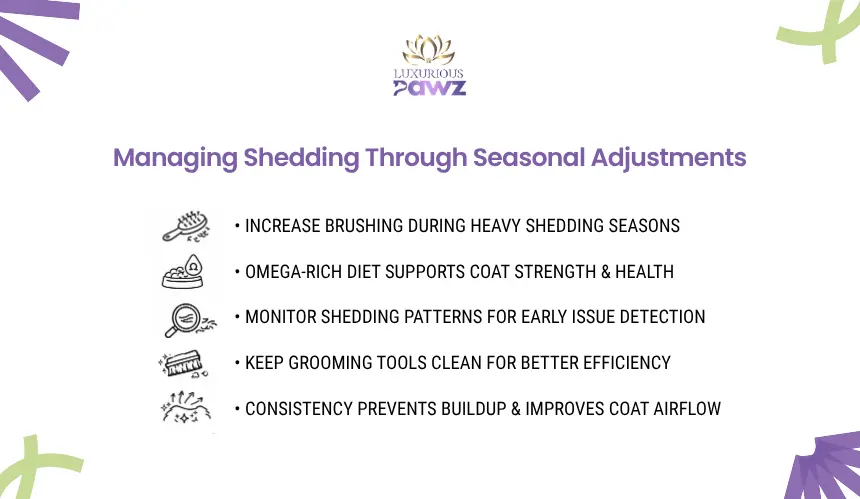
Labradors shed year-round, but seasonal transitions intensify the process. Grooming must adapt during these phases.
Shedding Control Strategies
- Increase Brushing Frequency:
Daily brushing during peak shedding removes loose undercoat before it spreads. - Support Internal Health:
Omega-rich diets strengthen hair structure and reduce excessive shedding. - Monitor Coat Density Changes:
Seasonal shedding should be even; patchy loss indicates underlying issues. - Maintain Clean Grooming Tools:
Dirty brushes can redistribute debris and reduce grooming efficiency.
Seasonal shedding is natural, but unmanaged shedding leads to matting at the base layer and poor coat ventilation.
Common Mistakes That Damage a Short Coat
Even though a Labrador’s coat looks simple, small grooming mistakes can quietly disrupt its balance and lead to long-term issues. Many problems, such as excessive shedding, dullness, or skin irritation, are not caused by the coat itself but by how it’s handled. Understanding these common errors helps you avoid damaging the coat’s natural function and keep grooming effective rather than harmful.
Fact Box: According to Merck Veterinary Manual, the skin is the largest organ of your dog’s body. It provides a protective barrier against the environment and regulates temperature, while the hair coat protects the skin and helps regulate body temperature |
Practices to Avoid
- Overusing De-shedding Tools:
Excessive use can thin the coat unevenly and irritate the skin surface. - Shaving the Coat:
This disrupts temperature regulation and can permanently alter coat texture. - Using Harsh Products:
Strong shampoos strip oils and weaken the coat’s protective barrier. - Inconsistent Grooming:
Irregular routines cause buildup, leading to sudden heavy shedding episodes.
Mistakes often come from treating the coat as purely cosmetic, rather than functional. A Labrador’s coat is part of its biological system and must be handled accordingly.
Building a Sustainable Grooming Routine
A structured routine ensures long-term coat health and reduces grooming stress for both the dog and the owner.
Weekly Grooming Framework
- Brushing:
2–3 times weekly, increased during shedding seasons - Bathing:
Every 4–6 weeks with gentle products - Inspection:
Regular checks for dryness, irritation, or unusual shedding patterns - Environment Maintenance:
Clean living spaces help manage loose fur and maintain hygiene
Consistency creates predictability, which helps regulate the coat’s natural shedding cycle and keeps the dog comfortable.
Environmental Impact on Labrador’s Short Coat
Labradors in areas like Altadena, Pasadena, and Glendale face dry heat and strong sunlight, which can dry out their coats and disrupt their natural oil balance. This often leads to dull fur, increased shedding, and mild skin irritation if grooming and hydration are not maintained properly. Dust in hillside regions like Tujunga and La Crescenta can also settle into the coat, clogging follicles and worsening shedding.
In urban zones such as Burbank and Highland Park, pollution and heat from paved surfaces can further stress the coat, causing uneven shedding and loss of shine. Temperature shifts between day and night also trigger more frequent shedding cycles, making regular brushing and proper coat care essential to maintain a healthy Labrador coat in these environments.
Give your Labrador the care it truly deserves with Luxurious Pawz, where grooming goes beyond the surface. Our expert approach is designed to protect your dog’s natural coat, control shedding, and maintain healthy skin using premium techniques and products. Trust Luxurious Pawz to deliver a refined grooming experience that keeps your Labrador looking clean, balanced, and radiant every time.
Frequently Asked Questions
Can climate affect how often I should groom my Labrador?
Yes, environmental conditions play a major role in grooming needs. In warmer, drier climates, Labradors tend to shed more and lose moisture from their coat faster, making frequent brushing essential to maintain oil balance and prevent dryness.
Is air conditioning harmful to a Labrador’s coat?
Prolonged exposure to air conditioning can reduce humidity levels, which may dry out your dog’s skin and coat over time. This can lead to flakiness and dull fur if not balanced with proper hydration and occasional coat conditioning.
Should I change grooming tools based on the season?
Yes, grooming tools should adapt to seasonal changes. During heavy shedding periods, undercoat rakes or de-shedding tools help remove excess hair, while softer brushes are better for regular maintenance when shedding is moderate.
How do I know if my Labrador’s coat is dehydrated?
A dehydrated coat often appears dull, rough, and lacks elasticity. You may also notice increased shedding, flaky skin, or your dog scratching more than usual, indicating the need for improved grooming and nutrition.
Does exercise impact coat health?
Regular exercise improves blood circulation, which supports healthy skin and promotes stronger hair growth. Active Labradors often develop shinier and more resilient coats due to better overall physiological function.
Can indoor living reduce shedding in Labradors?
Indoor living may slightly stabilize shedding due to controlled temperatures, but it does not eliminate it. Labradors naturally shed year-round, so consistent grooming is still necessary regardless of their living environment.