
- admin
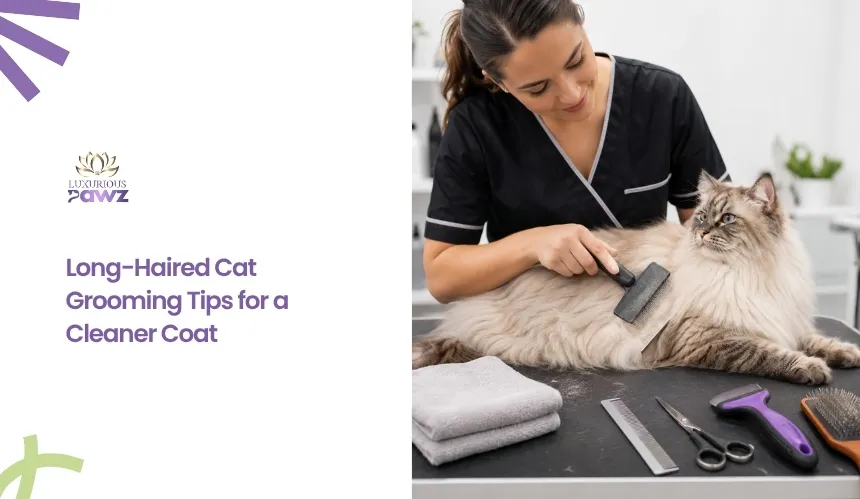
Long-Haired Cat Grooming Tips for a Cleaner Coat
Key Takeaways:
|
Long-haired cats have a unique coat structure that requires more than occasional brushing. Unlike short-haired breeds, much of their loose undercoat remains trapped beneath longer guard hairs, where it gradually collects natural oils, dust, and shed fur. As this material compresses through everyday movement, small tangles can develop into dense mats that are difficult to remove without causing discomfort.
For cat owners in Pasadena, CA, the region’s dry summers, seasonal pollen, and airborne dust can further increase coat maintenance needs, particularly for cats that spend time on patios, balconies, or enclosed gardens. Understanding how a long-haired coat behaves makes it easier to prevent grooming problems instead of correcting them later.
Brush Your Long-Haired Cat Regularly to Prevent Mats
Brushing does more than improve appearance. It interrupts the natural process that allows trapped undercoat, skin oils, and environmental debris to compact into mats. Regular grooming also stimulates the skin, distributes protective oils throughout the coat, and provides an opportunity to identify subtle changes that may otherwise remain hidden beneath dense fur.
Long-haired cats in Pasadena, CA, often require a slightly different grooming routine than cats living in cooler or more humid regions. Neighbourhoods with mature tree canopies and landscaped streets, such as Bungalow Heaven, Madison Heights, and areas near Arlington Garden, experience seasonal pollen, seed pods, and fine dust that can cling to a cat’s feathered legs, tail, and undercoat after supervised outdoor time. Professional cat grooming helps remove these fine particles before they mix with natural skin oils and compact into mats, reducing the need for corrective grooming later.
For owners whose cats enjoy enclosed patios, catios, or secure gardens, adjusting grooming frequency during peak pollen seasons is often more effective than increasing bathing alone.
Why Does a Long-Haired Coat Mat So Easily?
Long-haired cats have two distinct layers of fur. The outer guard hairs repel dirt and protect the body, while the soft undercoat provides insulation. During seasonal coat renewal, many of these undercoat hairs do not fall away naturally. Instead, they become caught beneath the longer outer coat.
As the cat stretches, curls up to sleep, or squeezes through narrow spaces, these loose hairs twist around healthy strands. Natural skin oils act like a light adhesive, causing individual knots to tighten over time until they become dense mats. This process often begins days before owners notice visible tangles on the coat’s surface.
Did You Know?
PNAS notes that a cat’s tongue is covered with tiny backward-facing, hook-shaped structures called papillae that pull loose hairs deep into the coat during grooming and then carry them toward the digestive tract. Researchers also found that these papillae help distribute saliva through the fur for cleaning and temperature regulation, explaining why long-haired cats swallow so much loose hair while grooming themselves.
Select Grooming Tools That Reach the Undercoat
Many owners assume that if a brush glides smoothly across the coat, grooming is complete. In reality, surface brushing can leave compacted undercoat untouched near the skin.
A slicker brush is designed to remove loose surface fur and separate light tangles, while a stainless steel comb acts as a verification tool. If the comb passes comfortably from the skin to the tip of the hair, the area has likely been groomed thoroughly. If it catches close to the skin despite a smooth-looking surface, hidden matting has already begun.
Using multiple grooming tools for different coat layers removes trapped fur more effectively than relying on a single brush.
Build a Grooming Schedule Around Coat Changes
Long-haired cats do not shed at exactly the same rate throughout the year. Temperature, daylight length, indoor heating, and individual breed characteristics all influence how quickly the undercoat renews itself.
For households in Pasadena, CA, spring often brings increased pollen while prolonged dry weather encourages static electricity within dense coats. Static causes loose hairs to cling together instead of separating naturally, allowing small tangles to develop more quickly between grooming sessions. Increasing brushing frequency during these seasonal changes is often more effective than scheduling additional baths.
Remove Small Knots Before They Become Structural Mats
Not every tangle becomes a mat, but every mat begins as a small knot. Once loose hairs wrap around one another, normal movement tightens the knot a little more each day. Areas with frequent friction, including behind the ears, beneath the front legs, around the collar area, and near the hindquarters, usually mat first because the coat experiences constant movement.
Rather than pulling knots apart, hold the surrounding hair close to the skin and work through the fibres gradually with a comb. Early removal preserves coat structure, while forcing apart mature mats can damage healthy hairs that would otherwise remain intact.
Keep the Coat Clean with Proper Bathing and Hygiene
Bathing removes contaminants that brushing cannot, but it should complement a grooming routine rather than replace it. The goal is not to eliminate every trace of natural oil from the coat. Healthy skin continuously produces sebum, a protective oil that waterproofs the hair shaft, reduces friction between individual hairs, and supports the skin’s natural barrier. Effective bathing removes excess oil, allergens, and debris while preserving the coat’s ability to protect itself.
When Does a Long-Haired Cat Actually Need a Bath?
Healthy indoor cats rarely become dirty enough to require frequent bathing because their tongues remove much of the loose debris from the coat. However, self-grooming becomes less effective when natural oils begin trapping fine particles deep within dense fur. Greasy coats, sticky substances, litter residue, or environmental allergens are stronger indicators that bathing is needed than following a fixed monthly schedule.
For cats living in Pasadena, CA, spring often brings higher pollen levels, while dry summer conditions increase airborne dust. Long-haired cats that spend time on balconies, patios, or supervised outdoor spaces can collect these microscopic particles within their feathered coat, making occasional bathing beneficial after periods of increased outdoor exposure rather than at regular calendar intervals.
Dry the Undercoat, Not Just the Surface
A coat that feels dry on the outside may still retain moisture beneath its dense undercoat. This hidden moisture creates a warm, humid environment against the skin where friction increases as hairs soften and rub together. The result is faster mat formation, particularly around the chest, neck, and hindquarters where the coat is naturally thicker.
Instead of rubbing vigorously with a towel, gently press absorbent towels against the coat to remove excess water before using a pet-safe dryer on a low-heat setting if your cat is comfortable with the noise. While drying, comb through small sections to separate individual hairs, allowing air to reach the undercoat instead of becoming trapped beneath the surface.
Focus on High-Friction Areas Between Baths
Some parts of a long-haired cat’s body become dirty because of how they move rather than because they touch the ground. The fur beneath the front legs, behind the ears, around the tail base, and along the hindquarters experiences constant bending and rubbing throughout the day. These areas trap loose hairs more quickly and often become the starting point for mats.
Spot-cleaning these high-friction areas with a damp cloth or cat-safe grooming wipe removes oils and debris before they spread through the surrounding coat. This targeted approach preserves the coat’s natural protective oils while reducing the need for frequent full-body baths, which can unnecessarily disrupt the skin barrier.
Why Coat Texture Changes After Bathing
Many owners notice that a freshly bathed coat sometimes tangles more easily than expected. This happens because water temporarily swells the hair shaft, making neighbouring hairs more likely to interlock as they dry. Brushing immediately after the coat is almost dry, rather than waiting until it has fully dried into place, helps separate these hairs before new tangles begin to form.
Understanding how the coat behaves after bathing transforms grooming from simple cleaning into preventative maintenance, reducing the likelihood of future mats while keeping the coat cleaner for longer.
Support a Cleaner Coat Through Daily Care
The condition of a long-haired coat is influenced as much by daily habits as by scheduled grooming sessions. Skin health, nutrition, hydration, and the cat’s living environment all affect how the coat grows, sheds, and protects itself. Small adjustments to everyday care often reduce the amount of grooming required while helping the coat remain cleaner between brushing sessions.
Support Hair Growth From the Inside Out
A cat’s coat is made primarily of keratin, a structural protein that depends on adequate nutrition to grow and renew efficiently. When dietary protein, omega fatty acids, zinc, or certain B vitamins are lacking, the body prioritises essential organs over hair production. The coat often becomes thinner, duller, or more prone to breakage before other signs of nutritional imbalance become obvious.
Hydration also plays an important role. Well-hydrated skin produces a balanced amount of natural oils that keep individual hairs flexible, reducing friction as the coat moves. This makes tangles less likely to form compared with dry, brittle fur that catches more easily during normal activity.
Reduce Hairballs by Removing Loose Undercoat
Many owners associate hairballs with excessive shedding, but the underlying cause is usually the amount of loose fur swallowed during self-grooming. Long-haired cats spend several hours each day grooming themselves, and any undercoat that remains trapped eventually ends up on the tongue instead of the brush.
Routine brushing removes these loose hairs before they can be ingested, reducing hairball formation while keeping the coat lighter and cleaner. During seasonal coat changes, increasing brushing frequency is often more effective than relying on hairball-control products alone because it addresses the source of the problem.
Long-haired pets living in Pasadena, CA often retain more loose undercoat during seasonal coat transitions, especially in neighbourhoods such as Hastings Ranch, Linda Vista, and San Rafael Hills, where mature trees, landscaped yards, and hillside vegetation contribute to higher levels of airborne plant debris.
Fine particles can settle deep within dense coats, where they combine with naturally shed fur and skin oils, making tangles more likely to form even when the coat appears clean on the surface. Pet de-shedding removes this trapped undercoat before it compacts beneath the guard hairs, helping improve airflow through the coat while reducing seasonal shedding, mat formation, and the amount of loose fur carried back into the home.
Did You Know?
Cornell Feline Health Center notes that cats typically spend 30% to 50% of their waking hours grooming themselves. While this keeps the coat clean, excessive grooming or increased hairball formation can sometimes indicate an underlying skin condition, allergy, or parasite rather than simply heavy shedding.
Watch for Subtle Changes in Coat Behaviour
A healthy coat does not only look clean. It behaves predictably. Hair should separate easily during brushing, lie smoothly against the body, and return to its normal position after being gently lifted. When the coat suddenly feels sticky, unusually coarse, excessively greasy, or develops a persistent musty odour, the change may indicate an underlying skin condition rather than a grooming issue.
Regular grooming creates a useful baseline for comparison. Because owners become familiar with the normal texture and density of their cat’s coat, they are more likely to notice early signs of allergies, parasites, fungal infections, or hormonal disorders before obvious skin irritation develops.
For households in Pasadena, CA, cats that spend time outdoors may also collect fine plant material or grass awns within their coats during warmer months. Checking the coat after outdoor activity helps prevent these materials from becoming trapped against the skin or hidden within developing mats.
Grooming Mistakes That Can Affect Coat Cleanliness
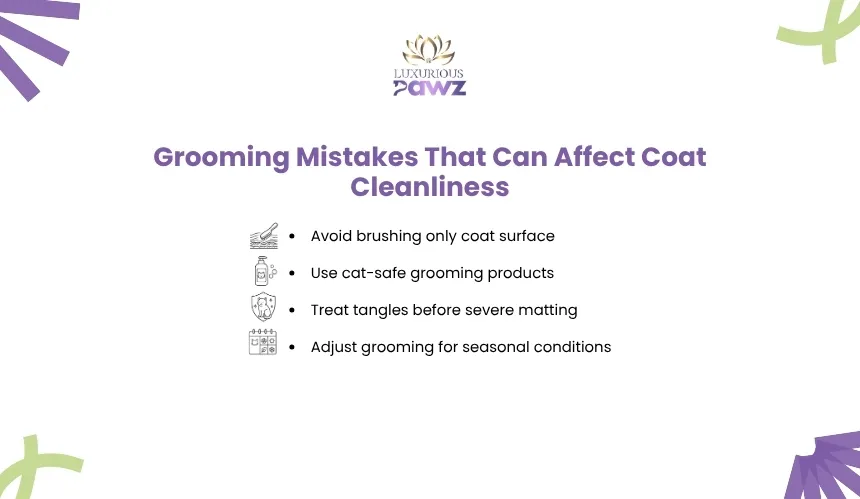
Many grooming problems develop gradually rather than from a single mistake. Small habits repeated over time can change coat texture, increase mat formation, or make future grooming more difficult. Understanding why these mistakes affect the coat allows owners to prevent problems instead of simply treating the symptoms.
Brushing Only the Surface of the Coat
One of the most common grooming mistakes is removing loose fur from the outer layer while leaving the undercoat untouched. This creates a coat that appears neat on the surface but contains compacted hair close to the skin, where mats continue forming unnoticed.
Professional groomers often describe this as surface brushing because the outer coat hides the developing problem underneath. Dividing the coat into small sections and brushing layer by layer allows grooming tools to reach the skin, where loose undercoat naturally accumulates.
Choosing Products That Disrupt the Skin Barrier
Cats maintain a delicate balance of natural oils and beneficial microorganisms that protect the skin from excessive dryness and irritation. Shampoos designed for people or heavily fragranced products can disturb this balance by removing too much sebum or altering the skin’s natural pH.
When the skin barrier is disrupted, the coat often becomes rougher, creating more friction between individual hairs and increasing the likelihood of tangles. Selecting cat-specific grooming products helps preserve this protective barrier while removing dirt and excess oils safely.
Waiting Until Mats Become Difficult to Remove
A mat changes structure over time. In its earliest stage, it consists of loosely connected hairs that can usually be separated with careful combing. As the cat moves, these hairs tighten together, trapping additional loose fur, skin oils, and environmental debris until the mat becomes dense enough to pull directly on the skin.
Once this stage is reached, attempting to remove the mat at home can cause unnecessary discomfort or accidental injury. Addressing small knots when they first appear is both safer and less stressful than waiting until extensive clipping becomes necessary.
Ignoring Environmental Factors That Affect the Coat
Grooming routines should adapt to the environment rather than remain identical throughout the year. In Pasadena, CA, dry summers can increase static electricity, while spring introduces higher levels of airborne pollen and fine dust. These conditions encourage loose hairs and microscopic particles to remain trapped within dense coats instead of falling away naturally.
Adjusting brushing frequency to seasonal conditions, rather than following a fixed schedule year-round, helps maintain coat cleanliness while reducing the formation of tangles before they become larger grooming problems.
Keeping a long-haired cat’s coat healthy requires more than occasional brushing, especially when seasonal shedding, trapped undercoat, or persistent mats begin affecting comfort and skin health. At Luxurious Pawz, our experienced groomers provide professional cat grooming using coat-specific techniques, quality grooming products, and gentle handling to help maintain healthy skin and a clean, mat-free coat.
Proudly serving pet owners throughout Pasadena, and the Foothill Communities of Los Angeles County, we tailor every grooming session to your cat’s coat type and individual needs. Contact Luxurious Pawz today to schedule an appointment and keep your cat’s coat clean, comfortable, and healthy year-round.
Frequently Asked Questions
Why do long-haired cats develop mats even when they groom themselves?
Cats remove loose surface debris by licking their coats, but they cannot effectively remove trapped undercoat beneath long guard hairs. As loose hairs accumulate, normal body movement causes them to twist together, gradually forming mats that self-grooming alone cannot prevent.
Which areas of a long-haired cat usually mat first?
Mats most commonly develop behind the ears, beneath the front legs, around the collar area, along the chest, and near the hindquarters. These locations experience constant movement and friction, causing loose hairs to compact more quickly than on flatter parts of the body.
Does brushing reduce hairballs?
Yes. Regular brushing removes loose undercoat before it can be swallowed during self-grooming. Reducing the amount of loose fur on the coat directly lowers the amount of hair entering the digestive tract, which can help decrease hairball formation.
Is bathing enough to keep a long-haired cat's coat clean?
No. Bathing removes dirt, excess oils, and environmental contaminants, but it does not remove all trapped undercoat. Brushing remains essential because it separates loose hairs before they tighten into mats, while bathing should serve as a complementary part of the grooming routine.
How does Pasadena's climate affect a long-haired cat's coat?
Pasadena, CA experiences dry summers, seasonal pollen, and airborne dust that can become trapped within dense coats, particularly in cats with supervised outdoor access. During these periods, increasing brushing frequency is often more effective than increasing bathing because it removes trapped debris before it contributes to tangles.
When is professional grooming the better option?
Professional grooming is recommended when mats have become tightly compacted, brushing causes discomfort, excessive shedding persists despite regular coat care, or a cat becomes difficult to groom safely at home. Early professional treatment often prevents minor coat problems from progressing into more extensive skin and grooming issues.