
- admin
Ultimate DIY Pet Grooming Tools for a Healthy Coat
DIY pet grooming between professional visits works best when pet owners rely on a small, purposeful set of grooming tools rather than an overcrowded kit. At a minimum, effective at-home coat care requires a coat-appropriate brush, a metal comb for detail work, a controlled de-shedding tool for undercoat management, and basic hygiene trimmers for limited touch-ups.
Between grooming appointments, a dog’s coat continues to shed, collect debris, and redistribute natural oils. Without routine maintenance, minor coat issues can quietly escalate into matting, skin irritation, or discomfort. This article breaks down which grooming tools matter, why they serve different purposes, and how to choose the right ones based on grooming needs.
Why Between-Visit Grooming Matters for Your Pet
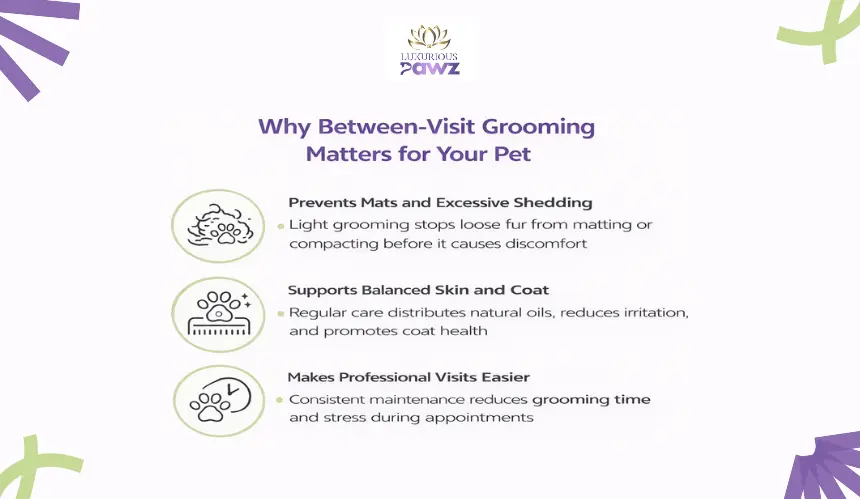
Between professional appointments, a pet’s coat continues to shed, shift, and respond to daily movement. Hair that is not released gradually begins to compact, while natural oils move unevenly across the skin.
Light pet grooming during this period helps regulate these changes before they turn into matting, excessive shedding, or coat discomfort that requires corrective care.
Consistent maintenance also supports skin health, not just appearance. When loose fur and debris remain trapped, airflow decreases and oils concentrate in certain areas, leaving other sections dry or irritated.
Simple grooming habits between visits help maintain balance across the coat, allowing the skin to stay protected and comfortable without aggressive brushing or overhandling.
Ignoring between-visit care often makes grooming sessions harder for both pets and professionals. What could have been routine upkeep becomes a repair process involving detangling or heavy de-shedding.
Regular pet grooming at home keeps coats manageable, reduces stress during professional visits, and helps pets stay comfortable throughout their daily routines.
Understanding Your Pet’s Coat Before Choosing Grooming Tools

Choosing grooming tools without understanding coat structure often leads to discomfort, breakage, or ineffective results. Pet coats vary widely in density, texture, and growth patterns, and each responds differently to brushing or de-shedding.
Identifying how a coat behaves is the first step toward selecting tools that maintain coat balance rather than disrupting it.
How Short and Smooth Coats Respond to Grooming Tools
Short, single-layer coats shed steadily but close to the skin. These coats benefit from tools that lift loose hair without scraping or irritating the surface. Overly aggressive tools tend to overstimulate the skin rather than improve coat condition. Grooming for this coat type focuses on gentle hair removal and even oil distribution rather than volume reduction.
What Grooming Challenges Appear in Long or Double Coats
Dense and double-layer coats trap loose undercoat beneath a longer top layer. Without proper release, this trapped hair compacts and restricts airflow. Tools for these coats must reach beneath the surface without cutting or pulling the topcoat. The goal is controlled undercoat management, not thinning the visible coat structure.
Why Curly and Textured Coats Need Specialized Handling
Curly, wavy, or textured coats tangle through compression rather than shedding alone. Knots form where friction is highest, often tightening quickly if handled incorrectly. These coats require tools that separate hair gently and support shape retention. Incorrect tool choice can stretch curls, increase breakage, or worsen tangling instead of reducing it.
Understanding coat behavior prevents tool misuse and sets realistic expectations for at-home grooming. With coat type clearly identified, the next step is selecting grooming tools that support maintenance without causing stress or damage.
Essential DIY Grooming Tools for At-Home Coat Maintenance
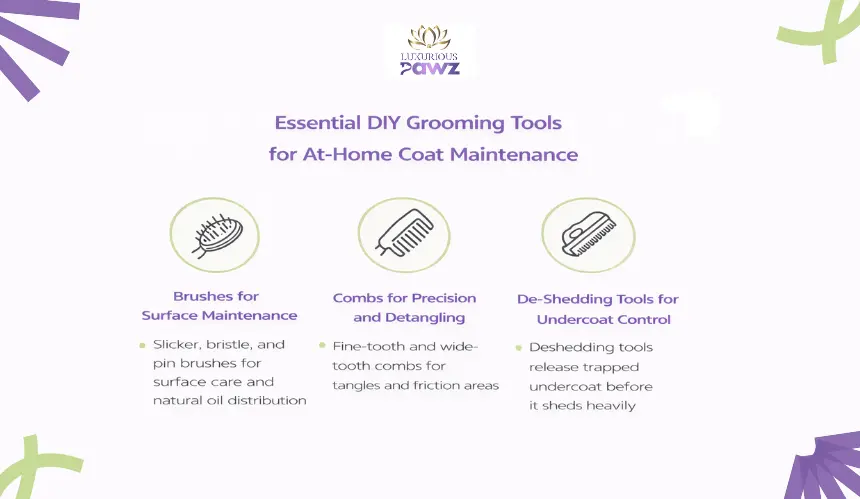
Effective at-home grooming depends on a small set of purpose-driven tools rather than an overloaded kit. Each tool serves a distinct role in maintaining coat stability, releasing loose hair, or managing high-friction areas.
Selecting tools based on function ensures consistent results while reducing the risk of coat damage or pet discomfort.
1. Brushes for Surface Maintenance
Brushes are the foundation of routine coat care and are used to manage surface-level shedding and distribute natural oils. Slicker, bristle, and pin brushes each interact with the coat differently, making selection dependent on coat density and sensitivity. The right brush lifts loose hair without scraping the skin, helping maintain coat flow rather than forcing hair removal.
2. Combs for Precision and Detangling
Combs play a supporting role by identifying tangles that brushes may pass over. Fine-tooth and wide-tooth combs help separate hair strands, confirm detangling progress, and maintain clean coat sections. Combing is especially useful for checking friction zones where mats begin forming before they are visible on the surface.
3. De-Shedding Tools for Undercoat Control
De-shedding tools are designed to release trapped undercoat hair that brushes cannot reach. When used correctly, they reduce excessive shedding without thinning the topcoat.
Controlled use is essential, as overuse can strip insulation or irritate the skin. These tools are most effective during seasonal shedding cycles rather than daily grooming.
4. Coat-Safe Clippers and Trimmers for Limited Use
Basic clippers and trimmers are intended for limited hygiene maintenance, not full coat shaping. They are useful for paw pads, sanitary areas, and small touch-ups where hair growth interferes with comfort. Using cutting tools outside these zones can disrupt coat structure and increase grooming challenges during professional visits.
Understanding the purpose of each grooming tool prevents misuse and supports balanced coat care. The next section focuses on how correct handling techniques make these tools effective without causing stress or resistance during grooming sessions.
How to Use Pet Grooming Tools Correctly at Home
Correct tool usage determines whether at-home grooming supports coat health or creates resistance and discomfort. Even well-chosen grooming tools can cause irritation if they are used with the wrong pressure, direction, or timing.
Understanding how grooming actions affect the coat and skin helps turn maintenance into a calm, effective routine rather than a stressful task.
How Should Pet Grooming Tools Be Applied to Avoid Skin Irritation
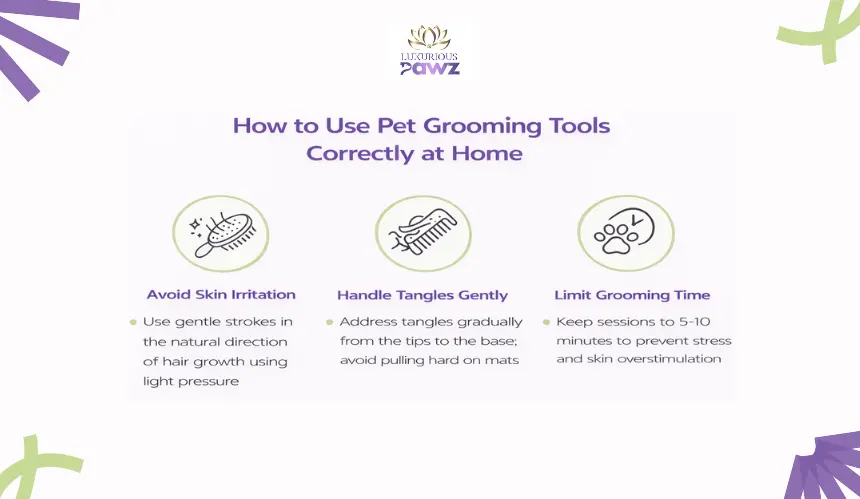
Grooming tools should move in the natural direction of hair growth using light, controlled pressure. Excess force presses loose hair back into the coat and overstimulates the skin instead of releasing debris.
Gentle contact allows hair to separate naturally, helping maintain coat flow while protecting sensitive skin areas from unnecessary friction.
What Is the Safest Way to Handle Tangles at Home
Tangles should be addressed gradually, starting at the outer edge of the knot and working inward in small sections. Pulling from the base tightens mats and increases discomfort, often making the problem worse. Slow separation preserves coat integrity and reduces the risk of breakage while keeping the pet relaxed during grooming.
How Long Should At-Home Grooming Sessions Last
For most pets, an effective at-home grooming session should last 5 to 10 minutes, depending on coat type and tolerance. This timeframe is long enough to remove loose hair, check friction zones, and maintain coat balance without overwhelming the pet.
Short-coated pets often require closer to five minutes, while denser or textured coats may benefit from slightly longer sessions spread across the week.
Limiting grooming to this short window reduces muscle tension, prevents skin sensitivity, and keeps the experience predictable. Stopping while the pet remains calm helps reinforce positive associations with grooming tools, making future sessions easier and more productive.
Grooming Tools Maintenance and Hygiene at Home
Grooming tools interact directly with a pet’s coat and skin, which means their condition affects grooming results just as much as technique. Tools that collect hair, oils, and residue can reintroduce debris into the coat and reduce effectiveness over time.
Maintaining clean, well-kept tools supports healthier grooming outcomes and protects the skin during routine use.
Why Dirty Grooming Tools Can Affect Coat and Skin Health of Your Pet
Hair, oils, and skin particles accumulate quickly on brushes and combs. When tools are reused without cleaning, this buildup transfers back into the coat, limiting airflow and spreading residue across the skin. Over time, this can contribute to dull fur, uneven oil distribution, and increased skin sensitivity during grooming sessions.
How Often Pet Grooming Tools Should Be Cleaned
Grooming tools should be cleared of loose hair immediately after every grooming session to prevent buildup from compacting into bristles or teeth. This quick step takes less than a minute and helps maintain smooth contact with the coat during the next use.
Brushes and combs that are used multiple times per week should receive a deeper clean once every 7 days using mild soap and warm water.
De-shedding tools and trimmers benefit from more frequent attention due to direct contact with skin oils and undercoat debris. These tools should be thoroughly cleaned every 3 to 5 uses, especially during heavy shedding periods.
Following a consistent cleaning timeline keeps tools gliding properly through the coat, reduces unnecessary pulling, and helps protect the skin from irritation caused by residue buildup.
What Safe Tool Hygiene Looks Like at Home
After washing, tools should be thoroughly dried to prevent moisture-related issues such as rust or bacterial growth. Sharing grooming tools between pets should be avoided unless tools are disinfected between uses. Replacing tools with bent bristles, dull edges, or damaged surfaces helps prevent skin irritation and uneven grooming results.
Safety Boundaries Every Pet Owner Should Respect
At-home grooming is meant to support comfort and coat stability, not to correct advanced issues. Knowing when to pause, adjust, or stop grooming protects pets from unnecessary stress and prevents small problems from becoming painful or risky. Respecting these boundaries keeps DIY grooming safe and effective between professional visits.
Signs Grooming Should Stop Immediately
Grooming should pause if a pet shows repeated avoidance, vocal distress, sudden stiffness, or skin reactions such as redness or sensitivity. These responses indicate discomfort or overstimulation rather than normal resistance. Continuing despite these signs can damage trust and make future grooming more difficult.
Why Mat Cutting and Aggressive De-Shedding Are Risky
Cutting into mats or applying heavy pressure with de-shedding tools increases the risk of skin injury, uneven coat damage, and irritation. Mats often pull skin upward, making cuts unpredictable. Aggressive undercoat removal can also strip insulation and expose sensitive skin, leading to discomfort or temperature regulation issues.
When DIY Pet Grooming Is Not Enough
Certain areas require training and precision, including severe matting, tight skin folds, facial shaping, and full coat resets. Recognizing these moments early helps prevent discomfort, skin issues, and stressful grooming experiences.
Situations Where Coat Conditions Require Professional Attention
Advanced matting, impacted undercoat, or coats that feel dense and immobile often exceed what safe at-home grooming can address. These conditions usually require specialized tools, controlled techniques, and experience to correct without causing pain or skin injury. Attempting to manage severe coat issues at home can worsen the problem rather than resolve it.
Skin and Sensitivity Changes That Signal a Transition
Redness, flaking, unusual odor, or visible irritation indicate that the skin barrier may already be compromised. Grooming over sensitive skin without proper assessment can increase inflammation or discomfort. Professional groomers are trained to recognize these changes and adjust techniques accordingly, reducing the risk of further irritation.
Behavioral Resistance That Limits At-Home Grooming
When pets consistently resist grooming despite short sessions and gentle handling, it often signals discomfort, anxiety, or negative associations that require professional intervention. Groomers use structured handling methods and controlled environments that help pets tolerate necessary care without escalating stress.
Seasonal Coat Changes That Exceed Maintenance Grooming
During heavy shedding periods, some coats release undercoat at a rate that standard brushing cannot manage effectively. Professional grooming sessions help reset the coat by removing trapped hair evenly and safely, making subsequent at-home maintenance more manageable.
A healthy coat is more than appearance. It is comfort, confidence, and how your pet feels every single day. When at-home care needs expert support, Luxurious Pawz is there to restore balance, comfort, and trust through professional grooming that puts your pet first.
Give your companion the care they deserve and let every grooming visit feel calm, safe, and truly luxurious.
Frequently Asked Questions
Can DIY grooming tools help reduce pet allergies inside the home?
DIY grooming tools can help lower the amount of loose fur and dander released into the home environment, which may reduce allergen buildup on furniture and floors. While grooming does not eliminate allergens entirely, consistent coat upkeep helps control their spread and supports a cleaner indoor space.
Are there grooming tools designed specifically for nervous or anxious pets?
Yes, some grooming tools are designed with softer bristles, flexible heads, and quieter operation to reduce sensory overload. These tools focus on minimizing vibration, noise, and resistance, making grooming less intimidating for pets that are sensitive to handling or sound.
Is it safe to use human brushes or hair tools on pets?
Human grooming tools are not designed for pet coat density or skin sensitivity and often apply uneven pressure. Using them can lead to skin irritation, breakage, or ineffective grooming results. Pet-specific tools are shaped and balanced to support fur structure and skin comfort.
How can pet owners tell if a grooming tool is causing coat damage?
Signs of coat damage include increased breakage, uneven texture, excessive shedding after grooming, or visible thinning in certain areas. If the coat feels rough or looks patchy following tool use, it may indicate incorrect tool selection or excessive pressure during grooming.
Do puppies and senior pets need different grooming tools?
Yes, puppies and senior pets often have more sensitive skin and lower tolerance for prolonged grooming. Tools designed for gentle contact and shorter grooming sessions are better suited for these age groups, helping maintain comfort while supporting light coat maintenance.
Can regular at-home grooming affect how a pet behaves during professional appointments?
Consistent, positive grooming experiences at home often help pets remain calmer during professional visits. Familiarity with grooming tools and handling reduces anxiety, allowing professional groomers to work more efficiently and comfortably with the pet.