

- Luxurious Pawz
Why Bathing Frequency Depends on Coat, Skin, and Lifestyle
A dog’s ideal bathing routine is not determined by a fixed number of days. Coat type, skin condition, activity level, and everyday environment all influence how often bathing may be appropriate. For dogs in Pasadena, CA, outdoor exposure, seasonal conditions, and individual grooming needs can make each pet’s routine different.
Coat Type Sets the Foundation for a Bathing Routine
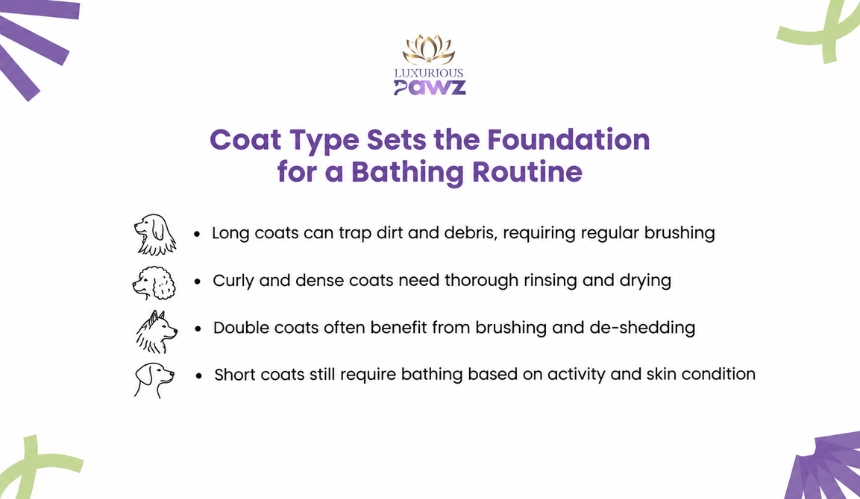
A dog’s coat is one of the first considerations when determining an appropriate bathing routine. Short, long, curly, dense, silky, wiry, and double coats can behave differently when exposed to dirt, moisture, natural oils, and everyday debris. The American Kennel Club explains that bathing frequency can depend on factors such as breed, coat type, lifestyle, and individual needs.
Long and Flowing Coats
Long coats can collect environmental debris because dirt, grass, dust, and loose material can become caught within the hair. Areas around the ears, legs, belly, tail, and underarms may be particularly susceptible to tangles and matting. For these dogs, bathing should be considered alongside regular brushing rather than treated as the only form of coat maintenance.
Regular brushing can help remove loose hair and prevent minor tangles from developing into more difficult mats. This is particularly relevant for dogs in Pasadena that regularly spend time outdoors, where their coats may encounter grass, dust, and other environmental debris. A long-coated dog with an active routine may therefore require more frequent overall grooming attention than a similar dog that spends most of its time indoors.
Curly and Dense Coats
Curly and dense coats can hold dirt, loose hair, and debris within their texture. They can also take longer to become completely wet, thoroughly rinsed, and properly dried. This makes bathing technique and after-bath care especially important.Regular brushing can help manage loose hair and reduce tangling between baths, but a greater need for brushing does not necessarily mean a greater need for shampooing.
Some dogs may benefit from consistent coat maintenance while requiring full baths only when their coat condition and lifestyle indicate that they are needed. Thorough drying is also important for dense and curly coats because moisture can remain within the fur. Professional grooming can help ensure that the coat receives appropriate brushing, bathing, rinsing, and drying according to its structure.
Double Coats
Double-coated dogs have an outer coat and an undercoat, creating different grooming requirements from those of single-coated dogs. Breeds with substantial undercoats may require regular brushing and de-shedding, particularly during periods of heavier shedding. The American Kennel Club explains that thick double coats can require considerable brushing and that bathing frequency should be based on the dog’s individual circumstances rather than simply its coat density.
For these dogs, de-shedding can be an important part of maintaining the coat without relying on frequent full baths. Seasonal changes can also influence how much loose hair needs to be removed, making the overall grooming routine more important than simply increasing bathing frequency.
Short Coats
Short-haired dogs may appear easier to maintain because their coats are generally simpler to brush and debris can be easier to identify. However, short hair does not automatically determine how frequently a dog should be bathed. A short-coated dog that spends considerable time outdoors may become dirty more quickly than a primarily indoor dog with the same coat type.
Differences in skin oil production, activity, and environmental exposure can also influence grooming requirements. Coat length should therefore be viewed as one factor within a broader assessment of the dog’s individual grooming needs.
Do You Know?
The American Kennel Club explains that bathing frequency can vary according to breed, lifestyle, coat length, and other individual factors. Dogs with thick coats may require substantial brushing even when frequent bathing is unnecessary.
Skin Condition Determines How Often Is Appropriate
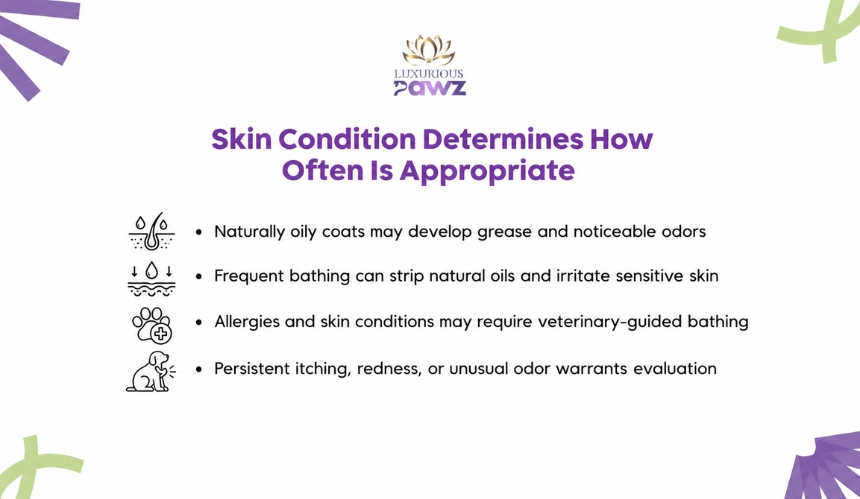
The coat may be the most visible part of grooming, but the skin underneath it is equally important. A dog with comfortable, healthy skin can have different bathing requirements from one experiencing dryness, sensitivity, allergies, or another dermatological concern. Bathing removes dirt and buildup, but repeated washing can also remove some of the natural oils present on the skin and coat. VCA Animal Hospitals notes that bathing too frequently can contribute to dryness and irritation.
Naturally Oily Skin
Some dogs naturally have oilier skin and coats than others. As oils accumulate, the fur can begin to appear greasy and may develop a stronger odor. This can make a dog seem as though it needs bathing sooner than another dog with a naturally drier coat. However, increasing bathing frequency is not always the appropriate solution. If oiliness or odor suddenly becomes more noticeable or persistent, it may be worth determining whether there is an underlying reason rather than simply adding more baths to the routine. The goal is to keep the coat clean without unnecessarily disrupting the skin’s natural balance.
Dry or Sensitive Skin
Dogs with dry or sensitive skin require a more careful approach to bathing. Frequent washing or unsuitable products may contribute to additional dryness or discomfort. VCA Animal Hospitals recommends using products specifically formulated for dogs because canine skin differs from human skin. It also recommends veterinary guidance when frequent bathing is necessary because of an underlying skin problem.
For Pasadena pet parents, this means the appearance of the coat should not be the only consideration. If the skin appears unusually dry, flaky, irritated, or uncomfortable, the bathing routine may need to be reconsidered rather than automatically increased.
Allergy-Prone or Problematic Skin
Dogs with allergies or diagnosed skin conditions may have bathing requirements that differ substantially from ordinary grooming routines. In some circumstances, veterinarians may recommend specific shampoos or bathing schedules as part of managing a dermatological condition. PetMD explains that dogs with certain skin conditions may require specialized bathing routines and products under veterinary guidance.
Persistent itching, redness, sores, unusual odor, excessive flaking, or other noticeable changes should not simply be addressed by adding more cosmetic baths. Veterinary evaluation can help identify whether an allergy, infection, parasite, environmental trigger, or another issue may be involved.
Why Overbathing Can Be Counterproductive
Bathing is intended to support cleanliness, but more frequent bathing does not automatically mean better skin or coat health. Repeated washing can remove natural oils and potentially contribute to dryness or irritation. PetMD explains that bathing too frequently can contribute to dry skin and coat problems, while inadequate bathing can allow dirt and odor to accumulate. The appropriate balance depends on the individual dog.
A Pasadena dog that remains clean and comfortable between grooming appointments may not need additional baths simply because a certain number of days has passed. Instead, the condition of the coat and skin should help determine when another bath is appropriate.
Do You Know?
VCA Animal Hospitals explains that frequent bathing can strip natural oils from a dog’s skin and coat, potentially contributing to dryness and itchiness. When frequent bathing is necessary because of a skin problem, veterinary guidance can help determine an appropriate approach.
Lifestyle Changes the Grooming Equation
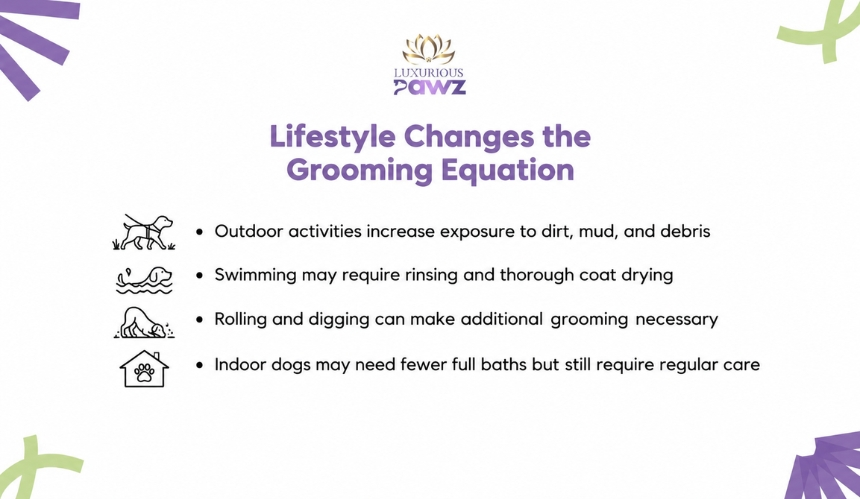
A dog’s everyday lifestyle can dramatically influence how quickly its coat becomes dirty. Coat type establishes one part of the grooming picture, while activity and environmental exposure determine how much dirt, moisture, and debris the coat encounters. VCA Animal Hospitals identifies lifestyle, hair coat, age, and health among the factors that can influence a dog’s grooming requirements.
Outdoor Activity
Dogs that spend substantial time outdoors can accumulate dust, dirt, grass, mud, and other environmental material more quickly than dogs that primarily remain indoors. For dogs living in Pasadena, regular walks and outdoor activities can naturally increase exposure to environmental debris.
A dog that frequently explores outdoor spaces may therefore need more regular coat maintenance than one with a quieter indoor routine. However, every outdoor activity does not necessarily require a full bath. Depending on the situation, brushing, paw cleaning, or targeted removal of debris may be sufficient. A complete bath becomes more relevant when dirt, odor, or buildup is substantial enough that simpler maintenance is no longer effective.
Pasadena’s warm, dry summers can intensify seasonal shedding, especially for dogs with dense undercoats. Pets around San Rafael Hills, Hastings Ranch, and Caltech-area neighborhoods may benefit from professional pet de-shedding to manage loose fur and maintain a cleaner, healthier-feeling coat.
Swimming and Water Exposure
Swimming can introduce another layer of grooming consideration. Dogs that regularly enter the water may have additional moisture and environmental material remaining on their coats afterward. PetMD notes that active dogs that swim or frequently become dirty may need more regular bathing than less active dogs. For dogs with long or dense coats, rinsing and thorough drying after water exposure can be particularly important. Professional grooming can help maintain the coat between full bathing appointments while keeping the overall routine suited to the dog’s activity level.
Rolling, Digging, and Exploring
Some dogs naturally turn an ordinary outdoor outing into an extensive exploration session. Rolling on the ground, digging, running through vegetation, and investigating muddy areas can quickly introduce dirt and debris into the coat. The American Kennel Club recognizes that dogs that spend significant time outdoors or become dirty through activities such as playing in muddy areas may require more frequent bathing.
Even then, every dirty paw or patch of grass does not necessarily call for a complete bath. Depending on the extent of the mess, brushing or spot cleaning may be sufficient. A full bath becomes more appropriate when the coat has substantial buildup, persistent odor, or widespread dirt.
Primarily Indoor Dogs
Dogs that spend most of their time indoors may naturally remain cleaner between baths. If their coat remains comfortable and free of significant dirt or buildup, frequent full bathing may not be necessary. The ASPCA explains that grooming requirements can vary according to a dog’s individual circumstances, including its coat and lifestyle.
Indoor living does not eliminate the need for grooming. Regular brushing, nail care, dental care, ear care, and routine inspection of the skin and coat remain important. Bathing is simply one part of a broader grooming routine.
Seasonal and Environmental Factors
Changes in weather and outdoor activity can also influence grooming needs. A dog’s coat may become dirtier, oilier, or more difficult to maintain during periods when outdoor activity increases. For Pasadena dogs, changes in daily routine can be just as relevant as seasonal changes. A dog spending more time outside may need additional coat maintenance, while a quieter period may naturally reduce the need for frequent bathing.
Seasonal changes therefore do not automatically mean more baths. Instead, they provide a reason to pay closer attention to the coat and skin and adjust grooming when the dog’s individual needs change. Pasadena’s dry, warm climate and foothill setting can leave dogs exposed to dust and outdoor residue, particularly around Linda Vista, Bungalow Heaven, and Eaton Canyon. Regular walks and seasonal changes may affect how quickly a coat becomes dirty or dry. A tailored pet bathing routine can help maintain coat cleanliness while considering each dog’s skin, coat type, and local lifestyle.
Do You Know?
VCA Animal Hospitals identifies lifestyle, coat characteristics, age, and health among the factors that influence grooming requirements. Dogs that regularly become muddy or participate in activities such as swimming may need different grooming attention from less active pets.
Creating an Individualized Bathing Routine
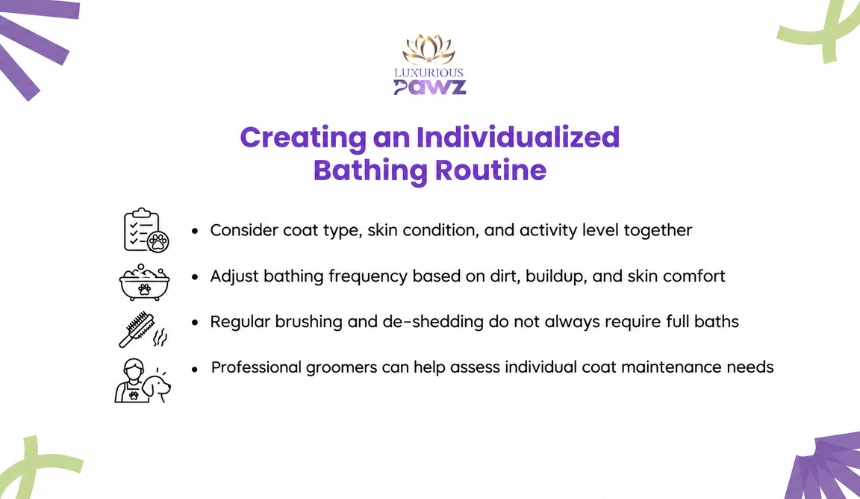
A practical bathing routine begins by looking at the individual dog rather than following a universal timetable. Coat type, skin condition, activity level, and environmental exposure should all be considered together. Start with the coat. A long, curly, dense, or double coat may require different maintenance from a short coat. Then consider the skin. Natural oiliness, dryness, sensitivity, allergies, or an existing skin condition can change what is appropriate.
Lifestyle completes the picture. Consider how frequently the dog goes outdoors, whether it swims, how active it is, how easily its coat collects debris, and whether it stays clean between grooming appointments. These factors often overlap. A long-coated dog with an active outdoor lifestyle may need substantial grooming attention, while another dog of the same breed that spends most of its time indoors may require a different routine.
Similarly, a double-coated dog may benefit from regular brushing and de-shedding without needing frequent full baths. This distinction between grooming and bathing is important. A dog can need regular brushing, nail trimming, ear care, or coat maintenance without requiring a full shampoo every few days.
Professional grooming can make this individualized approach easier by allowing the coat to be assessed during appointments. A groomer can identify buildup, loose hair, tangles, and other maintenance concerns while helping pet parents understand how the dog’s grooming routine can be adjusted. For Pasadena pet parents, the more useful question is not simply how many days should pass between baths. Instead, consider what the dog’s coat, skin, and lifestyle indicate about its current grooming needs.
Professional Bathing for Dogs
Professional bathing can form an important part of a carefully planned grooming routine. Beyond cleaning the coat, professional grooming provides an opportunity for thorough brushing, rinsing, drying, and general coat maintenance according to the individual dog’s needs. Dogs with long or dense coats may benefit from careful drying and brushing, while dogs with heavier shedding may require de-shedding as part of their broader grooming routine. Dogs with sensitive skin may require greater attention to product selection and bathing frequency.
Professional grooming should complement veterinary care rather than replace it. Persistent itching, redness, sores, unusual odor, or other unexplained skin changes warrant veterinary attention rather than simply adding more baths to a grooming schedule. The objective of an effective bathing routine is not simply a freshly washed appearance. It is a balanced approach that considers the dog’s coat, skin, lifestyle, and comfort.
For pet parents in Pasadena and Greater Los Angeles, Luxurious Pawz offers mobile pet grooming tailored to each pet’s coat, skin, and lifestyle. From bathing and brushing to de-shedding and nail trimming, professional care is brought directly to your home for convenient, personalized grooming.
Frequently Asked Questions
How often should a dog be bathed?
There is no universal bathing schedule for every dog. Frequency depends on coat type, skin condition, activity level, lifestyle, and environmental exposure. Dogs that regularly become dirty outdoors may need more frequent bathing, while primarily indoor dogs may stay clean for longer between professional grooming appointments.
Does a long coat mean a dog needs more baths?
Not necessarily. Long coats can require more frequent brushing because they may collect debris and develop tangles, but this does not automatically mean more baths are necessary. The dog’s lifestyle, skin condition, coat cleanliness, and overall grooming requirements should also be considered.
Can bathing too often cause dry skin?
Frequent bathing can remove some of the natural oils from a dog’s skin and coat, potentially contributing to dryness or irritation. Using products formulated specifically for dogs and maintaining an appropriate bathing schedule can help avoid unnecessary washing. Persistent skin problems should be discussed with a veterinarian.
Should active dogs be bathed more frequently?
Active dogs may require additional coat maintenance because outdoor activities can expose them to dirt, mud, grass, and other debris. However, every outdoor activity does not necessarily require a complete bath. Brushing, paw cleaning, or targeted cleaning may sometimes be sufficient between full grooming appointments.
Do double-coated dogs need frequent baths?
Double-coated dogs often need significant brushing and de-shedding because of their dense undercoat, but that does not automatically mean they need frequent baths. Their bathing routine should reflect their individual coat condition, lifestyle, skin health, and level of environmental exposure.
When should a veterinarian be involved in a bathing routine?
Veterinary guidance is appropriate when a dog develops persistent itching, redness, sores, unusual odor, excessive flaking, or other unexplained skin changes. Dogs with diagnosed allergies or skin conditions may also require specific shampoos or bathing schedules recommended by their veterinarian.