
- admin
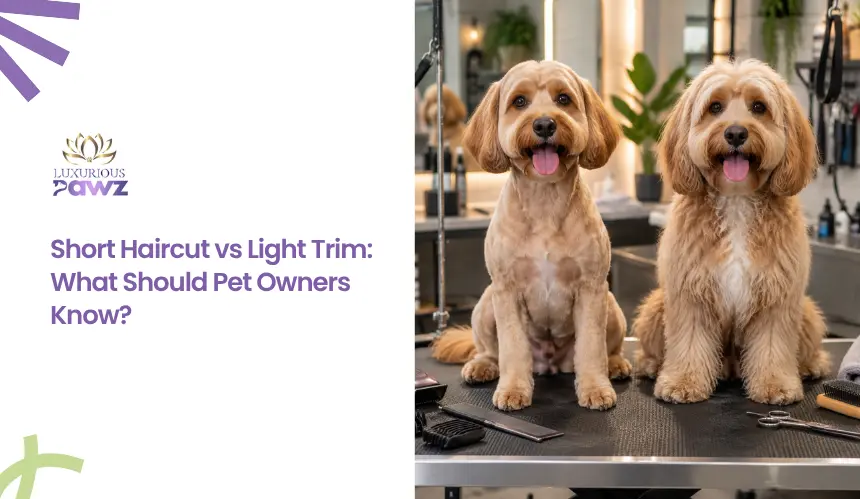
Short Haircut vs Light Trim: What Should Pet Owners Know?
Key Takeaways
|
Keeping your pet’s coat at the right length is not simply a cosmetic decision. Coat length influences temperature regulation, skin condition, mat prevention, hygiene, and the amount of routine maintenance required at home.
In Glendale, CA, where warm weather and outdoor activities are common throughout much of the year, selecting the appropriate grooming service becomes even more important. Understanding how a short haircut differs from a light trim allows pet owners to make decisions based on coat function, breed requirements, and long-term health rather than appearance alone.
Short Haircut vs Light Trim: What's the Difference?
Although these grooming services are often used interchangeably, they achieve different outcomes. A short haircut substantially changes the coat’s length and maintenance requirements, while a light trim preserves the coat’s natural structure by refining only selected areas.
Knowing how each service affects the coat helps owners choose an option that supports their pet’s comfort, skin health, and grooming schedule.
What Is a Short Haircut?
A short haircut involves reducing most of the coat to a uniform length using professional grooming clippers fitted with guide combs or clipper blades selected for the pet’s coat type. Unlike minor trimming, this service reshapes the entire coat and creates a shorter, more manageable finish that remains consistent across the body.
This grooming method is primarily recommended for breeds with continuously growing hair rather than seasonal fur. Breeds such as Poodles, Goldendoodles, Labradoodles, Maltese, Shih Tzus, and Bichon Frises produce hair that remains in the growth phase for longer periods.
It’s because the coat sheds minimally, loose hairs become trapped within surrounding strands, increasing the likelihood of knots and dense mat formation. Routine clipping interrupts this process before mats tighten against the skin.
A short haircut also changes how the coat interacts with the environment. A reduced coat collects less dust, pollen, burrs, leaves, and plant material during walks, making post-walk maintenance easier. For active pets that visit parks, hiking trails, or dog-friendly outdoor spaces around Glendale, shorter coats often require less cleaning after exercise.
Another practical advantage is easier coat inspection. Groomers and owners can identify ticks, fleas, skin irritation, hot spots, cysts, or abnormal growths more quickly when excessive hair does not conceal the skin surface. Early detection allows minor skin concerns to be addressed before they become more serious veterinary issues.
However, a short haircut is not appropriate for every breed. Dogs with double coats, including Golden Retrievers, Siberian Huskies, German Shepherds, and Pomeranians, rely on a layered coat consisting of protective guard hairs and a dense insulating undercoat.
Removing excessive length from these coats may disrupt the coat’s natural growth cycle and reduce its ability to regulate body temperature and protect the skin from ultraviolet exposure. For these breeds, professional de-shedding and selective trimming generally provide better long-term results than aggressive clipping.
Do You Know?
According to the American Kennel Club (AKC), double-coated dogs have two distinct layers that serve different protective functions. The outer guard hairs help protect against moisture, dirt, and environmental exposure, while the undercoat provides insulation by trapping air close to the skin. Because of this structure, removing excessive coat length from certain breeds may interfere with their natural ability to regulate temperature and protect their skin.
What Is a Light Trim?
A light trim focuses on precision rather than overall coat reduction. Instead of shortening the entire coat, the groomer removes only small amounts of excess hair from areas where growth interferes with hygiene, movement, visibility, or the coat’s finished appearance. The objective is to maintain the pet’s natural outline while improving cleanliness and coat manageability.
Most light trims include careful shaping around the face, feet, ears, tail, and sanitary areas. Hair around the eyes is shortened to improve visibility and reduce irritation caused by loose strands contacting the cornea. Excess hair between the paw pads is removed to improve traction on indoor flooring while reducing the amount of dirt and debris carried into the home.
Sanitary trimming around the hindquarters decreases the likelihood of urine or fecal matter becoming trapped in long hair, particularly in breeds with feathered coats. Around the ears, selective trimming may improve airflow without removing the protective coat that helps shield sensitive skin from environmental exposure.
Unlike a short haircut, a light trim maintains the coat’s original density and insulation. This makes it an excellent option for breeds whose coats naturally regulate body temperature or repel moisture.
It also suits owners who prefer a well-maintained appearance without significantly altering the pet’s natural look.
Because only limited hair is removed, a light trim typically extends the period between major grooming appointments while allowing routine brushing to remain effective. It represents a maintenance-focused grooming strategy rather than a complete style change.
Key Differences in Coat Length, Maintenance, and Grooming Goals
While both services involve cutting hair, their purpose, execution, and long-term maintenance requirements differ considerably.
A short haircut alters the entire coat by removing substantial length across the body. The result is a lighter, easier-to-maintain coat that requires less brushing and is less prone to matting. This approach is particularly beneficial for breeds with continuously growing hair that naturally forms tangles as the coat length increases.
A light trim, by contrast, leaves the overall coat intact while refining specific areas that benefit from improved hygiene or shaping. Instead of reducing maintenance by shortening the coat, it enhances the effectiveness of regular brushing by preventing localized overgrowth in high-friction areas.
The choice also influences future grooming schedules. Pets receiving short haircuts generally require appointments based on coat regrowth, while those receiving light trims often follow maintenance schedules that preserve the coat’s natural condition without repeated full-body clipping.
From a functional standpoint, the distinction is straightforward. A short haircut changes the coat’s overall management strategy, whereas a light trim optimizes the existing coat without fundamentally changing its structure.
Selecting between the two depends on breed characteristics, coat biology, lifestyle, and the level of maintenance an owner can realistically provide between professional grooming appointments.
How to Choose the Right Grooming Option for Your Pet
Selecting between a short haircut and a light trim requires more than comparing appearances. A pet’s coat performs essential biological functions, including insulation, protection from ultraviolet radiation, moisture regulation, and defense against environmental contaminants.
The most appropriate grooming service depends on how the coat grows, its structural composition, the pet’s daily environment, and the owner’s ability to maintain it between professional appointments.
Coat Type and Breed Considerations
Coat type is the most important factor when selecting a grooming approach because hair growth pattern, texture, density, and shedding behavior determine how a pet responds to trimming or clipping. Professional groomers evaluate the individual coat structure rather than relying only on breed names.
Key coat considerations include:
- Continuously growing hair coats: Breeds such as Poodles, Maltese, Yorkshire Terriers, Havanese, and Bichon Frises often require regular haircuts because their hair continues growing instead of shedding naturally. Loose hairs can become trapped within the coat, creating friction, knots, and progressive mat formation.
- Preventive haircut needs: For long-growing coats, scheduled haircuts are part of coat health management. Maintaining an appropriate length reduces tangling risk and makes brushing more effective between grooming appointments.
- Double-coated breeds: Dogs such as Golden Retrievers, Australian Shepherds, Siberian Huskies, German Shepherds, and Pomeranians have a protective outer coat and insulating undercoat. Excessive shortening may interfere with the coat’s natural ability to regulate temperature and protect the skin.
- Wire-coated breeds: Many Terriers have a harsh outer coat designed to protect against weather and abrasion. Specialized techniques, such as hand stripping, may preserve coat texture better than routine clipping.
- Individual coat differences: Age, genetics, hormones, health conditions, and lifestyle can influence coat growth and texture. A professional grooming assessment ensures the chosen service matches the pet’s actual coat needs rather than general breed expectations.
Glendale’s unique mix of urban living, hillside neighborhoods, and nearby natural areas can influence how often pets require professional coat management. Dogs that spend time outdoors around locations such as Chevy Chase Canyon, Kenneth Village, and the Adams Hill area may encounter seasonal pollen, dry vegetation, and fine environmental particles that become trapped within dense undercoats.
Professional pet de-Shedding in Glendale, CA helps remove accumulated loose undercoat while supporting healthier coat function, especially for breeds with heavy seasonal shedding patterns such as Golden Retrievers, German Shepherds, Huskies, and other double-coated dogs.
A targeted de-shedding process goes beyond surface brushing by addressing trapped undercoat, improving airflow through the coat, and reducing the amount of loose hair released throughout the home. For Glendale pet owners, a customized de-shedding routine based on coat type, outdoor exposure, and seasonal shedding cycles can help maintain cleaner coats and better skin comfort throughout the year.
Seasonal Weather and Comfort
Many pet owners assume that shorter hair always keeps pets cooler, but the right grooming choice depends on how the coat regulates temperature and protects the skin.
A pet’s coat works as a natural barrier by controlling heat transfer, reducing sun exposure, and managing moisture. The best grooming approach depends on coat type, outdoor activity, and Glendale, CA’s warm, dry conditions.
Key considerations include:
- Double-coated breeds: Their undercoat provides insulation, while guard hairs protect against sunlight and environmental exposure. Excessive clipping may reduce these natural benefits.
- Long or continuously growing coats: Controlled shortening can improve airflow, reduce drying time, and make maintenance easier.
- Moisture control: Proper coat length helps prevent damp areas that may contribute to bacterial or yeast-related skin issues.
- Glendale outdoor exposure: Pets visiting parks, trails, or open areas may collect dust, pollen, grass seeds, and debris that require regular coat care.
- Balanced grooming decisions: The goal is to maintain comfort and hygiene without damaging the coat’s natural protective function.
Lifestyle, Shedding, and Maintenance Needs
An owner’s lifestyle plays a major role in determining the most practical grooming approach. Even a coat that is naturally designed to remain long can develop matting, debris buildup, and skin issues when maintenance does not match the pet’s needs.
The following factors help determine whether a shorter haircut or a light trim is more suitable.
Grooming Factor | How It Affects the Right Choice |
Owner’s daily routine | A pet’s grooming needs should match the amount of brushing and maintenance an owner can realistically provide. Long coats may become difficult to manage without consistent care. |
Outdoor activity level | Pets exposed to burrs, foxtails, dust, mud, tree sap, and pollen may require easier-to-maintain coat lengths to reduce debris buildup and mat formation. |
High-maintenance coat types | Breeds with curly or fast-growing coats may benefit from shorter haircuts to reduce tangles, improve coat inspection, and prevent painful mats. |
Limited brushing time | Shorter coat styles can reduce daily maintenance demands for households that cannot commit to frequent brushing sessions. |
Regular home grooming routine | Owners who consistently brush their pets may prefer a light trim that maintains natural coat length while preventing localized tangles. |
Coat growth cycle | Grooming schedules should follow biological growth patterns. Fast-growing coats often need appointments every 6–8 weeks, while double-coated breeds may benefit from seasonal de-shedding. |
Long-term coat health | Matching grooming frequency and style to the individual pet helps maintain healthy skin, efficient coat function, and year-round comfort. |
Choosing the right grooming schedule is not only about appearance. It is about creating a maintenance routine that supports the pet’s coat structure, lifestyle, and overall comfort.
By considering activity level, coat behavior, and available home care, owners can avoid preventable grooming problems while keeping their pets healthier between professional appointments.
Benefits, Considerations, and Grooming Tips Of Pets
The effectiveness of a grooming style is measured by how well it preserves the coat’s biological function while reducing preventable skin and maintenance issues. A short haircut and a light trim each offer distinct advantages, but their value depends on selecting the option that aligns with the pet’s coat architecture rather than personal preference.
Understanding their long-term implications allows owners to support healthy coat growth, improve grooming efficiency, and reduce the likelihood of avoidable dermatological problems.
Benefits of a Short Haircut
For breeds with continuously growing coats, a short haircut works as a preventive grooming strategy rather than only a cosmetic change. Reducing coat length helps control common problems associated with trapped hair, moisture buildup, and difficult maintenance.
Key benefits include:
- Reduced mat formation: Shorter coats interrupt the cycle where loose hairs become trapped within surrounding strands and compress into dense mats.
- Improved skin comfort: Severe mats can pull on the skin, restrict airflow, trap moisture, and create pressure that may lead to irritation or inflammation.
- Better outdoor hygiene: Shorter coats collect fewer environmental contaminants such as dust, pollen, burrs, foxtails, tree sap, and plant debris during outdoor activities.
- Easier coat inspection: A reduced coat length allows owners and groomers to identify hidden debris, skin irritation, parasites, or abnormal changes more quickly.
- Faster drying after bathing: Shorter hair improves airflow and reduces moisture retention near the skin, lowering conditions that encourage bacterial or yeast overgrowth.
- Improved veterinary visibility: A manageable coat allows easier detection of concerns such as hot spots, cysts, pigmentation changes, or external parasites during routine checks.
A properly selected short haircut supports easier maintenance while helping protect coat health, skin condition, and overall comfort for suitable breeds.
Benefits of a Light Trim
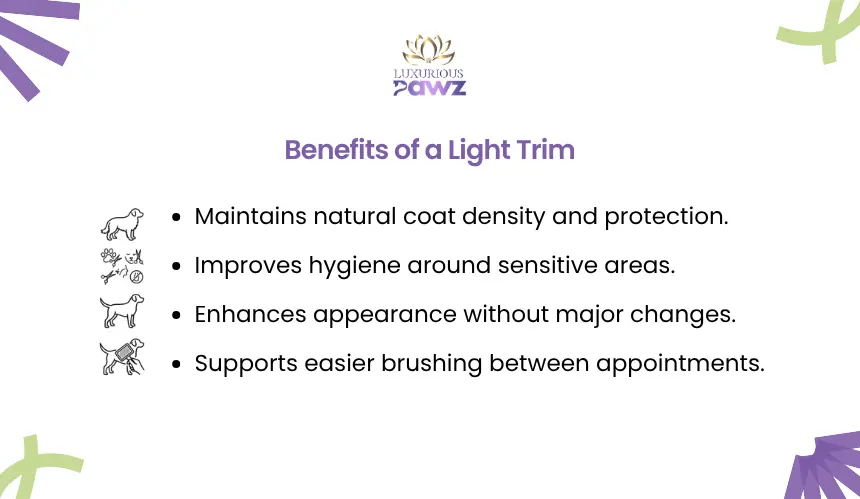
A light trim provides targeted coat maintenance by removing excess hair only where it affects hygiene, comfort, or daily function. Instead of changing the entire coat structure, it preserves the pet’s natural appearance and protective features.
Key benefits include:
- Improved eye comfort: Trimming excess hair around the eyes reduces visual
obstruction and minimizes irritation caused by loose strands contacting sensitive areas. - Better paw hygiene and traction: Removing overgrown hair around paw pads helps improve stability on smooth surfaces while reducing the buildup of mud, gravel, and outdoor debris.
- Cleaner sanitary areas: Selective trimming around sensitive areas reduces the retention of urine, fecal matter, and moisture, helping maintain healthier skin conditions.
- Balanced ear maintenance: Careful trimming around the ears can improve cleanliness and airflow without removing protective hair that helps shield the ear area.
- Preserved coat function: Unlike a short haircut, a light trim maintains the coat’s natural density, insulation, and weather-resistant qualities.
- Breed-appropriate grooming: It is ideal for owners who want a neat appearance while respecting the natural structure and requirements of their pet’s coat.
A light trim is best suited for pets that need improved cleanliness and manageability without significantly changing their overall coat length.
Coat Care and Grooming Maintenance After the Appointment
Professional grooming provides the foundation for coat health, but long-term results depend on consistent maintenance between appointments. The appropriate care routine should be determined by coat biology rather than a universal schedule, as different coat types grow, shed, and retain moisture in fundamentally different ways.
Brushing should remove loose undercoat and separate individual hair shafts instead of merely smoothing the surface. Hidden tangles typically develop in areas exposed to repeated friction, including behind the ears, beneath the collar, within the armpits, around the groin, and underneath the tail. Addressing these locations during routine grooming prevents localized mats from tightening against the skin.
Bathing frequency should reflect coat condition, environmental exposure, and activity level. Pets that frequently visit parks, hiking trails, or open spaces around Glendale, CA may require more frequent cleansing to remove pollen, dust, and environmental debris.
However, excessive bathing without appropriate moisturizing products may strip the skin of protective lipids, weakening the skin barrier and increasing susceptibility to dryness or irritation. Professional-grade shampoos formulated for specific coat types help maintain the balance between cleanliness and skin health.
Drying is equally important. Residual moisture trapped within dense coats creates an environment favorable for microbial growth and can compromise skin integrity over time. Thorough drying using appropriate grooming equipment reduces this risk while maintaining coat texture.
Regular grooming appointments should be scheduled according to coat growth rate instead of fixed calendar intervals. Hair-coated breeds often require maintenance every six to eight weeks to prevent excessive overgrowth, whereas double-coated breeds typically benefit from seasonal de-shedding services that correspond with their natural coat cycle. Tailoring the grooming schedule to the individual pet helps preserve coat quality while minimizing unnecessary trimming.
Glendale’s warm, dry climate and access to outdoor areas create unique grooming needs for pets, especially those exposed to dust, pollen, grass debris, and seasonal allergens during daily walks or outdoor activities.
Choosing professional dog grooming in Glendale, CA helps pet owners receive care that is adapted to local conditions, coat types, and lifestyle factors rather than relying on generic grooming routines.
Dogs exploring areas near Brand Park, the Verdugo Mountains, Montrose, and La Crescenta may require specialized coat maintenance, including de-shedding, breed-specific haircuts, and preventive mat management to keep their skin and coat healthy throughout the year.
For pet owners across the greater Los Angeles area, maintaining a healthy coat requires grooming services that consider breed characteristics, seasonal changes, outdoor exposure, and each pet’s individual needs.
Luxurious Pawz provides professional grooming solutions focused on coat health, hygiene, and comfort, offering customized care for pets that need everything from routine maintenance to specialized grooming treatments. A personalized grooming approach helps keep pets cleaner, more comfortable, and better prepared for the environmental conditions of the region.
Frequently Asked Questions
Is a Short Haircut Better Than a Light Trim?
Neither option is universally better because each grooming style serves a different purpose. A short haircut is generally more suitable for pets with continuously growing coats that develop mats easily, while a light trim is better for maintaining the existing coat length and improving cleanliness. The right choice depends on your pet’s breed, coat structure, skin condition, activity level, and home maintenance routine.
Does a Short Haircut Help Keep Pets Cooler?
A short haircut may improve comfort for certain breeds by reducing coat volume and making the hair easier to maintain, especially during warm weather in Glendale, CA. However, removing too much coat from double-coated breeds can interfere with their natural temperature regulation and protection from sunlight. Grooming decisions should be based on coat type rather than temperature alone.
How Often Should My Pet Get a Short Haircut or Light Trim?
The ideal grooming frequency depends on how quickly your pet’s coat grows and how easily it develops tangles. Breeds with continuously growing hair often require professional haircuts every six to eight weeks, while pets receiving light trims may need appointments less frequently. A grooming schedule should be adjusted based on coat condition, lifestyle, and seasonal changes.
Which Dog Breeds Usually Need Regular Haircuts?
Dogs with continuously growing hair commonly require routine haircuts to prevent excessive length and mat formation. Breeds such as Poodles, Goldendoodles, Labradoodles, Maltese, Shih Tzus, Bichon Frises, Havanese, and Yorkshire Terriers often benefit from scheduled grooming because their coats continue growing instead of naturally shedding in the same way as many other breeds.
Can a Light Trim Reduce Shedding?
A light trim does not significantly reduce shedding because shedding occurs through the natural release of old hair from the coat cycle. Removing small amounts of hair improves appearance and hygiene but does not change how much a pet naturally sheds. For shedding control, brushing, de-shedding treatments, and proper coat maintenance are more effective solutions.
How Do I Know Which Grooming Service Is Right for My Pet?
The best grooming choice depends on several factors, including coat type, breed characteristics, skin health, lifestyle, outdoor exposure, and the amount of brushing possible at home. A professional groomer can assess the coat’s condition and recommend whether a short haircut or light trim will provide better long-term results for your pet’s comfort and maintenance needs.