
- Luxurious Pawz
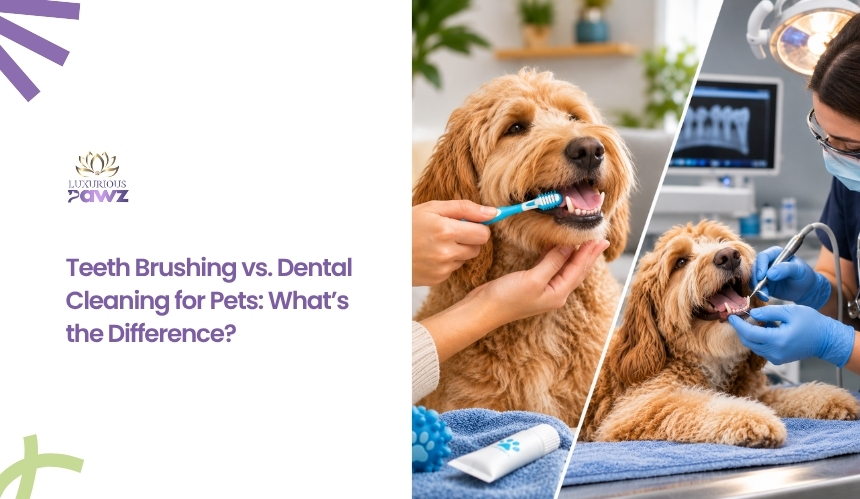
Teeth Brushing vs. Dental Cleaning for Pets: What’s the Difference?
Key Takeaways
|
Teeth brushing and professional dental cleaning both support pet oral health, but they serve different purposes. Brushing is primarily a preventive routine that helps manage plaque between veterinary visits, while professional dental cleaning provides a more thorough examination and cleaning when additional care is needed. Understanding what each approach can and cannot do can help pet owners build a more consistent oral-care routine for their dogs and cats.
Teeth Brushing for Everyday Pet Dental Care
Regular teeth brushing is one of the simplest ways to support a pet’s oral hygiene at home. When performed consistently, brushing can help remove plaque from accessible tooth surfaces before it becomes more firmly established. For pet owners in Pasadena, CA, making oral care part of a pet’s regular routine can be especially useful alongside other aspects of grooming and general wellness. A consistent routine also gives owners an opportunity to become familiar with their pet’s normal teeth, gums, breath, and eating habits.
What Pet Teeth Brushing Can Help With
Brushing primarily helps remove soft plaque from the surfaces of the teeth that can be reached safely. With regular care, it can contribute to cleaner teeth, fresher breath, and better day-to-day oral hygiene. It can also help prevent plaque from remaining undisturbed for long periods. The longer plaque stays on the teeth, the more likely it is to become hardened and difficult to remove through ordinary brushing alone.
Why Consistency Matters More Than Occasional Brushing
Occasional brushing may provide some benefit, but a consistent routine is more useful for managing plaque over time. Dental care works best when it becomes a familiar part of a pet’s normal grooming routine rather than something done only when visible buildup appears. Starting gradually can also make brushing easier for pets that are not accustomed to having their mouths handled. Short, calm sessions can help a pet become more comfortable with the process.
Helping Pets Become Comfortable With Oral Care
Some pets may initially resist having their teeth or gums touched. Introducing oral care gradually can make the experience more manageable. Owners can begin by allowing the pet to become comfortable with gentle handling around the mouth before progressing to brushing. Patience is important because forcing the process can make future brushing more difficult. A calm routine allows the pet to gradually associate mouth handling with an ordinary part of grooming.
Why Brushing Cannot Replace Professional Cleaning
Although brushing is valuable preventive care, it has limitations. It cannot effectively remove hardened tartar once it has formed, and it cannot provide the detailed examination needed to assess areas beneath the gumline. Professional veterinary care becomes particularly important when there is significant buildup, persistent bad breath, changes in eating habits, gum abnormalities, or other signs that require closer assessment.
Plaque and Tartar Are Not the Same
Plaque is a soft bacterial film that can accumulate on the teeth and may be reduced through regular brushing. Tartar, also called calculus, is hardened buildup that develops when plaque mineralizes. Once calculus has firmly formed, ordinary brushing is not an effective way to remove it. Attempting to scrape hardened deposits at home can also risk damaging the tooth or gums.
The Importance of Areas Beneath the Gumline
The visible part of a tooth represents only part of the overall dental structure. Important tissues and tooth surfaces extend beneath the gumline and cannot be properly evaluated through ordinary home brushing.
Do You Know?
The American Animal Hospital Association notes that more than half of a pet’s tooth structure is located below the gumline, meaning important dental structures cannot be assessed simply by examining the visible portion of the teeth.
Professional Dental Cleaning for More Thorough Oral Care
Professional dental cleaning provides a more comprehensive approach to maintaining a pet’s oral health. Unlike routine brushing, veterinary dental care can involve examining the teeth and gums, identifying areas of concern, and cleaning surfaces that are difficult or impossible to reach through ordinary home care.
The purpose is not simply to make the visible teeth look cleaner. A professional examination allows the veterinary team to assess the overall condition of the mouth and determine whether additional treatment or diagnostic testing is necessary.
What Happens During a Professional Dental Cleaning
A professional dental cleaning may involve a detailed examination of the teeth and gums, removal of plaque and hardened calculus, cleaning above and below the gumline, and polishing of the tooth surfaces. Dental X-rays may also be used to evaluate structures that cannot be seen during a routine examination. Veterinary dental procedures are generally performed under anesthesia so the veterinary team can conduct a thorough and controlled assessment and cleaning.
Why Dental X-Rays May Be Important
Some dental problems cannot be identified simply by looking at the visible surface of a tooth. X-rays can help veterinary professionals evaluate areas below the gumline and assess structures that are otherwise hidden. This is one of the major differences between professional dental care and routine brushing. Home brushing focuses on maintaining accessible surfaces, while veterinary assessment can investigate areas that cannot be reached or observed during normal grooming.
Cleaning Above and Below the Gumline
Professional cleaning can address areas around the teeth that are difficult to maintain through ordinary brushing. Cleaning beneath the gumline is particularly important because bacteria and accumulated material can remain in spaces that are not visible to a pet owner. This deeper level of cleaning requires.appropriate veterinary equipment and professional assessment rather than ordinary household dental tools.
Changes in Breath
Persistent or unusually strong bad breath can be a reason to have a pet’s mouth evaluated. While occasional odor may occur, a lasting change can sometimes accompany plaque, tartar, gum problems, or other dental concerns.
Visible Tartar or Dental Buildup
Yellow, brown, or otherwise noticeable hardened deposits on the teeth may indicate calculus that cannot be removed effectively through ordinary brushing.
Changes in Eating or Chewing
A pet that suddenly becomes reluctant to chew, drops food, chews differently, or shows discomfort while eating may need a veterinary assessment. Changes in eating behavior should not automatically be attributed to dental problems, but they can be worth discussing with a veterinarian.
Changes Around the Gums
Redness, swelling, bleeding, unusual sensitivity, or other noticeable changes around the gums can warrant professional attention. Owners should avoid trying to diagnose the cause themselves and should seek veterinary guidance when changes appear.
Home Brushing and Professional Cleaning Work Together
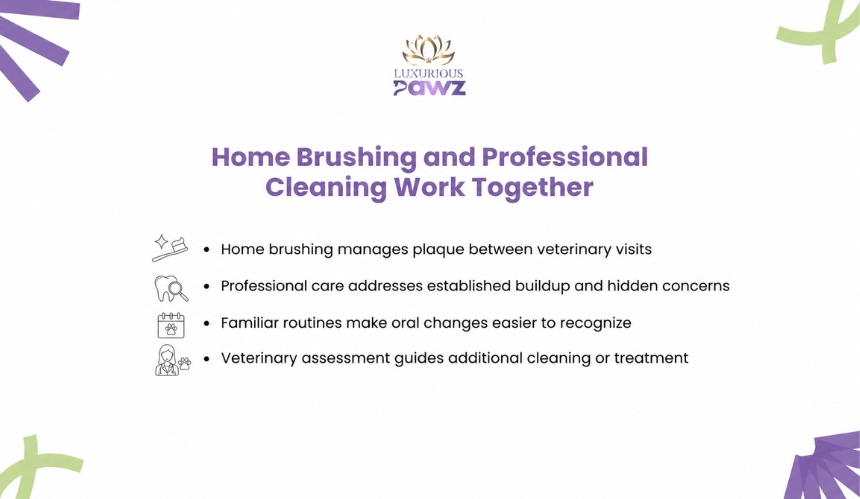
Home brushing and professional dental cleaning are complementary parts of a pet’s oral-care routine rather than competing alternatives. Brushing focuses on regular maintenance by helping control plaque on accessible tooth surfaces, while professional dental care allows a veterinary team to examine the mouth more thoroughly and address established buildup or concerns that cannot be managed effectively at home.
Keeping both approaches in mind gives pet owners a more complete way to support ongoing oral hygiene. Regular home care can help maintain the teeth between veterinary visits, while professional assessment provides an opportunity to identify changes and determine when additional dental care may be appropriate.
Brushing as Preventive Maintenance
Home brushing helps manage plaque between professional dental evaluations and supports a consistent oral-hygiene routine. Its main value comes from regular maintenance, as brushing can remove soft plaque from accessible tooth surfaces before it becomes more established. It can also help pet owners become familiar with their pet’s normal teeth, gums, and breath, making noticeable changes easier to recognize.
However, brushing is not intended to correct established dental disease or remove hardened tartar. When significant buildup or other dental concerns are present, professional veterinary assessment may be necessary to determine the appropriate level of care.
Professional Care as a Deeper Assessment
Professional dental cleaning allows veterinary professionals to examine the mouth more comprehensively and address hardened buildup or concerns that cannot be managed through ordinary brushing. It can include a closer evaluation of the teeth and gums, removal of accumulated calculus, and cleaning of areas that are difficult to reach through home care.
This type of professional attention can also help identify dental changes that may not be visible during everyday brushing, allowing a veterinarian to determine whether additional care or treatment is appropriate.
Why Both Can Have a Place in a Dental Routine
A pet may benefit from consistent home oral care while still requiring professional veterinary examinations and cleanings when appropriate. Brushing should therefore be viewed as one part of ongoing dental care rather than a replacement for veterinary assessment.
How to Build a Practical Pet Dental-Care Routine
Creating a manageable routine can make oral care easier to maintain over the long term. Rather than treating dental care as an occasional task, pet owners can incorporate appropriate oral hygiene into their pet’s regular grooming and wellness routine. Consistency helps make brushing more familiar to the pet and allows owners to monitor changes in the teeth, gums, breath, or eating habits over time.
MA practical routine can also make it easier to keep up with professional veterinary evaluations when they are recommended. The specific approach and frequency should be adjusted according to the pet’s individual needs, age, oral-health history, and veterinary guidance.
Make Brushing Part of Regular Grooming
Brushing can be incorporated into an established grooming routine so it becomes a familiar activity rather than an occasional task. Keeping sessions calm and consistent may help pets become more comfortable with regular oral care.
Monitor Changes Between Professional Visits
Regular home care also gives owners opportunities to notice changes in their pet’s mouth. Becoming familiar with what looks normal for an individual pet can make it easier to recognize when something appears different.
Know When Home Care Is Not Enough
If substantial tartar has already developed or a pet shows signs of discomfort or other oral-health changes, continuing to brush without professional assessment may not address the underlying issue. Veterinary evaluation can determine what level of care is appropriate.
Choosing Between Teeth Brushing and Professional Dental Cleaning
The choice is not necessarily one or the other. Teeth brushing is generally associated with ongoing plaque management and everyday oral hygiene, while professional dental cleaning is intended for a more comprehensive examination and removal of buildup that cannot be adequately addressed at home.
When Brushing Is the Focus
For routine maintenance, brushing can help keep accessible tooth surfaces cleaner and support an ongoing oral-hygiene habit. Regular brushing helps remove soft plaque before it has more opportunity to accumulate and harden on the teeth. It can also help pets become familiar with routine mouth handling while allowing owners to observe their teeth and gums more regularly. However, brushing is primarily a preventive measure and works best as part of a broader dental-care routine rather than as a substitute for professional veterinary assessment when concerns arise.
When Professional Evaluation Becomes Important
Professional assessment becomes more relevant when there is established tartar, persistent changes in breath, gum abnormalities, difficulty eating, or other signs of a possible dental concern. These changes may indicate that routine brushing alone is not enough to address what is happening in the mouth. A veterinary examination can provide a closer assessment of the teeth and gums and help determine whether professional cleaning or additional dental care is appropriate. Seeking guidance when noticeable changes occur can also help pet owners avoid relying solely on home care when a more thorough evaluation may be needed..
Keeping Preventive Care and Veterinary Care Connected
The most practical approach is to treat home brushing and professional veterinary care as complementary. Consistent brushing can help with daily maintenance, while veterinary examinations and professional cleanings provide the deeper assessment that home care cannot provide.
Keeping Pet Dental Care Consistent Over Time
Good oral care is an ongoing process rather than a one-time task. Regular brushing can help manage plaque between professional visits, while veterinary examinations can identify concerns that are not visible during everyday grooming.
For Pasadena pet owners, incorporating dental care into an established grooming and wellness routine can make it easier to monitor changes and maintain consistent habits.
The appropriate frequency of professional dental care depends on the individual pet, including factors such as age, existing dental condition, oral-health history, and veterinary recommendations.
Frequently Asked Questions
Is brushing a pet’s teeth the same as professional dental cleaning?
No. Brushing is an at-home preventive routine that helps control plaque, while professional dental cleaning involves a veterinary examination and thorough removal of plaque and tartar from areas that routine brushing cannot adequately reach.
Can brushing remove tartar from a pet’s teeth?
Brushing can help prevent plaque from accumulating and hardening, but it generally cannot remove established tartar. Once tartar has formed, professional veterinary cleaning may be necessary to restore the teeth and address underlying oral-health concerns.
How often should a pet receive professional dental cleaning?
There is no universal schedule for every pet. Dental-cleaning frequency depends on factors such as age, breed, existing dental disease, plaque buildup, and overall oral health. Your veterinarian can recommend an appropriate schedule based on your pet’s needs.
Should I brush my pet’s teeth after professional cleaning?
Yes. Professional cleaning does not prevent new plaque from forming. Regular brushing at home helps control plaque between veterinary visits and supports ongoing oral hygiene. Your veterinarian can also recommend suitable brushing techniques and pet-safe dental products.