
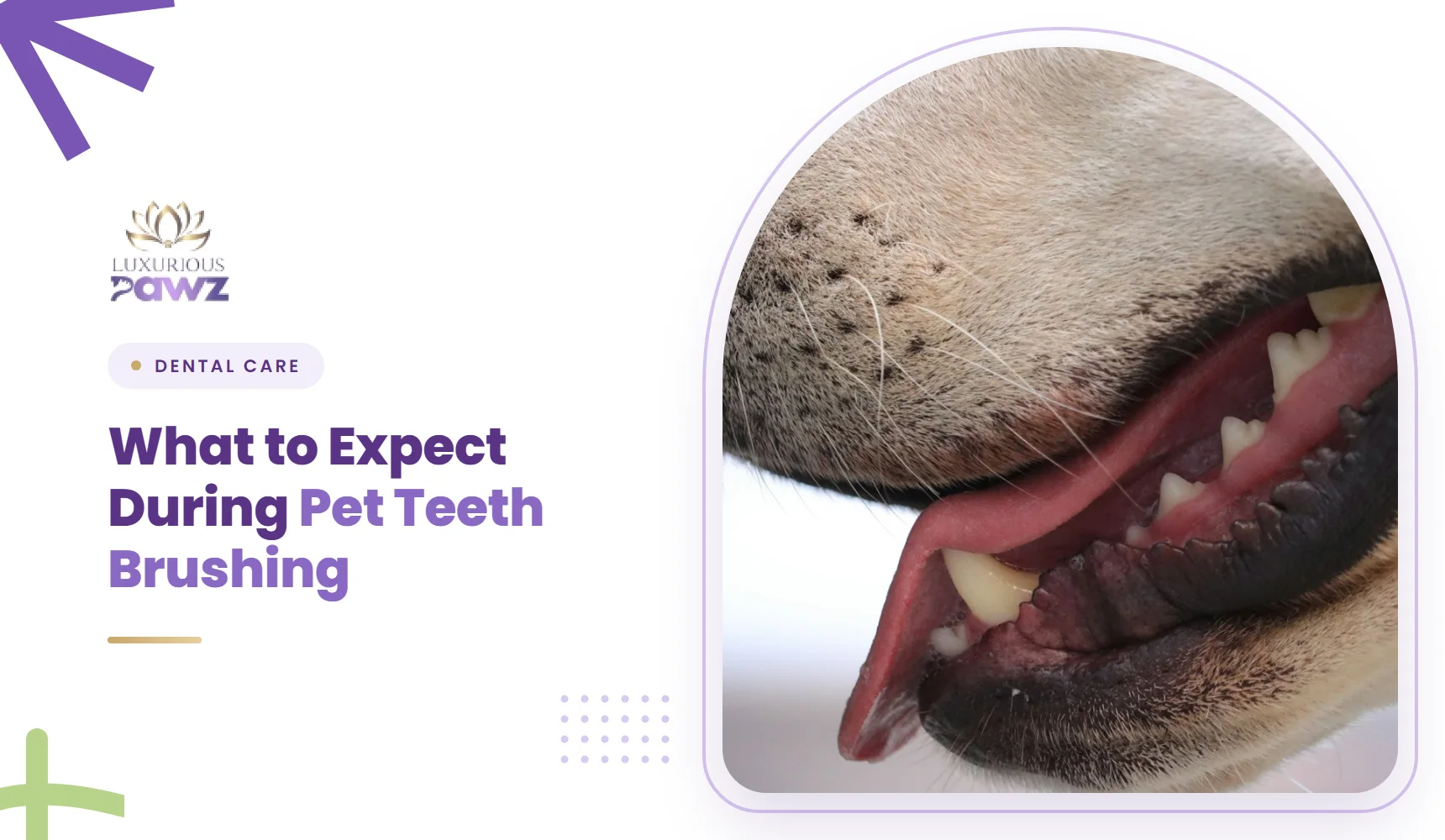
What to Expect During Pet Teeth Brushing
- Luxurious Pawz
What should you expect when your pet’s teeth are brushed for the first time? The process is usually much gentler and more controlled than many pet owners assume, but technique matters because brushing irritated gums can cause pain and make pets resist future dental care. For pet owners in Lakewood, CA, understanding what happens before, during, and after brushing can make dental care more predictable and help identify when routine brushing is no longer enough.
Key Takeaways
Pet teeth brushing should begin with gentle handling to build comfort and cooperation.
Use a pet-safe toothbrush and toothpaste, never human toothpaste.
Brushing focuses on disrupting plaque along the teeth and gumline.
Established tartar cannot be removed through routine brushing alone.
Regular brushing supports ongoing oral hygiene, while signs of dental disease require veterinary evaluation.
What Happens Before a Pet Teeth-Brushing Session?
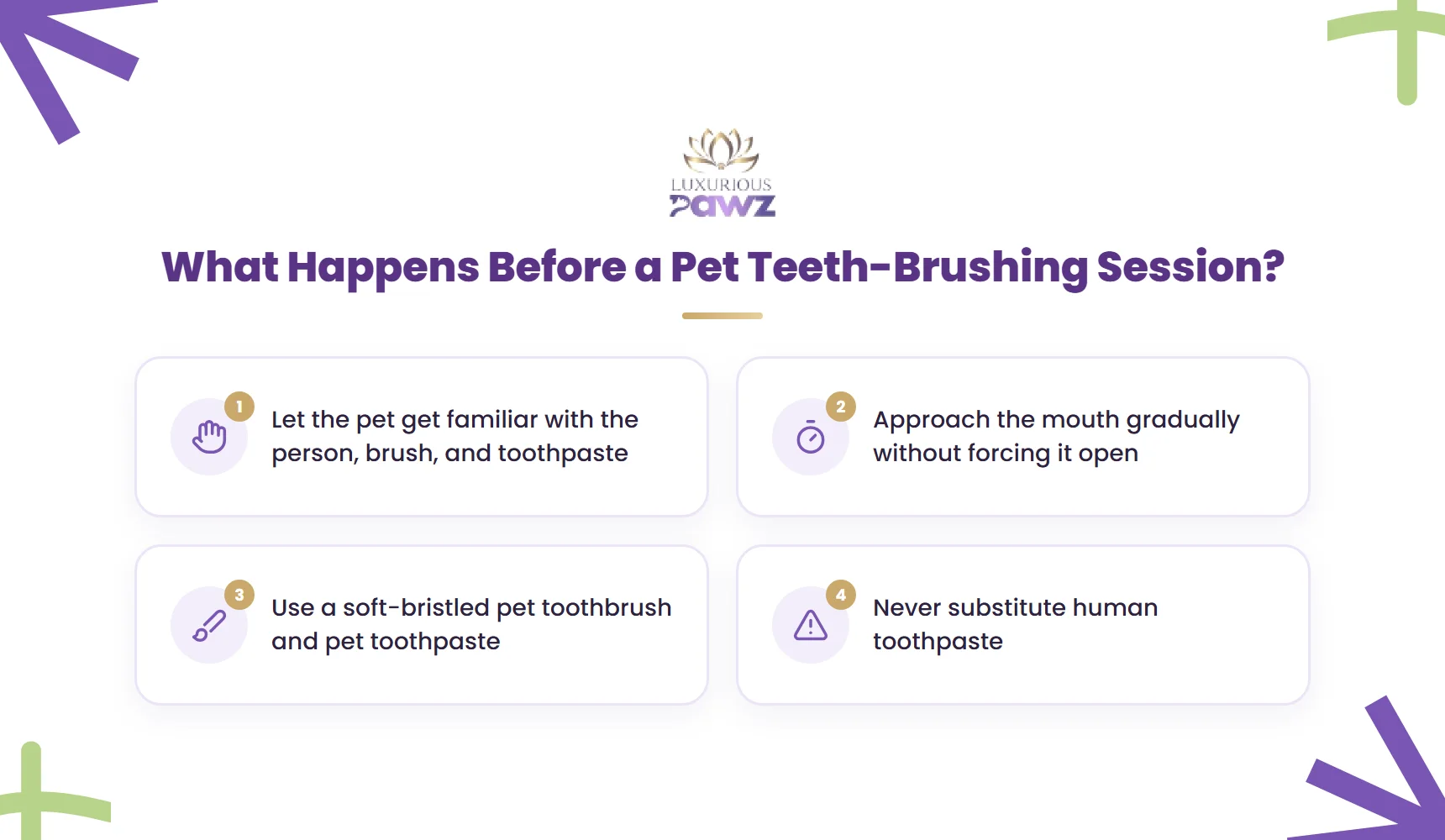
Before brushing begins, the goal is to make the pet comfortable enough for someone to safely work around the mouth. A proper session should begin with observation rather than immediately placing a toothbrush against the teeth.
How Is a Pet Prepared for Teeth Brushing?
A pet may first be allowed to become familiar with the person, toothbrush, and pet-safe toothpaste. The mouth can then be approached gradually, particularly if the animal has never had its teeth brushed before.
The pet’s response matters because forcing the mouth open or continuing through obvious resistance can create a negative association with dental care. Veterinary dental guidance also cautions that brushing already inflamed gums can cause pain and contribute to future aversion to brushing.
For a Lakewood dog or cat that is new to tooth brushing, preparation may therefore involve short periods of contact with the lips, gums, and teeth before attempting a complete brushing session. The objective is not simply to get the teeth clean once. It is to establish a routine that the pet can tolerate consistently.
What Dental Products Are Used?
Pet teeth should be brushed with products designed specifically for animals. A soft-bristled pet toothbrush and veterinary toothpaste are commonly used. Human toothpaste should not be substituted because pets swallow toothpaste rather than reliably spitting it out.
Cornell University College of Veterinary Medicine notes that human toothpaste is not recommended for dogs because it contains ingredients such as detergents and fluoride that are intended for people who rinse and spit after brushing.
The toothpaste itself is also not the main mechanism responsible for plaque removal. The physical action of the bristles against the tooth surface is what disrupts plaque. Veterinary guidance describes brushing as a mechanical plaque-control method, which is why technique and consistency matter more than simply applying toothpaste to the teeth.
What Happens During Pet Teeth Brushing?
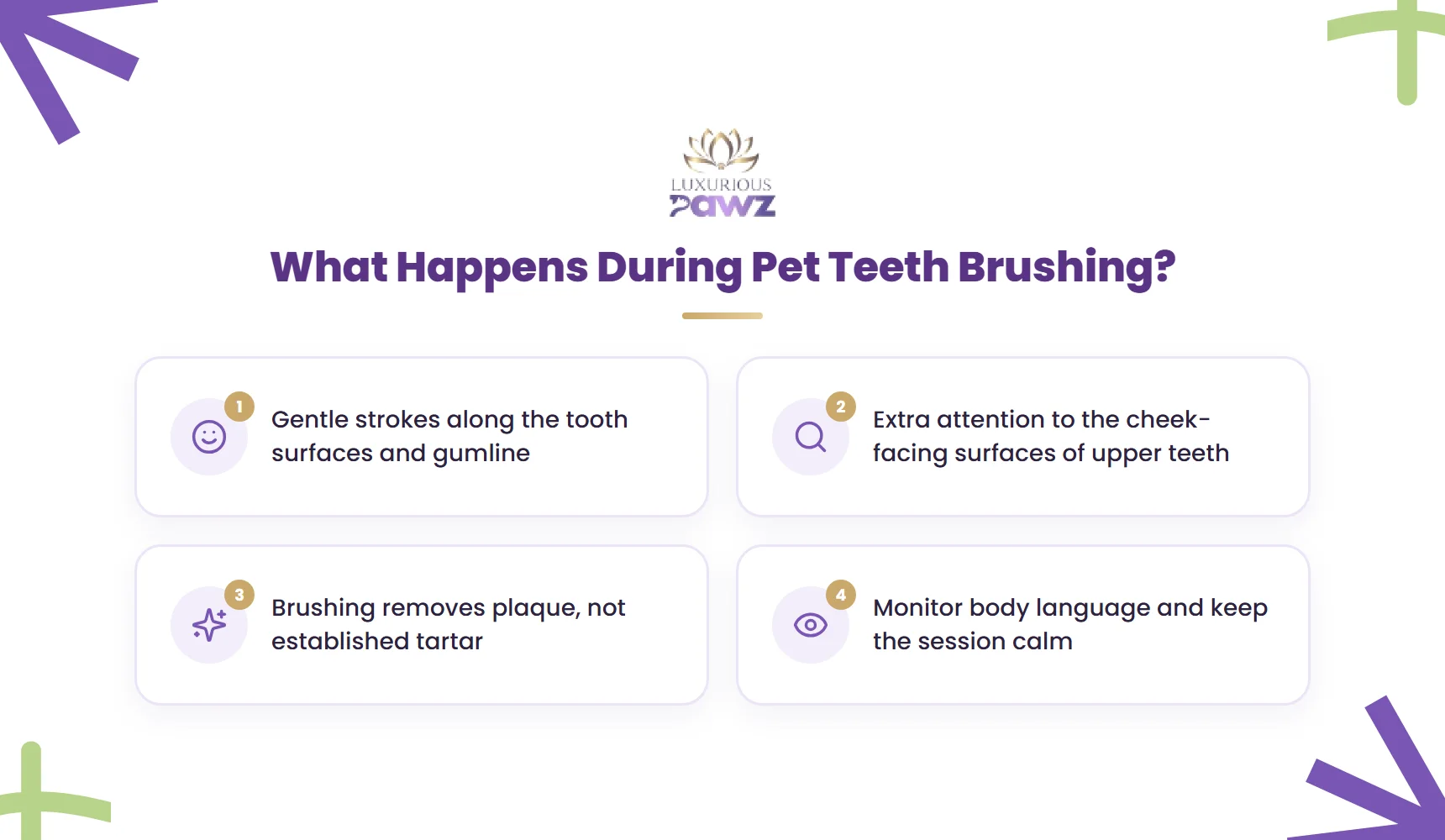
Once the pet is comfortable, brushing focuses on mechanically disrupting plaque on the tooth surfaces, particularly in areas where plaque and calculus accumulate readily. The process should be controlled rather than forceful.
In Sunland, CA, warm, dry weather can contribute to increased water loss, making access to fresh drinking water particularly important for pets. For dogs in Shadow Hills and Sunland-Tujunga, regular pet teeth brushing can be incorporated into their routine oral-care schedule to mechanically remove plaque before it mineralizes into tartar.
How Are the Teeth and Gumline Brushed?
The toothbrush is directed along the tooth surfaces and near the gumline using gentle strokes. Particular attention should be given to the cheek-facing surfaces of the upper teeth because the Veterinary Oral Health Council identifies these areas as locations where plaque and tartar accumulate most rapidly in dogs and cats.
Ideally, all tooth surfaces are addressed over time, including the inner surfaces when practical. However, a pet that cannot tolerate a complete brushing sequence may still benefit from consistent brushing of accessible areas. VOHC notes that any regular brushing activity is better than none when a pet cannot cooperate with the full sequence.
For a Lakewood pet, this distinction is useful because owners do not necessarily need to interpret an imperfect first session as a failed session. Building tolerance while consistently targeting plaque-prone areas can be more realistic than attempting a lengthy brushing routine immediately.
Brushing removes plaque, not established calculus or tartar. Once plaque mineralizes into calculus, ordinary brushing cannot simply brush it away. AAHA specifically advises owners that brushing removes plaque but does not remove calculus.
How Is the Session Kept Calm and Gentle?
The brushing motion should remain controlled and gentle, particularly around the gumline. The pet’s body language should be monitored throughout the session.
If the animal repeatedly pulls away, snaps, vocalizes, or shows significant discomfort, continuing to force the toothbrush into the mouth can undermine future cooperation. A gradual approach is more appropriate for pets that are still learning to tolerate oral handling.
The condition of the gums also changes what brushing is appropriate. Inflamed or painful gums can make brushing uncomfortable, so persistent redness, bleeding, swelling, strong odor, excessive drooling, or difficulty eating warrants veterinary assessment rather than simply increasing brushing pressure. AAHA identifies these signs among indicators associated with dental disease.
Plaque can begin accumulating only hours after a pet eats. The American Animal Hospital Association therefore explains that an occasional dental cleaning does not replace ongoing home plaque control. Daily brushing is recommended as the most effective at-home method for reducing plaque accumulation.
What to Expect After the Brushing Session?
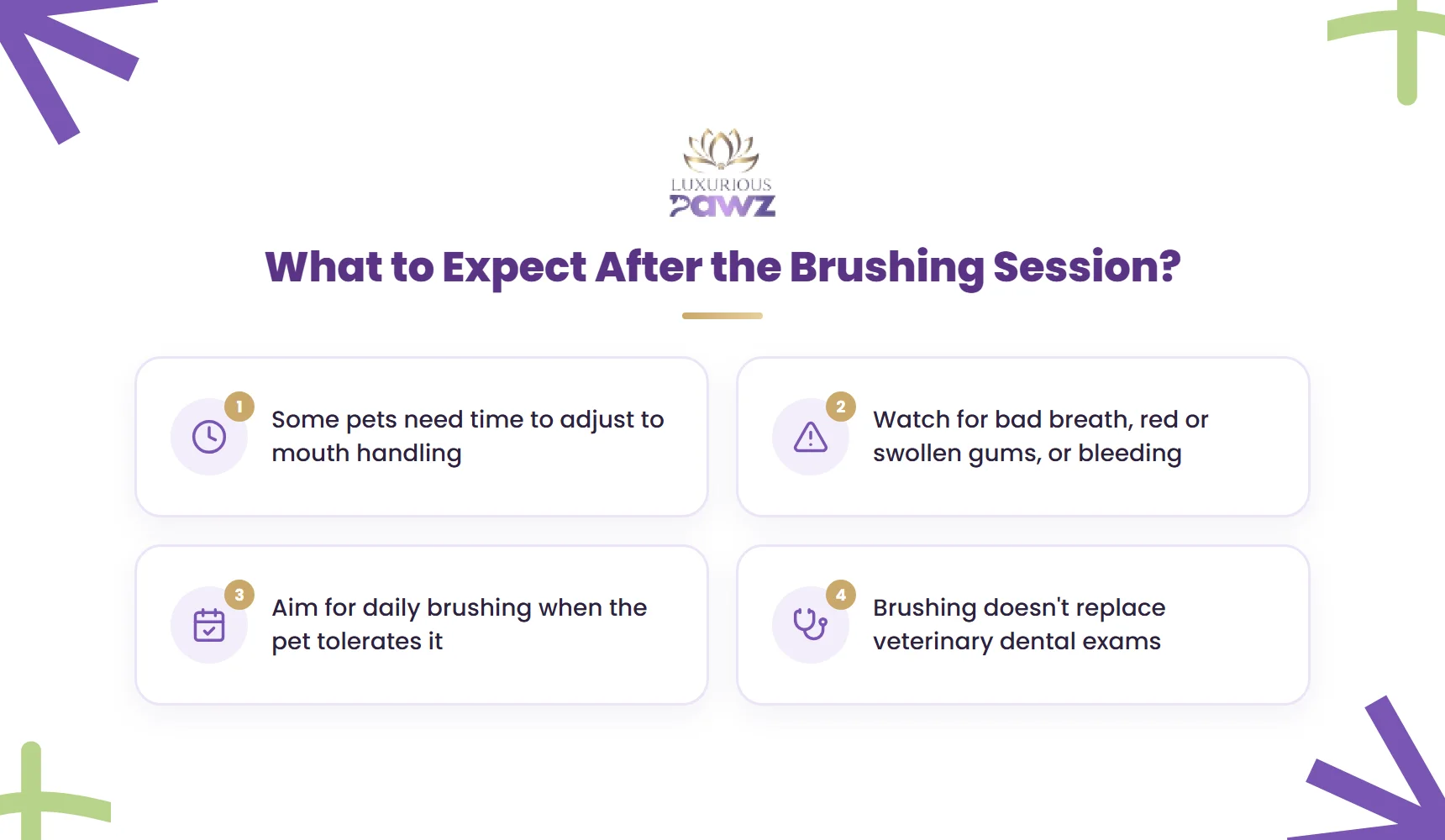
After brushing, the main objective is to maintain the plaque-control routine without confusing routine home brushing with treatment for established dental disease. What happens next depends partly on the pet’s oral condition and how well it tolerates ongoing care.
In Sunland, CA, hot, dry weather and seasonal Santa Ana winds can leave dogs exposed to dry air and airborne debris. For dogs around La Tuna Canyon and Verdugo Hills, regular dog grooming can help manage debris in the coat and keep longer or denser fur more comfortable during warmer periods, especially after outdoor activity.
How Might a Pet Act Afterward?
A pet that is unfamiliar with brushing may need time to adjust to the sensation around its mouth. Some animals may immediately return to normal behavior, while others may remain hesitant about having their mouth handled.
A difficult response does not necessarily mean the pet cannot receive dental care. It may indicate that the process needs to be shortened or introduced more gradually. Repeated calm exposure can be more useful than trying to complete a long session at once.
Owners should also distinguish temporary resistance from signs of oral pain. Persistent bad breath, red or swollen gums, bleeding, facial swelling, dropped food, excessive drooling, or changes in eating behavior can indicate dental disease and should be evaluated by a veterinarian.
How Should Dental Care Continue Between Sessions?
For a healthy mouth, brushing works best as a consistent routine rather than an occasional grooming add-on. VOHC and veterinary dental guidance recommend daily brushing when the pet can tolerate it.
Other dental products can complement brushing, including certain dental diets, chews, and water additives. Products carrying the Veterinary Oral Health Council (VOHC) Seal have undergone evaluation for specific plaque or tartar-control claims, making the seal a useful reference when selecting dental products.
However, home brushing does not replace veterinary dental examinations. A toothbrush cannot evaluate structures beneath the gumline, take dental radiographs, or remove established calculus. AAHA explains that a complete veterinary dental assessment may require periodontal probing, radiographs, scaling, and treatment depending on disease severity.
For pet owners in Lakewood, CA, this distinction is especially useful when deciding whether a pet simply needs continued home plaque control or needs a veterinary dental evaluation. Brushing is preventive maintenance. It is not a substitute for treating established periodontal disease.
Looking for convenient grooming care for your pet? Luxurious Pawz provides Pet Teeth Brushing and Dog Grooming throughout Greater LA, helping keep pets clean, comfortable, and well cared for.
Frequently Asked Questions
How often should I brush my pet's teeth?
Daily brushing is generally recommended for dogs and cats when they can tolerate it. Regular brushing disrupts plaque before it mineralizes into calculus and is considered the most effective at-home method of maintaining oral hygiene.
Can I use human toothpaste to brush my pet's teeth?
No. Use toothpaste formulated for pets. Animals swallow toothpaste rather than reliably rinsing and spitting, so human toothpaste can expose them to ingredients that are not intended for ingestion.
Does brushing remove tartar from a pet's teeth?
No. Brushing mechanically removes plaque, but established calculus or tartar requires professional dental treatment. Increasing brushing pressure will not safely substitute for calculus removal.
What if my pet refuses to let me brush its teeth?
Start with short, gradual sessions that allow the pet to become comfortable with mouth handling. If resistance is severe or appears related to pain, have the pet’s mouth evaluated by a veterinarian before continuing.
Should my pet's gums bleed during brushing?
Bleeding should not be treated as a normal reason to brush harder. Red, swollen, painful, or bleeding gums can indicate gingivitis or periodontal disease and warrant veterinary assessment.
Can regular brushing replace professional dental cleanings?
No. Brushing helps control plaque at home, but it cannot examine or treat disease beneath the gumline or remove established calculus. Veterinary dental care may be necessary when periodontal disease is present.