
- admin
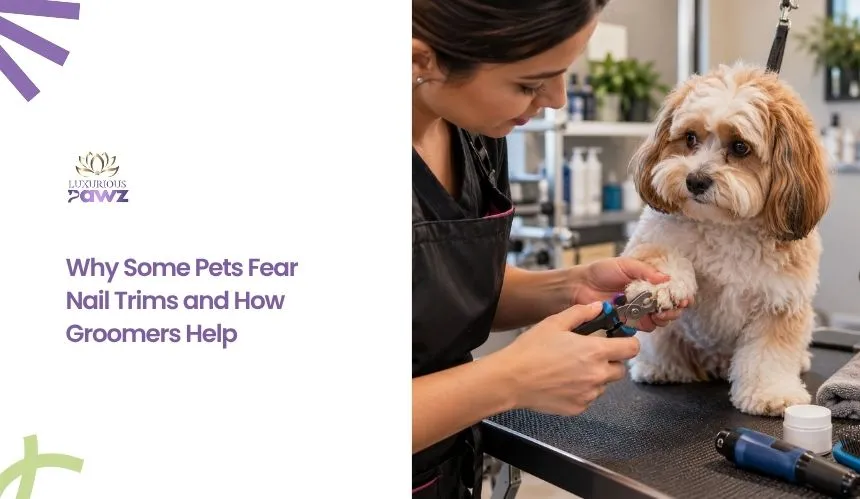
Why Some Pets Fear Nail Trims and How Groomers Help
Key Takeaways
|
Nail trimming can become stressful when a pet associates paw handling, clipping sounds, restraint, or previous discomfort with the grooming process. Fear may then appear as pulling away, hiding, vocalizing, freezing, or resisting the handler.
In Los Angeles, where pets may regularly encounter warm pavement and active outdoor environments, keeping nails at an appropriate length remains part of routine paw care. Understanding the source of nail-trim anxiety and using controlled grooming techniques can make future sessions safer and more predictable.
Why Some Pets Fear Nail Trims
Fear of nail trimming is not always caused by the nail cutter itself. A pet may react to the entire sequence of events, including having its paw held, hearing a grinder, being positioned for access to the nails, or remembering a previous uncomfortable trim.
In Los Angeles, pets frequently walk on concrete and pavement, making proper nail length important for comfortable movement and paw stability. For dogs in Silver Lake, Los Feliz, and West Hollywood, regular outdoor activity can naturally affect how quickly nails wear down or grow.
Professional pet nail trimming helps maintain appropriate nail length while supporting safer, more comfortable movement on LA’s hard urban surfaces.
Previous Painful or Stressful Experiences
A painful nail trim can create a strong association between paw handling and an anticipated negative outcome. Cutting into the quick, applying excessive pressure to the nail, or forcing a frightened pet to continue can make subsequent sessions more difficult even after the original injury has healed.
The quick contains blood vessels and nerves, so contact with it can be painful and may cause bleeding. Pets that have experienced this may begin withdrawing their paws before the tool even touches the nail. This is one reason a groomer may need to rebuild tolerance rather than simply attempt another full trim.
Fear can also develop without an obvious injury. Repeated unsuccessful attempts, prolonged restraint, or a loud grooming environment can teach a pet that nail trimming is an event from which it cannot easily disengage. The resulting resistance is a behavioral response, not necessarily stubbornness.
For dogs and cats in Los Angeles, an inconsistent nail-trimming routine can make this problem more pronounced. When nails are allowed to become substantially overgrown, the amount that can be safely removed during one appointment may be limited, requiring gradual maintenance instead of an aggressive reduction.
Do You Know?
A dog may develop a lasting negative association with nail trimming after just one painful or frightening experience. The American Kennel Club describes this as “one-trial learning,” where a particularly unpleasant event can create a strong memory even though positive training experiences may require repeated exposure.
Sensitivity to Paw Handling and Restraint
Paws are highly relevant to an animal’s movement and environmental interaction, so some pets are naturally uncomfortable with having their toes manipulated. The sensitivity can be particularly noticeable when the groomer separates individual toes or applies pressure to expose a nail.
Restraint can add another layer of stress. A pet that tolerates ordinary petting may still resist when a limb is held in a fixed position. If the animal feels trapped, its stress response can escalate before trimming begins.
Body language provides useful information. Repeated paw withdrawal, tense muscles, lip licking, turning the head away, panting unrelated to heat or exercise, attempts to escape, or freezing can indicate that the pet’s tolerance is decreasing. A skilled groomer can adjust the handling approach before resistance becomes a safety issue.
This distinction matters because forcing a frightened pet through the procedure can strengthen the association between restraint and fear. The immediate objective is not simply to finish the trim, but to maintain enough behavioral control for the procedure to remain safe.
Noise, Tools, and Unfamiliar Grooming Environments
Some pets react to the sensory components of nail care rather than the trimming motion itself. Clippers create a sudden mechanical sound, while grinders produce vibration and a continuous motor noise. The sensation may be especially unfamiliar when the tool is brought close to a sensitive paw.
The grooming environment can compound the response. Dryers, barking animals, unfamiliar people, slick surfaces, and frequent handling create multiple stimuli at once. A pet already concerned about paw manipulation may have a lower tolerance for additional sensory input.
Tool selection therefore matters. A grinder may allow controlled removal of small amounts of nail but can be unsuitable for a pet that strongly dislikes vibration or motor noise. Clippers may be quicker but require accurate positioning and controlled pressure. The appropriate method depends on the individual animal, nail condition, and level of tolerance.
For Los Angeles pets that visit professional grooming facilities, acclimation to the environment can be as valuable as acclimation to the nail tool. Reducing unnecessary stimulation can make it easier for the groomer to distinguish tool-related fear from broader handling anxiety.
Do You Know?
In one study cited by the American Animal Hospital Association, 106 out of 135 dogs, or 78.5%, showed fearful behavior on the veterinary examination table. The same source reported that fewer than half of the dogs entered the practice calmly, highlighting how strongly unfamiliar handling and clinical environments can affect canine behavior.
How Professional Groomers Make Nail Trims Less Stressful
Professional grooming is not simply a faster version of trimming nails at home. Experienced groomers assess the pet’s behavior, nail condition, handling tolerance, and response to equipment so the procedure can be adapted without compromising safety.
Do You Know?
A pet does not have to growl, snap, or attempt to escape to show stress. AAHA’s behavioral guidelines list intentional paw lifting, shifting legs, freezing, hiding, lowered body posture, hypervigilance, and increased reactivity among behaviors that can indicate fear or distress.
Gradual Paw Handling and Desensitization
Desensitization involves exposing a pet to a stressful stimulus at an intensity it can tolerate rather than immediately presenting the full procedure. For a nail-trim-sensitive pet, that may mean handling the paw first, touching individual toes later, introducing the tool without trimming, and eventually removing a small amount of nail.
The process works because the pet has an opportunity to experience the stimulus without consistently reaching the point of panic or defensive resistance. Pairing manageable handling with rewards can also help establish a different association with paw care.
Progress is not necessarily linear. A pet may tolerate paw handling but react when the grinder starts. Another may accept the tool but resist when a particular foot is positioned. Groomers can therefore work below the animal’s stress threshold and adjust the sequence according to its response.
This approach is particularly useful for pets that have previously experienced painful nail trims. Rather than assuming that a single successful appointment resolves the problem, future sessions can continue building tolerance.
Calm Handling and Appropriate Restraint
Safe restraint should provide enough control to prevent sudden movement without applying unnecessary force. The handling method depends on the pet’s size, temperament, mobility, nail condition, and level of distress.
A groomer may use stable positioning, controlled limb support, and brief handling intervals rather than maintaining prolonged restraint. The goal is to prevent a sudden paw movement from causing an accidental cut while avoiding unnecessary escalation of fear.
Timing also matters. A groomer may pause when a pet begins showing clear stress signals instead of waiting until the animal is actively struggling. This creates an opportunity to reposition, reduce stimulation, or change the technique.
Severe fear or defensive behavior can require veterinary input rather than increasingly forceful grooming. If a pet cannot be handled safely despite appropriate professional techniques, a veterinarian can determine whether an underlying medical problem, pain, or a broader behavioral issue needs assessment.
Do You Know?
Veterinary professionals increasingly use cooperative care, a positive-reinforcement approach in which animals learn behaviors that allow them to participate more voluntarily in procedures. AAHA notes that techniques such as targeting and stationing can help animals become comfortable with procedures including nail trims, rather than relying immediately on forceful restraint.
Choosing the Right Tools and Trimming Pace
Professional nail care may involve guillotine-style clippers, scissor-style nail trimmers, or rotary grinders. Each tool produces different mechanical sensations and allows a different degree of control.
Clippers can remove nail length quickly, which may reduce the duration of handling for some animals. Grinders allow gradual removal and can help smooth the nail after shortening it, but their vibration and noise may be poorly tolerated by certain pets.
The trimming pace should also account for nail anatomy. The visible nail is not uniformly safe to remove because the quick extends into the nail. In light-colored nails, its location may be easier to identify visually. Dark nails can make the boundary more difficult to assess, so incremental removal can reduce the risk of cutting too deeply.
For dogs in Los Angeles that spend substantial time walking outdoors, regular maintenance can also reduce the need for large reductions during a single appointment. A predictable schedule allows smaller amounts of growth to be addressed before the nails become excessively long.
What Pet Owners Can Do Before and After a Nail Trim
Professional handling becomes more effective when nail care is reinforced between appointments. Owners can influence how familiar a pet becomes with paw handling without attempting to force a complete trim at home.
In Los Angeles, grooming should reflect the city’s warm, dry climate, hot pavement, and outdoor lifestyle. Dogs around Echo Park, Highland Park, and Atwater Village may benefit from regular paw, facial, and sanitary care, while professional dog grooming can help pets in Eagle Rock, Pasadena, and Studio City stay comfortable based on their coat type and outdoor activity.
Why Some Pets Fear Nail Trims
Fear of nail trimming is not always caused by the nail cutter itself. A pet may react to the entire sequence of events, including having its paw held, hearing a grinder, being positioned for access to the nails, or remembering a previous uncomfortable trim.
Practice Gentle Paw Handling at Home
Begin with brief, controlled contact rather than immediately reaching for nail clippers. Touch the leg, move toward the paw, briefly handle a toe, and release before the pet becomes uncomfortable.
The progression should remain gradual. If the pet pulls away, repeatedly forcing the paw back into position can teach it that withdrawal results in increased restraint. Instead, reduce the intensity of the interaction and return to a level the animal can tolerate.
Owners can also introduce the sound or sight of grooming equipment without using it on the nails. For example, a tool can be present at a distance while the pet remains calm. The objective is familiarity, not endurance.
This practice is particularly useful for puppies and kittens because early exposure can make routine paw care more familiar. Adult pets can also learn new associations, although the process may take longer when established fear is already present.
Use Positive Reinforcement
Rewards are most effective when they are delivered immediately after a manageable behavior. A small treat after calmly allowing a paw to be touched creates a clearer behavioral connection than giving a large reward only after a stressful session has ended.
Reinforcement can be paired with specific milestones, such as allowing one toe to be handled, remaining relaxed while the tool is visible, or tolerating a brief touch from the equipment.
Owners should avoid using food to pressure a highly distressed pet into continuing. If the animal is already struggling or attempting to escape, increasing the reward does not remove the underlying stress. The interaction should be reduced to a level the pet can manage.
For Los Angeles households using professional grooming services, consistent reinforcement at home can complement the groomer’s work by making paw handling a familiar part of routine care rather than an isolated event.
Watch for Signs of Stress During Future Trims
Owners should watch for stress throughout the trim, not just whether the nails are finished. Paw withdrawal, body tension, lip licking, yawning, avoidance, or attempts to escape can signal discomfort, while growling, snapping, freezing, or persistent struggling indicate stronger distress.
In Los Angeles, panting should also be considered alongside heat and activity levels. Sudden sensitivity, limping, swelling, or a damaged nail may indicate pain and should be checked by a veterinarian.
For pets that need calmer, more comfortable grooming, Luxurious Pawz provides professional pet grooming and nail care for families throughout Greater Los Angeles. Experienced handling can make a meaningful difference for pets that become anxious during paw care, while regular nail maintenance helps keep routine grooming manageable.
If your dog or cat is nervous about nail trims, professional care from Luxurious Pawz can provide a controlled, attentive grooming experience tailored to your pet’s comfort and needs.
Frequently Asked Questions
Why does my pet suddenly hate nail trims?
A sudden change can result from a painful experience, a damaged nail, increased sensitivity, or a new negative association with handling or grooming equipment. If the behavior changes abruptly, checking for paw or nail discomfort is appropriate.
Can a groomer help a dog that is afraid of nail trims?
Yes. A professional groomer can modify handling, introduce tools gradually, use controlled restraint, and adjust the trimming pace according to the dog’s tolerance. Severe fear or unsafe defensive behavior may require veterinary or behavioral support.
Is it better to use nail clippers or a grinder?
Neither tool is universally better. Clippers can shorten nails efficiently, while grinders allow gradual removal and smoothing. The better option depends on nail condition, the groomer’s technique, and the pet’s tolerance of pressure, vibration, and noise.
How can I prepare my pet for professional nail trimming?
Practice brief paw and toe handling at home, introduce grooming tools gradually, and reward calm behavior. Avoid forcing the pet through interactions that produce significant distress because this can reinforce negative associations.
Why does my pet pull its paw away before the nail is trimmed?
The pet may have learned to anticipate an unpleasant sensation from previous trimming experiences. Paw withdrawal can also indicate sensitivity to handling, restraint, or the tool itself. Some pets also become more reactive when their paws are held for too long, making gradual handling and short, calm sessions more effective.
When should a fearful pet's nails be handled by a veterinarian instead of a groomer?
Veterinary assessment is appropriate when fear is accompanied by pain, limping, swelling, a damaged nail, bleeding, or a sudden change in behavior. If the pet becomes dangerously aggressive or cannot be safely handled, a veterinarian can determine whether medical or behavioral intervention is needed.