

- admin
An Effective Guide for Pomeranians
Key Takeaways:
|
Pomeranians are small yet highly demanding when it comes to grooming. Their dense double coat gives them a signature fluffy appearance, but it also requires consistent and careful maintenance. Grooming is not simply about keeping your dog looking attractive; it directly contributes to skin health, coat strength, and overall comfort. Without proper care, their coat can quickly become tangled, matted, and prone to irritation.
A well-maintained grooming routine helps preserve the natural structure of the coat while ensuring that your Pomeranian remains clean and comfortable. It also allows early detection of skin issues, parasites, or abnormalities that may otherwise go unnoticed. Understanding each element of grooming ensures that your pet receives proper care without compromising coat quality.
Understanding the Pomeranian Coat

The Pomeranian’s coat is unique and requires specific care techniques. It consists of a soft, dense undercoat and a longer outer coat that together create volume and protection. This combination not only gives the breed its distinctive appearance but also plays an essential role in regulating body temperature.
The undercoat functions as insulation, helping the dog adapt to both warm and cool environments. The outer coat acts as a protective shield, preventing dirt, moisture, and environmental particles from reaching the skin. These layers work together as a natural defense system, and any disruption to this balance can lead to long-term issues.
- The undercoat maintains insulation and body temperature stability.
- The outer coat protects the skin from external exposure.
Cutting the coat too short or shaving it interferes with this natural mechanism. In many cases, the coat may regrow unevenly or lose its original texture, making proper grooming techniques essential.
Why Grooming Is Essential for Pomeranians

Grooming is a fundamental part of maintaining a Pomeranian’s overall health. It is not limited to appearance but supports hygiene, comfort, and early health monitoring. A properly groomed coat allows the skin to breathe and reduces the risk of infections caused by trapped dirt or moisture.
When grooming is performed consistently, it improves coat condition and prevents the formation of tight tangles that can pull on the skin. It also helps distribute natural oils evenly, giving the coat a healthier and shinier appearance.
- It minimizes the risk of matting and skin irritation.
- It helps maintain cleanliness and proper hygiene.
- It supports healthy coat growth and structure.
Neglecting grooming can lead to discomfort, skin infections, and difficulty managing the coat over time.
1. Brushing Techniques and Frequency
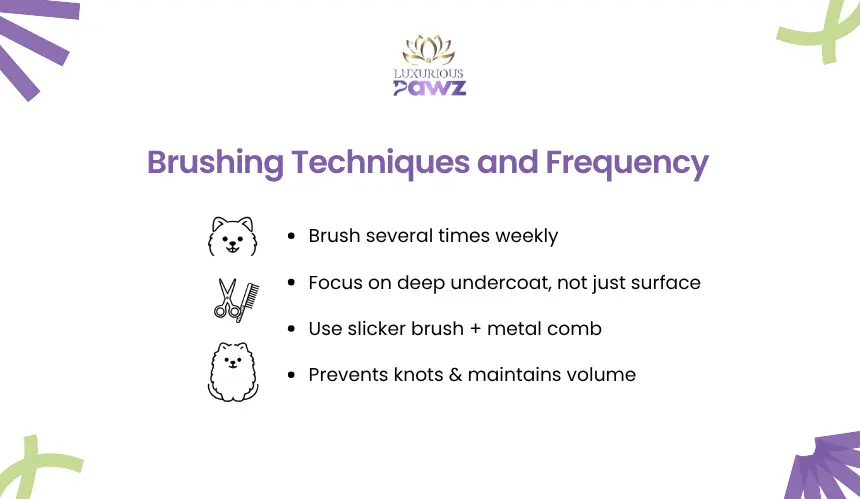
Brushing plays a central role in maintaining the Pomeranian’s coat. Due to the thickness of the undercoat, brushing must be thorough and consistent. It is not enough to brush only the surface, as tangles often form close to the skin.
You should brush your Pomeranian several times a week to keep the coat free from knots. During seasonal shedding, more frequent brushing is necessary to remove loose undercoat and prevent buildup.
The most effective approach involves brushing in layers, starting from the outer coat and gradually working inward. This ensures that both coat layers are properly maintained without causing discomfort.
- A slicker brush helps remove loose hair and minor tangles.
- A metal comb ensures deeper penetration into the undercoat.
This method keeps the coat smooth, prevents matting, and maintains its natural volume.
2. Bathing Routine and Best Practices

Bathing is essential for maintaining cleanliness, but it must be done carefully to avoid damaging the coat. Over-bathing can strip the natural oils that protect the skin, while infrequent bathing can lead to buildup and odor.
A balanced approach is to bathe your Pomeranian every few weeks using a gentle shampoo formulated for dogs. The bathing process should be thorough yet gentle, ensuring that all areas are properly cleaned without causing stress.
It is important to rinse the coat completely, as leftover product can cause irritation. Conditioning the coat after shampooing helps maintain softness and reduces the likelihood of tangles forming.
3. Drying and Coat Maintenance
Drying is a critical step that directly affects the coat’s condition. Leaving the undercoat damp can lead to matting and unpleasant odors. Proper drying ensures that the coat remains fluffy and well-structured.
Using a blow dryer on a controlled heat setting while brushing the coat helps separate the hair strands and maintain volume. This technique also prevents tangles from forming as the coat dries.
- The coat should always be dried completely, including the undercoat.
- Gentle brushing during drying helps maintain texture and shape.
This step enhances the overall appearance and keeps the coat manageable between grooming sessions.
4. Trimming and Coat Shaping

Trimming is necessary to maintain a neat and balanced appearance, but it should be done carefully to avoid disrupting the coat’s natural growth pattern. Unlike some breeds, Pomeranians should not be shaved down completely.
Trimming should focus on shaping specific areas such as the paws, ears, and face. This helps maintain cleanliness while preserving the coat’s protective function. A controlled approach ensures that the coat remains functional while looking well-groomed.
- The fur around the paws should be trimmed for hygiene.
- The face and ears can be shaped for a tidy appearance.
Maintaining moderate length is essential for preserving coat health.
5. Nail, Ear, and Dental Care
A complete grooming routine includes more than coat maintenance. Proper care of nails, ears, and teeth contributes to overall health and prevents common issues.
Nail trimming is necessary to prevent discomfort and mobility problems. Long nails can affect posture and cause pain while walking. Ear cleaning helps prevent infections caused by wax buildup, while regular dental care supports oral health.
These aspects of grooming should be incorporated into a regular routine to ensure that your Pomeranian remains healthy in all areas.
Common Grooming Mistakes to Avoid
Many grooming issues arise from simple mistakes that can easily be prevented. Understanding these errors helps protect the coat and ensures better results.
- Cutting the coat too short, which can damage regrowth
- Ignoring the undercoat while brushing
- Skipping grooming sessions for long periods
- Using unsuitable grooming products
- Failing to dry the coat properly after bathing
Avoiding these mistakes helps maintain coat integrity and prevents unnecessary complications.
Creating a Consistent Grooming Routine
Consistency is the foundation of effective grooming. Establishing a routine helps maintain coat quality and reduces the effort required over time. A structured approach ensures that grooming becomes manageable rather than overwhelming.
You should set a schedule that includes regular brushing, occasional bathing, and periodic trimming. Professional grooming can also be included to maintain shape and address areas that require expert handling.
A consistent routine not only improves the coat’s condition but also makes the grooming process more comfortable for your dog.
Give your Pomeranian the royal treatment at Luxurious Paws, where expert groomers combine care, precision, and pampering to keep your fluffy companion looking and feeling their best. From gentle brushing and thorough baths to styling and coat maintenance, we ensure your Pomeranian stays healthy, soft, and irresistibly adorable. Treat your furry friend to the ultimate grooming experience today
Frequently Asked Questions
How long does it take to groom a Pomeranian properly?
A full grooming session for a Pomeranian can take anywhere from one to two hours, depending on the coat condition and grooming style. If the coat is heavily tangled or matted, it may take longer. Regular maintenance reduces grooming time significantly.
Do Pomeranians shed a lot despite their fluffy coat?
Pomeranians do shed, especially during seasonal changes when they lose their undercoat. While they may not shed constantly like some breeds, shedding can still be noticeable. Regular brushing helps control loose hair and reduces shedding around the home.
Can grooming help reduce allergies in the home?
Yes, regular grooming can help reduce allergens by removing loose hair, dander, and dirt from the coat. Keeping your Pomeranian clean and well-brushed minimizes the spread of allergens in your living space. However, no dog is completely hypoallergenic.
What signs indicate that my Pomeranian needs grooming?
You may notice tangles, a dull coat, or a buildup of dirt and odor. Difficulty brushing through the coat or visible matting are also clear signs. Changes in behavior, such as scratching or discomfort, may indicate grooming is overdue.
Should grooming routines change as my Pomeranian ages?
Yes, grooming routines may need adjustment as your dog gets older. Senior Pomeranians may have more sensitive skin and thinner coats. Gentle grooming techniques and shorter sessions are more suitable for older dogs.
Can diet affect my Pomeranian’s coat quality?
Yes, diet plays a significant role in coat health. A balanced diet rich in essential fatty acids supports a shiny and strong coat. Poor nutrition can lead to dryness, dullness, and increased shedding.