
- admin
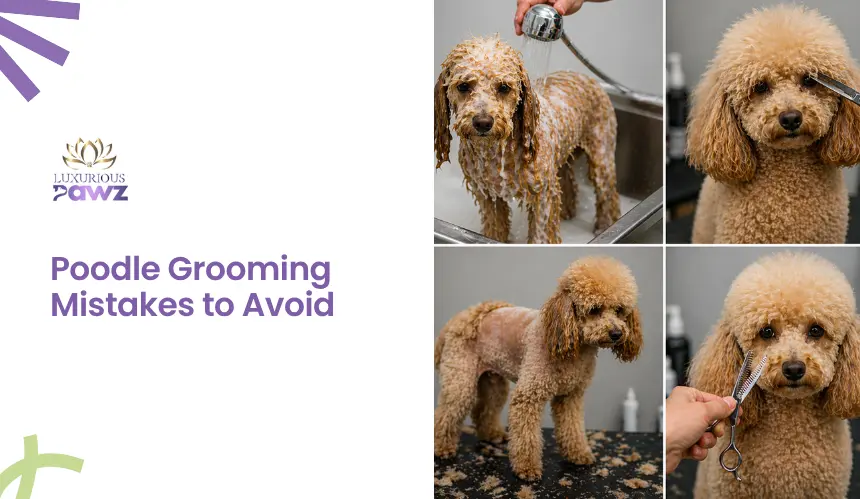
Poodle Grooming Mistakes to Avoid
Key Takeaways
|
Why Is Poodle Grooming Easy to Get Wrong?
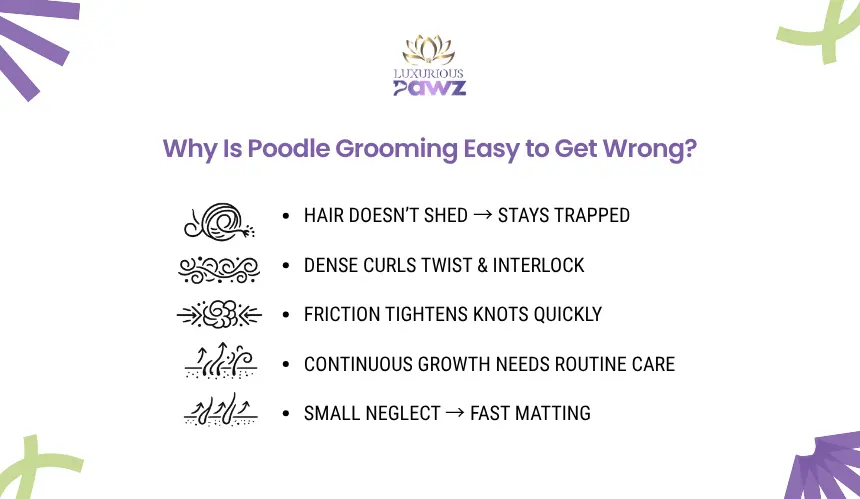
Poodle coats require specific handling due to their unique structure. Without understanding how the coat behaves, even well-intended grooming routines can lead to tangling, matting, and coat damage.
Hair Retention
Dense Curl Pattern
The curly structure of the coat causes individual strands to loop and interlock. Daily activities like walking, lying down, or wearing a collar create friction that tightens these curls further. This makes the hair more likely to wrap around itself, forming tangles that can rapidly develop into mats.
High Maintenance Needs
Because of continuous hair growth and retention, the coat requires consistent maintenance. Skipping grooming for even a few days can allow small tangles to form and tighten. Without a regular routine, these minor issues quickly escalate, making grooming more difficult and time-consuming.
Do you Know? According to Purina, Poodle’s coat is considered low-shedding, but the hair keeps growing and can mat close to the roots if it is not brushed all the way to the skin. Purina notes that full-coated Poodles may need daily brushing, with most pet trims maintained every 4–6 weeks. |
1. Skiping Brushing in Poodles
Fast Mat Formation
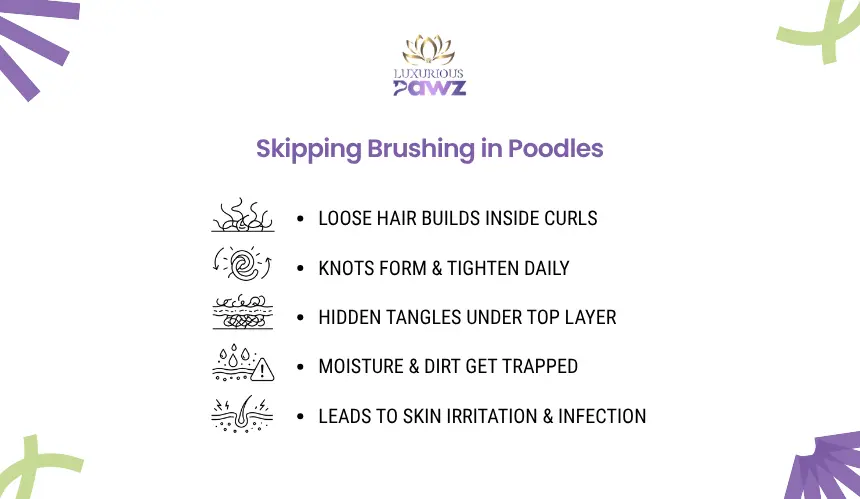
When brushing is skipped, loose hair gets trapped within the curls instead of being removed. Daily movement causes these strands to twist around each other, forming small knots. Over time, these knots tighten and compact into dense mats that are difficult to separate and may require cutting or shaving.
Hidden Tangles
Even if occasional brushing is done, skipping consistent deep grooming allows tangles to form beneath the top layer. The surface may appear smooth, but the inner coat can become tightly packed with knots. These hidden tangles are often discovered only when they have already developed into serious matting.
Skin Issues
As mats form, they create a barrier over the skin. This traps moisture, dirt, and heat, reducing airflow and preventing the skin from staying dry and clean. Over time, this can lead to irritation, discomfort, and a higher risk of infections beneath the coat.
2. Common Grooming Tool Mistakes in Poodles
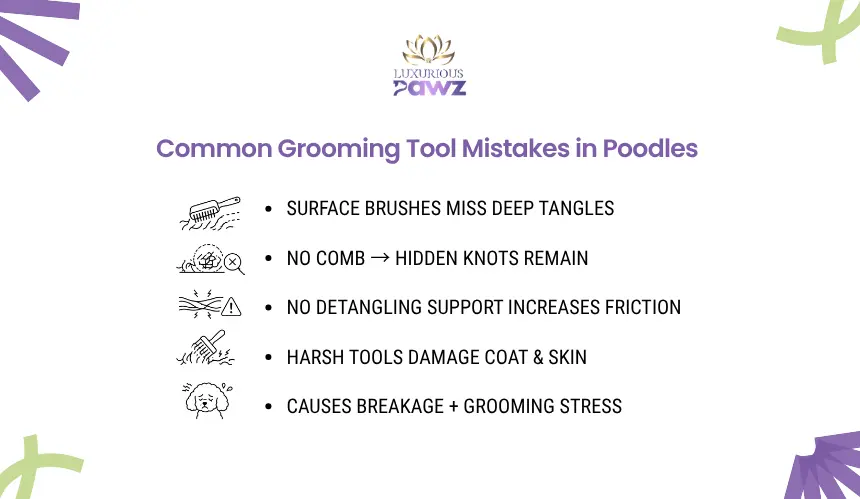
Using the wrong grooming tools can make brushing ineffective, even if done regularly. Poodle coats are dense and layered, so tools must reach beyond the surface to properly remove tangles and maintain coat health.
Surface-Level Brushes
No Detangling Support
Brushing alone is not always enough to remove tangles, especially in a thick curly coat. Without tools designed to separate and check the hair thoroughly, small knots stay in place and gradually tighten. This leads to mat formation even if grooming seems consistent.
Harsh Tools
Using overly aggressive or incorrect tools can pull on the hair and irritate the skin. This not only damages the coat by causing breakage but also makes grooming uncomfortable for the dog. Over time, this can lead to resistance and stress during grooming sessions.
Use Instead:
- Slicker brush: Reaches deep into the coat to separate curls and remove loose hair effectively. lt helps prevent tangles from tightening into mats by keeping the coat evenly lifted and aerated.
- Metal comb: Helps detect and remove hidden tangles that brushes may miss, ensuring the coat is fully detangled.This supports more thorough coat checks by revealing dense areas where friction and matting tend to build unnoticed.
- Detangling spray: Reduces friction between strands, making brushing smoother and preventing hair from pulling or breaking. It helps the coat stay more manageable between grooming sessions by minimizing dryness and surface resistance.
3. Bathing Poodles Without Brushing
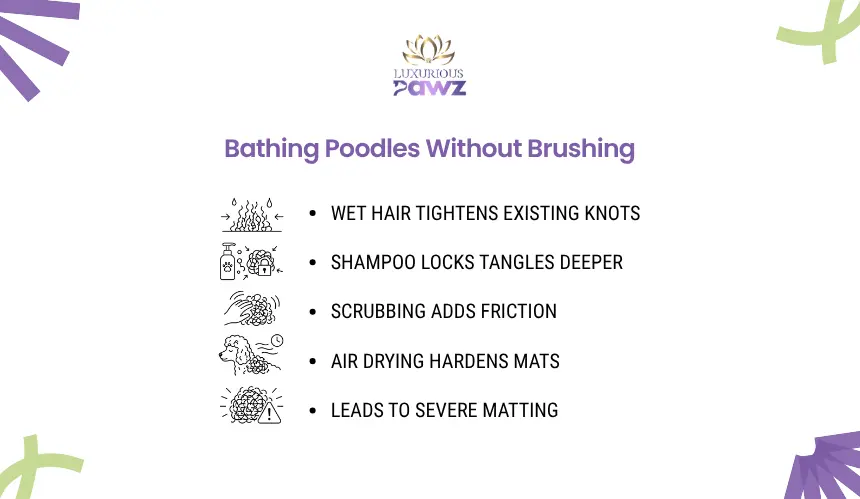
Bathing a Poodle without proper pre-brushing is one of the most common grooming errors. Water and movement change how the coat behaves, and any existing tangles quickly become more severe. What may seem like a minor knot before a bath can turn into a tight, unmanageable mat afterward.
Wet Hair Tightens Knots
Shampoo Locks Tangles
During bathing, the act of scrubbing and massaging shampoo into the coat creates friction. This movement pushes tangled hair strands deeper into each other, compressing knots and making them more solid. Instead of loosening the coat, shampooing without detangling actually reinforces the tangles, locking them into place and increasing the chances of mat formation.
Poor Drying
4. Imbalanced Grooming Routine in Poodles
Infrequent Grooming
When brushing is skipped, loose hair and daily friction combine to form small knots. These knots tighten over time and turn into dense mats that require more effort or even shaving to remove.
As mats grow, they pull on the skin, causing discomfort and restricting airflow. This can lead to irritation, trapped moisture, and an increased risk of skin issues beneath the coat.
Over-Grooming
Excessive brushing puts stress on the hair strands, leading to breakage and thinning. Over time, this weakens the coat’s structure, making it less resilient and more difficult to manage. Frequent bathing strips natural oils from the coat, leaving it dry, rough, and more prone to tangling.
Without these oils, the hair loses its natural slip, increasing friction between strands and making knots form more easily.
No Routine
Irregular grooming makes it difficult to maintain coat condition. Long gaps followed by intense grooming sessions create stress on both the coat and the dog, resulting in uneven texture and poor manageability.
5. Overlooking High-Risk Matting Areas in Poodles
Behind Ears
Under Legs
Neck Area
Joints & Tail Base
Frequent motion around joints and the tail base causes hair to twist and bind together. These areas are often overlooked during brushing, allowing hidden tangles to build into dense mats unnoticed.
6. Improper Drying Techniques in Poodles
Air Drying
Rough Towel Use
No Blow Dry Control
Using a dryer without direction or control causes hair to move randomly, increasing tangling. Uneven airflow can leave some areas damp while others overdry, affecting coat texture and making grooming inconsistent.
Better Method: Use a controlled blow dryer with low heat and steady airflow. Brush through the coat while drying to keep strands separated and aligned. This method helps maintain a smooth, manageable coat and prevents mat formation.
Do you Know? AKC advises that after baths or swimming, areas such as the ears should be thoroughly dried, because lingering moisture can contribute to irritation and infection risk. |
7. Does Poodle’s Diet Affect Grooming?
Diet plays a direct role in coat condition and grooming results. A well-balanced diet supports stronger, smoother hair that is easier to manage.
Weak Protein Intake
Protein is essential for maintaining a strong and healthy coat because hair is primarily composed of keratin, a structural protein. When a Poodle’s diet lacks adequate high-quality protein, the hair strands become weak and fragile.
This weakness makes the coat more prone to breakage, uneven growth, and thinning over time. Fragile strands also tangle more easily, increasing the risk of matting. As the coat loses its strength and structure, it becomes harder to manage and maintain through regular grooming.
Low Fatty Acids
Essential fatty acids, particularly Omega-3 and Omega-6, are responsible for maintaining the coat’s natural lubrication and smooth texture. When these nutrients are insufficient, the coat begins to lose its natural oils, resulting in dryness and a rough feel. Without proper lubrication, individual hair strands create more friction against each other, which accelerates the formation of tangles and mats.
Additionally, the lack of fatty acids can negatively impact skin health, leading to flakiness or irritation that further affects overall coat condition.
Poor Hydration
Proper hydration plays a critical role in maintaining both skin health and hair flexibility. When a dog is not adequately hydrated, the hair strands become dry and brittle, losing their ability to bend and move freely. This brittleness increases the likelihood of breakage and makes the coat more difficult to detangle during grooming.
Dry hair also resists smooth brushing, which allows small tangles to persist and develop into larger mats over time. In addition, dehydration can lead to dry, tight, or itchy skin, further contributing to overall coat deterioration.
Fact Box: Merck Veterinary Manual notes that water is the most important nutrient, and in a thermoneutral environment most mammals need roughly 44–66 mL/kg of body weight daily, though needs vary with diet, environment, and activity. |
Long-Term Effects of Grooming Mistakes in Poodles
Grooming mistakes may seem minor at first, but over time they can lead to lasting consequences for a Poodle’s coat, skin, and overall well-being. Inconsistent care, improper techniques, or neglect can disrupt the natural balance of the coat and create issues that become harder to reverse.
Understanding these long-term effects helps you recognize why proper grooming is not just routine maintenance, but an essential part of your dog’s health.
Severe Matting
Severe matting occurs when tangles are left unmanaged and tighten over time, forming dense clumps close to the skin. At this stage, brushing is no longer effective or safe, and shaving often becomes the only humane solution to prevent further discomfort.
- Mats pull tightly on the skin, causing constant tension
- Airflow is blocked, creating a warm, moist environment underneath
- Professional grooming is usually required to remove safely
- Attempting to cut mats at home can lead to accidental skin injuries
Skin Problems
When mats sit against the skin for extended periods, they trap moisture, dirt, and bacteria. This creates the perfect conditions for irritation and infections to develop beneath the coat, often going unnoticed until the problem worsens.
- Redness and inflammation can develop under matted areas
- Moisture buildup increases the risk of bacterial and fungal infections
- Skin may become sensitive, sore, or even develop hot spots
- Hidden parasites like fleas or ticks can thrive under dense mats
Grooming Resistance
Matting makes grooming painful, which can cause your dog to associate brushing with discomfort. Over time, this leads to resistance, anxiety, or even aggressive behavior during grooming sessions.
- Dogs may pull away, whine, or refuse brushing altogether
- Fear-based reactions can develop due to repeated discomfort
- Grooming sessions become longer and more stressful for both dog and owner
- Early negative experiences can create long-term behavioral challenges
How to Fix Grooming Problem in Poodles
1. Full Coat Check
2. Use the Right Tools
Fixing tangles is much easier when the right grooming tools are used. A slicker brush helps separate curls and remove trapped loose hair, while a metal comb checks for hidden knots that the brush may miss. A detangling spray can also help reduce friction and make the coat easier to work through without pulling.
3. Brush in Small Sections
Work through the coat in small sections instead of brushing over the surface. Use a line-brushing method by lifting part of the coat and brushing from the base outward, making sure the brush reaches close to the skin. This prevents hidden tangles from being left behind under the outer layer.
4. Handle Mats Gently
If you find small mats, loosen them slowly instead of trying to force a brush through them. Hold the hair near the skin to reduce pulling, use your fingers to break apart the edges, and then brush carefully with short strokes. This makes grooming more comfortable and helps avoid coat breakage.
5. Know When to Seek Professional Help
Severe mats should not be handled aggressively at home. If the mat is tight to the skin, spread across multiple areas, or causes pain when touched, professional grooming is usually the safest option. In many cases, clipping or shaving is more humane than trying to brush out heavy matting.
Environmental Effects on Poodle Grooming
Environmental conditions across areas like Altadena, CA, Pasadena, CA, Glendale, CA, and La Cañada Flintridge, CA often include dry heat, wind, and dust exposure. These factors can strip moisture from a Poodle’s coat, increasing friction between strands and making the hair more prone to tangling, breakage, and dullness if not properly maintained.
In areas such as Sunland, CA, Tujunga, CA, Shadow Hills, CA, and Eagle Rock, CA, pollen, debris, and outdoor elements easily get trapped within the curls, accelerating knot formation. Temperature fluctuations can also impact skin hydration, leading to dryness or imbalance, which makes consistent grooming, hydration, and coat protection essential.
Keep your Poodle’s coat healthy, tangle-free, and professionally maintained with expert care from Luxurious Pawz. From precision grooming to coat-specific treatments, every service is designed to match the unique needs of curly coats. Whether you’re dealing with matting, dryness, or routine maintenance, trust a team that understands the science behind proper grooming and delivers results that last.
Frequently Asked Questions
How long can a Poodle go without grooming before problems start?
Does coat length affect how quickly a Poodle mats?
Yes, coat length plays a major role. Longer coats provide more surface area for hair to twist and tangle, increasing matting risk. However, shorter coats are not immune, as friction zones like underarms and behind the ears can still develop knots without regular maintenance.