
- admin
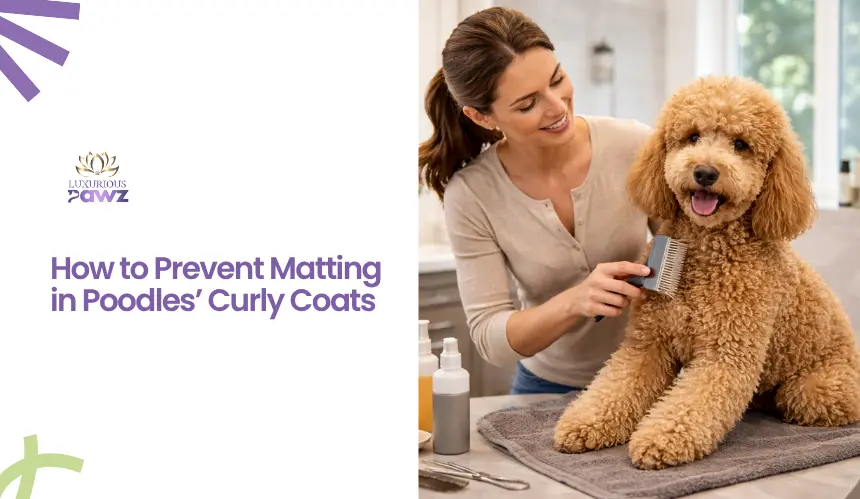
How to Prevent Matting in Poodles’ Curly Coats
Key Takeaways
|
Poodles have one of the most unique coat structures in the canine world. Their dense, curly hair grows continuously and traps loose strands instead of shedding them out. This creates a high risk of tangling and knot formation if not managed properly. Matting is not just a cosmetic issue. It can lead to skin irritation, restricted airflow, and even infections beneath the coat. Preventing matting requires understanding how the coat behaves and aligning grooming practices with its natural structure.
Why Do Poodles Get Matted So Easily?
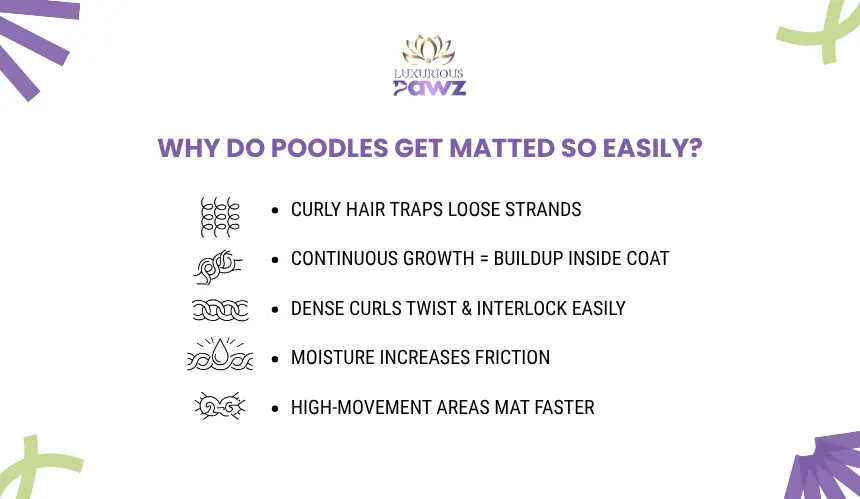
Poodles are highly prone to matting due to the unique structure of their curly, continuously growing coat. Unlike shedding breeds, loose hair does not fall away but becomes trapped within the curls, where it easily twists and binds with surrounding strands. Without consistent grooming, this combination of retained hair, tight curls, and daily friction quickly leads to tangles that develop into mats.
Continuous Hair Growth Cycle
Unlike shedding breeds, Poodles have a hair-like coat that continues to grow rather than cycling out and falling away naturally. This means old, loose hair remains trapped within the dense curls instead of shedding off the body. As new hair grows, it intertwines with this retained hair, creating a buildup within the coat. Over time, normal movement, friction, and environmental debris cause these strands to twist together, forming small knots that can quickly develop into larger mats if not regularly removed through proper grooming.
Do You Know? According to the American Kennel Club (AKC), you can trim your dog’s hair as often as you bathe them, about every four to eight weeks. Grooming time is also an opportunity to check for ‘cuts, growths, or parasites’ and monitor your Poodle’s overall coat and skin condition. |
Dense Curly Structure
The tight curl pattern of a Poodle’s coat naturally encourages individual strands to wrap around each other with minimal movement. Unlike straight hair, curls create multiple points of contact where hairs can easily interlock. As the dog moves, walking, running, or even lying down, friction increases in key areas such as joints, behind the ears, and under the collar. This constant movement speeds up the twisting process, turning loose strands into tangles and, if left unmanaged, into dense mats within a short period.
Moisture Retention
Curly coats naturally retain moisture for longer periods because the tight structure slows down evaporation. When the hair remains damp, the strands become more elastic and prone to sticking together, increasing friction between them. This friction causes existing tangles to tighten and new ones to form more easily. As the coat begins to dry, these tightened tangles can set into place, turning into firm mats that are much harder to remove without proper grooming.
High Friction Areas
Certain parts of the body experience constant movement:
- Behind the ears
- Under the legs
- Around the collar area
- Tail base
These zones mat faster due to repeated rubbing, which continuously twists and compresses the hair in these areas. The constant friction prevents the strands from staying separated, causing tangles to form quickly and tighten over time. Because these spots are often overlooked or harder to reach during routine grooming, mats can develop rapidly and become more severe if not addressed consistently.
Fact Box: According to ASPCA (American Society for the Prevention of Cruelty to Animals), shedding is a natural process in dogs, but the amount and pattern vary based on health, breed, and seasonal changes. Many dogs grow thicker coats in winter and shed them in spring, while indoor dogs tend to shed more consistently throughout the year with fewer seasonal changes. |
What Happens If Matting in Poodles Is Not Prevented?
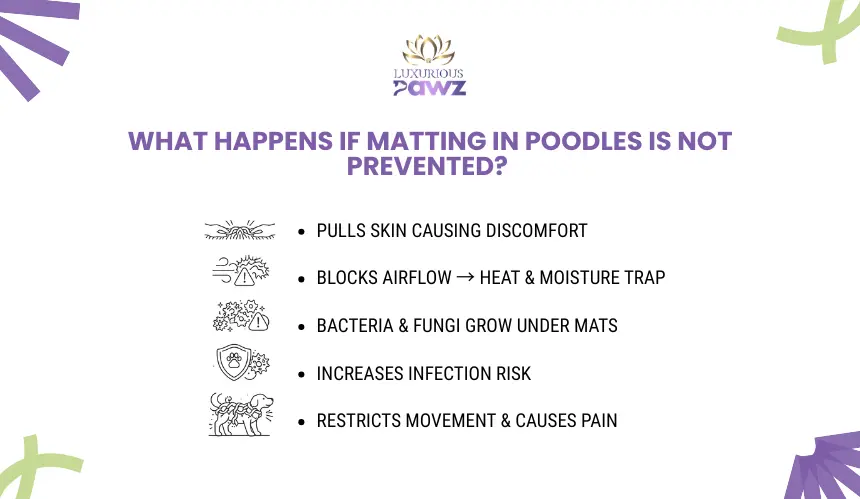
If matting is not prevented, it can quickly progress from a minor grooming issue into a serious health concern. Mats tighten over time, pulling on the skin and restricting airflow, which can lead to discomfort, irritation, and even infections. As they become denser, they trap moisture, dirt, and bacteria, creating an environment that affects both coat condition and overall skin health.
Skin Barrier Damage
Mats pull on the skin, creating constant tension that can cause significant discomfort and sensitivity, especially when the dog moves. This pulling effect weakens the skin’s natural protective barrier, making it more vulnerable to irritation, inflammation, and external contaminants. Over time, the stress on the skin can lead to redness, soreness, and even small wounds hidden beneath the matting.
Do You Know? According to the ASPCA, a dog’s skin reflects its overall health, and issues like irritation or damage can lead to excessive scratching, licking, or chewing. When matting pulls on the skin and weakens its protective barrier, it can contribute to inflammation, infections, and hidden wounds beneath the coat if not addressed promptly. |
Reduced Air Circulation
Tightly packed hair blocks airflow, creating a warm and moist environment close to the skin. This lack of ventilation traps heat, moisture, and debris, making it easier for bacteria and fungi to thrive. Over time, this can lead to unpleasant odors, skin irritation, and an increased risk of infections developing beneath the matted areas.
Increased Risk of Infections
Bacteria and fungi thrive under mats due to the trapped moisture, warmth, and lack of airflow. This creates an ideal environment for microbial growth, which can quickly lead to skin infections, irritation, and a noticeable odor. If left untreated, these infections can worsen, causing redness, inflammation, and discomfort that may require veterinary care.
Pain and Restricted Movement
Severe matting can restrict movement by tightly binding the hair and pulling on the skin with every motion. This creates discomfort and can make simple actions like walking, sitting, or stretching painful for the dog. In advanced cases, the constant tension may even affect posture and mobility, leading to reduced activity and overall distress.
How Often Should You Brush a Poodle to Prevent Matting?
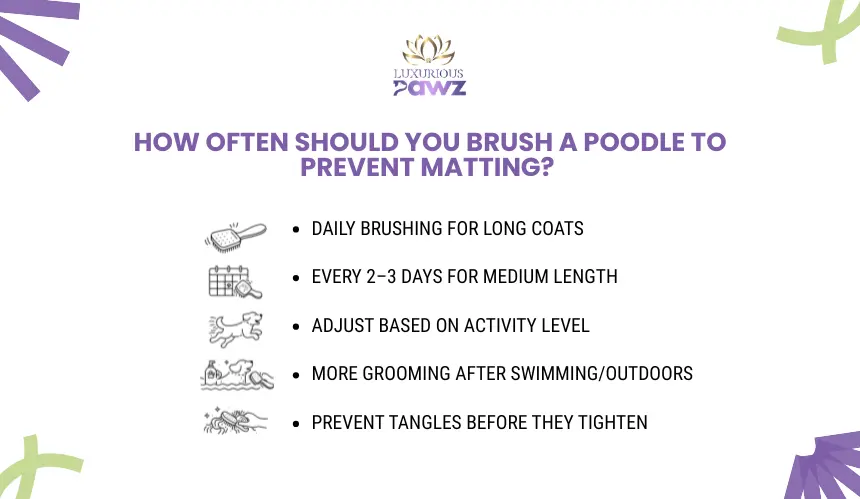
The frequency of brushing depends on the length, density, and style of your Poodle’s coat, but consistency is key to preventing matting. Because their curly hair traps loose strands and debris, regular brushing is necessary to keep the coat separated, clean, and tangle-free before knots have a chance to develop.
Daily Brushing for Long Coats
Long or show-style coats require daily attention to prevent knots from forming and tightening into mats. Because the hair is longer and more prone to friction, even a single day without brushing can allow tangles to develop, especially in high-movement areas.
Regular daily brushing keeps the coat separated, removes trapped loose hair, and maintains a smooth texture, making grooming more manageable and preventing buildup over time.
Every 2–3 Days for Medium Length
Shorter trims still need consistent brushing to control internal tangles that are not always visible on the surface. Even when the coat appears manageable, loose hair can remain trapped beneath the top layer, gradually forming knots close to the skin. Regular brushing ensures these hidden tangles are removed early, maintaining coat health and preventing unexpected matting.
Adjust Based on Lifestyle
Dogs that:
- Swim frequently
- Play outdoors
- Wear clothing or harnesses
require more frequent grooming due to increased exposure to moisture, dirt, and constant friction. Water tightens curls and slows drying, while outdoor activity introduces debris that gets trapped in the coat.
Clothing and harnesses create repeated rubbing in specific areas, accelerating tangle formation. Together, these factors significantly raise the risk of quick mat development if grooming is not adjusted accordingly.
What Is the Correct Way to Brush a Poodle Coat?
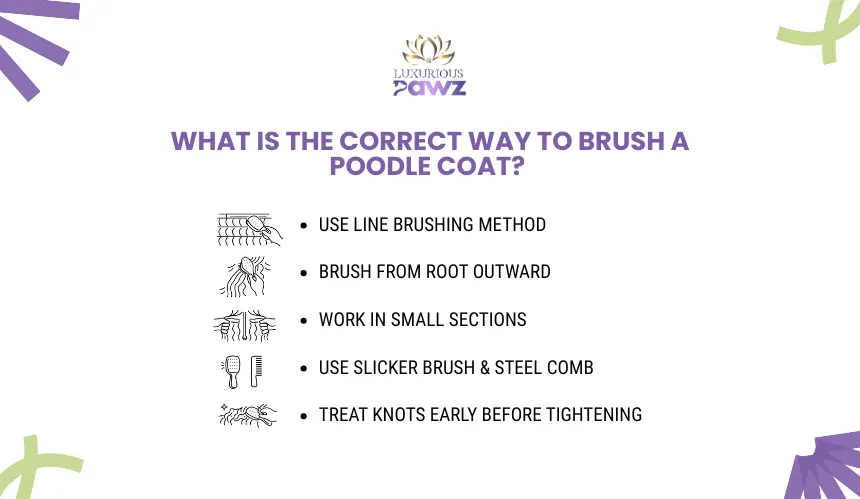
Brushing a Poodle coat requires a proper technique to prevent hidden tangles and maintain a smooth, healthy coat. Done correctly, it removes trapped hair and keeps curls from matting.
Line Brushing Technique
This method ensures complete coverage of the coat:
- Divide hair into small sections
- Brush from the root outward
- Work layer by layer
This structured approach, often called line brushing, allows you to reach deep into the coat rather than just skimming the surface. By working in sections and brushing from the base of the hair outward, you ensure that no tangles are left hidden near the skin, where mats typically begin.
It also helps maintain proper coat separation, making the hair easier to manage and significantly reducing the risk of mat buildup over time.
Use the Right Tools
- Slicker brush for detangling
- Steel comb for checking deeper knots
- Detangling spray to reduce friction
Start Before Tangles Tighten
Small knots are much easier to remove when addressed early, as the hair is still loosely tangled and can be gently separated without causing discomfort. However, if left unattended, these minor tangles continue to tighten with movement, friction, and moisture. Over time, they compress into dense, solid mats that are more difficult and often painful to remove, sometimes requiring cutting or shaving instead of simple brushing.
How Does Bathing Impact Matting in Poodles?
Bathing plays a critical role in either preventing or worsening matting, depending on how it is done. While water and shampoo help remove dirt, oils, and debris from the coat, improper bathing techniques can tighten existing tangles and create new ones. Understanding how moisture interacts with a Poodle’s curly coat is essential to maintaining a smooth, manageable texture and preventing knots from forming after each wash.
Pre-Brushing Is Essential
Never bathe a matted coat, as water causes the hair strands to swell and contract around existing tangles. This process tightens the knots, binding them closer to the skin and making them significantly more difficult and sometimes painful to remove.
What might have been a manageable tangle before bathing can quickly turn into a dense, compact mat after exposure to water and shampoo. In severe cases, this can lead to the need for cutting or shaving the coat rather than safely detangling it. Always remove tangles and mats thoroughly before bathing to prevent worsening the condition.
Proper Drying Technique
- Use a high-velocity dryer
- Brush while drying
- Ensure the coat is completely dry
Proper drying is just as important as the bathing process itself. A high-velocity dryer helps separate curls and remove excess moisture efficiently, preventing clumping. Brushing during the drying phase keeps the hair aligned and stops tangles from setting into the coat. It is essential to dry the coat completely, as any retained moisture, especially near the skin or in dense areas, can quickly lead to mat formation.
Even slightly damp sections can tighten curls and create the perfect conditions for tangles to develop.
Coat Conditioning
Conditioners reduce friction between individual hair strands by smoothing the outer layer of the hair shaft. This allows curls to glide past each other instead of catching and twisting into tangles. As a result, brushing becomes significantly easier and less stressful for both the dog and the handler.
Regular use of a quality conditioner also helps maintain coat softness, flexibility, and moisture balance, all of which are essential for preventing dryness a key factor that contributes to mat formation. A well-conditioned coat stays more manageable, resists knotting, and responds better to routine grooming.
What Grooming Schedule Prevents Severe Matting in Poodles?
A structured grooming schedule is essential to prevent severe matting in a Poodle’s coat. Because their hair continuously grows and easily traps loose strands, irregular care allows small tangles to tighten over time. Establishing a consistent routine combining daily maintenance with periodic deep grooming helps keep the coat controlled, evenly maintained, and free from painful mat buildup.
Professional Grooming Every 4–6 Weeks
Regular trims maintain a manageable coat length and help eliminate early-stage tangles before they tighten into mats. By keeping the hair at an optimal length, trims reduce the chances of strands twisting and binding together, especially in high-friction areas. This not only makes daily maintenance easier but also supports overall coat health by preventing buildup, improving airflow to the skin, and keeping the coat smooth and functional.
Routine Maintenance at Home
Between grooming sessions:
- Brush consistently
- Check high-risk areas
- Keep the coat clean and dry
Maintaining this routine between full grooming sessions helps prevent small tangles from developing into tight mats. Consistency is key, as regular attention keeps the coat manageable, reduces discomfort for your dog, and makes each grooming session quicker and more effective.
Tailored Grooming Styles
Shorter styles, such as puppy cuts, help reduce daily grooming demands by limiting the length where tangles typically form. With less surface area for hair to twist and bind together, the risk of matting decreases significantly. At the same time, these styles still maintain enough coat coverage to protect the skin, regulate temperature, and preserve the coat’s natural function without overexposure.
How Do Environmental Factors Affect Matting in Poodles?
Environmental factors play a significant role in how quickly and severely a Poodle’s coat can develop mats. While grooming habits are critical, external conditions such as humidity, temperature, and daily exposure to elements directly influence coat behavior. These factors can increase friction, alter hair texture, and create the perfect conditions for tangles to form and tighten if not managed properly.
Humidity and Rain
Moist air causes the hair shaft to absorb humidity, which tightens the natural curl pattern of a Poodle’s coat. As the curls contract, individual strands draw closer together, increasing the chances of interlocking and twisting.
This added tension makes the coat more prone to tangling, especially in high-friction areas like behind the ears, under the legs, and around the collar. When combined with movement and trapped debris, the tightened curls can quickly transition from light tangles into dense mats if not regularly managed.
Outdoor Debris
Grass, dust, and dirt easily cling to a Poodle’s dense, curly coat, becoming trapped deep within the strands. Unlike straight coats, where debris can fall off more easily, curls hold onto these particles, creating friction between hairs.
This friction disrupts the natural alignment of the coat, causing strands to twist around each other and form tangles. Over time, as more debris accumulates and movement continues, these tangles tighten and develop into stubborn mats. Without regular removal through brushing and cleaning, even small amounts of dirt can quickly escalate into significant matting issues.
Seasonal Changes
Coat density can change with temperature, directly affecting grooming needs. As seasons shift, the undercoat may become thicker in cooler weather or shed out during warmer periods, altering how the hair sits and moves. These changes can increase the chances of tangling if grooming routines are not adjusted. More frequent brushing is often needed during these transitions to manage loose hair and prevent it from binding into mats.
Can Diet Influence Coat Condition and Matting in Poodles?
Diet plays a direct role in the condition of your dog’s coat and its tendency to mat. The nutrients your dog receives influence hair strength, skin hydration, and overall coat texture. When the diet is balanced and nutrient-rich, the coat remains smooth, resilient, and easier to manage. Poor nutrition, on the other hand, can lead to dryness, brittleness, and increased tangling, making matting more likely even with regular grooming.
Essential Fatty Acids
Omega-3 and Omega-6 improve coat smoothness and reduce friction. These essential fatty acids nourish the skin and coat at a cellular level, helping hair strands stay soft, flexible, and less likely to tangle.
Key benefits of essential fatty acids include:
- Enhanced coat smoothness: Reduces friction between hair strands
- Improved skin health: Minimizes dryness and flakiness
- Stronger hair structure: Lowers breakage and split ends
- Natural shine: Indicates a well-nourished, healthy coat
- Reduced inflammation: Supports overall skin comfort and resilience
Protein Quality
Strong hair structure depends on high-quality protein intake. Hair is primarily made of keratin, a protein that requires consistent nutritional support to grow strong, resilient, and less prone to breakage or tangling.
Key factors that support protein quality include:
- High-quality animal protein sources: Support healthy hair growth and strength
- Balanced amino acid profile: Essential for proper keratin production
- Consistent diet: Prevents fluctuations that weaken coat quality
- Digestibility of food: Ensures nutrients are properly absorbed and utilized
- Nutrient-rich formulations: Combine protein with vitamins that support follicle health
Hydration
Well-hydrated skin supports flexible hair strands that are less prone to breakage and tangling. When the coat retains proper moisture balance, individual hairs remain smooth and separate instead of becoming dry and brittle.
Key factors that support coat hydration include:
- Adequate water intake: Keeps skin and hair nourished from within
- Moisturizing grooming products: Prevent dryness without stripping natural oils
- Balanced diet (Omega-3 & Omega-6): Improves skin health and coat elasticity
- Avoiding over-bathing: Prevents loss of natural protective oils
Humid environment when possible: Reduces excessive dryness in the coat
Early Warning Signs of Matting in Poodles You Should Not Ignore
Matting does not happen instantly; it develops gradually through small, often unnoticed changes in the coat. Recognizing these early warning signs allows you to take action before tangles tighten and spread. By catching the problem early, you can prevent discomfort, protect the coat’s health, and avoid more intensive grooming later.
Small Knots Near the Skin
As they tighten, they pull on the surrounding hair and skin, leading to discomfort and restricted movement in sensitive areas. What starts as a small, hidden tangle can quickly spread and merge with nearby knots, making the grooming process more time-consuming and potentially painful if not addressed early.
Rough or Clumped Texture
This is often the first visible sign that the coat is starting to lose its smooth separation. At this stage, the hair begins to clump lightly but has not yet tightened into a solid mat, making it much easier to correct with gentle brushing. Ignoring it allows the strands to bind more firmly, eventually leading to dense, compact mats that require more effort to remove.
Resistance During Brushing
A smooth brushing motion indicates that the coat is properly maintained, while resistance is an early warning sign of developing tangles. When the brush begins to snag or drag, it means hair strands are starting to intertwine and form knots. Addressing this immediately prevents the resistance from turning into tight, compact mats that are harder and more uncomfortable to remove.
Preventive Strategies That Actually Work for Poodles
Preventing matting is not about occasional fixes but about building a consistent, proactive routine. Effective strategies focus on maintaining the coat daily, addressing problem areas early, and using the right techniques before tangles have a chance to develop. When prevention becomes part of regular care, matting is significantly reduced rather than repeatedly treated after it forms.
Consistency Over Intensity
Consistency keeps the coat controlled, while intensity often leads to damage. Light, frequent grooming prevents small tangles from developing into tight mats and maintains the coat’s natural structure without unnecessary stress. In contrast, infrequent heavy grooming usually requires aggressive brushing or detangling, which can cause discomfort and weaken the hair over time.
Section-Based Grooming
Working in sections allows you to groom the coat with precision rather than rushing through the surface. By dividing the coat into manageable parts, you can reach the undercoat, detect early tangles, and ensure even coverage throughout. This method reduces missed spots and prevents hidden mats from forming in dense or hard-to-reach areas.
Reduce Friction Sources
- Remove tight collars when possible
- Use smooth harness materials
- Avoid prolonged dampness
These small adjustments play a crucial role in preventing matting by reducing constant friction and moisture exposure. Tight collars can create pressure points where hair tangles and compacts, while rough materials increase breakage and knot formation. Keeping the coat dry and using gentle, well-fitted gear helps maintain smooth hair flow and minimizes the chances of hidden mats developing over time.
Early Intervention
Tangles should never be left “for later,” as they tighten quickly and become much harder to remove. Addressing them early keeps the coat manageable, prevents discomfort, and avoids the need for aggressive detangling that can damage the hair and irritate the skin.
Common Mistakes That Cause Matting in Poodles
Matting does not happen suddenly. In most cases, it is the result of small grooming mistakes that build up over time. Many owners believe they are maintaining their Poodle’s coat properly, yet certain overlooked habits can quickly lead to tangles turning into tight mats. Understanding these common errors helps you correct your routine early and maintain a smoother, healthier coat.
Skipping Regular Brushing
Inconsistent grooming allows small tangles to escalate into tightly packed mats that become difficult to remove without causing discomfort. When brushing is skipped even for a few days, loose hairs begin to intertwine within the curls, especially in high-friction areas. These early tangles are manageable at first, but they quickly tighten and settle closer to the skin.
From a practical standpoint, inconsistency disrupts the natural maintenance cycle of the coat, leading to buildup and compression instead of controlled shedding.
What this leads to:
- Small knots are tightening into dense mats
- Increased grooming time and effort later
- Higher risk of pulling, pain, and skin irritation
- A greater likelihood of needing shaving in severe cases
Maintaining a consistent grooming routine prevents these issues early and keeps the coat manageable and healthy.
Using Incorrect Tools
Improper brushes fail to reach the undercoat, which is where most tangles actually begin in a Poodle’s coat. While the top layer may appear smooth, loose hair and early knots often remain hidden underneath. Surface-level brushing creates a false sense of grooming, leaving the deeper layers compacted and prone to matting.
Over time, this missed undercoat builds up and compresses into dense mats close to the skin, making them harder and more painful to remove.
What this leads to:
- Hidden tangles forming beneath a smooth outer coat
- Rapid mat development near the skin
- Ineffective grooming despite regular effort
- Increased discomfort during detangling sessions
Using tools that penetrate through the full coat depth ensures that both surface and underlying hair are properly maintained.
Bathing Without Detangling
Water locks tangles into place by tightening the structure of already twisted hair strands. When a matted or tangled coat gets wet, the curls contract and wrap more firmly around each other, turning loose knots into dense, compact mats. What might have been easy to brush out before bathing can become significantly harder or even impossible to detangle afterward.
This is why bathing without pre-brushing is one of the most damaging grooming mistakes. Instead of improving coat condition, it reinforces existing problems and increases the risk of discomfort during post-bath grooming.
What this leads to:
- Loose tangles are tightening into solid mats
- Increased resistance during brushing after drying
- Greater need for forceful detangling or cutting
- Higher risk of pulling, pain, and skin irritation
Always detangle thoroughly before bathing to prevent water from setting knots deeper into the coat.
Ignoring Problem Areas
Certain zones require extra attention and cannot be skipped because they are high-friction areas where tangles form quickly and tighten if ignored. These spots experience constant movement, moisture buildup, and pressure, making them the most vulnerable to matting even when the rest of the coat looks fine. Neglecting these areas allows small knots to develop close to the skin, which can become painful and difficult to remove.
Key areas that need focused grooming include:
- Behind the ears: Frequent rubbing and limited airflow make this a prime matting zone
- Under the legs (armpits): Constant motion and friction create tight tangles quickly
- Around the collar area: Repeated rubbing from collars leads to hidden knots
- Leg joints and bends: Movement causes hair to twist and compact in these regions
- Tail base and underside: Often overlooked, but prone to buildup and tangling
Consistent attention to these zones prevents deep mat formation and keeps grooming manageable rather than corrective.
How Do Environmental Conditions Affect a Poodle’s Curly Coat?
Environmental conditions in Altadena, CA, Sunland, CA, Pasadena, CA, Highland Park, CA, and Glendale, CA often include dry heat, dust, and strong sun exposure. These elements can strip moisture from the coat, making curls less flexible and more prone to tangling, while dust and debris become trapped within the hair, increasing friction and accelerating mat formation.
In La Cañada Flintridge, CA, Burbank, CA, Tujunga, CA, Shadow Hills, CA, Montrose, CA, La Crescenta, CA, and Eagle Rock, CA, similar conditions combined with occasional humidity can further impact the coat. Moist air tightens curls, causing strands to draw closer and interlock more easily, especially when mixed with dirt and movement, increasing the likelihood of quick mat development without consistent grooming.
Keep your Poodle’s coat healthy, tangle-free, and professionally maintained with Luxurious Pawz. Our expert grooming services are designed specifically for curly-coated breeds, ensuring proper brushing, conditioning, and care that prevent matting before it starts. Whether your dog needs routine maintenance or a full grooming session, Luxurious Pawz delivers precision, comfort, and care your pet deserves. Book your appointment today and give your Poodle the coat care it truly needs.
Frequently Asked Questions
How quickly can a Poodle’s coat become matted?
Matting can begin within just a few days if the coat is not brushed regularly. Loose hair, movement, and friction quickly create small tangles. These tangles can tighten rapidly, especially in dense or curly coats. Without early removal, they develop into larger, more stubborn mats.
Is daily brushing necessary for all Poodles?
Daily brushing is essential for long or show-style coats to prevent constant tangling. Shorter trims may require brushing a few times a week instead. However, consistency is key regardless of coat length. Skipping sessions can allow hidden tangles to form quickly.
Can matting cause health problems for dogs?
Yes, matting can lead to discomfort, skin irritation, and even infections. Mats trap moisture, dirt, and bacteria close to the skin. They can also pull tightly, causing pain during movement. In severe cases, veterinary treatment may be needed.
What type of brush works best for a Poodle’s coat?
A slicker brush is ideal for removing tangles and reaching deep into the coat. A metal comb should be used afterward to check for hidden knots. This combination ensures full coat coverage and proper detangling. Using the right tools prevents surface-only grooming.
Does bathing help prevent matting?
Bathing helps only when the coat is properly pre-brushed and detangled. Water can tighten existing knots if mats are present beforehand. Proper drying and brushing after a bath are equally important. Without correct technique, bathing can worsen matting instead of preventing it.