
- admin
How Professional De-Skunking Helps Remove Odor Safely Skunk?
Key Takeaways
|
When a pet is sprayed by a skunk, the odor can cling to its coat, spread to bedding and furniture, and become noticeable again whenever the fur gets wet. Regular pet shampoo and scented products may reduce the smell temporarily, but they often do not remove the oily sulfur compounds responsible for it. Professional de-skunking uses pet-safe, coat-appropriate treatments to neutralize the residue while protecting the animal’s skin, eyes, and comfort.
Why Skunk Odor Is Difficult to Remove From a Pet’s Coat
Skunk spray is an oily chemical residue rather than an ordinary outdoor smell. Its composition and the structure of a pet’s coat allow the odor to remain long after the initial encounter.
What Causes the Strong Skunk Smell?
Skunk spray contains sulfur-based compounds called thiols. These compounds create the recognizable odor and can be detected by the human nose at extremely low concentrations.
Because the spray is oily, it can coat guard hairs, settle into the undercoat, and cling close to the skin. Dogs with thick, long, curly, or double-layered coats may retain more residue than pets with short, smooth fur.
Some compounds in skunk spray can also contribute to recurring odor when exposed to moisture. A pet may smell significantly better after an initial bath, only for the odor to become noticeable again after rain, swimming, humidity, or another bath.
Why Regular Pet Shampoo May Not Be Enough
Standard dog or cat shampoo is formulated to remove dirt, natural oils, and routine coat buildup. It may not chemically neutralize the sulfur compounds in skunk spray.
Repeatedly bathing a sprayed pet with ordinary shampoo can also create additional problems. Excessive washing may dry the skin, irritate sensitive areas, or leave residue trapped within a dense undercoat.
Fragranced sprays and conditioners can temporarily cover the odor, but they do not remove the original source. Combining perfume with skunk odor may make the smell more complex without improving the pet’s coat.
How Does a Pet Spread Skunk Odor Indoors?
A sprayed pet can transfer skunk oil to almost every surface it touches. Common secondary contamination points include:
- Pet beds and blankets
- Carpets and rugs
- Sofas and upholstered chairs
- Vehicle seats and floor mats
- Collars, harnesses, and leashes
- Towels and grooming tools
- Clothing worn while handling the pet
Keeping the pet in a controlled, well-ventilated area limits transfer while professional care is arranged. The pet should not be allowed to rub against furniture, roll on carpet, or sleep in its normal bedding until the coat has been treated.
Did You Know?
Chemical & Engineering News, American Chemical Society notes that the human nose can detect some skunk-spray thiols at concentrations as low as 10 parts per billion. This sensitivity explains why a pet may still smell skunky even when only a very small amount of residue remains in the coat.
What Should You Do After Your Pet Is Sprayed?
The first few actions after a skunk encounter can affect the pet’s health, the final odor-removal result, and how far the residue spreads.
Keep the Pet Outside or Contained
Do not immediately bring a sprayed pet into the main living area. Keep the animal outdoors when conditions are safe or move it into a contained, ventilated space such as a garage, bathroom, or washable entry area.
Avoid wrapping the pet in household blankets or placing it directly into a vehicle without a protective covering. Skunk oil can transfer from the coat to fabric and become difficult to remove.
Use disposable gloves when examining or moving the pet. Clothing that contacts the coat should remain separate from unaffected laundry.
Check the Eyes, Mouth, and Breathing
A close-range spray may affect more than the coat. Examine the pet for:
- Red, swollen, or tightly closed eyes
- Excessive tearing or pawing at the face
- Drooling or repeated licking
- Coughing, sneezing, or breathing changes
- Vomiting or unusual weakness
Eyes exposed to skunk spray should be gently rinsed with clean, room-temperature water. Do not place de-skunking products, peroxide mixtures, shampoo, or fragranced solutions near the eyes.
A veterinarian should evaluate persistent eye irritation, breathing difficulty, repeated vomiting, weakness, pale or brown gums, or unusual urine color. Professional grooming removes odor from the coat, but it does not replace veterinary treatment.
Avoid Common Home-Remedy Mistakes
Tomato juice is one of the best-known skunk odor remedies, but it does not neutralize the sulfur compounds in the spray. Its strong scent may temporarily distract the human sense of smell while the residue remains on the pet.
Bleach, household disinfectants, essential oils, and concentrated cleaning products should never be applied to a pet’s coat. These substances may cause skin irritation, chemical burns, respiratory problems, or toxicity if the pet licks its fur.
A homemade mixture containing hydrogen peroxide, baking soda, and dish soap is sometimes used for skunk odor, but it requires careful handling. Peroxide can lighten dark fur, irritate the skin, and injure the eyes. The mixture must never be stored in a sealed container because pressure can build as oxygen is released.
How Professional De-Skunking Treats a Pet Safely
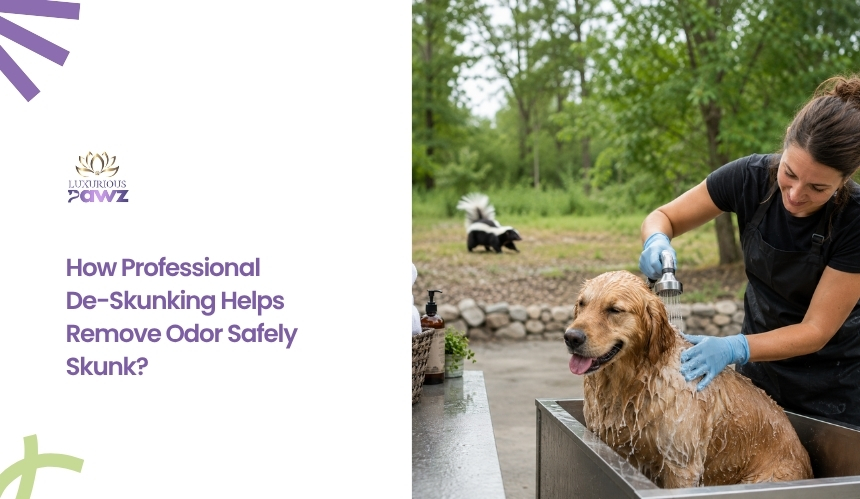
Professional pet de-skunking combines odor neutralization with coat-specific bathing and careful handling. The process is adjusted according to the pet’s species, coat type, skin condition, and level of contamination.
Pets in Sunland, CA, especially those spending time near Foothill Boulevard, Sunland Park, Oro Vista Park, and surrounding foothill neighborhoods, may encounter skunks during evening or early-morning outings. Professional pet bathing helps remove oily skunk residue from the coat, reduce lingering odor, and prevent it from spreading to bedding, vehicles, and furniture. Luxurious Pawz provides careful de-skunking baths tailored to your pet’s coat and comfort.
Evaluating the Pet Before Treatment
A professional groomer begins by identifying where the spray landed and how deeply it entered the coat. A direct facial or chest spray may require a different approach from residue limited to the back, legs, or tail.
The groomer may also consider:
- Coat length and density
- Presence of mats or compacted undercoat
- Skin sensitivity or existing irritation
- Products already applied at home
- Time elapsed since the incident
- Whether the pet has been rinsed or bathed
- The animal’s stress level and handling tolerance
This assessment reduces unnecessary product use and helps prevent repeated washing.
Neutralizing Odor Instead of Covering It
Professional de-skunking products are designed to remove or alter the odor-causing residue rather than hide it beneath perfume.
Treatment commonly begins with an odor-neutralizing application before the regular bath. The product must reach the contaminated coat without entering the eyes, ears, nose, or mouth. Correct dilution and contact time are essential because stronger or longer application does not automatically produce better results.
After neutralization, the coat is rinsed thoroughly to remove loosened oil and product residue. A pet-appropriate shampoo may then be used to complete the bathing process.
Matching the Process to the Pet’s Coat
A short-coated dog may require less product and rinsing than a large dog with a dense double coat. Thick undercoats can trap residue close to the skin, where surface washing may not reach it.
Long-haired pets may also have mats or tangled areas that prevent even product distribution. Gentle brushing, coat separation, and controlled rinsing help the neutralizer reach affected fibers.
Cats require particularly careful handling because they groom themselves and may ingest products left on the coat. A professional cat groomer should use feline-appropriate products and minimize unnecessary restraint or prolonged bathing.
Protecting the Skin and Coat
Multiple harsh baths can strip the coat’s protective oils and leave the skin dry or irritated. Professional treatment aims to use the fewest effective applications rather than repeatedly shampooing the pet.
The groomer may choose mild finishing products based on the animal’s skin and coat condition. Heavy fragrances should not be used to disguise remaining odor, especially around pets with respiratory sensitivity.
The coat must be rinsed thoroughly and dried appropriately. A faint smell may still be noticeable when the fur becomes wet if residue remains deep in the coat, so the groomer should provide realistic expectations about possible follow-up care.
When Is Professional De-Skunking the Best Choice?
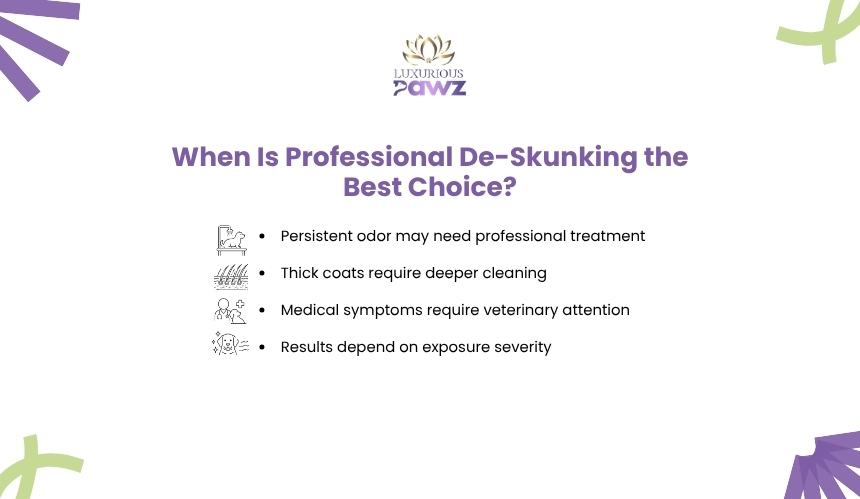
Some mild skunk encounters can be managed at home, but professional care is often the safer choice when the pet receives a direct spray or has a coat that is difficult to clean thoroughly.
Pets near Foothill Boulevard, Sunland Park, Oro Vista Park, and Tujunga Wash may encounter skunks around foothill properties and backyard areas. Professional De-Skunking in Sunland, CA helps remove oily residue before odor spreads to bedding, vehicles, and furniture. Luxurious Pawz also serves nearby Tujunga, Shadow Hills, and Lake View Terrace.
Signs Your Pet Needs Professional Treatment
Consider professional de-skunking when:
- The odor remains after an initial home bath.
- The smell returns whenever the coat becomes wet.
- The pet has a thick, curly, long, or double-layered coat.
- Skunk oil is concentrated around the face, neck, chest, or tail.
- Home treatment has caused dryness, irritation, or coat discoloration.
- The pet transferred odor to several indoor surfaces.
- You are unsure which products are safe for the animal.
- The pet becomes too stressed or difficult to handle during bathing.
Prompt professional treatment can reduce the amount of time the residue remains on the fur and limit further transfer into the home or vehicle.
When Should a Veterinarian Be Contacted?
A groomer should not treat a medical reaction as a routine odor-removal problem. Contact a veterinarian if the pet has:
- Severe or continuing eye irritation
- Difficulty breathing
- Repeated vomiting
- Weakness or collapse
- Pale, brown, or unusually dark gums
- Dark or discolored urine
- Significant facial swelling
- An open wound contaminated by skunk spray
Veterinary evaluation should occur before or instead of grooming when the pet appears medically unstable.
What Results Can Pet Owners Expect?
Professional de-skunking can significantly reduce odor, but complete removal in one appointment cannot always be guaranteed. Results depend on the amount of spray, the location of exposure, coat density, treatment timing, and products previously used.
A heavily sprayed pet may retain a faint odor that becomes noticeable when the coat is wet. Follow-up bathing may be recommended after the skin and coat have had time to recover.
A responsible groomer should explain the treatment plan, protect sensitive areas, and provide realistic expectations rather than promising instant or permanent odor removal.
Helping Prevent Future Skunk Encounters
Skunks are most active from evening through early morning. Pets should be supervised during nighttime bathroom breaks, particularly around yards, fences, sheds, decks, bushes, and outdoor feeding areas.
Secure trash containers, remove uneaten pet food, clean up fallen fruit, and eliminate accessible water sources that may attract wildlife. Openings beneath decks, porches, and sheds should only be sealed after confirming that no animal is inside.
When a skunk raises its tail, stamps its feet, hisses, or turns its rear toward a pet, increase the distance calmly. Pulling a dog away on a leash is safer than allowing barking, chasing, or cornering behavior.
Do not let skunk residue remain on your pet’s coat or spread throughout your home. Luxurious Pawz provides pet-focused de-skunking services in Sunland, CA, using careful bathing and coat-appropriate odor treatment designed around your pet’s comfort. Contact Luxurious Pawz to schedule professional care and help your dog or cat feel clean, comfortable, and fresh again.
Frequently Asked Questions
What Should I Do Immediately After My Dog Is Sprayed by a Skunk?
Keep your dog outside or in a contained, ventilated area so skunk oil does not transfer to furniture, carpeting, or bedding. Check the eyes, mouth, and breathing before attempting to bathe the coat. Wear gloves, avoid fragranced sprays, and contact a professional de-skunking groomer. Seek veterinary help for eye pain, vomiting, weakness, or breathing difficulty.
Can Regular Dog Shampoo Remove Skunk Odor?
Regular dog shampoo may remove surface dirt and some oil, but it usually does not fully neutralize skunk-spray thiols. Repeated shampooing can dry the skin without addressing residue trapped in the undercoat. Professional de-skunking uses an odor-neutralizing treatment before or alongside a coat-appropriate bath, making it more effective than ordinary shampoo or fragranced conditioner alone.
Can Professional De-Skunking Remove the Smell in One Visit?
Professional de-skunking can substantially reduce the odor, but one treatment may not remove every trace. Results depend on how much spray reached the pet, the coat’s density, the location of exposure, and how quickly treatment began. A faint smell may return when the coat becomes wet if residue remains deep in the undercoat.
Is Hydrogen Peroxide and Baking Soda Safe for Pets?
A freshly prepared mixture of 3% hydrogen peroxide, baking soda, and dish soap is sometimes used for skunk odor, but it carries risks. Peroxide can irritate skin, lighten dark fur, and injure the eyes. It should never be used on wounds or stored in a sealed container. Professional treatment is safer when the pet has sensitive skin or facial exposure.
When Does a Skunked Pet Need Veterinary Care?
Contact a veterinarian if the pet has persistent eye redness, facial swelling, breathing changes, repeated vomiting, weakness, pale or brown gums, or dark urine. A direct spray into the eyes or mouth also warrants veterinary guidance. Grooming can remove odor from the coat, but it cannot diagnose or treat respiratory, eye, or blood-related complications.
How Long Can Skunk Odor Stay on a Pet?
Untreated skunk odor may remain noticeable for days or weeks, especially on pets with long, thick, curly, or double-layered coats. The smell may become stronger after rain, swimming, or bathing because moisture can reactivate the remaining odor. Prompt professional de-skunking and thorough rinsing usually provide better results than allowing the residue to dry.