
- Luxurious Pawz
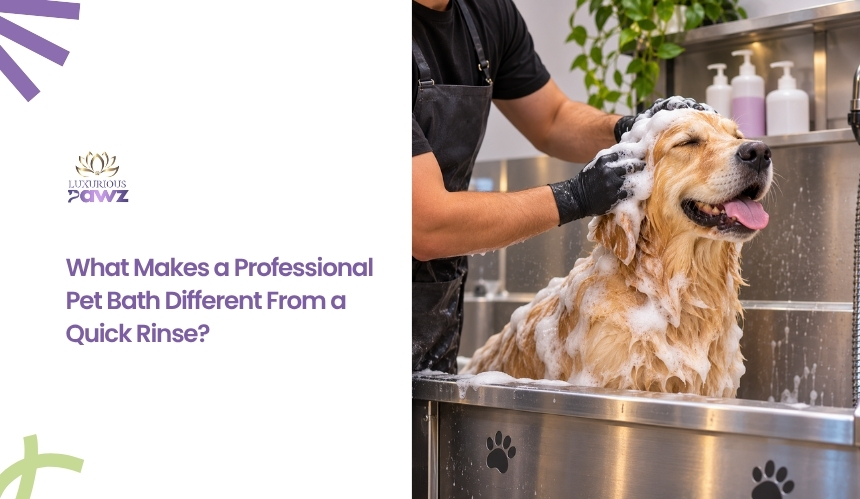
What Makes a Professional Pet Bath Different From a Quick Rinse?
Key Takeaways
|
A quick rinse can remove some loose dirt, but a professional pet bath is a complete grooming process. It considers the coat, skin, cleansing method, rinsing, drying, and finishing rather than simply getting the pet wet. For Glendale, CA pets that spend time outdoors, the distinction becomes especially useful when everyday dust, debris, shedding, or coat buildup calls for more than a surface rinse.
1. Professional Bathing Is a Complete Cleaning Process, Not Just Wetting the Coat
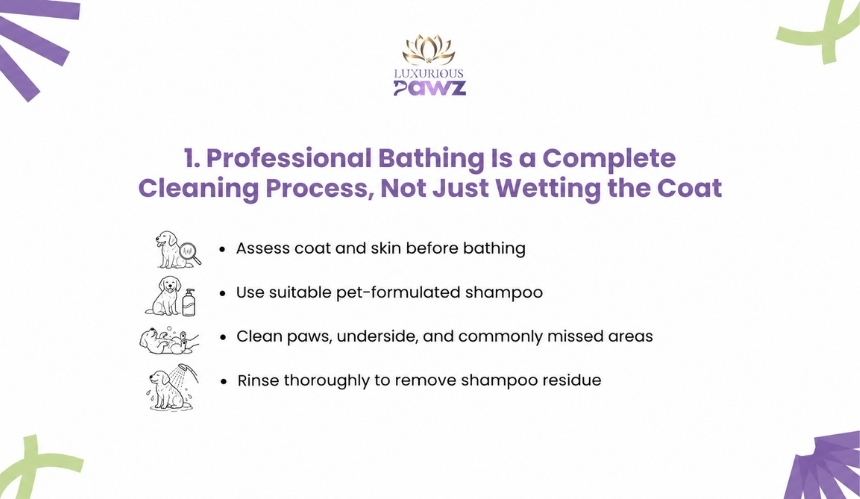
The difference begins before the shampoo is applied. A professional bath follows a sequence designed around the pet’s coat and individual grooming needs. Instead of treating every bath as the same routine, the process considers what is actually present in the coat, where buildup tends to collect, and how the coat should be cleansed without unnecessary stress.
Coat and Skin Assessment Before Bathing
Professional bathing starts with observation. The groomer can consider the coat’s length, density, texture, shedding pattern, and general condition before deciding how to approach the bath. Visible debris, tangles, mats, excessive oil, dryness, or compacted hair can change what needs to happen before the coat is thoroughly washed.
This preliminary assessment is particularly valuable for pets whose coats respond differently to moisture. A short, smooth coat may release surface dirt relatively easily, while a long or dense coat can hold debris deeper within the hair. Curly coats may also require careful preparation because tangles can become more difficult to manage once saturated.
Veterinary guidance confirms that grooming requirements vary according to factors including a dog’s haircoat type, lifestyle, age, and underlying health status.
For a pet enjoying regular walks around Glendale, the assessment can also provide an opportunity to identify ordinary outdoor debris before it becomes embedded in the coat.
Glendale’s warm, dry climate and foothill setting can mean pets pick up fine dust and outdoor debris during walks and time outside, particularly around areas such as Montrose, Rossmoyne, and Glenoaks Canyon.
During warmer periods, regular outdoor activity can leave a coat carrying more environmental residue than is immediately visible, making pet bathing useful as part of a grooming routine tailored to the local conditions rather than simply washing whenever a pet looks dirty.
A professional assessment can help determine whether the coat needs a routine cleanse, more thorough rinsing, or additional brushing based on its type and the pet’s outdoor habits.
Thorough Cleansing of the Skin and Coat
A rinse and a bath perform different functions. Water can loosen some surface material, but effective cleansing requires a suitable pet-formulated shampoo worked through the coat and subsequently rinsed away.
Professional bathing focuses on coverage rather than simply making the outside of the coat appear clean. Shampoo needs to be distributed through the coat appropriately, with attention given to areas where dirt, oils, and environmental residue may accumulate.
The product itself also matters. Dogs have different skin characteristics from humans, and veterinary guidance advises using shampoos specifically formulated for dogs rather than human or baby shampoo.
That distinction matters in a professional setting because the objective is not to use the strongest possible cleanser. It is to use an appropriate product and technique for the pet being groomed.
Targeted Cleaning of Commonly Missed Areas
A quick rinse often concentrates on the most visible parts of the coat. Professional bathing takes a more systematic approach, giving attention to areas that can collect dirt or require more careful cleaning.
Depending on the pet, this can include the paws, areas between the toes, legs, underside, chest, tail area, and other places where debris can remain after ordinary outdoor activity. Veterinary bathing instructions similarly identify areas such as the paws, armpits, groin, and area around the rectum as locations that may require focused attention in certain bathing situations.
The ears also deserve thoughtful handling. Cleaning around the ear is different from directing water into the ear canal. A professional approach recognizes that some body areas require precision rather than simply more water.
For Glendale pets that regularly move between sidewalks, yards, parks, and indoor spaces, these small details can make the difference between a coat that has been wetted and one that has actually been cleaned.
Controlled Water Temperature, Pressure, and Technique
The way water is used contributes to the quality of the bath. Lukewarm water is generally recommended for routine dog bathing, both for comfort and because shampoos can work effectively in warm water.
Technique matters too. Some pets may find direct spraying uncomfortable or intimidating, particularly if they are inexperienced with bathing. VCA guidance recommends considering a gentler approach when introducing water to a pet.
A professional groomer can therefore work with the pet rather than treating the bath as a purely mechanical process. Water is used to wet, cleanse, and rinse the coat systematically, while the handling approach can be adjusted according to the animal’s response.
This is especially relevant for pets that become tense during ordinary bathroom bathing. The objective is a controlled grooming experience, not simply faster water application.
Complete Rinsing and Residue Removal
Thorough rinsing is one of the clearest differences between a rushed wash and a carefully completed bath. Shampoo should not simply be rinsed from the outer surface while the product remains deeper in the coat.
Dense or long coats can require additional attention because water must travel through the coat sufficiently to remove cleansing product. Veterinary bathing guidance specifically emphasizes rinsing all shampoo from the body and avoiding residual product on the skin.
A proper rinse therefore requires patience and method. The coat may look clean while still containing product, which is why appearance alone is not a reliable indication that rinsing is complete.
Do You Know?
Thorough rinsing is an important part of bathing rather than an optional finishing step. Veterinary guidance specifically advises removing shampoo from all areas of the body so residue is not left against the skin.
A professional bath treats cleansing and rinsing as two connected stages: the product must first be distributed appropriately, then removed thoroughly.
2. The Professional Difference Continues Beyond the Bath
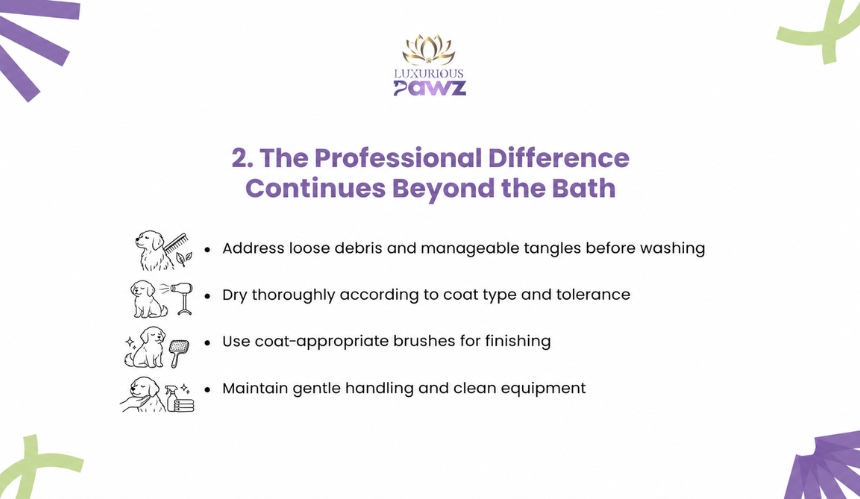
Getting a pet clean is only part of the process. The coat still has to be managed after washing, and this is where a professional bath can differ substantially from a quick home rinse. Preparation, drying, brushing, handling, and hygiene all contribute to the final result.
Coat Preparation Before and After Washing
Coat preparation can determine how effectively the bath proceeds. Loose debris and manageable tangles are often better addressed before the coat becomes saturated.
This is especially important for longer or more textured coats. VCA advises brushing out burrs and tangles before bathing because tangles can become much harder to remove once the coat is wet. Severe or extensive matting may require professional grooming or veterinary attention.
The same principle applies after washing. Once the coat has been cleansed and dried, appropriate brushing can help separate the hair, remove loose material, and maintain manageability.
For pets in Glendale that spend time outdoors, this preparation can be particularly useful when grass, small plant material, dust, or other debris becomes caught in the coat.
Professional Drying Rather Than Simply Leaving the Coat Damp
A bath is not finished when the water stops running. Drying is another important stage because moisture can remain within the coat, especially when the hair is long or dense.
The drying approach should take the pet’s coat and tolerance into account. A short coat may require considerably less drying than a dense coat, while a heavily coated pet may need more methodical attention to ensure moisture is not simply trapped beneath the outer layer.
Veterinary bathing guidance recommends drying a dog after bathing and keeping the animal warm until completely dry.
This is one reason a professional bath should be viewed as a complete grooming appointment rather than a simple washing event. Cleansing, rinsing, and drying form a connected sequence.
Brushing and Coat Finishing
Brushing gives the finished coat structure and manageability. It can remove loose hair, help separate the coat, and address remaining minor tangles after bathing.
The correct brush or comb depends on coat type. The ASPCA notes that brushing needs differ among smooth, short, dense, and long coats, while VCA similarly recommends different grooming tools for different coat structures.
A professional finish is therefore not simply about making a pet look fluffy. It is about leaving the coat appropriately clean, dry, brushed, and manageable.
For a Glendale pet with a coat that sheds heavily or tangles easily, this finishing stage can be just as meaningful as the cleansing itself.
Gentle Handling Throughout the Grooming Session
Professional grooming involves both technical skill and careful handling. Pets differ in temperament, previous grooming experiences, tolerance for water, and sensitivity to dryers or unfamiliar sensations.
A thoughtful grooming process can use a predictable sequence and controlled handling rather than unnecessary pulling, rushing, or repeated manipulation of tangled hair.
This is particularly valuable for senior pets, nervous animals, and pets that simply dislike conventional bathing environments. Luxurious Pawz describes its Glendale mobile grooming service as using calm, personalized care and familiar surroundings as part of its approach.
The benefit is not merely convenience. A calmer setting can make the grooming process more manageable for pets that become unsettled by travel or crowded grooming environments.
Hygiene and Equipment Standards
The quality of a professional bath also depends on the environment in which it takes place. Bathing surfaces, brushes, combs, towels, and other grooming equipment should be maintained appropriately between appointments.
Good hygiene supports a more controlled grooming environment and reduces unnecessary transfer of dirt or debris between sessions. It is part of the professional process rather than something that only matters when the pet is visibly dirty.
The same principle applies to organization. Having the appropriate equipment prepared before bathing can reduce interruptions and help the groomer maintain a consistent sequence from preparation through drying.
For mobile grooming, the controlled environment can also be brought directly to the pet’s home, avoiding a busy salon setting.
Knowing When a Routine Bath Is Not Enough
Professional grooming is not a replacement for veterinary care. An experienced groomer may notice that an unusual coat condition, persistent odor, excessive greasiness, irritation, or another change does not appear to be an ordinary cleanliness issue.
Veterinary guidance notes that skin and coat concerns can have different underlying causes and that pets requiring unusually frequent bathing because of skin problems should be evaluated with veterinary guidance.
That distinction is important. A stronger shampoo or more frequent bathing is not automatically the answer to every coat concern.
Do You Know?
Persistent coat or skin changes should not automatically be treated as a grooming-frequency problem. Veterinary guidance notes that recurring skin and coat issues may warrant professional veterinary evaluation rather than simply increasing the number of baths.
A professional groomer can support hygiene and coat care while recognizing when the appropriate next step belongs with a veterinarian.
3. A Professional Pet Bath Is About the Pet's Overall Grooming Needs
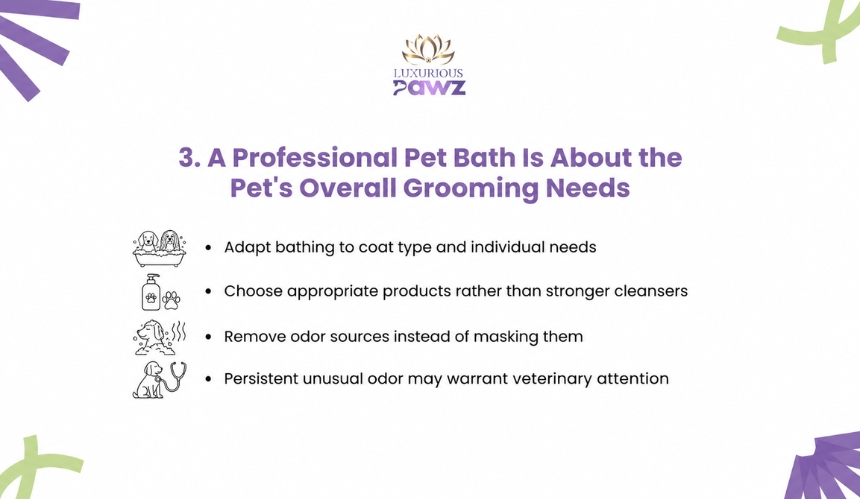
The final distinction is broader than cleanliness. A professional bath should fit into the pet’s overall grooming routine, taking account of coat type, product selection, odor, shedding, comfort, and maintenance. This makes the result more useful than a temporary reduction in visible dirt.
Bathing According to Coat Type Rather Than Using a One-Method-Fits-All Approach
A short, smooth coat behaves differently from a long, flowing coat. Dense double coats have different grooming considerations again, while curly or textured coats may require careful brushing and drying to maintain manageability.
The ASPCA explains that brushing requirements vary according to coat type, while VCA notes that bathing frequency also depends on haircoat type, lifestyle, age, and health status. That means a professional bath is not defined by a universal number of shampoo applications or a fixed amount of time under water. The process is adapted to what the coat actually requires.
For Glendale pets with different lifestyles, from dogs enjoying neighborhood walks to pets spending more time indoors. The appropriate grooming routine can naturally vary. Glendale’s warm, relatively dry conditions can make coat maintenance especially relevant for pets spending time outdoors, where longer hair may collect fine dust and plant debris during everyday activity.
Around Adams Hill, Verdugo Woodlands, and Brockmont, a well-maintained coat can be easier to keep clean and manageable between baths, making a pet haircut a practical part of grooming for pets whose coat length and texture call for trimming. The appropriate length should still be based on the individual coat rather than treating a haircut as a universal response to warm weather.
Choosing Products With the Pet's Needs in Mind
Professional bathing does not mean using the most powerful cleanser available. The better approach is selecting products formulated for pets and appropriate to the grooming purpose. Veterinary sources advise against using human shampoo on dogs because canine skin differs in thickness and pH from human skin.
Routine grooming products and veterinary therapeutic products should also not be confused. If a pet has a diagnosed skin condition, a veterinarian may recommend a specific medicated shampoo or bathing schedule. For ordinary grooming, the objective is a clean coat and comfortable skin, not unnecessary product intensity.
Addressing Odor at the Source Instead of Masking It
A fragrant coat is not necessarily a thoroughly clean coat. Professional bathing focuses first on removing ordinary sources of odor, such as accumulated oils, dirt, and environmental residue.
This distinction becomes particularly relevant when a pet has spent time outdoors. A quick rinse may reduce some visible dirt while leaving material deeper within the coat.
Persistent or unusual odor, however, can be different. If the smell repeatedly returns despite appropriate grooming, the issue may warrant veterinary attention rather than simply stronger fragrance or increasingly frequent baths.
The Difference in the Final Result: Clean, Dry, Comfortable, and Manageable
The easiest way to understand the distinction is to look at the entire result. A quick rinse can remove loose surface material. A professional bath can involve preliminary coat assessment, brushing, appropriate cleansing, targeted rinsing, thorough product removal, drying, and coat finishing.
That does not mean every home bath is inadequate. A well-executed home bath can also be thorough. The distinction is that professional grooming applies a structured process and specialized handling to the pet’s individual coat and circumstances.
The result should therefore be evaluated by more than appearance. A properly groomed coat should be appropriately clean, thoroughly rinsed, sufficiently dry, and manageable for the pet’s ongoing routine.
Why Consistent Professional Grooming Creates a More Complete Routine
Grooming is most useful when it becomes an appropriate part of ongoing pet care rather than something done only after a coat becomes visibly dirty.
The correct schedule varies considerably. VCA notes that bathing frequency depends on factors such as lifestyle, coat type, age, and health status, while the ASPCA likewise notes that some dogs may need more frequent baths when they spend considerable time outdoors or have skin problems.
For a Glendale household, this can mean adjusting grooming around the pet’s actual lifestyle rather than following a rigid calendar. A dog that frequently explores outdoor spaces may have different grooming requirements from a mostly indoor companion.
Regular professional grooming can also create continuity: the coat is repeatedly assessed, maintained, and finished according to its changing needs.
Professional Pet Bath vs. Quick Rinse: What Actually Changes?
The difference can be summarized through five elements: purpose, process, attention, technique, and outcome.
A quick rinse is primarily concerned with removing some loose surface dirt. A professional bath takes a broader view, beginning with the condition of the coat and continuing through cleansing, complete rinsing, drying, brushing, and finishing.
The attention is also different. Instead of focusing only on visible dirt, professional grooming considers the entire coat and the areas where buildup, tangles, or loose hair may be present.
Ultimately, professional bathing is not simply about making a pet wetter, cleaner-looking, or more fragrant. It is a structured grooming process designed around the pet’s coat, comfort, hygiene, and ongoing maintenance.
For pet parents who want a more complete grooming experience without turning a bath day into a stressful trip, Luxurious Pawz brings mobile grooming directly to Greater Los Angeles. Its Glendale service includes professional dog bathing and brushing, with options such as de-shedding, nail trimming, ear cleaning, and other grooming care tailored to the pet. The mobile format also allows pets to remain in familiar surroundings while receiving individualized attention.
If your pet’s coat needs more than a quick rinse, Luxurious Pawz provides professional bathing and grooming throughout Greater Los Angeles, with care shaped around coat condition, temperament, and grooming needs.
Frequently Asked Questions
Is a professional pet bath better than a quick rinse?
A professional bath is more comprehensive because it can include coat assessment, brushing, cleansing, thorough rinsing, drying, and finishing. A quick rinse generally addresses surface debris without providing the same complete grooming sequence.
How often should a pet receive a professional bath?
There is no universal schedule. Bathing frequency depends on coat type, lifestyle, activity level, age, and skin condition. Dogs that spend considerable time outdoors may need bathing more frequently than primarily indoor pets.
Why is brushing done before a professional bath?
Brushing can remove loose hair, debris, and manageable tangles before the coat becomes wet. This is particularly important because existing tangles can become substantially harder to remove after bathing.
Why does thorough rinsing matter after shampooing?
Thorough rinsing removes cleansing product from throughout the coat rather than leaving residue behind. Veterinary bathing guidance specifically emphasizes rinsing all shampoo from the pet’s body before the drying stage.
Can professional grooming help with excessive shedding?
Professional grooming can help remove loose hair through appropriate brushing and de-shedding techniques. However, shedding varies naturally between breeds and individuals, and unusual changes in shedding may warrant veterinary discussion.