
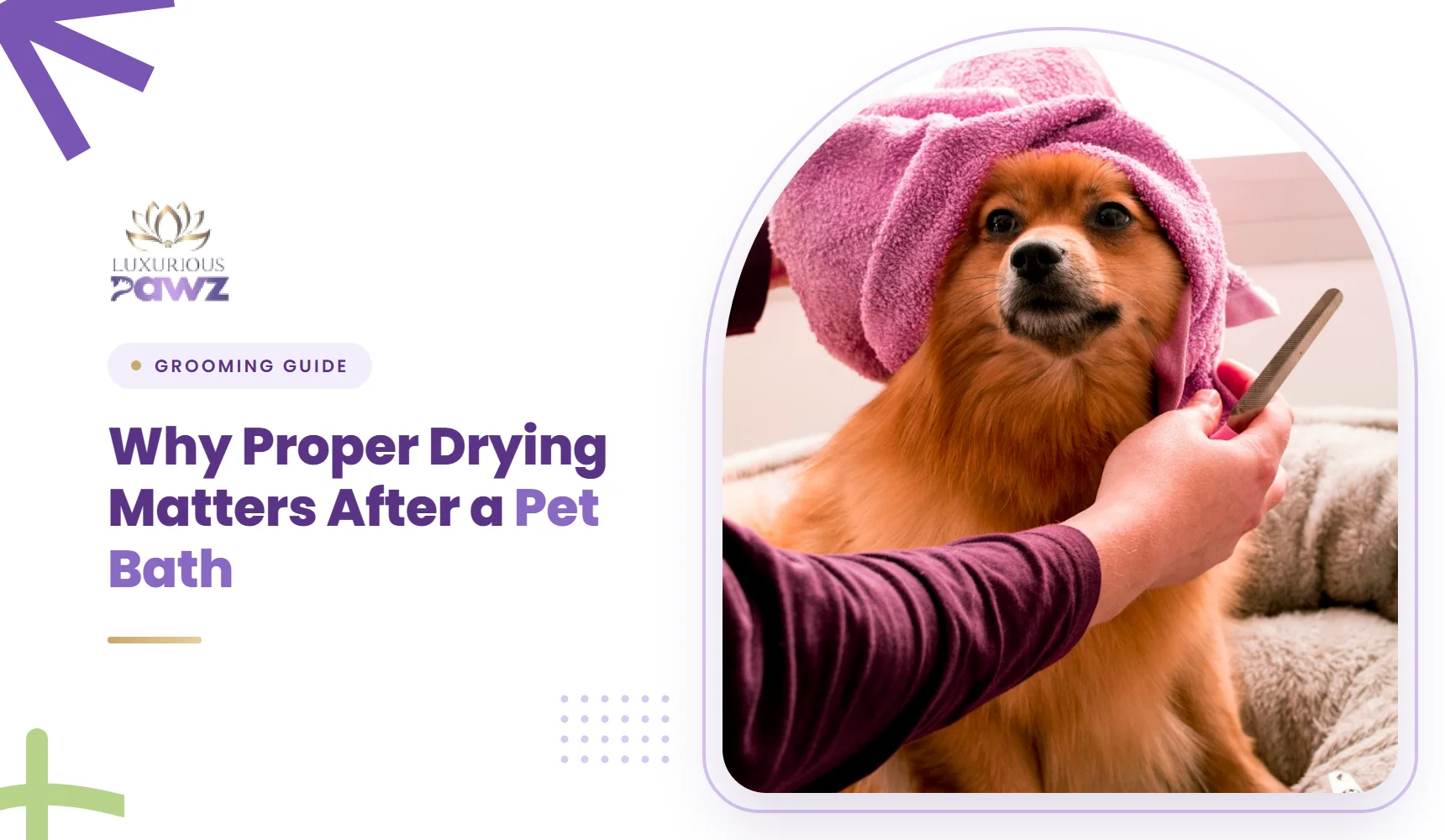
Why Proper Drying Matters After a Pet Bath
- Luxurious Pawz
A pet can appear dry on the surface while moisture remains trapped beneath dense fur, around the ears, between the toes, or close to the skin. In Altadena, CA, warm, dry conditions can make the outer coat feel dry before the deeper layers have fully dried.
Incomplete drying can contribute to coat tangling, discomfort, and prolonged dampness against the skin. Proper drying makes the bathing process more complete while giving owners an opportunity to inspect areas that are easy to overlook.
Key Takeaways
Proper drying removes moisture that can remain hidden beneath dense or layered coats, even when the outer fur feels dry.
Incomplete drying can contribute to coat tangling, discomfort, and prolonged dampness close to the skin.
Thorough drying makes it easier to inspect the skin and identify damp or tangled areas that may otherwise remain concealed.
Drying techniques should be adapted to the pet's coat type, with dense, long, curly, or layered coats generally requiring more attention.
A final check of moisture-prone areas, including the ears, paws, chest, and dense fur, helps confirm that the coat is dry beneath the surface.
What Happens When a Pet Is Not Dried Properly
Drying is more than the final step that makes a pet look clean after a bath. Moisture can remain hidden in dense areas of the coat, particularly where hair is layered or pressed closely against the skin. Areas such as the chest, abdomen, behind the ears, around the legs, and between the toes can take longer to dry because airflow and towel contact do not reach every layer equally.
If these sections remain damp while the outer coat feels dry, the coat can stay compressed against the skin and become more difficult to brush or separate. A thorough drying routine therefore involves working through the coat rather than judging dryness by its surface appearance alone. This is especially relevant for pets with long, curly, or double coats, where the difference between a dry outer layer and a damp underlayer can be significant.
Trapped Moisture and Skin Irritation
Moisture that remains close to the skin can keep a localized area damp longer than the surrounding coat. This does not mean that every damp coat will develop a skin infection, but prolonged moisture can become one factor affecting an already vulnerable skin barrier.
This is more relevant for pets with dense coats, skin folds, allergies, or existing dermatological problems. The coat can also conceal changes in the skin until it is separated and thoroughly dried.
In Altadena, outdoor activity can expose pets to dust, vegetation, and other environmental material that may become trapped in a wet coat. Drying therefore provides an opportunity to check the skin rather than simply allowing the coat to dry on its own. A dry outer layer is not necessarily evidence that the entire coat is dry. The fur closest to the skin can retain moisture after the surface feels normal to the touch.
Tangling, Matting, and Coat Changes
Wet hair tends to group together, making existing tangles harder to separate. This becomes particularly significant with long, curly, or dense coats, where individual hairs can remain compressed as moisture evaporates. The American Kennel Club recommends addressing mats before bathing because they can become tighter when wet. It also notes that thicker coats require more attention during drying.
Drying technique therefore affects more than comfort. When a coat is allowed to dry while tangled or compressed, the resulting knots can make later brushing more difficult and may require more extensive grooming.
For Altadena dogs with longer coats, checking the areas behind the ears, around the legs, under the chest, and near the collar can reveal damp or tangled sections that are easy to miss when only the outer coat is inspected.
How Proper Drying Supports a Healthy, Manageable Coat
Once excess water has been removed, drying becomes an opportunity to restore the coat’s structure and inspect areas that may remain hidden while the fur is wet. The process is particularly valuable for pets with dense, long, or curly coats, where moisture can remain between layers even after the surface appears dry.
Controlled drying helps separate the coat, reveal areas that need additional brushing, and identify trapped moisture before the grooming session is finished. For pets in Altadena, where warm, dry outdoor conditions may make the outer coat dry quickly, checking the deeper layers is especially useful because surface dryness does not necessarily mean the entire coat is dry.
Helps Keep the Coat Clean and Comfortable
A thoroughly dried coat is less likely to remain damp against the skin for an extended period. This is particularly relevant around the paws, underside, chest, armpits, groin, and other areas where water can collect.
Drying also makes it easier to examine the skin. The American Kennel Club recommends using the drying process as an opportunity to look for abnormalities such as lumps, bumps, scrapes, scabs, or irritation.
For pets in Altadena, this inspection can be useful after outdoor activity because debris or plant material may be hidden beneath wet fur. A thorough drying routine allows those areas to be separated and examined instead of remaining concealed.
If a pet repeatedly develops itching, redness, odor, discharge, or other skin changes after bathing, incomplete drying should not automatically be assumed to be the cause. Persistent symptoms can have several underlying causes and may require veterinary assessment.
Makes Brushing and Coat Maintenance Easier
Drying and brushing can be coordinated for coats that require regular separation and maintenance. Controlled airflow can help separate individual sections of fur while a groomer works through the coat with an appropriate brush.
The objective is not to aggressively brush a heavily tangled wet coat. Instead, excess water should first be removed, followed by careful drying and coat separation according to the pet’s coat type.
A short-haired pet may need relatively little coat manipulation, while a long-haired or dense-coated pet may require substantially more attention. Treating every coat the same can lead to unnecessary friction or leave moisture hidden beneath the outer layer.
In Altadena, CA, dogs that spend time around Woodbury Road, Altadena Drive, or Mountain View Street can pick up dust, loose plant material, and seasonal debris that settles into the coat. Regular brushing may not address buildup around the paws, underside, or dense areas of fur. Professional dog grooming can combine coat care with thorough cleaning and drying, making it easier to keep dogs comfortable and their coats manageable after outdoor activity.
A veterinary case series examined 22 dogs that developed a particular form of furunculosis following water immersion or exposure to grooming products. 20 of the 22 dogs, or about 91%, had been bathed at home or at a commercial grooming facility before the lesions developed.
How to Dry a Pet Safely After a Bath
The appropriate drying method depends on the pet’s coat, skin condition, size, tolerance, and the equipment being used. The goal is controlled moisture removal without excessive heat, friction, or stress.
Remove Excess Water Before Drying
Begin by allowing the pet to shake off excess water naturally. Follow this with an absorbent towel, pressing or blotting sections of the coat rather than vigorously rubbing them.
Aggressive back-and-forth rubbing can increase tangling, particularly in longer coats. The American Kennel Club recommends pressing the towel into the fur rather than vigorously rubbing the coat.
Pay particular attention to:
- Behind and beneath the ears
- The chest and underside
- Around the legs and paws
- The abdomen and groin
- Skin folds
- Dense sections of fur
For an Altadena pet, drying indoors can provide more control than leaving the animal outside to dry naturally. The important consideration is not how quickly the outer coat appears dry, but whether moisture remains underneath.
In Altadena, CA, pets that spend time near Eaton Canyon, Chaney Trail, or La Vina can pick up fine dust, plant debris, and outdoor residue on their coats and paws. After heavy outdoor exposure, brushing may not remove everything from dense fur or between the toes. Professional pet bathing provides a thorough way to clean these hard-to-reach areas while supporting regular coat and skin care.
Choose a Drying Method Based on the Coat
Short-haired pets generally release water more easily than pets with long, curly, layered, or dense coats. The latter may need additional drying because water can remain between layers of fur. For thicker coats, a pet-specific dryer can be useful. The American Kennel Club recommends dog-specific drying equipment and notes that high-velocity dryers primarily use airflow to remove water rather than depending on high heat.
Human hair dryers are not an ideal substitute because excessive heat can injure a pet’s skin. If a dryer is used, the airflow should be controlled and the pet should be monitored continuously for signs of discomfort or overheating.
The sound and sensation of a dryer can also cause anxiety. Introducing the equipment gradually and keeping sessions controlled can make the drying process easier for pets that are sensitive to noise.
Check the Coat Before Finishing
The final check should go beyond looking at the outside of the fur. Run your hands gently through different sections and assess whether moisture remains close to the skin.
Dense areas deserve particular attention because the surface can dry faster than the underlying hair. Check behind the ears, beneath the collar area, around the chest and armpits, between the toes, and under the abdomen. The ears also require careful handling. VCA recommends drying a dog’s ears after bathing or swimming and advises against inserting cotton swabs into the ear canal.
This final inspection is especially useful because it separates surface dryness from complete coat dryness. If the coat still feels cool, heavy, or damp near the skin, additional controlled drying may be necessary.
What happens when a pet looks dry, but moisture remains trapped beneath the coat? Proper drying helps prevent prolonged dampness, tangling, and discomfort. Luxurious Pawz serves pets throughout Greater LA, making thorough drying an important part of keeping pets clean, comfortable, and well-groomed after a bath in Altadena.
Frequently Asked Questions
Why is it important to dry a pet completely after a bath?
Complete drying removes moisture that can remain trapped within the coat or close to the skin. It also reduces the chance of the coat drying in compressed or tangled sections and allows the skin, paws, and ears to be inspected more carefully.
Can I let my dog air-dry after a bath?
Air-drying may be adequate for some short-coated pets under suitable conditions, but it is not ideal for every coat. Long, curly, dense, or double coats can retain moisture beneath the surface and may require towel drying followed by an appropriate pet dryer.
Can a wet coat cause mats?
A wet coat can make existing tangles more difficult to manage, particularly in long or curly fur. As the coat dries, knots can become tighter. Removing existing mats before bathing and using appropriate drying techniques can make coat maintenance easier.
Can I use a human hair dryer on my dog?
A human hair dryer is generally not the preferred option because excessive heat can injure a dog’s skin. A pet-specific dryer with controlled airflow is more appropriate, and the pet should be monitored throughout the drying process.
Should I dry my dog's ears after a bath?
Yes. The visible parts of the ears should be dried carefully after bathing. VCA recommends keeping dogs’ ears clean and dry and advises against inserting cotton swabs into the ear canal.
When should I contact a veterinarian about a skin problem after bathing?
Persistent redness, itching, unusual odor, discharge, sores, or other changes should be evaluated by a veterinarian rather than automatically attributed to bathing or drying. Skin and ear problems can have multiple causes that require proper diagnosis.