
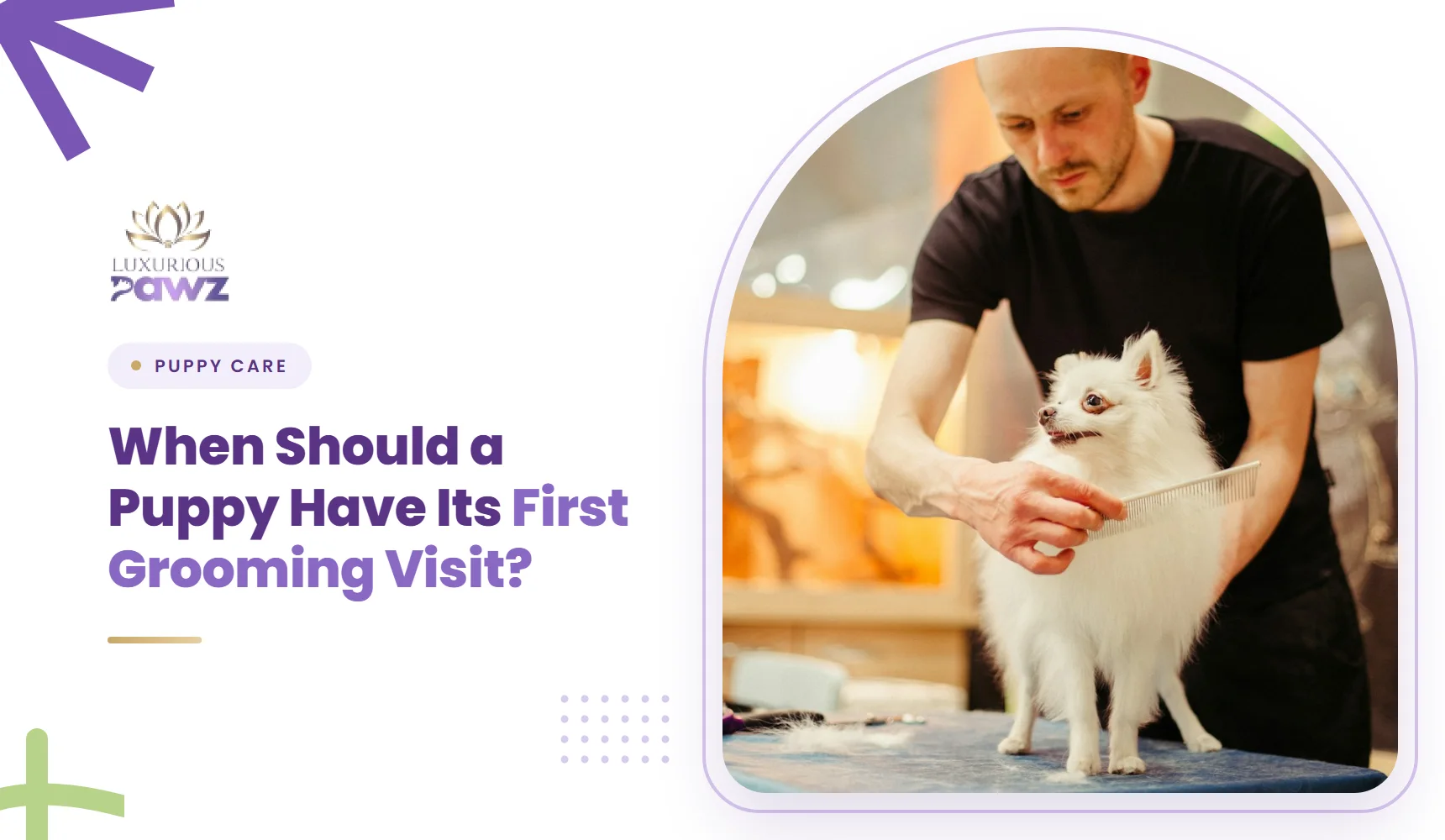
When Should a Puppy Have Its First Grooming Visit?
- Luxurious Pawz
Bringing a new puppy home in Pasadena, CA means learning a whole new routine of feeding, training, socialization, veterinary care, and grooming. One question many new puppy owners eventually face is: When should a puppy have its first grooming visit? The answer is not determined by age alone. Vaccination status, coat type, temperament, handling tolerance, and the kind of grooming your puppy needs all influence when that first appointment makes sense.
For many puppies, an introductory professional grooming visit can begin around 8–12 weeks of age, provided the puppy is appropriately protected according to veterinary guidance and the grooming facility’s requirements. The first appointment does not necessarily need to involve a complete haircut. Instead, it can introduce the puppy to brushing, bathing, nail care, drying, grooming tools, and professional handling in a controlled environment.
For Pasadena puppy owners, starting with a carefully managed introduction can help establish grooming as a familiar part of lifelong care rather than an unfamiliar experience that only happens when the coat becomes difficult to manage.
Key Takeaways
Puppies can often begin an introductory grooming visit around 8–12 weeks, depending on health and vaccination guidance.
The first appointment may focus on acclimation, brushing, bathing, drying, and nail care rather than a full haircut.
A puppy’s temperament and comfort with handling are important indicators of grooming readiness.
Gradual grooming practice at home can help puppies become comfortable with brushes, dryers, paw handling, and bathing.
Grooming needs vary by breed, coat type, lifestyle, and climate, making a personalized routine important for Pasadena, CA puppies.
When Should a Puppy Have Its First Grooming Visit?
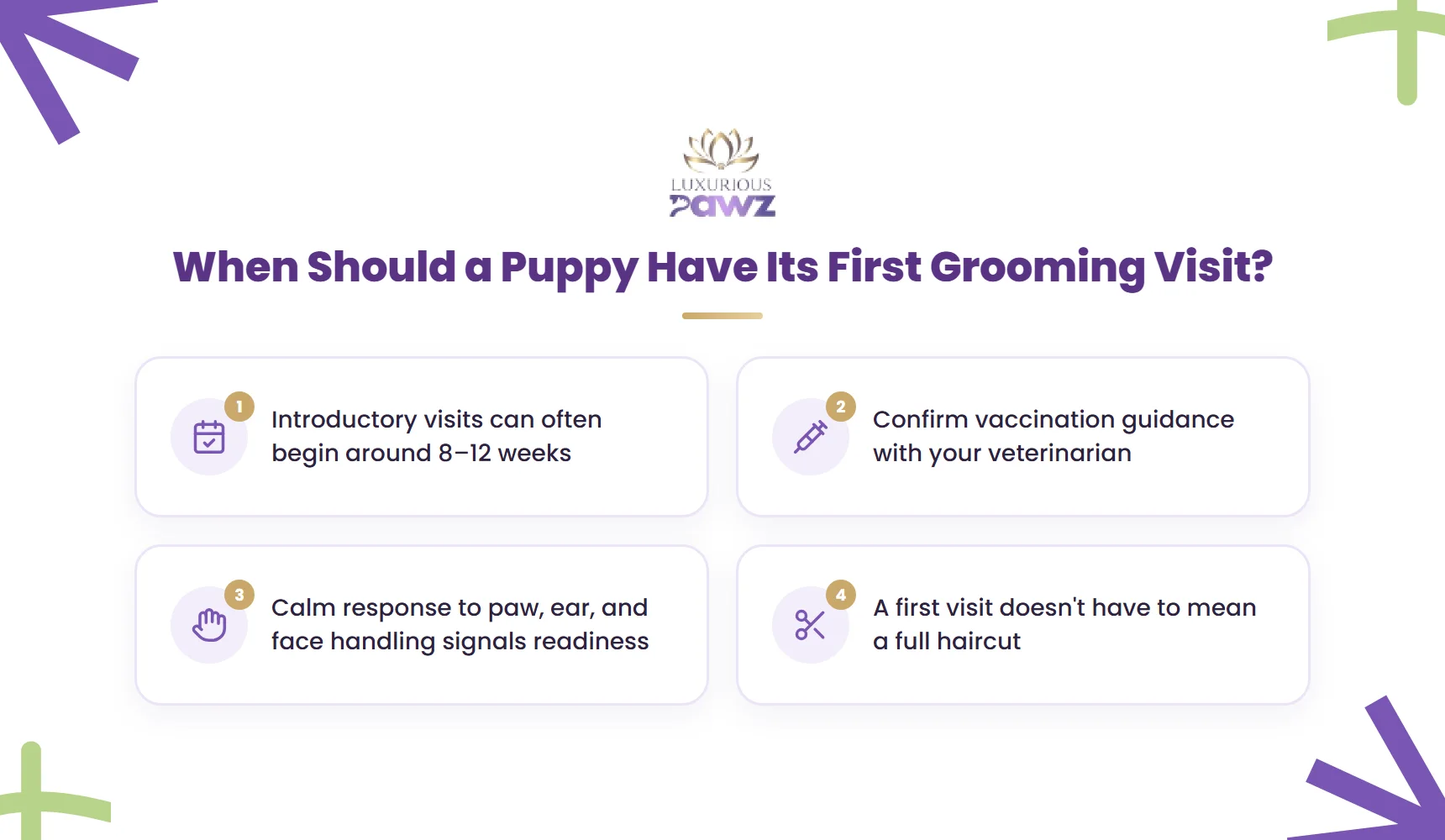
Most puppies can begin an introductory professional grooming experience around 8–12 weeks of age, although the appropriate timing varies between individual dogs. A veterinarian can help determine whether a puppy is sufficiently protected for exposure to a professional grooming environment, while the groomer can explain facility-specific vaccination and health requirements.
The distinction between a first grooming visit and a first full haircut is particularly important. A young puppy may benefit from visiting a groomer simply to become familiar with the setting and basic grooming sensations. Depending on the puppy’s coat and needs, the appointment may involve brushing, bathing, drying, nail trimming, or light tidying rather than an extensive haircut.
The Typical Age for a Puppy’s First Grooming
The 8–12-week period is a useful general timeframe for beginning grooming exposure, but it should not be treated as a rigid deadline. The American Kennel Club discusses introducing puppies to grooming at an early age, including familiarization with brushing, bathing, nail care, and grooming equipment.
This timing also overlaps with an important developmental period. The American Veterinary Society of Animal Behavior identifies the first three months of a puppy’s life as the primary socialization period, during which safe exposure to new people, environments, sounds, and experiences can be particularly valuable.
That does not mean every puppy should immediately enter a busy grooming environment. Instead, grooming exposure should be introduced thoughtfully, with veterinary recommendations and the puppy’s individual response taken into account.
Signs Your Puppy Is Ready for Grooming
A puppy’s behavior can be just as important as its age. Before scheduling a first grooming appointment in Pasadena, observe whether your puppy can comfortably tolerate short periods of handling.
Useful readiness indicators include:
- Remaining relatively calm when the paws are touched
- Tolerating gentle brushing for short periods
- Accepting handling around the ears and face
- Recovering quickly from unfamiliar sounds
- Showing curiosity rather than sustained fear toward new objects
- Accepting treats or praise during handling
Vaccination status should also be considered. Puppy vaccinations commonly begin during the first several weeks of life and continue through a series of boosters, with schedules individualized according to veterinary recommendations and exposure risk.
A puppy's early fear responses can sometimes persist beyond puppyhood. AAHA cites research in which 10% of puppies that displayed fear during a physical examination at 8 weeks were still fearful at 18 months. This does not mean early fear inevitably becomes a long-term problem, but it demonstrates why gentle handling and positive experiences deserve attention from the beginning.
What Happens During a Puppy’s First Grooming Appointment?
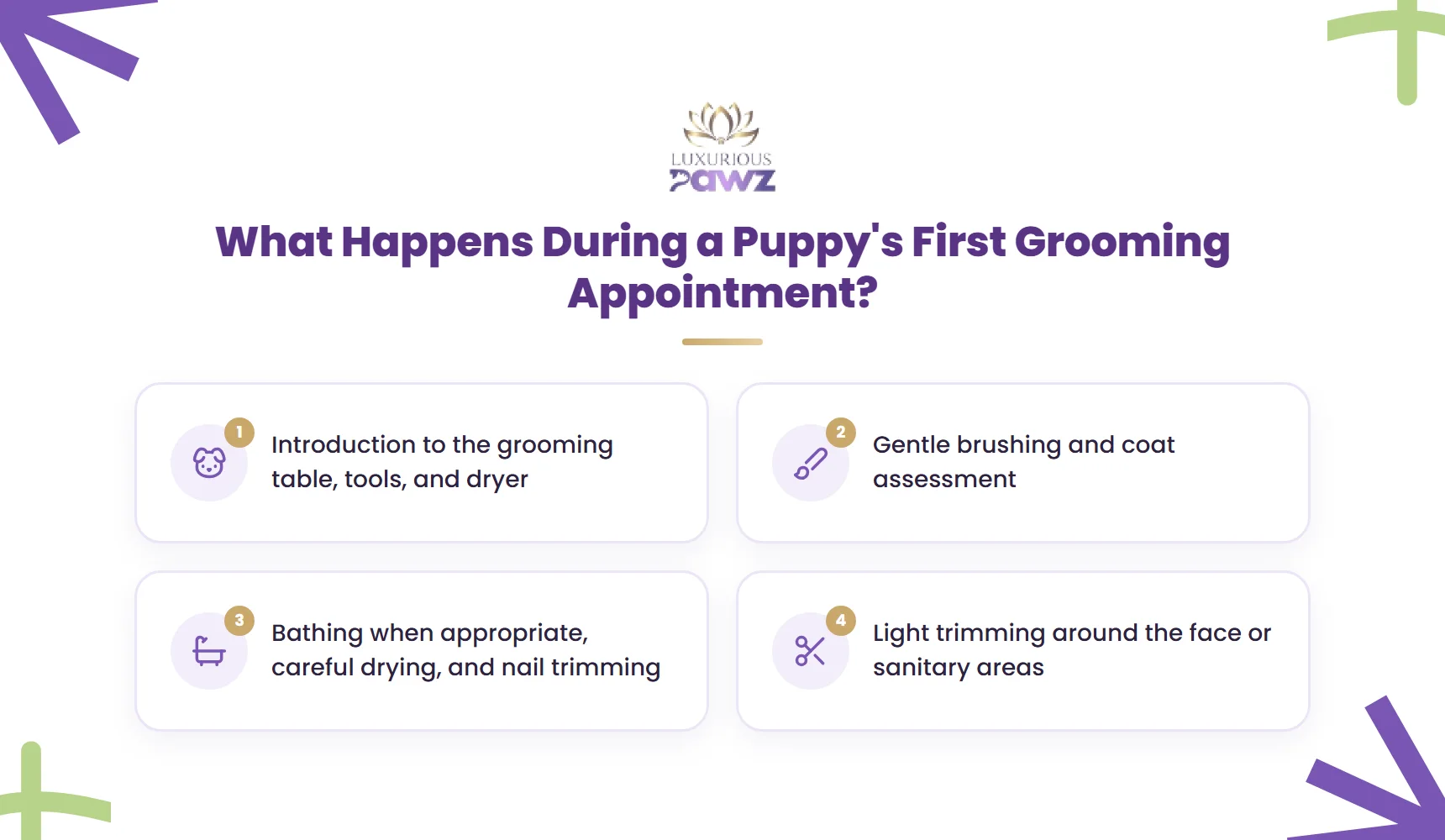
A puppy’s first professional grooming appointment is often more about familiarization than transformation. A groomer may need to introduce the puppy to the grooming table, bathing area, brushes, dryer, nail equipment, and unfamiliar handling before attempting more extensive grooming. Keeping the experience manageable can help prevent the first visit from becoming an unnecessarily intense encounter.
For a Pasadena puppy that will eventually require frequent professional grooming, this introductory stage can be particularly valuable. The objective is to establish predictable associations with grooming while addressing the puppy’s immediate hygiene needs.
Puppy Introduction and Basic Handling
The grooming environment contains several sensations that may be completely unfamiliar to a young dog. The elevated grooming table changes the puppy’s footing, while dryers create unfamiliar airflow and noise. Brushes move across the coat, hands manipulate paws and ears, and unfamiliar people handle areas that puppies may naturally guard.
The American Kennel Club recommends gradually introducing puppies to grooming equipment and handling rather than waiting until a full professional grooming session is necessary.
A thoughtful first appointment therefore allows the groomer to observe how the puppy responds and adjust the experience accordingly. If a puppy becomes overwhelmed, completing fewer services may be more constructive than forcing the entire appointment.
Common First-Grooming Services
The exact services depend on the puppy’s breed, coat, age, temperament, and hygiene needs. An introductory visit may include:
- Gentle brushing and coat assessment
- Bathing when appropriate
- Careful drying
- Nail trimming
- Light trimming around the face or sanitary areas
- Gentle handling of paws, ears, and other sensitive areas
A complete haircut is not automatically necessary. For some puppies, the greatest value of the first appointment is simply learning that brushing, bathing, drying, and handling can occur without becoming a frightening experience.
This distinction becomes particularly important for puppies with coats that will require extensive adult maintenance. Early familiarity can provide a foundation for the repeated professional grooming those coats may eventually require.
Pasadena’s warm, low-humidity conditions can leave pets with accumulated dust and outdoor debris, particularly after time outside. For pets around Bungalow Heaven, Linda Vista, or Hastings Ranch, pet bathing can help remove buildup from the coat while maintaining a comfortable, clean skin and coat routine especially during Pasadena’s hotter, drier periods.
Grooming equipment itself can be part of a puppy's early learning experience. American Kennel Club guidance recommends exposing puppies gradually to grooming tables, tubs, brushes, dryers, and other equipment through short, positive experiences. This means a puppy does not need to wait for its first full grooming appointment to begin learning what these objects are.
How to Prepare Your Puppy for a Successful First Grooming
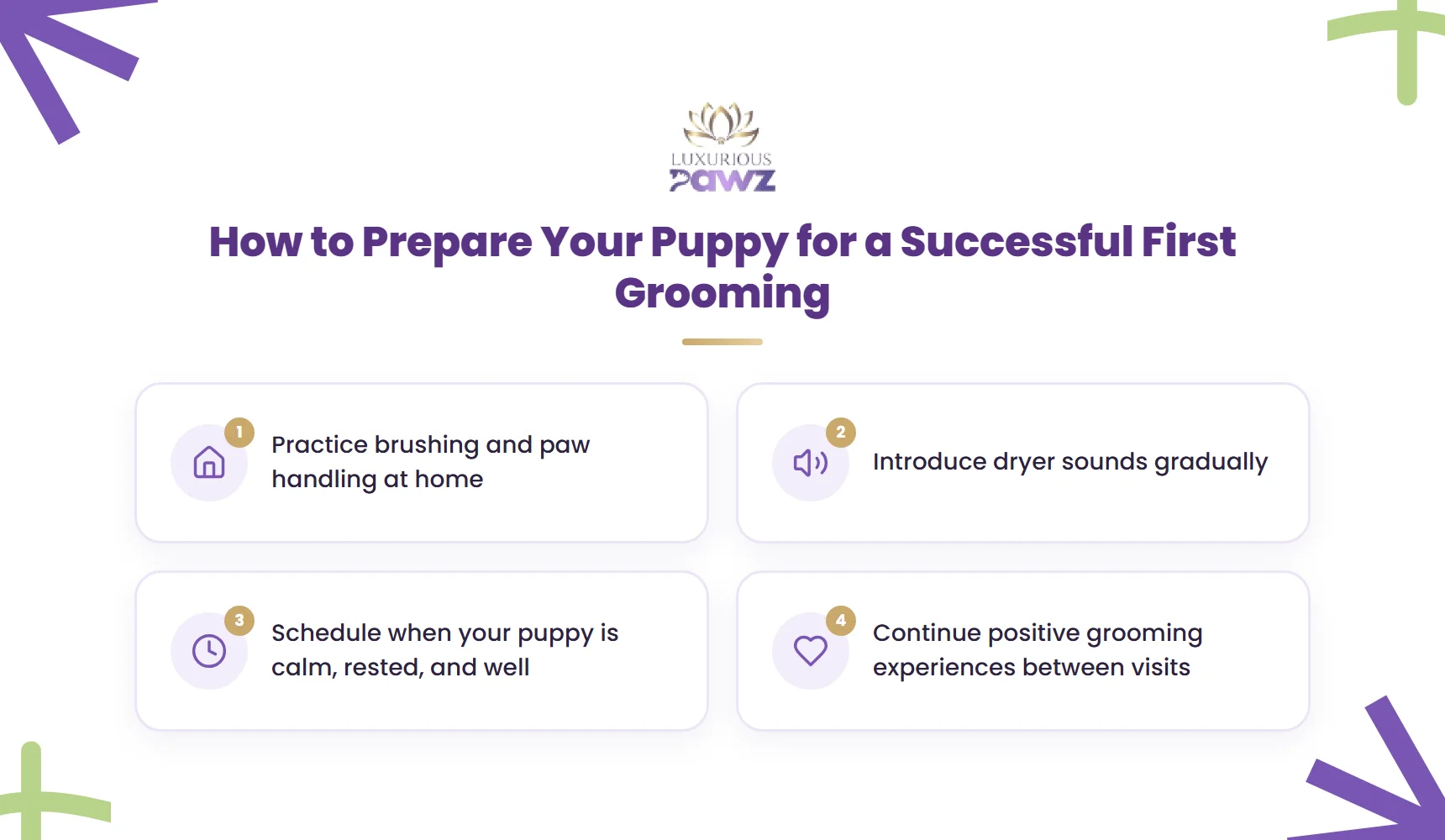
Preparation for a first grooming appointment should begin at home. A puppy that has already experienced gentle brushing, paw handling, and brief exposure to grooming sounds has more context for what will happen during a professional appointment. The goal is not to make the puppy perfectly groomed before arriving; it is to make individual grooming sensations less unfamiliar.
For Pasadena owners, this preparation can also help distinguish between ordinary puppy resistance and genuine distress. Short, controlled sessions allow owners to observe how their puppy reacts and gradually build tolerance without turning grooming into a struggle.
Practice Grooming at Home
Start with individual behaviors rather than attempting a complete grooming routine. For example, gently touch and hold one paw for a few seconds, reward calm behavior, and release it. On another occasion, introduce a few brush strokes. Ear and facial handling can likewise be practiced briefly and calmly.
Dryer exposure should also be gradual. A puppy can first hear the appliance from a distance before experiencing the airflow. VCA recommends gradual conditioning when introducing puppies to grooming procedures and equipment, emphasizing short sessions and positive associations.
This incremental approach matters because grooming involves several different sensations simultaneously. Teaching each component separately gives the puppy an opportunity to process them without being confronted by the entire experience at once.
Choose the Right Time for the Appointment
The appointment should be scheduled around more than the owner’s availability. A puppy that is already overstimulated, unwell, excessively tired, or unusually anxious may have less capacity to handle an unfamiliar grooming environment.
Vaccination and disease-exposure considerations are also important. AAHA notes that lifestyle and exposure circumstances including contact with grooming and boarding environments can influence vaccination considerations. Pasadena puppy owners should therefore confirm both their veterinarian’s recommendations and the grooming facility’s vaccination requirements before booking.
The puppy’s behavior should remain an important consideration. Signs of fear can include changes in posture, attempts to retreat, excessive scanning, or other noticeable behavioral changes. AAHA’s behavior guidance emphasizes reducing fear rather than simply forcing an animal to endure an uncomfortable situation.
Continue Positive Grooming Experiences
The first grooming appointment should be considered the beginning of a routine rather than a single milestone. Between professional visits, continue practicing appropriate grooming behaviors at home. These can include:
- Regular brushing suited to the puppy’s coat
- Gentle paw handling
- Nail-care preparation
- Ear handling
- Facial handling
- Bathing when appropriate
- Gradual exposure to grooming sounds
- Calm handling during coat maintenance
The frequency of professional grooming will ultimately depend on the puppy’s breed and coat. A short-coated dog and a puppy developing a dense, curly, or continuously growing coat can have substantially different maintenance requirements. AKC notes that grooming needs vary according to coat type and breed, making a universal grooming schedule inappropriate for every dog.
Pasadena’s warm, dry summers can leave puppies exposed to heat, dust, and outdoor debris, making appropriate coat care especially important. For puppies around Old Pasadena, San Rafael Hills, or the Playhouse District, professional dog grooming can support healthy coat maintenance while gradually introducing young dogs to brushing, bathing, drying, and handling.
The developmental window for socialization does not perfectly coincide with the point at which every puppy has completed its entire vaccination series. The American Veterinary Society of Animal Behavior identifies the first three months as the primary socialization period and states that puppies can participate in appropriately managed socialization opportunities before full vaccination under suitable precautions. Its position statement describes puppy classes beginning as early as 7–8 weeks, provided puppies have received appropriate initial vaccination and other preventive measures.
For Pasadena puppy owners, the ideal first grooming visit is ultimately the one that matches the puppy’s age, health status, vaccination guidance, coat requirements, and emotional readiness. Around 8–12 weeks can be a useful starting window for an introductory experience, but the appointment should be adapted to the individual puppy rather than treated as a rigid milestone.
A successful first visit does not have to end with an elaborate haircut. If the puppy leaves having calmly experienced professional handling, brushing, bathing, drying, nail care, and grooming equipment, the appointment has already accomplished something important: it has begun establishing grooming as a familiar part of the dog’s life.
Looking for gentle care for your puppy or adult pet? Luxurious Pawz provides Dog Grooming, Cat Grooming, Pet Bathing, Pet Haircuts, Nail Trimming, and De-Shedding throughout Greater Los Angeles, helping pets stay clean, comfortable, and well cared for.
Frequently Asked Questions
When should a puppy have its first grooming visit?
Many puppies can begin an introductory professional grooming visit around 8–12 weeks, but the appropriate timing depends on vaccination status, health, temperament, coat type, and the groomer’s requirements.
Should a puppy be fully vaccinated before going to a groomer?
Vaccination requirements vary according to the puppy, veterinary guidance, local exposure risks, and the grooming facility. Ask your veterinarian when the puppy can safely enter a professional grooming environment and confirm the groomer’s requirements beforehand.
Does a puppy need a full haircut during its first grooming?
No. The first visit may focus on acclimation, brushing, bathing, drying, nail trimming, and gentle handling. Whether a haircut is appropriate depends on the puppy’s coat and grooming requirements.
How can I prepare my puppy for its first grooming in Pasadena?
Practice short, positive sessions at home involving brushing, paw handling, ear handling, and gradual exposure to grooming sounds. Reward calm behavior and avoid forcing the puppy through experiences that cause significant distress.
What if my puppy becomes frightened during grooming?
A frightened puppy should not simply be forced through the appointment. The groomer may be able to modify or shorten the session, while persistent or significant fear can be discussed with a veterinarian for further behavioral guidance.
How often will my puppy need professional grooming?
There is no universal schedule. Grooming frequency depends on the puppy’s breed, coat type, coat growth, lifestyle, and hygiene requirements. Puppies with coats that mat or require regular trimming generally need more frequent professional maintenance than short-coated dogs.