
- admin
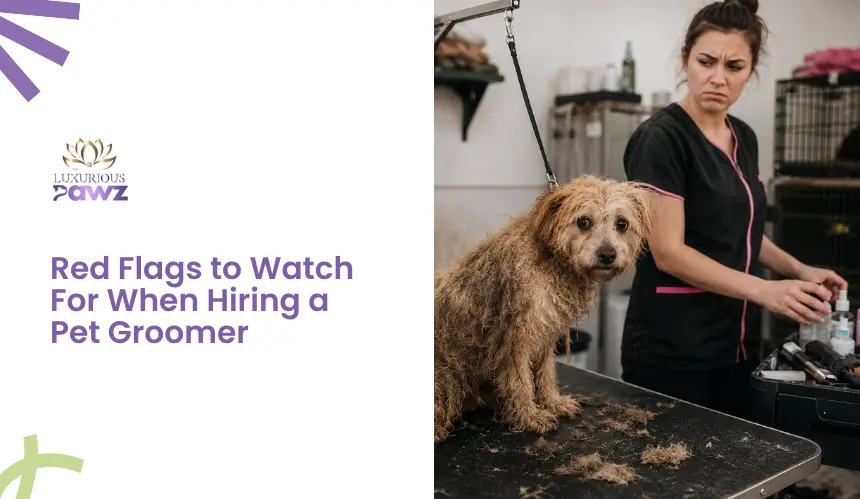
Red Flags to Watch For When Hiring a Pet Groomer
Key Takeaways
|
Choosing a pet groomer requires more than comparing styles, prices, or availability. The real concern is whether the person handling your pet follows careful, transparent, and pet-aware practices. Small warning signs before or during the appointment can reveal bigger problems with professionalism, hygiene, or handling standards. This blog explains how to spot red flags before hiring a pet groomer.
Why Choosing the Right Pet Groomer Matters
The right groomer reduces preventable risks during routine care, while the wrong one can create avoidable problems for your pet and extra concern for you. This decision affects trust, consistency, and how confidently future appointments can be managed.
Do You Know? According to the American Veterinary Medical Association around 56.3 million U.S. households own dogs, and 43.1 million households own cats, which means grooming safety is not a small concern. With so many pets relying on routine care, choosing the wrong groomer can affect millions of animals through poor handling, weak hygiene, or rushed service practices. |
Grooming Is More Than Appearance
Professional pet grooming supports skin health, coat condition, nail length, ear cleanliness, and handling tolerance. A groomer is not only trimming fur or shaping a style. They are working around sensitive skin, joints, ears, paws, and stress signals that require patience and controlled technique.
Can Poor Grooming Lead to Physical or Behavioral Problems?
Poor technique can leave pets with irritated skin, uneven nail trimming, small cuts, or sensitivity after the visit. It can also create defensive behavior if the pet learns to associate grooming with pressure or discomfort. These outcomes make future care more difficult for both the owner and the groomer.
In Sunland, CA, many pets spend time walking on outdoor trails, neighborhood sidewalks, and rough pavement near areas like Oro Vista Park and the Foothill neighborhoods. These surfaces can place extra pressure on overgrown nails and affect how comfortably pets walk during daily activity. Pet nail trimming in Sunland, CA is important for supporting better paw comfort, smoother movement, safer balance, and reduced strain during walks and outdoor exercise.
Why Should Safety Come Before Style?
A safe groomer prioritizes calm handling, proper restraint, clean tools, and breed-aware grooming before cosmetic results. A polished haircut means little if the pet leaves stressed, uncomfortable, or physically irritated.
In Sunland, CA, many pets spend time outdoors around Foothill Boulevard, Howard Finn Park, and nearby walking areas where heat, dust, and dry conditions can affect coat comfort. Thick or overgrown fur may trap debris and become harder to manage after regular outdoor activity. Pet haircut in Sunland, CA services are important for helping pets stay cleaner, more comfortable, and easier to maintain during everyday walks and outdoor time.
Red Flags in Groomer Communication Before the Appointment
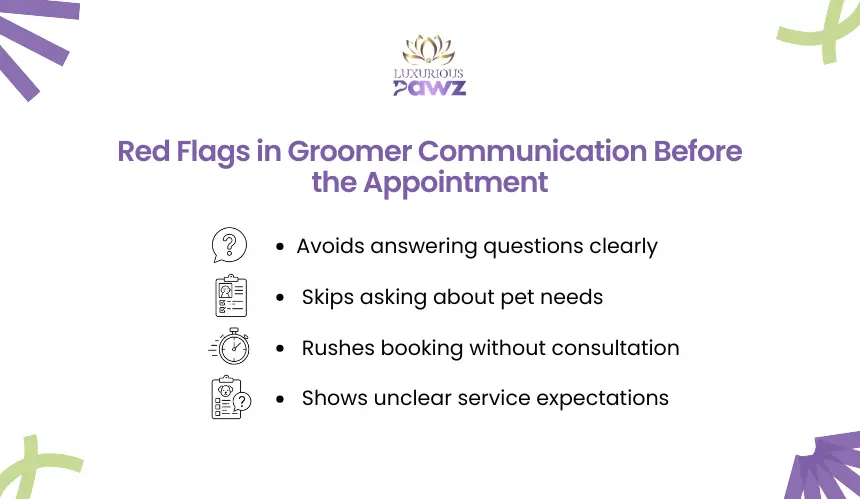
The first conversation can show whether the groomer takes assessment seriously or treats every booking the same. Before the appointment, owners should look for clear explanations, relevant questions, and a willingness to understand the pet’s condition.
They Avoid Answering Questions Clearly
A reliable grooming provider should be able to explain their service process without hesitation. Vague replies about training, grooming techniques, equipment, estimated duration, pricing structure, or handling approach make it harder for owners to evaluate risk. When basic details are unclear before booking, accountability may also be unclear if something goes wrong.
They Do Not Ask About Your Pet’s Needs
A proper intake should cover age, breed, coat condition, allergies, health limitations, temperament, previous grooming history, and known triggers. These details shape the service plan because different pets need different pacing, tools, products, and restraint levels. Skipping these questions suggests the appointment may be treated as a standard task instead of a tailored care service.
They Rush the Booking Without a Basic Consultation
Fast scheduling can be a warning sign when the salon collects no meaningful background information first. A volume-driven process may leave little room to assess matting, sensitivity, behavior concerns, or medical restrictions. Before confirming an appointment, the provider should understand what type of service is suitable and what conditions may affect the visit.
Facility and Hygiene Red Flags to Look For
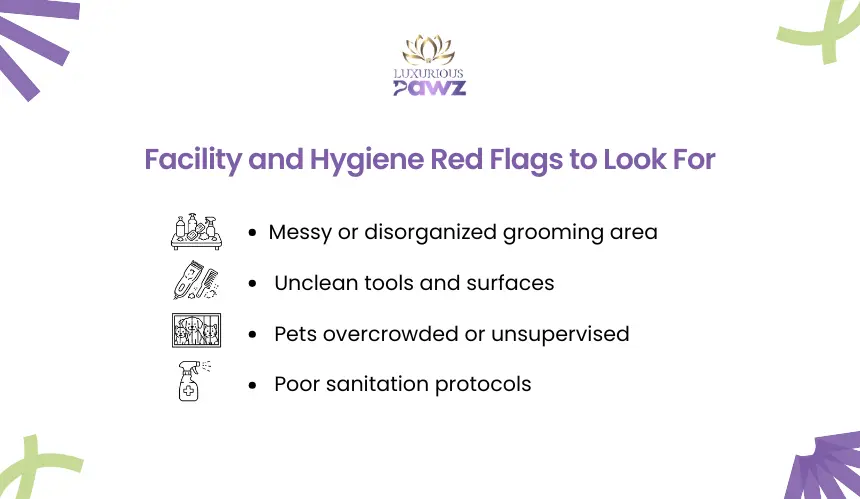
The physical environment can reveal standards that may not appear in ads, photos, or service descriptions. A well-run grooming space should show order, separation, and visible cleaning discipline.
Do You Know? The CDC separates cleaning from disinfecting: cleaning removes dirt and germs with soap or detergent, while disinfecting kills germs on surfaces using chemicals. In a grooming salon, this distinction matters because clippers, tables, towels, tubs, and cages may contact multiple pets in one day. |
The Grooming Area Looks Dirty or Disorganized
A messy workspace can indicate poor operational standards. Heavy fur buildup, strong odors, stained tubs, scattered supplies, cluttered stations, or worn-out equipment suggest cleaning routines may not be consistent. An unorganized setup can also slow the process, increase handling mistakes, and make it harder to manage multiple animals efficiently.
Tools and Surfaces Do Not Appear Sanitized
Clippers, combs, brushes, tables, kennels, dryers, towels, and bathing areas should be disinfected between appointments. Shared equipment can transfer bacteria, fungi, parasites, dander, and residue when sanitation is skipped. Visible buildup on blades, grooming loops, or washing stations is a clear sign that hygiene protocols may be weak.
In Sunland, CA, pets are often exposed to dust, dry weather, hiking areas, and outdoor walking spots near Shadow Hills, Big Tujunga Canyon routes, and local residential trails. Dirt, loose debris, and outdoor allergens can easily collect in the coat after regular activity, especially for pets that spend time outside frequently. Pet bathing in Sunland, CA is important for helping maintain coat cleanliness, skin comfort, and a fresher, healthier appearance after outdoor walks and play.
Pets Seem Overcrowded or Unsupervised
Crowded waiting spaces, noisy holding zones, or animals left without monitoring can create preventable risk. Limited spacing may increase reactivity, barking, slipping, or contact between animals. Poor supervision also makes it easier for cross-contamination, conflict, or accidental injury to go unnoticed.
Handling and Safety Warning Signs During Grooming
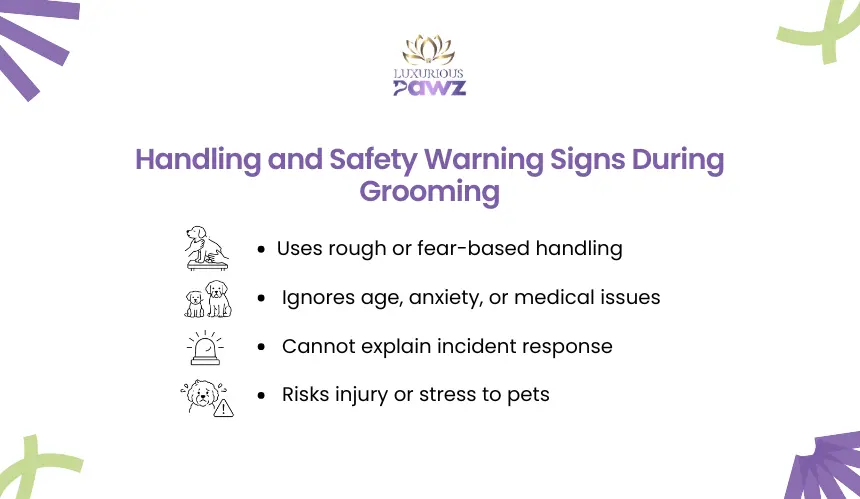
During the appointment, warning signs often appear in the groomer’s timing, pressure, body control, and response to resistance. These behaviors show whether the session is being managed with skill or forced through for completion.
Do You Know? The Bureau of Labor Statistics notes that animal care and service workers may face injury risks while caring for animals, and the field is projected to grow 11% from 2024 to 2034. This shows why groomers need proper animal-handling skill, not just basic grooming ability. |
The Groomer Uses Rough or Fear-Based Handling
Yelling, jerking, pinning, excessive restraint, or harsh correction can make a grooming session unsafe. These actions may cause panic, defensive movement, muscle tension, or loss of trust. A skilled groomer should use calm direction, steady positioning, and controlled breaks instead of forcing compliance.
They Dismiss Anxiety, Age, or Medical Concerns
Senior pets, puppies, nervous dogs, cats, and animals with joint pain or mobility limits need modified pacing. Ignoring these factors can make bathing, drying, lifting, brushing, or nail work harder on the body. A responsible groomer adjusts the session based on tolerance, sensitivity, and physical condition.
They Cannot Explain Their Incident Response Process
A groomer should know what steps to take if a pet panics, slips, becomes reactive, or shows signs of physical distress. They should also explain when they pause, stop, contact the owner, or seek veterinary guidance. Uncertainty around these situations suggests weak preparation for predictable grooming challenges.
Professionalism, Reviews, and Policy Red Flags
A grooming business can look acceptable on the surface, but its reputation, pricing clarity, and disclosure habits often reveal how dependable it really is. These signals help owners judge whether the service operates with accountability before committing.
Reviews Show a Pattern of Injuries or Complaints
One negative review does not automatically define a grooming salon. The concern starts when multiple customers mention similar problems, such as unexplained cuts, poor updates, dismissive staff, billing disputes, or pets returning unusually distressed. Repeated themes in reviews point to recurring process failures rather than isolated customer dissatisfaction.
Pricing, Services, or Policies Are Not Clearly Defined
A trustworthy business should present service details, add-on costs, cancellation terms, matting fees, coat-condition charges, and appointment expectations upfront. When pricing changes without explanation or policies are difficult to confirm, owners may face surprise costs or limited recourse after the visit. Ambiguous service descriptions also make comparison between groomers harder.
They Refuse to Share Credentials or Experience
Formal licensing rules can vary, but a professional groomer should still be open about training, hands-on background, breed familiarity, continuing education, and knowledge of safe grooming practices. Refusing to discuss experience creates a credibility gap. Owners need enough information to judge whether the person has the skill level their pet requires.
How to Choose a Safer Pet Groomer With Confidence
After identifying possible concerns, the next step is to compare groomers through evidence rather than assumptions. A safer choice comes from checking communication quality, service boundaries, and how your pet responds to a limited first visit.
What Should You Confirm Before Booking?
Confirm whether the groomer accepts your pet’s breed, coat condition, age, and temperament before the visit. Ask what information they need in advance, when extra charges apply, and what would cause them to stop or modify the appointment. Clear answers show whether expectations are defined before service begins.
Start With a Small Service First
A low-commitment visit can reveal how the business communicates and how your pet responds. Begin with a nail trim, bath, brush-out, or meet-and-greet before scheduling a complete groom. This gives you a practical way to evaluate patience, pacing, and handling style without exposing your pet to a longer session immediately.
Review the Outcome After the Appointment
fter the visit, check your pet’s skin, nails, coat, movement, and general behavior. Redness, limping, unusual sensitivity, hiding, or sudden defensiveness may suggest the appointment was too stressful or physically uncomfortable. A suitable groomer should leave your pet clean, stable, and able to return to normal behavior without lingering distress.
For pet owners who want grooming care that feels safer, calmer, and more personalized, Luxurious Pawz provides professional pet grooming focused on comfort, cleanliness, and careful handling. From routine coat care to detail-focused grooming sessions, our team helps pets look refreshed while keeping their well-being at the center of the experience.
Frequently Asked Questions
How do I know if my pet is too anxious for a regular grooming appointment?
A pet may need a slower grooming plan if they shake heavily, pant nonstop, freeze, growl, hide, or resist touch before the session begins. In these cases, a shorter visit, familiarization appointment, or low-stress handling approach may be safer than forcing a full groom immediately.
Should I stay with my pet during the grooming appointment?
Some pets relax when owners leave, while others become more unsettled. Ask the groomer about their observation policy, drop-off process, and whether staying nearby affects the pet’s behavior. A professional salon should explain what works best for focus, safety, and smoother handling during the appointment.
What should I do if my pet comes home with redness or soreness?
Check the affected area closely and document visible irritation, swelling, limping, or sensitivity. Contact the groomer for a clear explanation, especially if the issue appears after trimming, bathing, brushing, or drying. Persistent pain, broken skin, or unusual behavior should be reviewed by a veterinarian.
Is mobile grooming safer than a salon?
Mobile grooming can be calmer for pets that dislike crowds, noise, or travel, but safety depends on the groomer’s training, equipment sanitation, ventilation, and emergency plan. A salon may be better for pets needing extra staff support. The safer choice depends on the pet’s behavior and health needs.
How often should pets be groomed professionally?
Grooming frequency depends on coat type, shedding level, skin condition, nail growth, lifestyle, and breed needs. Long-haired or double-coated pets may need more frequent coat maintenance, while short-haired pets may need less. Pets in dusty outdoor areas, including Sunland, CA, may need more routine bathing and brushing.
What is the safest way to try a new groomer?
Start with a limited service such as a nail trim, bath, brush-out, or consultation. This gives you a practical way to observe communication, cleanliness, timing, and how your pet responds afterward. A successful small visit can build confidence before booking a full grooming session.