
- admin
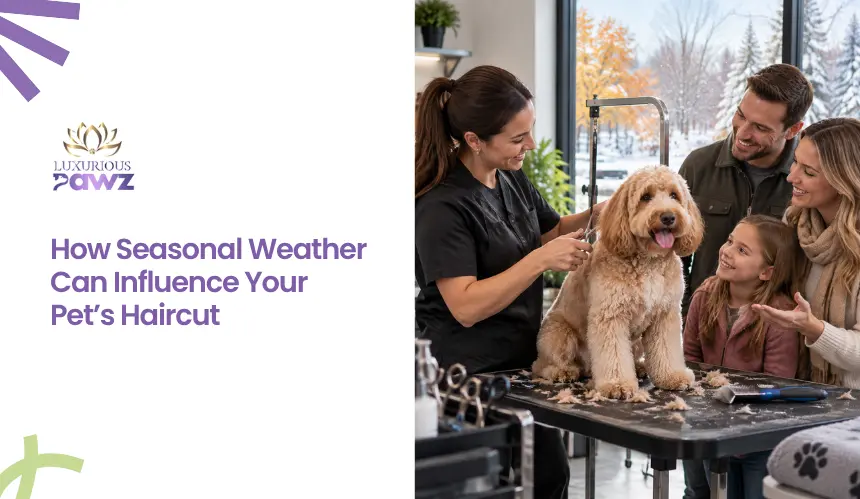
How Seasonal Weather Can Influence Your Pet’s Haircut
Key Takeaways
|
Seasonal grooming in Glendale, CA, requires more than simply shortening a pet’s coat when temperatures rise. Heat, dry conditions, seasonal shedding, and changes in outdoor exposure can alter how much coat a dog or cat can comfortably retain.
An overly short haircut can remove useful skin protection, while an inadequately maintained coat can increase matting and moisture retention. The appropriate haircut depends on coat structure, weather exposure, activity level, and the pet’s ability to regulate temperature.
Do You Know? Glendale’s average August high is about 87°F, while February averages about 66°F. That roughly 21°F seasonal difference is enough to change how much outdoor heat exposure a pet experiences, making a fixed, year-round haircut strategy less appropriate than adjusting grooming to the season. Glendale also averages only about 0.01 inches of precipitation in August compared with 3.40 inches in February, showing how dramatically moisture exposure changes across the year.
How Weather Affects Your Pet’s Coat
Weather influences grooming through temperature, moisture, sunlight, shedding patterns, and the condition of the coat itself. In Glendale, seasonal changes are not extreme in the same way as colder climates, so grooming decisions should respond to the pet’s actual environment rather than a fixed seasonal haircut schedule.
How Does Hot Weather Affect Coat Length?
Hot weather does not automatically justify cutting a pet’s coat as short as possible. Coat structure determines whether removing length will improve manageability or interfere with the coat’s protective function.
Double-coated dogs have a dense undercoat beneath a longer outer layer of guard hairs. The undercoat provides insulation, while the outer coat helps protect the skin from sunlight, moisture, dirt, and environmental contact. During warmer periods, many double-coated dogs naturally shed substantial amounts of undercoat.
For these pets, professional de-shedding and thorough brushing can remove accumulated dead undercoat without eliminating the protective outer coat. Shaving a double coat down to the skin is generally not an appropriate method for routine summer cooling because it removes both layers and can contribute to sun exposure, abnormal regrowth, and coat-texture changes.
In Glendale, summer grooming should therefore focus on controlling excess undercoat, preventing mats, and maintaining manageable hair around high-friction areas rather than applying the same short haircut to every breed.
A pet that spends significant time outdoors also needs heat-management measures beyond grooming. Shade, water, controlled exercise, and avoiding strenuous activity during the hottest part of the day remain more significant for heat safety than simply reducing coat length.
How Does Cold Weather Affect Natural Insulation?
A healthy coat functions as part of a pet’s natural thermal barrier. Dense undercoat traps air close to the body, while the outer coat provides additional environmental protection. This means that removing substantial coat length during cooler periods can reduce the insulation available to the animal.
However, keeping the coat longer does not automatically make it healthier. Long hair that has become densely matted can restrict airflow, hold debris against the skin, and make bathing and drying more difficult. A maintained moderate-length coat can therefore provide better functional protection than an excessively long but neglected coat.
For Glendale pets, winter grooming generally calls for maintaining sufficient coverage while controlling tangles, overgrowth around the feet, sanitary areas, ears, and other locations where hair repeatedly collects debris.
The pet’s lifestyle also matters. An indoor companion that spends most of its time in a climate-controlled home has different cold-weather exposure from a dog that regularly walks, hikes, or spends extended periods outdoors.
How Do Humidity and Rain Affect Coat Health?
Moisture becomes a grooming concern when it remains trapped within dense or compacted hair. Wet hair can clump together, while mats can hold moisture close to the skin and interfere with normal drying.
Glendale’s generally dry climate does not eliminate this issue. Rain, bathing, wet grass, swimming, and temporary increases in environmental moisture can all expose the coat to water. The relevant grooming question is therefore not simply whether outdoor humidity is high, but whether the pet’s coat can dry efficiently after becoming wet.
Curly, long, and densely coated pets require particular attention because their hair structure can retain moisture more effectively than short, smooth coats. Regular combing helps keep individual hairs separated and makes it easier to identify areas where moisture or debris is accumulating.
If a pet repeatedly develops odor, redness, persistent dampness, or irritation beneath a dense coat, grooming alone may not address the underlying problem. Veterinary evaluation may be appropriate when skin abnormalities persist.
Seasonal Haircut Adjustments for Pets
Seasonal grooming should be treated as an adjustment process rather than a four-haircut calendar. The correct approach changes according to shedding, coat growth, outdoor exposure, matting, and the pet’s ability to remain comfortable in current conditions.
What Grooming Changes Are Needed in Spring?
Spring often brings increased shedding in dogs with seasonal undercoats. As temperatures rise, loose undercoat can accumulate beneath the outer coat and create a dense layer of dead hair.
The primary objective is usually de-shedding rather than aggressive clipping. Removing loose undercoat improves coat manageability while preserving the outer layer responsible for much of the coat’s environmental protection.
This distinction is particularly important for double-coated breeds. Their undercoat and guard hairs have different structures and functions, so cutting away both layers is not equivalent to removing excess seasonal shedding.
In Glendale, spring grooming is also a useful time to inspect the skin after winter. Areas hidden beneath dense hair can reveal early signs of irritation, parasites, mats, or abnormal skin changes that may otherwise remain unnoticed.
Glendale’s hot, dry seasonal pattern can make professional pet de-shedding particularly useful for dogs with dense undercoats, especially as loose hair accumulates during seasonal coat changes.
Pets regularly exposed to outdoor conditions around North Glendale, Glenoaks Canyon, Brand Park, or the Verdugo foothills may pick up more dust and vegetation within their coats than primarily indoor pets in Downtown Glendale.
Rather than simply shortening the coat, professional de-shedding removes loose undercoat while preserving the outer layer that helps protect the skin, making it a practical option when seasonal shedding increases.
The appropriate schedule depends on coat density, shedding behavior, outdoor activity, and current coat condition, with Glendale’s climate serving as one factor in determining when the coat needs additional maintenance.
How Should Summer Grooming Change?
Summer grooming should prioritize coat manageability, skin protection, and heat-risk reduction rather than simply minimizing hair.
For double-coated pets, routine brushing and de-shedding can remove dead undercoat while retaining the functional outer coat. For appropriate single-coated breeds, a professional trim may reduce excessive length and make the coat easier to maintain. However, even single-coated dogs should not automatically be shaved to the skin because exposed skin is more vulnerable to sunburn and environmental irritation.
Targeted trimming can be useful around the paws, sanitary region, and excessively long furnishings when those areas interfere with cleanliness or movement. These localized adjustments are different from removing the entire body coat.
Glendale’s summer heat also makes grooming timing relevant. A freshly groomed pet still requires access to water and shade and should not be exercised aggressively during extreme heat. Grooming should support heat management, not be treated as a substitute for it.
What Changes Should You Make During Fall Coat Transition?
Fall can trigger another period of significant shedding as some dogs transition from their warmer-season coat. The grooming priority is to prevent loose hair from becoming packed beneath the outer layer.
Regular brushing and combing allow shed hair to be removed before it forms compacted sections. This is particularly relevant for medium, long, and dense coats, where loose undercoat can remain hidden beneath the surface.
For Glendale pets, fall is also an appropriate time to reassess the summer haircut rather than automatically repeating it. If the coat was shortened for summer, the next grooming appointment can focus on controlled regrowth, removal of damaged ends, and prevention of tangling.
The objective is to enter cooler weather with a clean, functional coat rather than an excessively long or severely shortened one.
How Should Winter Grooming Protect the Coat?
Winter grooming should preserve useful coat coverage while preventing excessive length from becoming a maintenance problem.
A longer coat is valuable only when it remains clean, separated, and free from significant matting. Dense mats can interfere with normal coat function and make the skin difficult to inspect or dry.
For longer-haired pets, selective trimming around the feet, ears, sanitary areas, and other high-friction locations can maintain hygiene without unnecessarily reducing the main body coat.
Glendale’s relatively moderate winter conditions also mean that an extreme winter haircut is rarely justified solely because of the calendar. The more useful approach is to consider actual outdoor exposure, coat density, indoor living conditions, and the pet’s ability to remain comfortable.
Choosing the Right Haircut for Each Season
The best seasonal haircut is not determined by temperature alone. Coat type, hair-growth pattern, skin coverage, lifestyle, maintenance requirements, and the severity of existing matting all influence the appropriate grooming strategy.
When Should You Trim or Shorten the Coat?
A pet may benefit from a shorter trim when excessive hair is creating a specific management problem.
Common reasons include recurrent matting, hair accumulating around the feet, excessive sanitary-area buildup, or a continuously growing coat that has become difficult to maintain.
Single-coated breeds with continuously growing hair can often be clipped at an appropriate length based on their coat characteristics and lifestyle. Poodles and Maltese, for example, have different grooming requirements from breeds with dense double coats.
The objective should be a manageable functional length, not the shortest possible cut.
For double-coated breeds, routine body shaving is generally inappropriate. Removing the entire coat can eliminate the guard hairs and undercoat simultaneously, and the two layers may not regrow at the same rate. This can produce altered texture, uneven regrowth, or persistent coat abnormalities.
An exception can occur when severe matting has made normal brushing impossible. In those cases, removing compromised hair may be necessary to restore skin access and allow the coat to recover. Severe matting should be handled professionally because the skin underneath can be fragile or already damaged.
For pets in Glendale, CA, a seasonal haircut should account for the city’s warm, dry conditions and the differences in outdoor exposure between areas such as Adams Hill, Rossmoyne, and the Chevy Chase Canyon area.
Pets that regularly accompany owners on walks through sloped residential streets or spend time outdoors can experience greater sun and surface-heat exposure than primarily indoor pets, making coat length a practical grooming consideration without assuming that shorter is always better.
For appropriate coat types, a professional pet haircut can reduce excessive length, manage hair around high-friction areas, and keep the coat easier to maintain through Glendale’s warmer months while retaining enough coverage for skin protection.
The haircut should be selected according to coat structure, outdoor routine, matting tendency, and seasonal conditions rather than using the same clip length for every pet in Glendale.
When Should You Keep More Coat Length?
Keeping more coat length is generally appropriate when the hair provides useful insulation or environmental protection and can still be maintained effectively.
This is particularly relevant for double-coated breeds. Their outer guard hairs protect the skin, while the undercoat contributes to insulation. Removing the entire system can create problems that simply shortening the coat does not solve.
Coat retention is also relevant for pets with substantial sun exposure. Hair provides a physical barrier between ultraviolet radiation and the skin, so unnecessarily exposing the skin can increase sunburn risk.
However, keeping more hair should never mean tolerating severe mats. A clean, brushed, properly dried coat provides more functional value than an unmanaged coat that has become compacted.
The appropriate length is therefore the longest practical length that the pet and owner can maintain without recurring matting or hygiene problems.
How Do Breed, Coat Type, and Lifestyle Change the Decision?
Coat architecture is one of the most important variables. Single-coated, double-coated, curly, silky, wiry, and densely undercoated pets do not respond identically to clipping.
Hair-growth behavior also matters. Some coats naturally reach a predetermined length, while others continue growing until they are cut or break. This affects how frequently professional trimming is required.
Breed characteristics provide useful guidance, but they do not create an absolute haircut prescription. Individual coat density, age, grooming history, and skin condition can change the practical recommendation.
Lifestyle determines environmental exposure. A Glendale dog that hikes, plays outdoors, visits parks, swims, or spends long periods outside may accumulate considerably more debris and require more frequent maintenance than an indoor companion.
Home maintenance is another operational factor. A longer coat requires sufficient brushing and combing between professional appointments. If the owner cannot maintain that schedule, reducing the length of an appropriate coat may be more practical than repeatedly dealing with severe mats.
A sound seasonal grooming decision therefore evaluates five variables together: coat structure, current condition, environmental exposure, activity level, and maintenance capacity. This produces a more reliable haircut strategy than choosing a length based solely on the month or outdoor temperature.
Keep your pet’s coat comfortable and manageable with professional grooming from Luxurious Pawz, serving the greater San Gabriel Valley and Northeast Los Angeles area. From seasonal haircuts to de-shedding, our grooming approach is tailored to your pet’s coat and local climate.
Frequently Asked Questions
Should I Shave My Dog During a Glendale Summer?
Usually not if the dog has a double coat. Double-coated dogs generally benefit from de-shedding and regular brushing rather than a close shave. Their coat provides insulation and helps protect the skin from sunlight.
Do Double-Coated Dogs Need Summer Haircuts?
Most do not need their main body coat shaved. Grooming should concentrate on removing loose undercoat, preventing mats, and performing appropriate localized trims when needed.
How Often Should a Pet Be Groomed in Glendale?
There is no universal interval. Grooming frequency depends on coat type, growth rate, shedding, matting tendency, outdoor exposure, and the amount of brushing performed at home.
Can Rain or Bathing Affect a Pet’s Coat Even in Glendale?
Yes. Moisture can become trapped in dense or matted hair regardless of the region’s overall climate. Thorough drying and regular combing are particularly important for long, curly, and dense coats.
Is a Shorter Haircut Always Better for Hot Weather?
No. Coat structure determines whether shortening the hair is beneficial. Excessive clipping can remove protective layers and expose the skin, while appropriate trimming can improve manageability for certain coat types.
What Should I Discuss With a Glendale Pet Groomer?
Provide information about your pet’s breed and coat type, outdoor activity, typical time spent in the sun, history of matting, brushing routine, and preferred maintenance level. A professional groomer can then select a length that balances coat protection, hygiene, manageability, and seasonal exposure.