
- admin
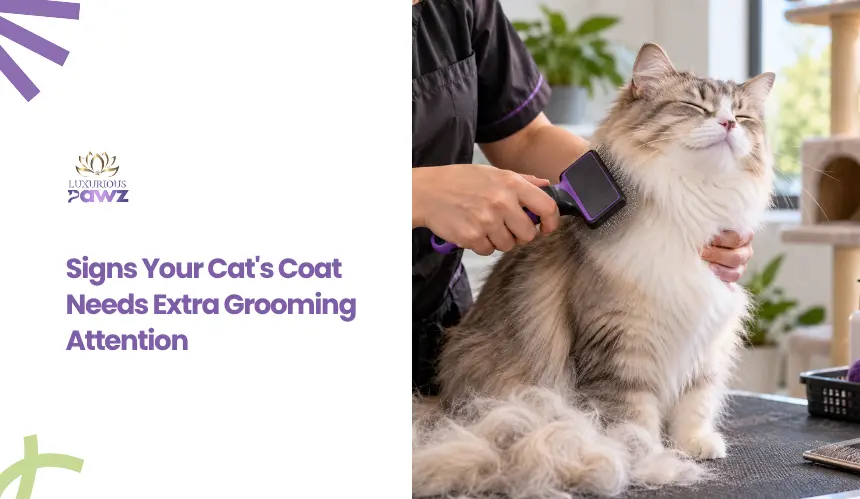
Signs Your Cat's Coat Needs Extra Grooming Attention
Key Takeaways
|
A cat’s coat is an important indicator of overall health, helping regulate body temperature, protect the skin, and maintain a healthy barrier against environmental factors. Although cats spend a significant portion of their day grooming themselves, age, seasonal coat changes, reduced mobility, coat type, and environmental conditions can gradually affect their ability to keep their fur in optimal condition.
As a result, signs such as dull fur, persistent tangles, excessive loose hair, or visible dander may indicate that the coat and skin need additional attention before more serious problems develop.
In Altadena, CA, the area’s warm, dry climate and airborne dust can contribute to coat dryness and the buildup of fine debris, making regular coat maintenance even more beneficial. Recognizing these early changes allows owners to address potential coat issues promptly and support healthier skin and a well-maintained coat.
Did You Know?
Cornell University College of Veterinary Medicine notes that cats typically spend 30–50% of their waking hours grooming themselves, making grooming one of their most important daily behaviors. Because they groom so frequently, subtle coat or skin problems often go unnoticed until significant hair loss, matting, or skin irritation develops. Regular coat checks help identify these changes much earlier.
Sign 01: Your Cat's Fur Looks Dull or Loses Its Natural Shine
A healthy feline coat naturally reflects light because each hair shaft is coated with protective oils produced by the skin’s sebaceous glands, keeping the fur smooth, soft, and resilient. When oil distribution becomes uneven, loose undercoat accumulates, or the hair cuticle is affected by dust, friction, or environmental debris, the coat gradually loses its natural shine and appears dull despite remaining relatively clean.
Dull fur is not always a sign of poor hygiene but often indicates changes in coat health and grooming efficiency.
Coat shine also depends on breed, coat type, age, and overall health. Short-haired cats typically have glossier coats, while long-haired breeds such as Persians, Maine Coons, Ragdolls, Norwegian Forest Cats, and Domestic Longhairs are more likely to trap loose undercoat and debris.
Aging, obesity, arthritis, illness, or reduced mobility can make self-grooming less effective, allowing loose hair to build up and natural oils to spread unevenly, making dull fur one of the earliest signs that additional coat care may be needed.
Why Does a Healthy Coat Look Smooth and Glossy?
The glossy appearance of a healthy feline coat results from an intricate interaction between skin physiology, hair structure, and normal grooming behavior rather than from the fur itself.
Embedded throughout feline skin are sebaceous glands that produce an oily substance composed primarily of lipids, fatty acids, wax esters, cholesterol derivatives, and other protective compounds.
These secretions form an invisible coating over individual hairs, reducing friction between neighboring strands while helping repel moisture, dust, and environmental contaminants. During self-grooming, the cat’s tongue distributes these oils throughout the coat, maintaining flexibility and preserving the integrity of the hair shaft.
Healthy grooming behavior performs several simultaneous functions:
- It redistributes protective skin oils from the skin surface to the ends of each hair.
- It removes naturally shed hairs before they become trapped within the undercoat.
- It reduces microscopic debris that may accumulate between neighboring hairs.
- It aligns individual hairs so they reflect light more uniformly.
- It stimulates blood circulation near the skin surface through repeated mechanical movement.
Healthy cats spend a significant portion of their waking hours grooming, making coat maintenance an essential part of overall skin and coat health rather than simple cleanliness. At the same time, every hair follicle continuously cycles through growth, transition, resting, and shedding phases.
Because follicles operate independently, healthy shedding occurs throughout the year, with seasonal increases largely influenced by changes in daylight. If naturally shed hairs remain trapped within the coat, they disrupt the smooth alignment of healthy hairs, causing the fur to appear less glossy and more uneven.
Dense undercoats naturally provide insulation, but retained dead hair can reduce airflow to the skin and increase friction between neighboring hairs, making the topcoat look rough despite remaining structurally healthy.
Environmental factors also play an important role, as fine dust, pollen, and airborne particles gradually accumulate on the coat and reduce its natural shine. In Altadena, CA, the area’s warm, dry climate and seasonal winds can increase airborne dust while reducing skin moisture, allowing microscopic debris to build up within the coat and gradually affect its texture over time.
Common Reasons a Coat Becomes Dull
Cause | How It Affects the Coat |
Retained Loose Undercoat | Dead hairs become trapped beneath healthy guard hairs, increasing coat density, restricting airflow, limiting the even distribution of natural oils, and making the fur feel rough. |
Natural Aging | Senior cats may groom less frequently due to reduced flexibility or joint stiffness, allowing loose hair and environmental debris to accumulate over time. |
Seasonal Shedding | During seasonal coat changes, more resting hairs are released. If they are not removed efficiently, they become trapped within the coat, creating a thicker and less reflective appearance. |
Dry Skin and Low Humidity | Reduced skin hydration can affect the skin barrier and make it harder for natural oils to spread evenly, causing the coat to appear dry and dull. |
Environmental Debris | Dust, pollen, soil particles, and other airborne contaminants settle on the coat, disrupting hair alignment and reducing its natural shine. |
Reduced Grooming Efficiency | Stress, obesity, arthritis, dental disease, illness, or other health conditions may reduce self-grooming, leading to uneven oil distribution and gradual coat deterioration. |
Dense Coat Type | Long-haired and double-coated breeds retain more loose undercoat between grooming sessions, increasing the risk of dullness, tangles, and mat formation without regular coat maintenance. |
Sign 02: You're Finding Excess Loose Hair Everywhere
Some shedding is a normal part of a cat’s hair growth cycle, as old hairs are continuously replaced by new ones throughout the year. However, excessive loose hair around the home may indicate that dead hairs are becoming trapped within the coat instead of being removed through regular self-grooming.
As retained undercoat accumulates, airflow to the skin decreases, natural oils spread less evenly, and neighboring hairs begin tangling together, affecting both coat texture and overall condition.
Shedding patterns vary depending on coat type, age, and environmental conditions. Short-haired cats usually release loose hair gradually, while long-haired and double-coated breeds such as Maine Coons, Norwegian Forest Cats, Ragdolls, and Domestic Longhairs retain more undercoat before shedding larger amounts.
Seasonal changes, indoor living, and reduced grooming caused by aging or decreased mobility can also increase retained loose hair, making excessive shedding one of the earliest signs that the coat needs additional care.
In Altadena, CA, warm, dry weather and seasonal winds can carry fine dust and other airborne particles that gradually settle into a cat’s coat, even for pets that spend most of their time indoors. Homes near Eaton Canyon, Lake Avenue, and Altadena Drive may experience greater exposure to this environmental debris, making cat grooming an effective way to remove trapped undercoat and microscopic particles before they affect coat texture or skin comfort. Regular coat maintenance also helps support even oil distribution, reduces buildup caused by local environmental conditions, and keeps the coat healthier throughout the year.
Normal Shedding vs. Excessive Loose Fur
Distinguishing normal shedding from excessive hair loss requires evaluating more than the quantity of fur found around the home. Healthy shedding produces loose hairs of relatively uniform length without leaving obvious bald areas or damaged skin. The coat generally maintains an even appearance despite continual hair replacement.
Excessive loose fur often develops more gradually than owners realize. Early indicators include:
- Hair accumulates on furniture shortly after cleaning.
- Increased fur on clothing after brief contact.
- Larger hair clumps beneath resting areas.
- Frequent hairballs caused by swallowing retained loose fur.
- Hair collecting in brushes after only a few grooming strokes.
These observations suggest that dead hairs are remaining within the coat longer than they should before eventually being released.
Several biological mechanisms contribute to this increase. During periods of heavy seasonal shedding, follicles release larger numbers of resting hairs simultaneously. If these hairs remain trapped within dense undercoat, neighboring hairs begin catching one another, creating localized tangles that eventually progress toward mat formation.
Reduced grooming efficiency compounds the problem. Cats experiencing arthritis, obesity, dental discomfort, chronic illness, or reduced mobility may continue grooming regularly but fail to remove enough loose undercoat to keep pace with normal hair replacement. The result is gradual accumulation rather than immediate hair loss.
Owners should also distinguish excessive shedding from abnormal hair loss. Shedding involves complete hairs naturally released from healthy follicles. Hair loss, by contrast, often includes broken hairs, thinning patches, inflamed skin, or irregular bald areas that may indicate allergies, parasites, fungal infections, hormonal disorders, nutritional deficiencies, or other medical conditions requiring veterinary evaluation.
Environmental influences deserve consideration as well. Dry indoor air, seasonal allergens, airborne dust, and prolonged exposure to low humidity may contribute to increased coat dryness, encouraging more retained loose hair while simultaneously affecting skin comfort. These factors become especially relevant in regions where environmental conditions fluctuate significantly throughout the year.
For residents throughout Altadena, neighborhoods surrounding Lake Avenue, Christmas Tree Lane, and the foothill communities frequently experience periods of warm weather, dry air, and airborne dust.
Although these conditions do not directly cause abnormal shedding, they may increase the accumulation of environmental particles within the coat, making retained undercoat more noticeable and reducing the coat’s overall softness if regular coat maintenance is delayed.
How Regular Coat Maintenance Removes Dead Hair More Efficiently
Professional coat maintenance helps remove hairs that have naturally completed their growth cycle before they become trapped within the surrounding coat. During normal self-grooming, detached hairs are removed as new ones grow, but when this process becomes less effective, loose undercoat accumulates and increases coat density and friction.
Removing this excess undercoat does more than improve appearance; it also supports healthier skin and overall coat function.
By reducing retained loose hair, professional grooming improves airflow to the skin, allows natural oils to spread more evenly, and helps the coat regulate body temperature more efficiently.
It also reduces friction between hairs, lowers the risk of tangles and mats, minimizes the amount of hair swallowed during self-grooming, and makes it easier to detect early skin changes such as irritation or parasites.
Benefits of Removing Retained Undercoat
- Improves airflow to the skin and reduces moisture buildup.
- Promotes even distribution of natural skin oils.
- Reduces friction, tangles, and mat formation.
- Minimizes hair swallowed during self-grooming, helping reduce hairballs.
- Makes scratches, parasites, and skin changes easier to identify.
- Helps the coat maintain its natural insulating properties while reducing unnecessary bulk.
Benefits of Reducing Loose Fur Before It Spreads
Managing retained loose hair benefits both the cat and the household environment. While many owners appreciate the cosmetic improvements, the biological advantages are considerably more significant.
Removing excess undercoat supports healthier coat function by allowing individual hairs to move independently rather than becoming compressed into dense clusters. Better separation improves distribution of natural oils while preserving the smooth alignment responsible for a healthy appearance.
Practical household benefits include:
- Less hair accumulating on upholstery and bedding.
- Reduced airborne fur circulating through indoor spaces.
- Fewer hairballs resulting from excessive self-grooming.
- Lower risk of tangles progressing into mats.
- Improved visibility of the underlying skin during routine health checks.
- Greater comfort during warm weather because excess retained undercoat no longer traps unnecessary heat.
Over time, consistent coat maintenance also simplifies future grooming sessions. Removing dead hair regularly prevents months of accumulation, making brushing less stressful while reducing discomfort associated with pulling dense undercoats.
Most importantly, healthy shedding should remain a controlled biological renewal process rather than an indication that the coat is struggling to maintain itself. Recognizing increased loose hair as an early warning sign allows owners to restore normal coat balance before retained undercoat contributes to more complex skin or coat problems.
Seasonal coat changes can become more noticeable in Altadena, CA, where dry conditions and occasional winds allow fine dust to settle into a cat’s coat, even for indoor pets. Cats living near Loma Alta Park, Fair Oaks Avenue, or the Altadena Golf Course may experience greater buildup of loose undercoat mixed with environmental debris during heavier shedding periods.
In these situations,pet de-shedding helps remove excess undercoat before it contributes to tangles, excessive shedding around the home, or reduced coat comfort, supporting a healthier coat that is better suited to local environmental conditions.
Sign 03: Your Cat Is Scratching, Licking, or Developing Dander
Changes in grooming behavior often indicate skin discomfort before obvious coat damage appears. While occasional scratching and licking are normal, persistent scratching, repetitive licking, or visible dander usually suggests that the skin’s natural balance of moisture, oil production, and cell renewal has been disrupted.
When the skin becomes dry or irritated, dead skin cells accumulate more quickly, forming visible white flakes known as dander. Retained loose undercoat, dry environmental conditions, allergens, parasites, certain skin disorders, and other health conditions can all contribute to these changes.
Common signs that your cat’s skin and coat may need extra attention include:
- Frequent scratching or repetitive licking of the same area.
- Visible white flakes (dander) throughout the coat.
- Dry or irritated skin caused by low humidity or environmental factors.
- Uneven distribution of natural skin oils due to retained loose undercoat.
- Hair thinning in areas that are repeatedly licked or chewed.
- Skin irritation associated with allergies, parasites, dermatological conditions, or certain underlying illnesses.
Persistent scratching, excessive licking, or noticeable dander should not be ignored, as these changes may indicate that the coat and skin require additional care or veterinary evaluation if the symptoms continue or worsen.
Sign 04: Grooming at Home Is Becoming More Difficult
Some coat conditions eventually become too challenging to manage safely at home, even for owners who brush their cats regularly. As loose undercoat accumulates, tangles tighten, or the coat becomes denser, routine brushing may no longer remove trapped hair effectively.
Instead of improving the coat, repeated brushing over severe mats can pull on the skin, causing discomfort and making the grooming experience increasingly stressful. In many cases, a cat that once tolerated brushing begins resisting it because the coat has already become uncomfortable.
Difficulty grooming at home is not always caused by owner technique. Changes in a cat’s physical condition, coat density, temperament, or overall health can significantly reduce the effectiveness of routine home care. Recognizing when professional intervention is more appropriate helps prevent minor coat issues from progressing into painful matting, skin irritation, or excessive stress.
Signs Your Cat Resists Grooming Because of Coat Condition
A cat’s behavior during grooming often provides valuable clues about its coat and skin health. While some cats naturally dislike being brushed, sudden resistance usually develops because grooming has become uncomfortable rather than because of changes in temperament.
As mats tighten or loose undercoats build up, brushing creates greater tension on the skin, making previously tolerated grooming sessions unpleasant.
Common signs include:
- Pulling away or twisting during brushing.
- Vocalizing when certain areas are touched.
- Biting, scratching, or swatting at the brush.
- Hiding when grooming tools appear.
- Constant movement that prevents effective brushing.
- Licking or chewing one area repeatedly after grooming.
- Flinching when the lower back, belly, or tail base is touched.
These behaviors often indicate physical discomfort rather than stubbornness. Continuing to brush through severe tangles may increase stress while making future grooming even more difficult.
Cats That Often Need Extra Grooming Support
Although every cat benefits from regular coat maintenance, some require additional care because their physical characteristics or health make self-grooming less effective. Long-haired breeds naturally retain a more loose undercoat, increasing the likelihood of tangles and mats. Senior cats often lose flexibility with age, while overweight cats may struggle to reach the abdomen, lower back, and hindquarters during self-grooming.
Cats with arthritis, recovering from surgery, living with chronic illness, or experiencing reduced mobility may also groom less thoroughly. Even temporary discomfort can reduce grooming frequency, allowing loose hair and environmental debris to accumulate faster than the coat can naturally remove them. Cats with particularly dense or double coats often require more frequent coat maintenance because dead undercoat remains trapped beneath the visible guard hairs.
How Professional Coat Care Helps Maintain a Healthy Coat
Professional coat care provides benefits that extend beyond simply improving appearance. A trained groomer can safely remove accumulated loose undercoat, identify developing mats before they become severe, and clean difficult-to-reach areas without placing unnecessary strain on the skin or hair.
Regular coat assessments also help detect early changes such as excessive shedding, abnormal dander, skin irritation, parasites, or unusual coat texture before they become more significant concerns.
For cats living in Altadena, CA, warm, dry weather and airborne dust can contribute to coat dryness and debris accumulation throughout the year. Professional coat maintenance helps remove trapped particles, improve the distribution of natural skin oils, and maintain a cleaner, healthier coat despite these environmental conditions.
By addressing coat changes early, owners can reduce the likelihood of painful matting, improve overall coat comfort, and support long-term skin health before more complex problems develop.
For cat owners in Altadena, CA, and throughout Greater Foothill Communities, routine grooming can be especially beneficial because the area’s warm, dry conditions and airborne dust may contribute to coat dryness and debris buildup. If your cat is showing any of these signs, Luxurious Pawz provides gentle, professional cat grooming services designed to help maintain a clean, healthy coat while supporting long-term skin and coat health.
Frequently Asked Questions
How can I tell if my cat needs professional grooming?
If your cat has a dull coat, persistent tangles or mats, excessive shedding, visible dander, or struggles to groom certain areas, professional grooming can help maintain a healthier coat and prevent these issues from worsening.
Is it normal for cats to shed a lot?
Yes, cats naturally shed throughout the year, with heavier shedding during seasonal coat changes. However, excessive loose hair, especially when combined with dull fur or tangles, may indicate that the coat needs additional maintenance.
Why does my cat's coat look dull even though it grooms itself?
A dull coat can result from uneven distribution of natural oils, retained loose undercoat, aging, environmental debris, reduced grooming efficiency, or certain health conditions. Regular coat maintenance helps restore a healthier-looking coat.
Can regular grooming reduce dander and hairballs?
Yes. Removing a loose undercoat before it is swallowed during self-grooming can reduce hairballs, while regular grooming also removes dead skin cells and debris that contribute to visible dander.
How often should my cat be professionally groomed?
The ideal grooming schedule depends on your cat’s breed, coat type, age, and lifestyle. Long-haired cats usually require grooming more frequently than short-haired cats to help prevent tangles, matting, and excessive undercoat buildup.
Why is regular cat grooming beneficial in Altadena, CA?
In Altadena, CA, warm, dry weather and airborne dust can contribute to coat dryness and debris buildup. Regular professional grooming helps remove trapped loose hair and environmental particles while supporting healthier skin and a cleaner, more comfortable coat.