
- admin
Signs Your Pet’s Nails Are Too Long
Key Takeaways
|
Long nails are not simply a grooming issue. They can change how a pet places its feet, alter traction, increase the chance of nail injury, and become painful when they curl into the paw. For pet owners in Altadena, CA, recognizing these signs early can help prevent a minor nail-length problem from developing into a mobility or paw-care issue.
Do You Know?
A large veterinary-record study found that 5.52% of dogs under primary veterinary care were diagnosed with overgrown nails annually. In another analysis of 3,884 dogs attending primary-care practices in England, overgrown nails affected 7.1% of dogs, making them one of the most frequently recorded disorders.
What Are the Signs Your Pet’s Nails Are Too Long?
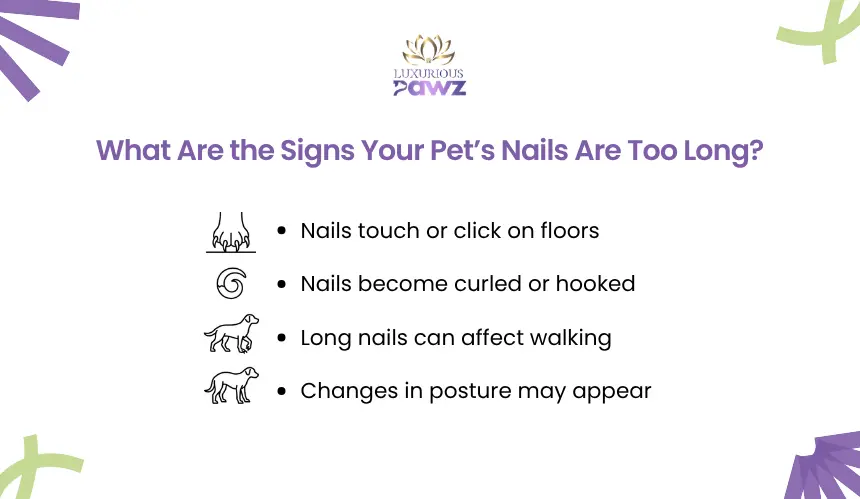
The easiest way to assess nail length is to look at your pet standing and walking rather than judging the nails only by appearance. Nail contact with the floor, abnormal curvature, and changes in movement are useful indicators that trimming may be overdue.
For dogs in Altadena, CA, grooming needs can vary with the foothill environment, warm weather, and outdoor routines around the community. Pets spending time near Woodbury Road, Altadena Drive, and the Rubio Canyon area may pick up more dust, fine plant debris, and loose material on their coats than dogs whose routines are limited to indoor living and paved neighborhood walks.
Regular dog grooming can therefore focus on coat inspection, paw cleaning, ear checks, and removal of trapped debris after outdoor activity, particularly for dogs with longer or denser coats. These local conditions make grooming a practical part of keeping an active Altadena dog comfortable, rather than simply maintaining appearance.
Are Your Pet’s Nails Touching or Clicking on the Floor?
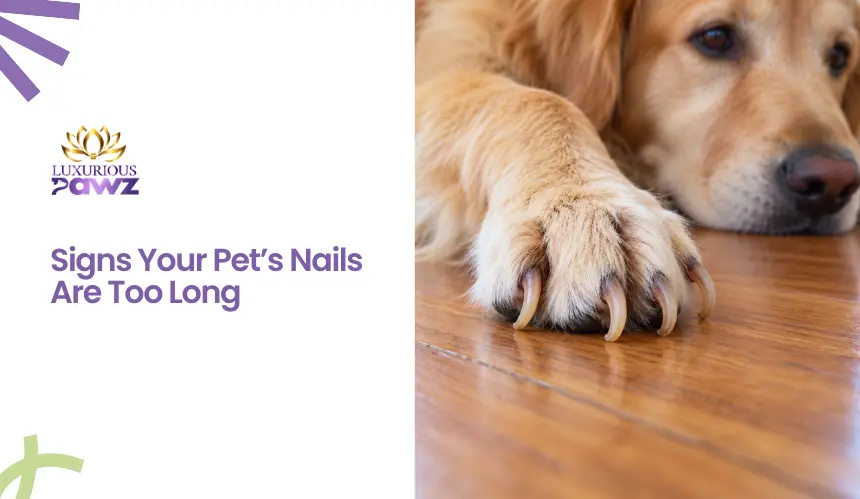
A common practical indicator is hearing a repeated clicking sound when a dog walks across a hard indoor surface. When nails contact the floor while the pet is standing naturally, they may already be longer than ideal. Veterinary guidance from VCA specifically identifies floor contact and clicking on hard floors as signs that a dog’s nails need attention.
However, clicking alone should not be treated as a universal measurement. Nail shape, paw structure, flooring, and activity level all affect how a pet’s nails interact with the ground. A better assessment combines the sound with visual inspection and observation of movement.
Are the Nails Curled, Hooked, or Overgrown?
Healthy nail maintenance is particularly important when the nail begins forming a pronounced hook or curling toward the paw. An excessively long nail can catch on carpeting, bedding, or other surfaces, increasing the likelihood of splitting or tearing.
Dewclaws require separate attention because they generally do not receive the same natural wear as weight-bearing nails. If neglected, a dewclaw can become markedly overgrown and, in severe cases, curve into the paw pad.
Has Your Pet’s Walking or Posture Changed?
Nail length can affect foot placement. When a long claw repeatedly contacts the ground, it can interfere with normal positioning of the foot and alter the way a dog distributes pressure while walking. Veterinary behavioral and medical guidance notes that very long claws can interfere with proper foot placement and may contribute to structural changes in the foot.
Look for subtle changes such as shorter steps, reluctance to walk on certain surfaces, repeatedly lifting a paw, or an altered stance. These signs do not prove that nails are the cause, but they warrant checking the paws rather than assuming the behavior is simply age-related or behavioral.
How Long Nails Can Affect Your Pet
The consequences of excessive nail length become more significant when the nails begin changing how the paw contacts the ground. The problem can progress from mechanical pressure to nail damage, particularly when the nails remain long for an extended period.
Can Long Nails Cause Paw Pain and Pressure?
Long nails can transmit abnormal pressure through the toes when they strike or press against the ground. Instead of allowing the paw to make normal contact, the extended nail can influence foot positioning and traction. The American Kennel Club notes that excessive nail length can contribute to a splayed foot, reduced traction, and changes affecting the feet and tendons over time.
This is especially relevant for active dogs that frequently move over different surfaces. In Altadena, a pet may encounter indoor flooring, sidewalks, concrete, and other hard surfaces during its normal routine. Hard surfaces can naturally wear nails, but that does not guarantee adequate nail length for every dog. VCA notes that active dogs walking regularly on pavement may need trims less frequently, while less-active dogs may require more frequent maintenance.
Can Long Nails Split, Break, or Become Injured?
An overgrown nail has more opportunity to catch on a surface. A sudden snag can fracture the nail and expose the sensitive tissue inside it. The quick contains blood vessels and nerves, so injury can cause significant pain and bleeding.
A broken nail is different from routine nail trimming because the exposed tissue can require protection and monitoring. Persistent bleeding, substantial pain, swelling, or other signs of injury warrant veterinary attention rather than repeated attempts to trim the damaged nail at home.
Can Overgrown Nails Affect Gait and Joint Loading?
The concern is not limited to the nail itself. Repeated changes in foot placement can influence the mechanics of the entire limb. Long claws can interfere with normal paw positioning, and prolonged abnormal loading may contribute to changes in the feet and associated structures.
That makes nail length a functional grooming consideration rather than merely a cosmetic one. If a pet already has difficulty walking, persistent lameness, or obvious pain, nail trimming should not be assumed to be the complete solution. Those symptoms may have another orthopedic or paw-related cause and should be evaluated appropriately.
What Should You Do When Your Pet’s Nails Are Too Long?
The appropriate response depends on how overgrown the nails are, whether the pet tolerates handling, and whether there is already an injury. The goal is controlled shortening without damaging the quick or aggravating an existing problem.
When Is Regular Nail Trimming Needed?
There is no single interval that works for every pet. VCA reports that many dogs need approximately monthly nail trims, while dogs with less activity or limited exposure to hard surfaces may need them more frequently.
Rather than relying exclusively on a calendar, monitor nail length directly. Regular maintenance also matters because the quick grows along with the nail. When nails remain excessively long, the amount that can safely be removed at one time may be limited. Gradual, repeated trims can allow the nail and quick to become shorter over time.
For dogs with dark nails, extra caution is necessary because the quick is difficult to see externally. VCA recommends taking only small amounts at a time, while stopping when the internal appearance indicates that the quick is being approached.
When Is Professional Pet Nail Trimming Safer?
For pets around Altadena, CA, nail care can be influenced by the area’s foothill setting, warm climate, and varied walking surfaces, from residential sidewalks near Lake Avenue to rougher terrain toward Chaney Trail and the Angeles National Forest.
Regular pet nail trimming is particularly useful for checking whether outdoor activity is wearing the nails evenly, since dewclaws and other nails may remain long despite frequent walks. During hot weather, owners should also avoid relying on heated pavement for natural nail wear and instead inspect both nails and paw pads after outdoor activity.
For pet owners across Greater Los Angeles, keeping nails at a healthy length can support comfortable movement and reduce the risk of painful nail problems. Luxurious Pawz provides professional pet nail trimming designed to keep your pet’s nails safely maintained as part of their overall grooming routine. Whether your pet needs routine nail care or has nails that have become noticeably overgrown, Luxurious Pawz can help keep their paws clean, comfortable, and properly cared for.
Frequently Asked Questions
How can I tell if my dog’s nails are too long?
Check whether the nails touch the ground while your dog is standing naturally or make repeated clicking sounds on hard floors. Curled nails and changes in walking are additional warning signs.
How often should a dog’s nails be trimmed?
Many dogs need nail trimming about once a month, but the appropriate interval varies with activity, nail growth, and the surfaces the dog regularly walks on.
Can long nails actually hurt a dog?
Yes. Excessive nail length can interfere with foot placement, reduce traction, create abnormal pressure, and increase the risk of painful nail breaks.
What happens if a nail grows into the paw pad?
A severely overgrown nail can curve into the paw pad and create a painful wound. This requires careful treatment and veterinary attention if there is significant injury, infection, or persistent pain.
Why are dewclaws easy to overlook?
Dewclaws generally do not contact the ground during normal walking, so they receive less natural wear and can become overgrown without obvious clicking.
Should I trim very long nails myself?
If the nails are severely overgrown, the pet is difficult to handle, or you cannot identify the quick safely, professional nail trimming is the safer option. This is particularly important when the nail is broken, embedded, or already painful.