
- admin
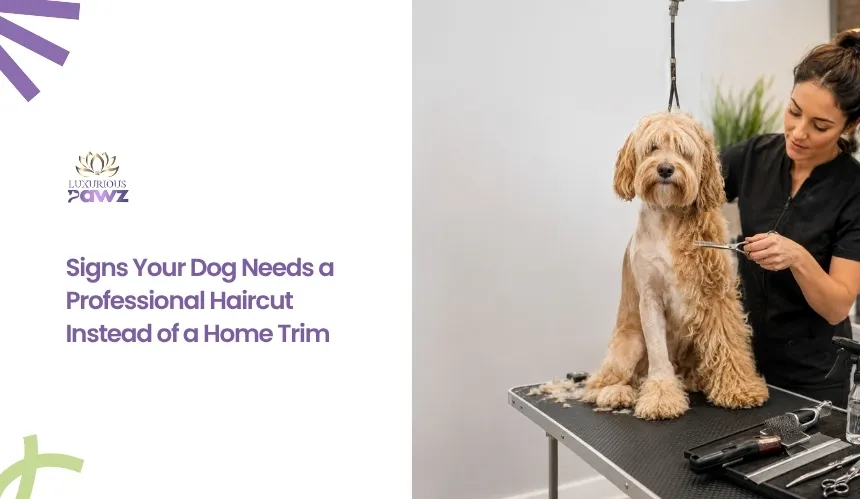
Signs Your Dog Needs a Professional Haircut Instead of a Home Trim
Key Takeaways
|
Many dog owners handle small grooming tasks at home, especially when a dog’s coat starts looking uneven or the hair around the paws, face, or tail becomes overgrown. A light touch-up can help between grooming appointments, but some coat and skin conditions require more than basic trimming.
A dog may need a professional haircut instead of a home trim when the coat is matted, heavily packed, difficult to brush, smelly, or growing into sensitive areas. Skin irritation, nervous behavior, breed-specific coat needs, and uneven results after home cutting are also clear signs that expert grooming may be the safer choice.
When Coat Problems Are Too Difficult for a Simple Trim
A clean, brushed coat is easier to maintain at home. Once the fur becomes tangled, compacted, or difficult to separate with a comb, trimming can become uncomfortable for the dog. Thick mats can sit close to the skin and make it hard to see where the hair ends and the skin begins.
Some coat issues are not just about appearance. They can affect comfort, hygiene, airflow, and skin health. When the coat is no longer easy to comb through, a basic home trim may not solve the real grooming problem.
Do You Know?
In 2024, households with dogs accounted for 45.5% of all U.S. households, according to the American Veterinary Medical Association. This shows why dog grooming decisions are not a small topic. Millions of owners face the same question: when is a home trim enough, and when does the dog need trained grooming care?
Mats and Tangles Sit Too Close to the Skin
Mats often form behind the ears, under the legs, around the collar, near the tail, and in areas where the coat rubs together. These tight sections can pull on the skin, trap moisture, and hide irritation.
Cutting through mats at home can be risky because the skin may be pulled into the knot. This makes accidental nicks more likely, especially when scissors are used too close to the body.
Heavy Shedding Buildup Makes the Coat Look Bulky
Heavy shedding buildup can make a dog look uneven even after a trim. Some coats hold dead hair beneath the top layer, so shortening the outside does not remove the packed undercoat.
In these cases, brushing, drying, de-shedding, and coat preparation are needed before the haircut can look clean. Without that process, the coat may stay thick, rough, or uneven.
Deep Odor or Dirt Stays After Bathing
A bad smell that remains after bathing may point to buildup deep in the coat. Long-haired and dense-coated dogs can trap dust, moisture, outdoor debris, and oils close to the skin.
When grime is trapped under layers of fur, trimming becomes harder because the coat may not separate cleanly. A full grooming process is often needed before the haircut can be shaped properly.
When Skin Sensitivity Makes Home Trimming Risky
Skin condition matters as much as coat length. Redness, bumps, scabs, swelling, hot spots, or tender areas should be handled carefully because trimming near irritated skin can increase discomfort.
Certain parts of the body also need extra control during grooming. The belly, inner legs, paw pads, face, ears, and sanitary area all involve thinner skin or smaller spaces where sudden movement can happen.
Why Nail Care Matters for Dogs in Sunland, CA
Dogs in Sunland, CA often move between hard sidewalks, dry neighborhood streets, dusty walking areas, and outdoor spaces near foothill surroundings. These mixed surfaces can cause nails to wear unevenly, especially when a dog is less active, walks mostly on soft ground, or avoids rough pavement during warmer weather.
Regular pet nail trimming becomes important in the middle of this routine because overgrown nails can affect paw comfort, walking balance, and grip on different surfaces. For Sunland dogs that spend time around dry brush, dirt paths, home flooring, and paved routes, trimmed nails help reduce snagging, pressure on the paw pads, and discomfort during daily movement.
Redness, Bumps, or Scabs Are Visible Under the Coat
Skin irritation under fur can be hard to see until the coat is parted. If a dog reacts when touched, licks one area often, or pulls away from brushing, the skin may already be sensitive.
Trimming too close to irritated skin can cause pain, bleeding, or further inflammation. When the skin looks abnormal, the haircut needs a slower and more careful approach.
Delicate Areas Need Better Control
Some grooming zones are harder to manage at home because they require close trimming and steady handling. Paw pads, the face, the ears, the belly, and the sanitary area are common examples.
Home trimming may be unsafe when the dog has:
- Hair growing between the paw pads
- Fur blocking the eyes or muzzle
- Long hair near the sanitary area
- Tender spots around the belly, ears, or legs
These areas affect comfort, hygiene, and movement. If the dog pulls away during trimming, the chance of accidental injury increases quickly.
Senior Dogs May Need Slower Handling
Senior dogs may have sore joints, weaker balance, or limited patience during grooming. Standing for too long can become uncomfortable, especially if the dog has arthritis or mobility issues.
A haircut for an older dog may need slower pacing, careful positioning, and shorter handling periods. The goal is not only to make the coat look neat, but also to keep the dog calm and comfortable.
When Breed or Coat Type Requires Better Technique

Not every coat should be trimmed the same way. A method that works for one dog may damage the look, texture, or function of another dog’s coat. This is why breed and coat type matter before any haircut.
Double-coated breeds, curly-coated dogs, wiry coats, silky coats, and long-haired breeds all need different grooming approaches. Random shortening can create uneven regrowth, poor texture, or a choppy finish.
Double-Coated Dogs Should Not Be Cut Too Closely
Double-coated dogs have a soft undercoat and a protective outer layer. Cutting too short can affect insulation, sun protection, and natural coat function.
These dogs often need de-shedding and light shaping rather than a close shave. A professional can decide how much coat can be safely removed without interfering with coat health.
Curly, Wiry, Silky, or Long Coats Need Specific Methods
Curly coats can mat quickly if they are not brushed and clipped correctly. Wiry coats may need texture-preserving care, while silky coats show uneven lines more easily than thicker coats.
Long-haired dogs often need blending so the haircut does not look choppy. These coat types usually need controlled clipping, sectioning, brushing, and finishing instead of a quick trim.
Breed-Style Haircuts Require Precision
Teddy bear cuts, rounded faces, clean feet, paw shaping, and sanitary trims depend on smooth transitions and steady tool control. These styles may look simple, but they require balance and detail.
Breed-style grooming is not only cosmetic. It can also improve visibility, hygiene, movement, and coat maintenance between appointments.
When Grooming Behavior Becomes a Safety Concern
A dog’s reaction during grooming can show whether home trimming is realistic. Pulling away, shaking, snapping, hiding, freezing, or turning the head repeatedly are signs that the dog is uncomfortable.
Even a gentle dog can move suddenly when nervous, especially near the face, paws, or tail. When behavior becomes unpredictable, scissors and clippers become harder to control.
The Dog Pulls Away or Tries to Hide
Dogs often show grooming stress before the haircut begins. A dog may hide when tools appear, tuck its tail, shake, turn away, or refuse to stand still.
These reactions make home trimming difficult because the dog is already trying to avoid the process. Continuing may increase fear and make future grooming harder.
Clipper Noise or Tool Vibration Causes Fear
Some dogs tolerate brushing but panic when the clippers turn on. Clipper sound, vibration, or past negative experiences can cause sudden movement during trimming.
Professional groomers often adjust the pace and tool handling based on the dog’s reaction. This helps reduce stress while keeping the grooming process more controlled.
Face, Paw, or Tail Trimming Becomes Unsafe
The face, paws, and tail are high-movement areas. A dog that jerks its head, lifts its paws, or swings its tail can make close trimming risky.
Common warning behaviors include:
- Snapping when paws or ears are touched
- Shaking during clipper use
- Pulling away during face trimming
- Moving suddenly when the tail is handled
When these signs appear, the safest choice is to stop before the dog or the owner gets hurt.
When Home Trimming Starts Causing New Problems
A home trim should make the coat cleaner, lighter, and easier to maintain. If it leaves uneven patches, visible gaps, rough texture, or over-cut areas, the coat may need proper correction.
Poor results do not always mean the owner was careless. In many cases, the coat simply needs better preparation, better tools, or a grooming method that fits the dog’s coat type.
Uneven Patches Show the Coat Was Not Ready
Uneven patches often happen when the coat is cut without proper sectioning, combing, or blending. Some areas may look short while others remain bulky.
This can affect the overall shape of the coat and make future grooming harder. If the skin shows through unexpectedly, the trim may have gone too close.
Clippers Snag or Scissors Pull the Hair
Tools should move smoothly through clean, brushed hair. If clippers snag, scissors pull, or brushing causes flinching, the coat may be too dense, tangled, dirty, or packed for safe home cutting.
Tool resistance often points to matting, dull blades, packed undercoat, or incorrect grooming technique. Continuing can cause discomfort and increase the risk of skin injury.
The Coat Mats Again Soon After Trimming
A haircut that mats again within a few days may not have addressed the real issue. The deeper buildup may still be present under the top layer.
Bathing, drying, brushing, combing, and de-shedding all affect how long a haircut stays neat. Without proper preparation, the coat can return to the same problem quickly.
How to Decide Between a Home Trim and a Professional Haircut
A home trim is suitable for light maintenance when the dog is calm, the coat is clean, and only minor touch-ups are needed. Owners can brush regularly, remove small debris, check for tangles, and keep the coat manageable between appointments.
A professional haircut is better when the coat is matted, packed, smelly, hard to brush, or growing into sensitive areas. It is also the better choice when the dog has skin irritation, mobility issues, grooming anxiety, or a coat type that requires specific handling.
Do You Know? U.S. pet owners spent $158 billion on pets in 2024, and the pet services category includes grooming-related services. This supports the idea that grooming is now viewed as part of routine pet care, not only a cosmetic extra.
Home Trimming Works for Light Maintenance
Home care works best when it supports regular grooming rather than replacing it completely. Small touch-ups around the paws or light coat cleanup may be reasonable if the dog stays calm.
Home trimming should stop if the dog becomes stressed, the coat pulls, or the skin is hard to see beneath the fur. These signs show that the grooming task has moved beyond simple maintenance.
Professional Haircuts Help Protect Coat Health
A professional groomer can assess the coat before cutting. This helps determine whether the dog needs de-matting, de-shedding, bathing, sanitary trimming, paw pad cleanup, or a full haircut.
The decision should be based on comfort, safety, and coat health rather than appearance alone. A cleaner haircut and better coat preparation can make the process easier for both the dog and the owner.
For Sunland pet owners, grooming is especially important because the area sits close to the Verdugo Mountains, Tujunga Wash, and the Angeles National Forest, where dogs are often exposed to dust, dry brush, loose debris, and outdoor trails. The Los Angeles City Council District 7 page describes Sunland-Tujunga as a foothill community with access to nature, hikes, and outdoor recreation, so local dogs may collect more dirt, plant material, and coat buildup after walks than pets in more urban neighborhoods.
Regular dog grooming helps remove trapped debris, check the paws and ears, reduce matting, and keep the coat easier to manage in warm, dry weather. This matters because UC Davis notes that foxtails can enter a dog’s nose, mouth, ears, eyes, or skin and may cause wounds or abscesses if they become embedded. For dogs that walk near dry grass, canyon paths, or open lots around Sunland, grooming is not only about appearance. It supports comfort, hygiene, and early detection of coat or skin problems.
Booking Sooner Prevents Bigger Grooming Problems
Dog owners should consider booking sooner when brushing becomes painful, the coat feels tight, or odor remains after bathing. Delaying the haircut can allow mats, skin irritation, and hygiene issues to get worse.
When a home trim causes pulling, stress, uneven results, or fast re-matting, the dog likely needs a more controlled grooming session. Professional care can help reset the coat before the problem becomes harder to manage.
Frequently Asked Questions
How often should a dog get a professional haircut?
Most dogs that need haircuts are groomed every 4 to 8 weeks, depending on coat type, growth speed, lifestyle, and brushing routine. Dogs with curly, long, or fast-matting coats usually need shorter grooming intervals.
Can regular brushing reduce the need for a professional haircut?
Regular brushing can reduce tangles, loose hair buildup, and minor coat problems between grooming visits. However, brushing does not replace a haircut when the coat becomes overgrown, uneven, packed, or difficult to manage safely at home.
Should a dog be bathed before getting a haircut?
A clean coat is usually easier to cut evenly, but badly tangled or matted dogs should not always be bathed first. Water can tighten mats, so the coat condition should be checked before bathing or trimming.
Is shaving a dog the same as giving a professional haircut?
No, shaving and haircutting are not the same. A haircut may include shaping, blending, trimming, and coat maintenance, while shaving removes hair much shorter. Some coat types should not be shaved too closely.
When should a groomer recommend a veterinarian instead?
A groomer may recommend a veterinarian if the dog has open sores, severe redness, swelling, bleeding, infection signs, or extreme pain during handling. Groomers manage coat care, but medical skin issues need veterinary attention.
What can owners do after a professional haircut to keep the coat healthy?
Owners can brush regularly, check high-friction areas, clean paws after outdoor walks, and watch for early tangles. Consistent home care helps the haircut last longer and prevents small coat issues from becoming harder to manage.